Can Any Induction-Compatible Pan Work On Every Cooking Zone? 10 Cooktop Myths Explained
Not every induction-compatible pan works equally well on every cooking zone. Pan size, base material and zone design all matter. Here are 10 common cooktop myths that can affect everyday cooking.
10 Induction Cooktop Myths About Pans, Zones And Compatibility
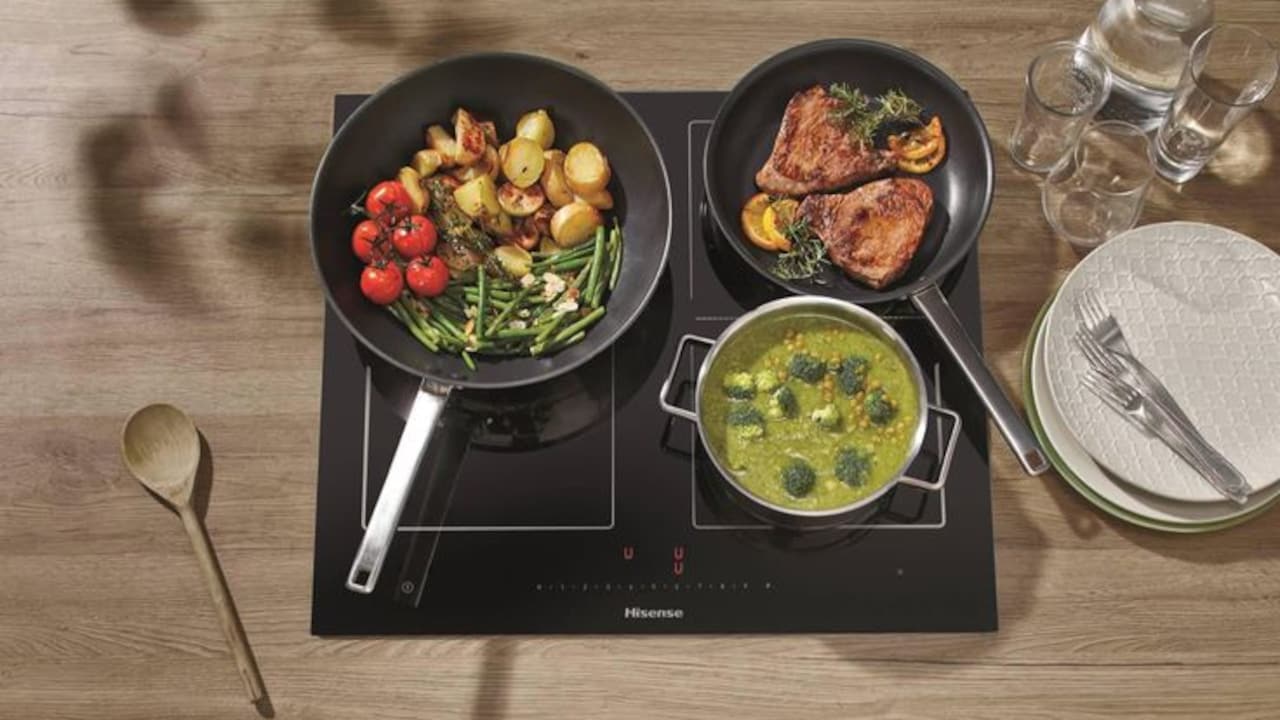
Buying an induction-compatible pan sounds simple. Spot the induction symbol, bring the pan home, place it on the cooktop and start cooking. Then comes the surprise: one zone heats beautifully while another refuses to recognise the same pan. So, can any induction-compatible pan work on every cooking zone? Not necessarily. Induction cooking relies on a magnetic connection between the cookware base and the coil beneath the glass surface. That sounds straightforward, but several small details influence how well the partnership works. Pan diameter matters. So does its magnetic base, flatness and position over the cooking zone. Different cooktops also have different detection limits. These details become especially noticeable in busy kitchens where a tiny tadka pan, family-sized pressure cooker, dosa tawa and kadai may all take turns on the same appliance. Unfortunately, cooktop advice often travels through kitchens like family recipes: confidently, repeatedly and with a few creative additions along the way. Some myths sound logical enough to survive for years. Here are ten worth clearing up.
10 Induction Cooktop Myths About Pans, Zones And Compatibility; Photo Credit: Amazon
Understanding Induction Cookware And Cooking Zones
Myth 1: Every Induction-Compatible Pan Works On Every Cooking Zone
The induction symbol on cookware confirms one important thing: its base contains magnetic material suitable for induction cooking. It does not guarantee perfect performance on every zone of every cooktop.
Cooking zones come in different sizes, and many have a minimum pan diameter they can detect. Place a tiny tempering pan on a large zone and the cooktop may struggle to recognise it. The pan works with induction technology; it simply does not suit that particular zone.
The reverse situation causes problems too. A huge tawa resting on a much smaller induction coil may heat strongly in the centre while the outer edges remain cooler. That can turn a promising dosa into an oddly browned geography lesson.
For everyday cooking, match the cookware base reasonably closely to the marked cooking zone. Check the appliance manual for minimum and maximum pan dimensions, especially when buying specialised cookware.
Think of induction compatibility as entry permission rather than a reserved seat. The pan can enter the club, but the right cooking zone still matters.
Also Read: Top 7 Induction Cooktops Under ₹3000 For Daily Cooking
Myth 2: If A Magnet Sticks, The Pan Will Perform Perfectly
The fridge-magnet test has earned its place as a handy kitchen shortcut. If a magnet grips the bottom of a pan firmly, the cookware has a magnetic layer and may work on induction.
However, the test cannot tell the whole story.
Two pans can both attract a magnet yet perform differently. One may contain a thick, evenly distributed magnetic base, while another may have only a thin magnetic layer. The first pan can spread heat more consistently. The second may create hot spots or respond slowly when you change the power setting.
Base construction also affects performance. Multi-layer cookware often combines magnetic stainless steel with heat-conductive materials such as aluminium. This arrangement helps distribute heat across the pan rather than concentrating it in one area.
So keep the magnet trick, but treat it as a compatibility check rather than a quality certificate.
When shopping, examine the base, weight and manufacturer's induction guidance as well. A ₹1 magnet can answer “Will it react?” It cannot reliably answer “Will Sunday's biryani cook evenly?”
Myth 3: A Bigger Pan Always Needs The Biggest Cooking Zone
It sounds sensible: biggest pan, biggest zone. In many cases that pairing works well, but pan size involves more than the width you see from above.
The important measurement for induction cooking comes from the magnetic base that touches the cooktop.
A wide kadai, for instance, may have sloping sides and a relatively narrow flat base. Although the vessel looks enormous, its actual induction contact area might suit a medium cooking zone perfectly well. Choosing a zone only by the rim diameter can therefore mislead.
At the same time, putting a broad flat tawa over a very small induction coil can produce uneven heating. The centre may become ready for a dosa before the outer section catches up.
Look underneath the cookware instead of judging it from the top. Compare the flat magnetic base with the zone dimensions.
Manufacturers often print recommended cookware sizes in their manuals, and those figures deserve more attention than kitchen guesswork. In induction cooking, appearances can deceive. The pan with the most dramatic silhouette does not automatically need the largest circle on the glass.
10 Induction Cooktop Myths About Pans, Zones And Compatibility; Photo Credit: Amazon
Myth 4: Small Pans Cannot Work On Large Induction Zones
Small cookware can work on a larger induction zone, provided the cooktop can detect its magnetic base.
Every induction appliance has its own minimum cookware requirement. If the base falls below that detection threshold, the zone may flash an error, switch itself off or simply refuse to heat. Move the same pan to a smaller zone and it may work immediately.
This explains why a little tadka pan can behave like an obedient kitchen helper one minute and stage a complete protest the next.
The problem does not mean the cookware has suddenly lost its induction compatibility. The larger zone may simply require more magnetic material over its sensor or coil area.
Some modern cooktops offer flexible zones that detect cookware across a wider surface. Those designs can make small-pan placement easier, although they still have limits.
For households that regularly prepare tiny quantities of tempering, sauces or ghee, check the minimum supported pan diameter before choosing a cooktop. That small specification can matter far more in daily life than an impressive-looking maximum wattage printed across the box.
Myth 5: An Oversized Tawa Heats Evenly Wherever You Place It
Few pieces of cookware expose induction-zone limitations as clearly as a large flat tawa.
Induction coils create heat through the magnetic section of the cookware sitting above them. If the coil covers only the middle portion of an oversized tawa, the centre receives stronger energy. Heat then travels towards the edges through the metal.
Good-quality cookware can spread that heat fairly well, but it cannot make the underlying coil physically larger.
This difference matters when making dishes that need an evenly hot surface. Dosas, rotis, chillas and parathas can reveal cool edges quickly. One side may brown beautifully while another looks as though it missed the invitation.
Placing the tawa centrally helps. Choosing cookware with a thick, well-constructed base helps even more.
Some premium cooktops include larger coils or linked flexible zones that suit broad cookware better. Standard single zones may struggle with unusually large pans.
So an induction-ready label does not promise edge-to-edge heating on every zone. For broad cookware, coil coverage and heat distribution matter just as much as magnetic compatibility.
Myth 6: Cookware Position Does Not Matter On Induction
Induction can feel wonderfully precise, but it still rewards good pan placement.
Most standard cooking zones contain a circular coil beneath the glass. Keeping the magnetic base near the centre of that coil gives the appliance the strongest and most consistent connection.
Push a small saucepan towards the edge and the cooktop may detect less of its base. Heating can become weaker, intermittent or uneven. Some appliances may stop recognising the pan altogether.
The problem grows more noticeable with cookware that barely meets the minimum size requirement.
Flexible induction zones handle positioning more generously because they use several coils or larger active areas. Even then, placing cookware within the marked region usually produces the best results.
There is also a practical benefit to centring pans. Handles remain easier to manage, cookware feels more stable and accidental knocks become less likely when several dishes compete for space.
Induction technology may look futuristic, but this rule feels reassuringly old-fashioned: put the pan where the heat actually is. A few centimetres can make the difference between smooth simmering and wondering why dinner suddenly stopped cooking.
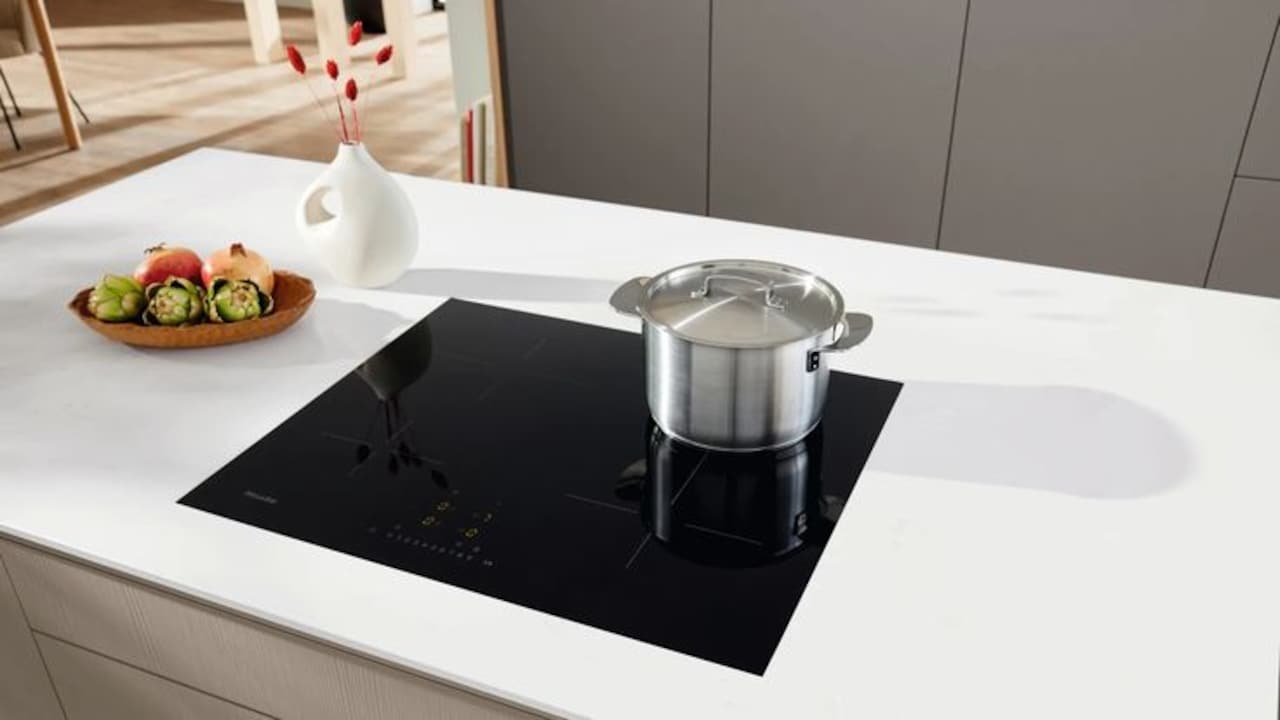
10 Induction Cooktop Myths About Pans, Zones And Compatibility; Photo Credit: Pexels
Myth 7: All Stainless-Steel Cookware Works On Induction
Stainless steel has a complicated relationship with induction cooktops. Some stainless-steel pans work brilliantly. Others will sit on the glass looking handsome and achieve absolutely nothing.
The reason comes down to magnetism.
Stainless steel exists in several grades and compositions. Some types contain magnetic properties that allow an induction coil to interact with the cookware. Others do not. A pan may also combine different metals, with an induction-compatible layer added specifically to the base.
That means the words “stainless steel” on a label do not automatically confirm induction compatibility.
Before buying, look for an induction symbol or clear manufacturer guidance. The magnet test can provide another quick clue: strong attraction at the base usually indicates suitable magnetic material.
Do not judge solely by price either. An expensive stainless-steel pan designed for another cooking method may still fail on induction, while a modestly priced induction-ready pan can perform perfectly well.
Material names give useful clues, but construction decides the outcome. In cookware shopping, “stainless steel” describes the family. It does not reveal every relative's personality.
Myth 8: Induction Cooktops Heat The Glass Directly
Touch an induction cooktop after preparing dinner and the glass may feel hot, which makes this myth particularly convincing.
Yet the induction coil does not heat the glass in the same way that an electric radiant hob heats its surface.
Instead, the cooktop creates an electromagnetic field that interacts with magnetic cookware. Electrical currents form within the pan base and generate heat there. The hot pan then transfers some of that heat back to the glass underneath it.
That explains why the surrounding cooktop surface often stays much cooler than the cookware itself.
Still, “cooler” does not mean “safe to touch”. After boiling dal or frying pakoras, the area beneath the vessel can retain considerable residual heat. Many appliances display a hot-surface indicator for precisely this reason.
This heating method also explains induction's quick response. When you reduce the power, the electromagnetic energy drops rapidly rather than waiting for a traditional heating element to cool first.
The pan plays the starring role in induction cooking. The glass mostly provides the stage, though it can certainly remain hot after the performance ends.
Myth 9: Maximum Power Always Means Faster And Better Cooking
That tempting boost button can make a litre of water boil impressively fast. It does not follow that every dish benefits from maximum induction power.
High settings work well for tasks that demand rapid heating, such as bringing water to the boil. Delicate cooking tells another story.
Milk can catch at the bottom. Spices can burn before releasing their aroma. A masala can turn from nicely roasted to deeply regrettable during one distracted phone notification.
Induction cooktops respond quickly, so medium and lower settings often provide better control than cooks expect when switching from gas. Once a heavy pan reaches the desired temperature, reducing the power can maintain heat efficiently.
Cookware also influences the ideal setting. A thick kadai stores more heat than a lightweight saucepan and may continue cooking vigorously after you lower the power.
Use maximum power as a tool, not a default personality setting. Start high when the recipe calls for speed, then adjust according to what happens inside the pan.
Good cooking rarely rewards impatience. Sometimes the quickest route to dinner involves turning the power down.
Myth 10: Any Flat-Bottomed Pan Can Become Induction-Compatible
A flat base certainly helps cookware sit securely and make effective use of an induction zone. Flatness alone, however, cannot create the magnetic properties that induction cooking needs.
An aluminium, copper, glass or earthen vessel may have a perfectly level base and still fail to work directly on induction if it lacks a suitable magnetic layer.
Some manufacturers solve this by bonding ferromagnetic material to the bottom of cookware made largely from aluminium or another highly conductive metal. The magnetic section interacts with the induction field while the remaining layers help distribute heat.
Induction converter plates also exist. These magnetic discs sit on the cooktop and heat conventional cookware placed above them. They can offer a workaround for a favourite vessel, but they reduce some of the speed and efficiency that make induction attractive in the first place.
So inspect more than the shape of the pan.
A flat base helps with stability, contact and heat distribution. A magnetic base makes induction heating possible. The two qualities work well together, but they perform completely different jobs.
Products Related To This Article
1. USHA Cookjoy Radiant Induction Cooktop 1600 Watts
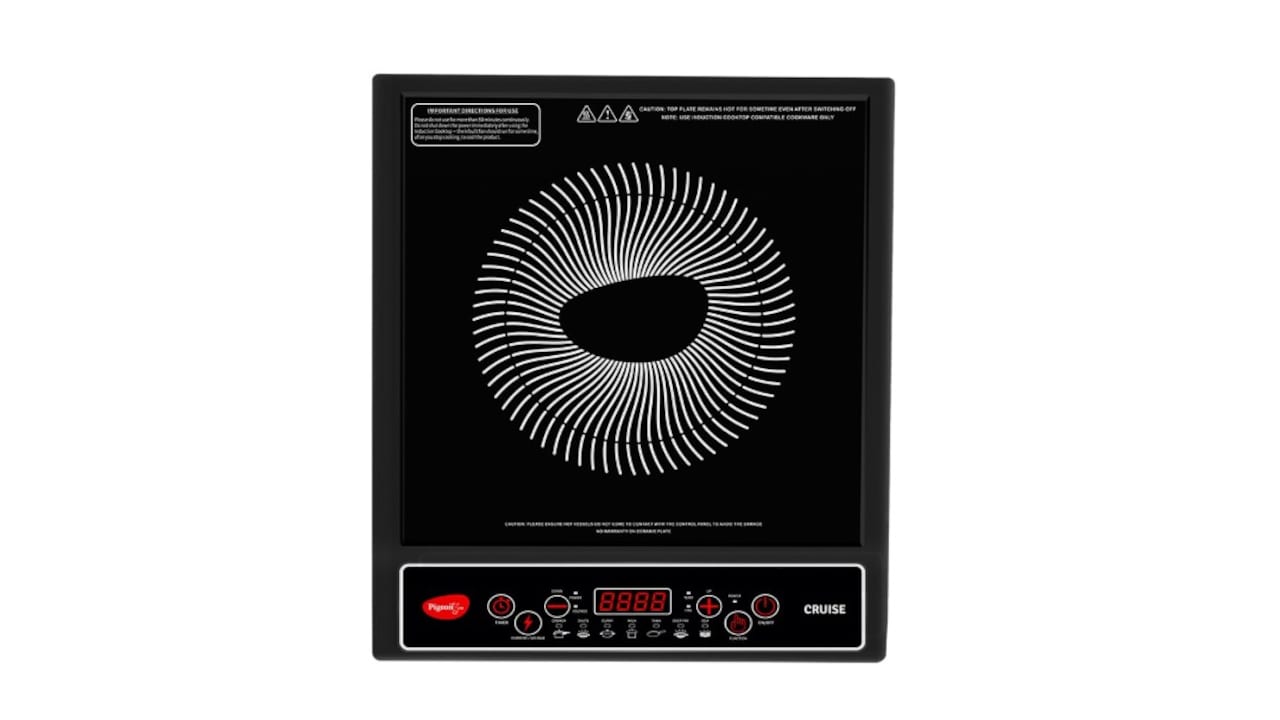
2. Pigeon by Stovekraft Cruise 1800 watt Induction Cooktop With Crystal Glass
3. Prestige PIC 20 1600 Watts Induction Cooktop
4. Usha Cook Joy (3616) 1600-Watt Induction Cooktop
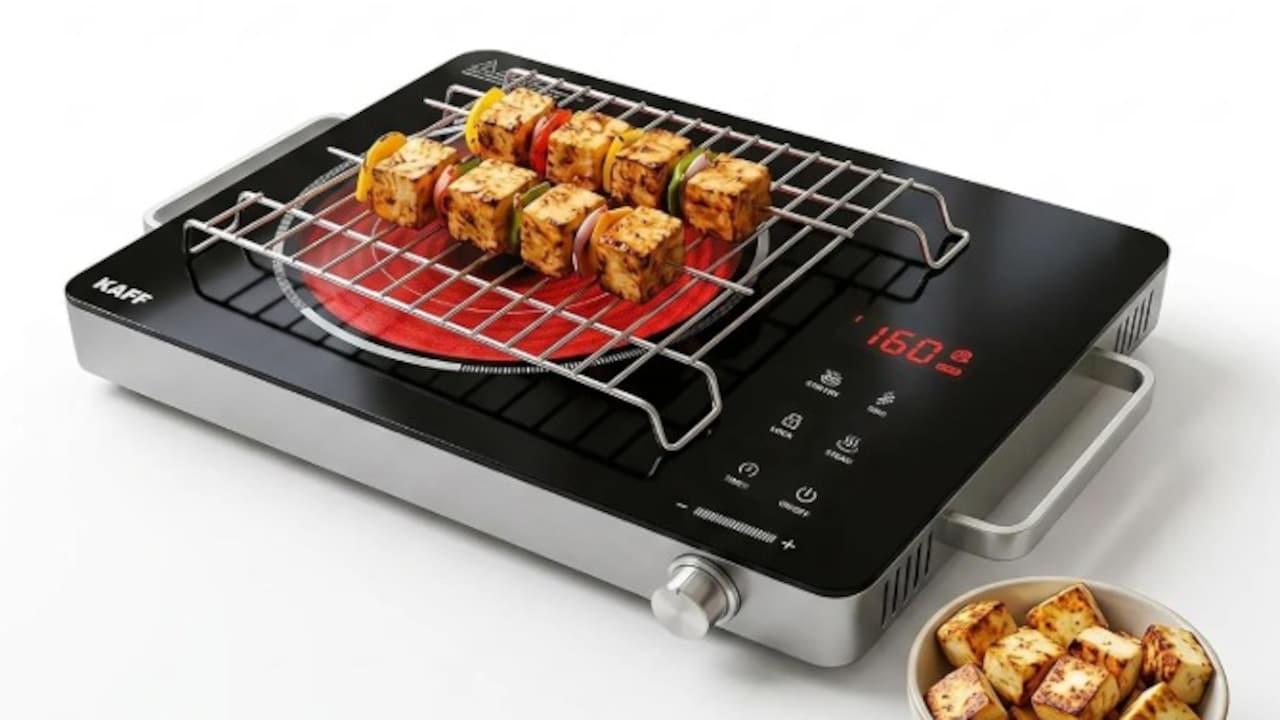
5. Cadlec HeatMate 2200W Infrared Cooktop Stove with Grill Rack for Barbecue
6. iBELL 20YO Induction Cooktop 2000W - 3 YEAR WARRANTY Full Touch Panel
7. Philips Viva Collection HD4928/01 2100-Watt Induction Cooktop
Induction cooking removes flames from the equation, but it introduces a new relationship between cookware, coils and cooking zones. That relationship explains why an induction-compatible pan can perform beautifully on one zone yet struggle on another.
The most reliable approach remains surprisingly simple: check the magnetic base, consider its actual diameter, centre the cookware correctly and match it sensibly to the cooking zone. Large tawas deserve enough coil coverage, while tiny tempering pans need zones capable of detecting them.
Most cooktop frustrations do not signal faulty cookware or a temperamental appliance. They often come from a mismatch between two perfectly functional pieces of kitchen equipment.
Once those small details make sense, induction cooking becomes far less mysterious. The dal simmers steadily, the tadka behaves itself and the dosa stands a much better chance of browning from centre to edge.
And perhaps most importantly, the kitchen gets one fewer myth to pass on to the next generation.
(Disclaimer: This article may include references to or features of products and services made available through affiliate marketing campaigns. NDTV Convergence Limited (“NDTV”) strives to maintain editorial independence while participating in such campaigns. NDTV does not assume responsibility for the performance or claims of any featured products or services.)