Soundbar Vs Home Theatre: Which One Truly Improves Dialogue Clarity?
Struggling to hear dialogue clearly? This guide compares soundbars and home theatre systems to reveal which one truly delivers clearer speech for everyday viewing.

Important differences between soundbars and home theatre system for better audio
Few things frustrate more than constantly reaching for the remote to adjust volume during a gripping scene. Explosions roar, background scores swell, yet the dialogue, the very heart of storytelling, gets lost in the noise. Modern audio systems promise to fix this, but the debate between soundbars and home theatre setups continues to divide households.
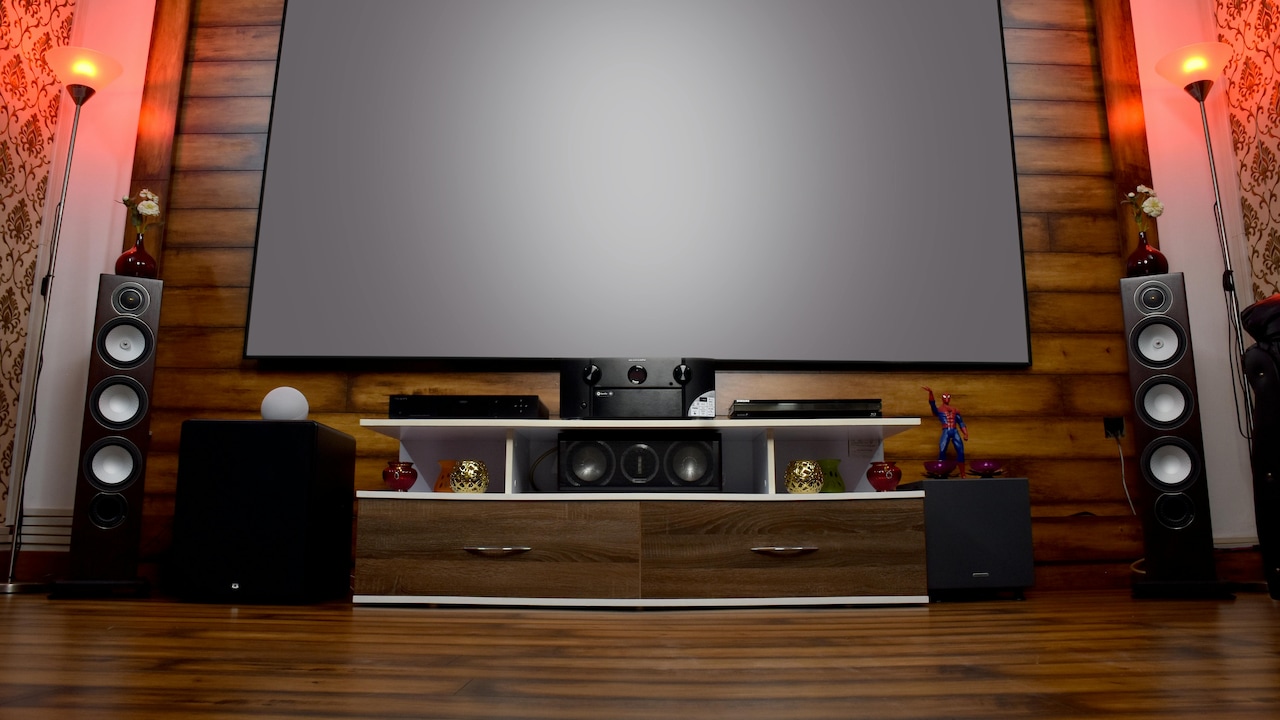
Home theatre vs soundbar which offers better dialogue clarity; Photo Credit: Pexels
On one side sits the sleek, space-saving soundbar, often marketed as the ultimate upgrade for television audio. On the other, the traditional home theatre system offers multiple speakers and cinematic immersion. But when the goal is simple, hearing every word clearly, does bigger always mean better?
The answer is not as straightforward as sales brochures suggest. Dialogue clarity depends on several factors, from speaker design to room acoustics. What works brilliantly in one living room may fall flat in another.
Let's unpack the real differences and uncover what actually improves dialogue clarity.
Also Read: Best Home Theatre Systems Under ₹15,000 For A True Cinema Experience At Home
Key Factors That Influence Dialogue Clarity
Dedicated Centre Channel: The Unsung Hero
Dialogue clarity often hinges on one crucial component, the centre channel. In a typical home theatre setup, this speaker sits directly below or above the television and handles most of the spoken lines. Its sole job is to deliver voices clearly, without interference from music or effects.
Soundbars attempt to replicate this by creating a “virtual” centre channel. While newer models perform impressively, they still rely on compact drivers. This limits their ability to separate dialogue from surrounding sound elements, especially during complex scenes.
Imagine a tense courtroom drama where multiple characters speak at once. A dedicated centre speaker ensures each voice remains distinct. A soundbar may blur those layers slightly, particularly at higher volumes.
However, not all home theatres guarantee perfection. Poor placement or cheap centre speakers can distort voices. A well-designed soundbar can outperform a poorly set up system.
Still, when prioritising dialogue clarity, a strong centre channel remains one of the most reliable advantages of a home theatre system.
Speaker Separation And Spatial Clarity
Sound travels differently when spread across multiple speakers. Home theatre systems distribute audio across the room, creating a sense of space that enhances clarity. Dialogue feels anchored to the screen rather than floating around it.
Soundbars, by contrast, house all speakers in a single unit. Advanced models use clever processing to simulate separation, bouncing sound off walls to mimic surround effects. Yet this depends heavily on room shape and surfaces.
In a compact living room with reflective walls, a soundbar might perform beautifully. In an open-plan space with high ceilings, the illusion can weaken. Dialogue may feel less focused.
Speaker separation matters because it reduces audio clutter. When effects, music, and voices come from distinct sources, the brain processes them more easily. This reduces listening fatigue and improves comprehension.
So while soundbars offer convenience, true spatial separation in a home theatre often delivers clearer, more natural dialogue.
Audio Processing Technology And Dialogue Enhancement
Modern soundbars come packed with smart features. Dialogue enhancement modes boost vocal frequencies, making speech stand out even during chaotic scenes. Brands often highlight this as a key selling point.
Home theatre systems, especially entry-level ones, may lack such advanced processing unless paired with a high-end AV receiver. This gives soundbars an edge in plug-and-play simplicity.
Consider late-night viewing when volume must stay low. A soundbar's dialogue mode can amplify speech without increasing overall sound. This proves incredibly useful in shared households.
However, these enhancements can sometimes sound artificial. Voices may become overly sharp or detached from the rest of the audio.
In contrast, a well-calibrated home theatre delivers natural clarity without relying on digital tricks. But achieving this requires effort, adjusting settings, positioning speakers, and sometimes investing more than ₹50,000.
For those seeking instant results, soundbars offer convenience. For purists, home theatres reward patience with authenticity.
Room Size And Acoustic Behaviour
Room size plays a silent but powerful role in dialogue clarity. A soundbar thrives in smaller spaces where sound reflections help create a fuller experience. In such environments, voices can sound surprisingly crisp.
In larger rooms, sound disperses more widely. A single soundbar may struggle to fill the space evenly, causing dialogue to lose focus. This is where home theatre systems shine.
Multiple speakers ensure consistent audio coverage across the room. Whether seated directly in front or off to the side, dialogue remains intelligible.
Acoustic factors like curtains, carpets, and furniture also influence clarity. Hard surfaces reflect sound, while soft materials absorb it. A poorly treated room can muddle dialogue regardless of the system.
In practical terms, a ₹20,000 soundbar might outperform a ₹70,000 home theatre in a small bedroom. Yet in a spacious hall, the roles could reverse dramatically.
Matching the audio system to the room often matters more than the system itself.
Installation And Placement Realities
Ease of installation often tilts the decision. Soundbars win hands down in this category. Place it under the television, plug it in, and enjoy improved audio within minutes.
Home theatre systems demand more effort. Speakers need precise placement, wiring must be managed, and calibration takes time. An incorrect setup can severely impact dialogue clarity.
A centre speaker placed too high or too low can distort voices. Surround speakers positioned poorly may overpower dialogue with ambient noise.
Many households hesitate to drill walls or manage cables, especially in rented spaces. In such cases, a soundbar becomes the practical choice.
However, those willing to invest time in proper setup often reap significant rewards. Dialogue sounds anchored, balanced, and immersive.
Convenience versus precision, this trade-off defines much of the soundbar versus home theatre debate.

Soundbars don't need drilling, whereas home entertainment systems need proper setup; Photo Credit: Pexels
Budget Considerations And Value
Cost often shapes decisions more than technical details. Soundbars offer a wide range of options, starting around ₹5,000 and going up to ₹80,000 or more for premium models.
Home theatre systems typically require a higher initial investment. Even a decent setup with an AV receiver and speakers can exceed ₹40,000.
But value is not just about price, it's about performance per rupee. A mid-range soundbar can deliver impressive clarity without additional components. This makes it appealing for everyday use.
On the other hand, a home theatre system offers scalability. Speakers can be upgraded over time, improving dialogue clarity gradually.
Spending ₹1,00,000 on a high-quality home theatre can deliver unmatched performance, but only if the setup is optimised.
For many households, the sweet spot lies in balancing budget with expectations rather than chasing the most expensive option.
Content Type And Viewing Habits
Not all content demands the same level of audio precision. Dialogue-heavy dramas, news programmes, and documentaries benefit greatly from clear vocal reproduction.
Soundbars handle such content quite well, especially with dialogue enhancement features. For casual viewing, they often suffice.
However, action films and web series with layered sound design reveal the limitations of compact systems. Background noise can overshadow speech, making dialogue harder to follow.
Home theatre systems excel in these scenarios. Their ability to separate audio elements ensures voices remain clear even during intense sequences.
Viewing habits matter. A household that primarily watches daily soaps may find a soundbar perfectly adequate. Film enthusiasts who enjoy weekend movie marathons may appreciate the depth of a home theatre.
Choosing the right system often depends less on specifications and more on how content is consumed.
Voice Tonality And Natural Sound Reproduction
Clarity is not just about volume; it's about how natural voices sound. Soundbars sometimes emphasise certain frequencies to make dialogue stand out. This can lead to a slightly processed tone.
Home theatre systems, particularly those with quality speakers, reproduce voices more naturally. Dialogue feels fuller, with subtle nuances preserved.
This difference becomes noticeable during emotional scenes. A whispered conversation or a heartfelt monologue carries more weight when reproduced accurately.
That said, not all soundbars suffer from artificial tonality. Premium models have improved significantly, offering balanced sound profiles.
Still, for those who value authenticity in audio, home theatre systems often hold the edge.
Upgradability And Longevity
Technology evolves quickly, and audio systems are no exception. Soundbars are typically all-in-one solutions. Upgrading usually means replacing the entire unit.
Home theatre systems offer flexibility. Speakers, receivers, and subwoofers can be upgraded individually. This allows gradual improvement in dialogue clarity without a complete overhaul.
For instance, upgrading just the centre speaker can significantly enhance vocal clarity. Such targeted improvements are not possible with most soundbars.
However, this flexibility comes with complexity. Managing multiple components requires knowledge and effort.
Those who prefer a simple, long-term solution may lean towards soundbars. Enthusiasts who enjoy tweaking and upgrading often gravitate towards home theatres.
Real-World Living Room Dynamics
Beyond technical specifications, everyday life shapes audio choices. Background noise from traffic, ceiling fans, or kitchen activity can affect how clearly dialogue is heard.
Soundbars with adaptive features can adjust output based on ambient noise. This proves useful in busy households.
Home theatre systems rely more on raw performance. While powerful, they may require manual adjustments to maintain clarity in changing environments.
Seating arrangements also matter. In many homes, not everyone sits directly in front of the television. Soundbars tend to distribute sound more evenly across a wider area.
Home theatres, when properly configured, can deliver exceptional clarity across seating positions, but only with careful calibration.
Ultimately, real-world conditions often determine which system performs better in daily use.
Products Related To This Article
1. Boat Aavante 2.1 1600D / Orion Plus, Dolby Audio, 160W Signature Sound
2. ZEBRONICS Pluto 2-2.1 Channel Desktop Speaker with 15 watts Output
3. Sonodyne SAMA 5000 Dolby Atmos Soundbar for Immersive
4. PS-511 Dj Mini-80W 5.25 Inch Single Bluetooth Home Theater Party Subwoofer Floor Standing Speaker 3 Inch Dual Satellites with Extreme Bass Mic Slot Aux USB Fm & Remote Control Black
5. Mivi Fort S24 Bluetooth Speaker Soundbar with 24W Powerful Sound
6. Sony SA-D40M2 All in One 4.1ch Home Theatre System with 100W Power Output and Powerful Subwoofer
7. ZEBRONICS VITA BAR 150 Wireless Bluetooth Soundbar
The question of soundbar versus home theatre does not have a one-size-fits-all answer. Dialogue clarity depends on a combination of factors, room size, setup, budget, and personal preferences.
Soundbars offer simplicity, smart features, and reliable performance for everyday viewing. They shine in smaller spaces and require minimal effort to set up. For many households, they strike the perfect balance between convenience and clarity.
Home theatre systems, however, deliver superior dialogue clarity when properly configured. Their dedicated centre channel, speaker separation, and natural sound reproduction create a more immersive experience.
Choosing between the two is less about which is better and more about what fits the space and lifestyle. A thoughtfully chosen system, whether compact or elaborate, can transform how stories are heard and felt.
After all, great audio does more than entertain. It ensures every word lands exactly where it should, right at the heart of the listener.
(Disclaimer: This article may include references to or features of products and services made available through affiliate marketing campaigns. NDTV Convergence Limited (“NDTV”) strives to maintain editorial independence while participating in such campaigns. NDTV does not assume responsibility for the performance or claims of any featured products or services.)