How To Choose Summer Shirts That Hide Sweat Patches And Keep You Comfortable
Beat the heat without visible sweat patches this summer. Discover how the right fabrics, colours, and fits can keep summer shirts looking fresh, comfortable and effortlessly stylish all day long.

How To Choose Summer Shirts That Do Not Show Sweat Patches
Summer has a way of testing your patience. The sun feels closer, the air feels heavier, and stepping out of an air-conditioned room can feel like walking into a steam bath. In such weather, clothes are not just fashion choices; they are survival tools. Yet, nothing ruins a well-planned outfit faster than visible sweat patches, especially during long workdays, packed metro rides, or outdoor gatherings. Most wardrobes are filled with shirts chosen for colour, fit, or brand. Rarely does anyone pause to consider how a shirt reacts to sweat. That's where the real difference lies. The right shirt can quietly absorb moisture, disguise patches, and keep things breathable. The wrong one? It puts every drop on display.
Finding that balance between comfort and confidence is easier than it seems. With a bit of awareness about fabric, colour, and fit, summer dressing can become far less stressful and far more enjoyable.

How To Choose Summer Shirts That Do Not Show Sweat Patches
Photo Credit: Pexels
Simple Style Tricks To Keep Sweat Patches Invisible
1. Choose Breathable Natural Fabrics
Summer dressing begins with fabric. Materials like cotton and linen are lifesavers when temperatures climb. Cotton allows air to circulate, which helps sweat evaporate quickly instead of clinging to the skin. Linen, slightly crisper in texture, feels even lighter and dries faster, making it perfect for humid days.
Synthetic fabrics, on the other hand, often trap heat. Polyester blends might look sharp initially, but they tend to hold onto moisture, creating visible patches that darken the fabric. A shirt that feels smooth and glossy in a shop can turn into a sticky discomfort outdoors.
Think of fabric as the first line of defence. A well-chosen cotton shirt, even if slightly damp, won't advertise it. It simply blends the moisture into its texture. That subtle difference keeps confidence intact during meetings or casual outings.
2. Opt For Lighter, But Not Too Light Colours
There's a common belief that only dark colours hide sweat. While black or navy can disguise patches, they also absorb heat, making the wearer feel warmer. On the other hand, very light shades like pale grey or sky blue can betray even the smallest damp spot.
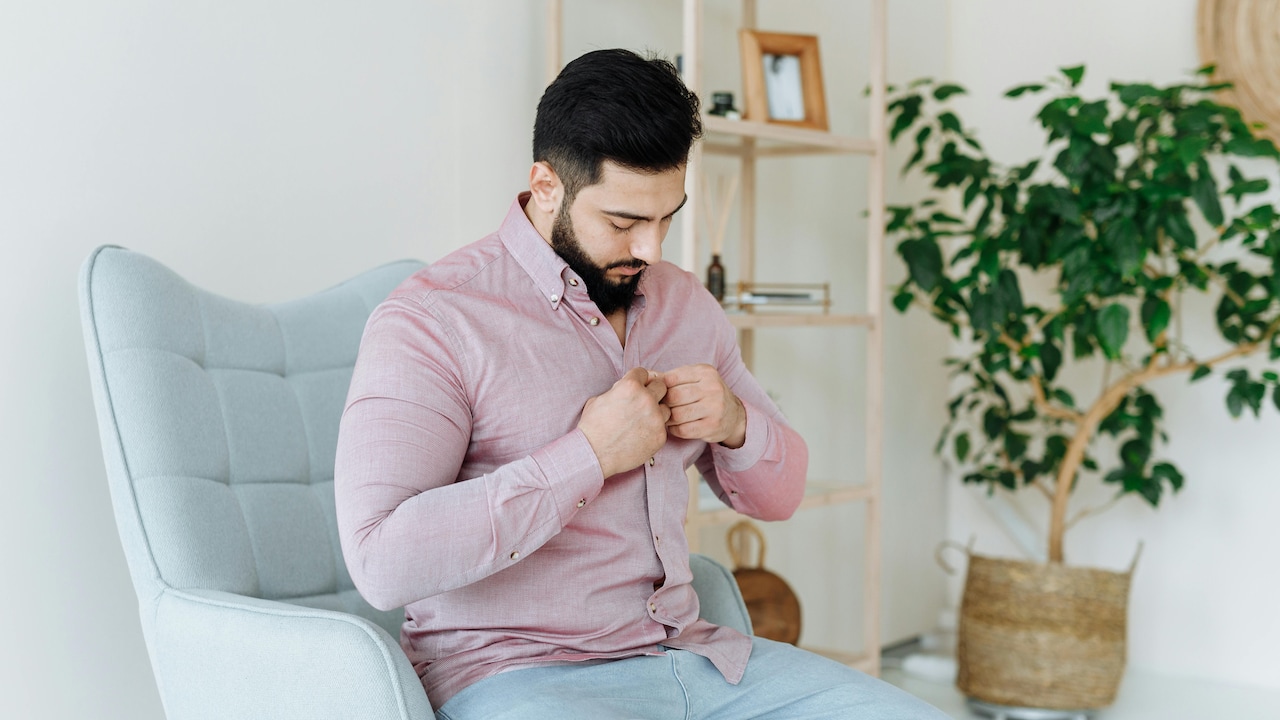
The sweet spot lies somewhere in between. Colours like off-white, pastel pink, mint green, or soft beige strike a balance. They reflect sunlight while still masking moisture better than extremely pale tones.
Choosing the right colour often feels like a small detail, but it has a big impact. Walking into a meeting in a shirt that doesn't show signs of the heat outside instantly boosts confidence. It allows focus to remain on the conversation, not on underarm patches.
3. Patterns Are Your Best Friend
Plain shirts can be unforgiving. Even the smallest patch becomes noticeable against a solid colour. Patterns, however, work like visual camouflage. Checks, stripes, or subtle prints break the uniformity and the "plainness" of the fabric, making sweat patches harder to detect.
A light checkered shirt, for instance, distracts the eye. Instead of focusing on one area, attention spreads across the pattern. This simple trick can make a noticeable difference during long, humid days.
Patterns also bring personality into summer wardrobes. They add a touch of playfulness without compromising practicality. A well-chosen patterned shirt can easily transition from office wear to an evening outing, all while quietly managing the challenges of the weather.
4. Go For Slightly Looser Fits
Tight shirts might look sharp in cooler weather, but they are less forgiving in summer. When fabric clings to the body, sweat has nowhere to go. It collects and becomes visible quickly, especially around the chest and underarms.
A slightly relaxed fit allows airflow. It creates space between the skin and the fabric, helping moisture evaporate faster. This doesn't mean oversized or baggy clothing, but rather a comfortable fit that doesn't hug every contour.
There's also a psychological comfort in wearing clothes that breathe. Moving through a crowded street or standing in a queue feels less suffocating when the shirt allows some room. That ease reflects in posture and overall presence.
5. Avoid Grey As A Colour
Grey shirts might seem like a safe, neutral choice, but they are notorious for highlighting sweat patches. The moment moisture touches the fabric, it darkens unevenly, creating obvious marks that are hard to ignore.
Even high-quality fabrics struggle to hide sweat in grey tones. It's one of those colours that simply doesn't cooperate with humid conditions. Despite its popularity, it's better reserved for cooler days or indoor settings.
Replacing grey with similar but safer shades, like light blue or beige, can make a surprising difference. The wardrobe still looks versatile, but without the constant worry of visible damp spots.
6. Look For Moisture-Wicking Technology
Modern clothing has evolved to address everyday challenges, and sweat is one of them. Many shirts now come with moisture-wicking properties, designed to pull sweat away from the skin and spread it across the fabric for faster evaporation.
These shirts often feel lighter and dry more quickly than traditional materials. While they may cost a bit more, sometimes around ₹1,500 to ₹3,000, they can be a worthwhile investment for daily wear.
The key lies in finding a balance between technology and comfort. Some moisture-wicking fabrics can feel slightly synthetic, so choosing blends that include natural fibres ensures both performance and comfort.
7. Pay Attention To Underarm Design
The underarm area is where sweat tends to show first. Some shirts are designed with this in mind, featuring reinforced or layered fabric in that region. These subtle design tweaks can absorb more moisture and prevent it from spreading outward.
Shirts with slightly darker panels or textured stitching in the underarm area can also help disguise patches. It's a small detail, often overlooked, but it plays a significant role in overall appearance.
A thoughtful design can make the difference between a shirt that works with the weather and one that works against it. It's worth checking these details before making a purchase.
How To Choose Summer Shirts That Do Not Show Sweat Patches
Photo Credit: Pexels
8. Choose Shirts With Texture
Smooth fabrics tend to reveal sweat more easily because there's nothing to break the visual continuity. Textured fabrics, however, create natural variations that hide moisture effectively.
Oxford cotton, chambray, or lightly slubbed fabrics are excellent choices. They add depth to the shirt, making any dampness less noticeable. At the same time, they bring a touch of sophistication to casual wear.
Texture also adds character. A textured shirt feels less predictable, more interesting. It's a subtle upgrade that improves both style and practicality.
Also Read: Top 5 Polo T-Shirts That Hold Shape Even After Multiple Washes
9. Layer Smartly When Needed
Layering might sound counterintuitive in summer, but done right, it can help manage sweat. Wearing a thin, breathable undershirt can absorb moisture before it reaches the outer layer.
The key is to choose lightweight, well-fitted innerwear that doesn't add bulk. A good undershirt acts as a barrier, keeping the outer shirt dry for longer periods.
This approach works particularly well during long office hours or formal events. It ensures that the outer layer remains presentable, even if the inner layer does the heavy lifting.
10. Test Before You Buy
A quick trial can reveal more than any label. Trying on a shirt and moving around, raising arms, and sitting down gives a sense of how it will behave in real situations. Checking how the fabric feels against the skin is equally important.
If possible, stepping into natural light helps assess how the colour reacts. Some fabrics look different under bright conditions, which is when sweat patches become noticeable.
Shopping with intention saves trouble later. Instead of relying solely on appearance, focusing on comfort and practicality leads to better choices. A shirt that passes this simple test is far more likely to perform well during the peak of summer.

How To Choose Summer Shirts That Do Not Show Sweat Patches
Photo Credit: Pexels
Summer dressing doesn't have to feel like a constant battle. The right shirt can quietly handle the heat, allowing focus to remain on the day rather than on discomfort. It's not about filling the wardrobe with expensive options, but about making smarter choices.
Fabric, colour, fit, and design all play their part. A breathable cotton shirt in a well-chosen shade, with a relaxed fit and a bit of texture, can make even the hottest day feel manageable. Small adjustments, like avoiding grey or choosing patterns, add up to a noticeable difference.
In the end, confidence comes from comfort. When clothes work with the weather instead of against it, everything else falls into place. Summer may remain intense, but at least the wardrobe won't make it harder. Shop now on Myntra.
Some Summer Shirts You May Like
1. Mast & Harbour Men Blue & White Slim Fit Striped Casual Shirt
2. HIGHLANDER Men Solid Casual Shirt
3. VASTRADO Men Classic Slim Fit Solid Cutaway Collar Cotton Casual Shirt
4. The Indian Garage Co Men Yellow Comfort Checked Regular Fit Casual Shirt
5. Thomas Scott Men Premium Pure Cotton Formal Shirt
(Disclaimer: This article may include references to or features of products and services made available through affiliate marketing campaigns. NDTV Convergence Limited (“NDTV”) strives to maintain editorial independence while participating in such campaigns. NDTV does not assume responsibility for the performance or claims of any featured products or services.)