Should A Halter Neck Support The Weight Of The Dress? 10 Fit Myths Explained
A halter neck should shape a dress, not carry its entire weight. From tight straps to waist support and bust fit, discover 10 common halter-dress fit myths and what actually makes the style comfortable, secure and flattering.

10 Halter Neck Dress Fit Myths You Should Stop Believing
Halter-neck dresses have a special kind of drama. They frame the shoulders, draw attention upwards and can make even a simple outfit feel ready for a wedding reception, cocktail evening, or rooftop dinner. Yet the moment a halter dress starts pulling at the neck, sliding at the bust or demanding constant adjustment, the glamour fades rather quickly. Much of the confusion comes from old fit rules passed around fitting rooms as though they were fashion law. A neckline feels tight, so it must be supportive. A dress stays up during a two-minute trial, so the fit must be perfect. A heavier fabric feels secure, so it must offer better structure. None of these assumptions tells the whole story. A well-fitted halter dress should distribute weight through several areas of the garment rather than asking one narrow strap to do all the work. Comfort matters just as much as appearance, especially when the outfit needs to survive dinner, dancing, photographs and a long ride home. So, should a halter neck support the weight of the dress? Not by itself. That is only the first myth worth clearing up.

10 Halter Neck Dress Fit Myths You Should Stop Believing; Photo Credit: Pexels
The Fit Rules Every Halter Dress Should Get Right
1. The Halter Neck Should Carry The Entire Dress
This is perhaps the biggest misconception surrounding halter styles. The neck tie or strap should help position the bodice, but it should not behave like the handle of a shopping bag carrying everything beneath it.
When most of the garment's weight hangs from the neck, discomfort usually appears quickly. The strap may dig into the skin, create redness or leave the wearer instinctively lifting the dress at the waist for relief. After a few hours, what looked elegant in the mirror can feel like an endurance test.
Good construction spreads support across the fitted bodice, waist, back and internal structure. Seams, lining, boning or a secure waistband can all help. The halter element then keeps the neckline positioned rather than fighting gravity alone.
Imagine wearing an embellished halter gown for a five-hour wedding function. If the beading weighs heavily on one neck strap, even the prettiest design can become exhausting.
A useful fitting-room test is simple: the dress should still feel reasonably secure before the halter is pulled painfully tight. Support should come from the garment as a whole.
Also Read: Top 5 Halter Tops Under ₹1,000 That Make A Statement On Their Own
2. A Tighter Halter Always Means A Better Fit
Tightness often disguises itself as security. Pull the straps harder, tie the knot closer and suddenly the dress feels more stable. Unfortunately, that stability may come at the expense of comfort and proper fit.
An overly tight halter can press against the neck, pull the bodice upwards and create awkward bunching around the bust or underarms. It may also change the neckline completely. What was designed as a soft drape can turn into an uncomfortable, flattened shape.
The better approach is balanced tension. The halter should sit firmly enough to keep the neckline where it belongs without creating pressure. If loosening it slightly causes the entire bodice to collapse, the problem probably lies elsewhere in the dress.
This becomes particularly noticeable during long events. A garment that feels merely snug during a ten-minute trial may feel painfully restrictive after dinner and several hours of movement.
Think of the difference between a fitted sandal and one with straps tightened to the last hole. Both stay on the foot, but only one lets the wearer forget about it.
A flattering halter should feel secure, not punishing.
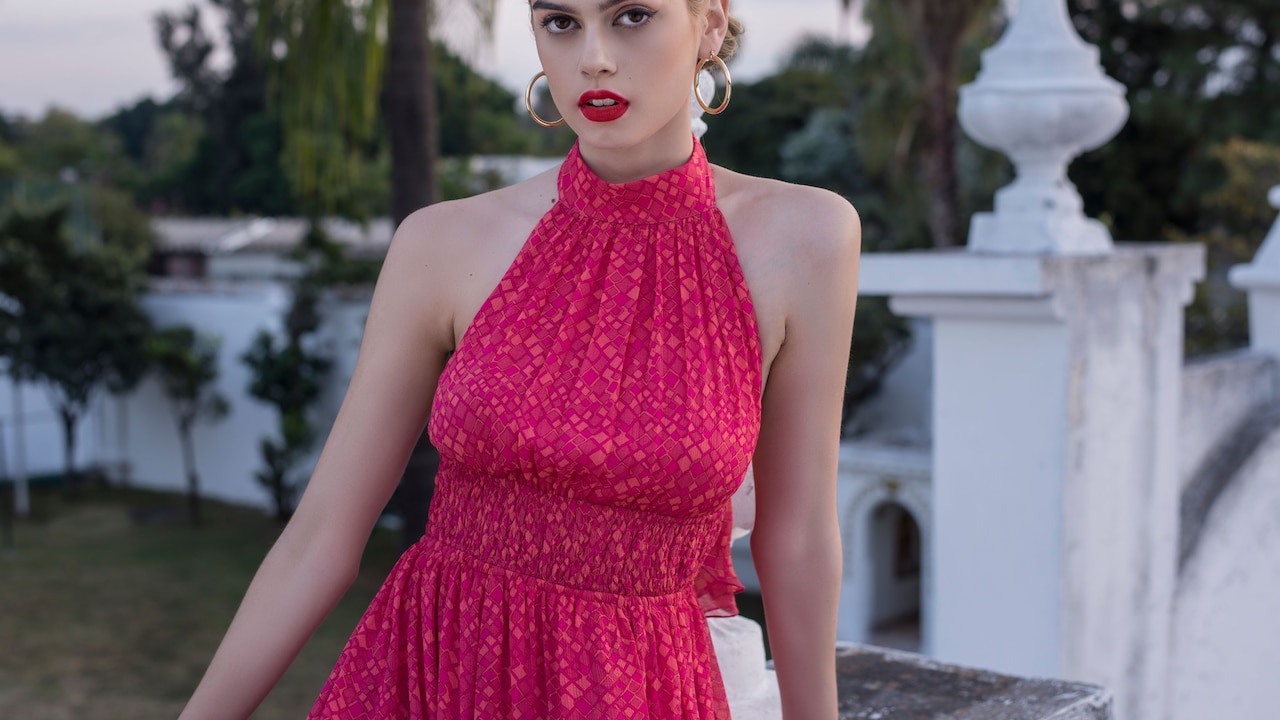
10 Halter Neck Dress Fit Myths You Should Stop Believing; Photo Credit: Pexels
3. The Waist Fit Does Not Matter In A Halter Dress
Because attention naturally goes towards the neckline, the waist can seem like a secondary concern. In reality, it often plays a major role in keeping the dress comfortably positioned.
A properly fitted waist can anchor the garment and reduce how much weight travels upwards. This becomes especially important with full skirts, layered fabrics, embroidery or heavier eveningwear. When the waist is too loose, the dress may gradually slip down, forcing the halter straps to compensate.
That is when the familiar cycle begins: pull the neckline tighter, adjust the bust, tug the skirt upwards and repeat every twenty minutes.
A defined waist does not necessarily mean a corset-tight fit. It simply needs enough structure to keep the garment sitting where the designer intended. Some dresses achieve this through a waistband, shaped seams or internal support.
Picture a flowing halter gown costing ₹8,000 that fits beautifully around the shoulders but hangs loosely at the waist. The price tag will not rescue poor weight distribution.
During a fitting, move around rather than standing perfectly still. Sit, walk and raise the arms. If the waist stays comfortably in place, the halter has far less work to do.
4. A Halter Dress Must Be Worn With A Strapless Bra
The strapless bra has somehow become the default answer to almost every unusual neckline. Halter styles, however, come in many shapes, and a strapless bra is only one possibility.
Some dresses offer enough built-in structure to be worn without a separate bra. Others work better with convertible bras, adhesive cups or bras designed specifically for halter necklines. The best option depends on the cut, fabric, back design and level of bust support needed.
A poorly matched strapless bra can create more problems than it solves. It may slide down, show at the sides or add bulk beneath a closely fitted bodice.
The smarter move is to judge the dress first. Deep armholes, open backs and plunging fronts all change what works underneath.
For example, a satin halter bought for ₹4,500 might look smooth on the hanger but reveal every seam once traditional lingerie goes underneath. Built-in cups or a specialised solution may give a cleaner result.
The goal is not to follow a fixed lingerie rule. It is to keep the silhouette secure, comfortable and invisible beneath the garment. No one wants to spend an evening checking whether a bra band has started making an unscheduled appearance.
5. Heavy Fabric Automatically Gives Better Support
Weight and support are not the same thing. Velvet, brocade, thick satin and heavily embellished fabrics may feel substantial, but that does not guarantee that they will hold the body or stay correctly positioned.
In fact, heavier fabric can increase the pressure on a halter neckline if the dress lacks internal support. Extra weight from sequins, beadwork or layered skirts has to go somewhere. If the bodice and waist cannot manage it, the neck often ends up taking the strain.
Meanwhile, a lighter fabric can perform beautifully when the construction is thoughtful. Strong lining, well-placed seams, supportive panels and a fitted waistband can make a relatively light dress feel remarkably secure.
This is why judging a garment simply by touching the fabric can be misleading.
Consider two party dresses priced around ₹6,000. One uses heavy embellished material with little structure. The other uses lighter crepe with a carefully shaped bodice and supportive lining. The second may remain comfortable for far longer.
Fabric affects drape, appearance and movement. Support comes largely from construction.
When trying on a halter dress, pay attention to what the garment does rather than how heavy it feels on the hanger.
6. A Perfect Bust Fit Means The Whole Dress Fits
A beautifully fitted bust can create immediate confidence in the trial room. The neckline sits neatly, nothing gaps and the mirror looks promising. Yet one well-fitted area does not guarantee that the entire dress works.
Halter styles connect several fit points. The bust, underbust, waist, back, armholes and neck all influence one another. A dress may fit perfectly across the chest while pulling at the neck or floating awkwardly at the waist.
Movement reveals these problems faster than a mirror does.
Try turning the torso, sitting down and reaching forward. If the bodice shifts dramatically or the neckline suddenly tightens, the overall fit needs attention.
Armholes deserve particular notice. Halter cuts expose more of the shoulder area, so armholes that gape can reveal lingerie or create an unfinished appearance. Ones that sit too high may rub throughout the evening.
Tailoring can often solve these issues. Spending another ₹500 or ₹800 on careful alterations may make a far greater difference than exchanging the dress for a more expensive one.
The ideal fit works as a connected system. A flattering bust line is lovely, but comfort should continue from neckline to hem.

10 Halter Neck Dress Fit Myths You Should Stop Believing; Photo Credit: Pexels
7. Halter Dresses Only Work On Certain Body Shapes
Fashion myths have an unfortunate habit of turning design features into body rules. Halter necklines often get labelled as suitable for one shape and unsuitable for another. Real clothing is far more flexible.
The effect of a halter depends on its width, neckline depth, bust construction, shoulder placement, waist position and fabric. Two halter dresses can create completely different silhouettes.
A broad strap with a higher neckline may feel very different from a narrow tie-back style. A structured bodice can define the waist, while a softer draped version creates a more relaxed line.
Fit matters more than rigid body-shape formulas.
Instead of asking whether a halter is "allowed" for a particular frame, look at proportion. Does the neckline feel balanced? Does the bust sit comfortably? Does the waist fall in the right place? Can the wearer move without constantly adjusting something?
This is where trying several variations becomes useful. A ₹3,000 halter dress that fits beautifully will usually look more polished than a ₹12,000 designer piece chosen according to a generic shape chart.
Clothes should adapt to bodies, not the other way around. A good halter neckline highlights the person wearing it rather than demanding membership in a particular silhouette category.
8. Neck Pain Is Normal With Halter Styles
Some people accept neck discomfort as the price of wearing a halter dress. A little pulling gets dismissed as normal, especially when the garment is heavy or tightly fitted.
Persistent pain, however, is not a stylish design feature.
Mild awareness of the strap may happen, particularly with heavier occasionwear, but pressure that becomes painful usually signals a fit or construction issue. The strap may be too narrow, the neckline may be tied too tightly or too much garment weight may be hanging from the neck.
Warning signs often appear early. Red marks, headaches, shoulder tension or a constant urge to lift the bodice should not be ignored.
Think about the schedule of a typical celebration. The outfit may go on at 6 pm and remain there until after midnight. A neckline that feels slightly uncomfortable before leaving home can become unbearable several hours later.
When shopping, keep the dress on for a little longer if possible. Walk around the fitting room and notice whether pressure builds.
Beauty should not require a secret countdown until the dress can finally come off. A well-designed halter can feel glamorous without turning the neck into structural scaffolding.
9. Alterations Cannot Fix A Poorly Fitting Halter Neck
Halter dresses can look complicated to alter because the neckline connects directly to the bodice. That sometimes leads shoppers to assume that an imperfect fit means the entire dress must be rejected.
Many fit problems are actually adjustable.
A tailor may shorten halter straps, reshape the neckline, take in the side seams, tighten the waist or improve the bust fit. Some dresses can also accommodate cups, support panels or discreet fastenings.
Of course, not every problem has an easy solution. Major changes involving elaborate beadwork, unusual draping or intricate embroidery may cost more and require greater skill. This is why alteration possibilities should be considered before purchase rather than after removing every tag.
Suppose a dress costs ₹7,500 and fits perfectly everywhere except the slightly loose halter straps. A straightforward adjustment of a few hundred rupees could transform it. Rejecting the entire garment might be unnecessary.
The important distinction lies between a correctable fit issue and a fundamental size or construction problem.
A trusted tailor can become the quiet hero behind a great halter dress. The best outfits sometimes owe their polished finish to a few centimetres of careful stitching.
10. If The Dress Looks Good Standing Still, The Fit Is Fine
Fitting-room mirrors encourage excellent posture. Shoulders go back, the stomach pulls in and everyone suddenly stands as though posing for a catalogue. Real life rarely stays that still.
A halter dress needs to work while walking, sitting, eating, dancing, bending and occasionally squeezing into the back seat of a cab.
That is why movement is the final fit test.
Raise both arms. Sit down. Turn from side to side. Lean forward slightly. Check whether the neckline shifts, the waist rides up or the back begins to gape.
Dancing deserves special attention if the dress is meant for a sangeet, reception or party. A neckline that survives standing beside a mirror may behave very differently after energetic movement.
This does not mean performing a full dance routine in the shop. A few natural motions reveal plenty.
The same rule applies to comfort after meals. A waist that feels dramatically tight before dinner is unlikely to become friendlier afterwards.
A truly good fit allows the garment to move with the body. The goal is to enjoy the occasion, not spend the evening conducting emergency fabric management every time someone asks for a photograph.
Products Related To This Article
1. Rain & Rainbow Floral Printed Pure Cotton Fit & Flare Ethnic Dress
2. Suo Abstract Printed Halter Neck A-Line Mini Dress
3. H&M Halter Neck Bodycon Midi Dress
4. AADVIKA Floral Print Halter Neck A-Line Maxi Dress
5. SASSAFRAS Halter Neck Denim A-Line Midi Dress
6. Western Vastra Floral Print Halter Neck A-Line Midi Dress
7. AKKRITI BY PANTALOONS Floral Print Halter Neck Maxi Dress
A halter-neck dress should help shape and position a dress, but it should never carry the entire burden alone. The strongest fits share support across the bust, waist, back, lining and internal construction, allowing the neckline to do its job without becoming a source of discomfort.
That is the thread running through most halter-neck myths. Tight does not automatically mean supportive. Heavy does not automatically mean structured. A perfect-looking bust does not guarantee an overall fit, and neck pain should never be treated as the compulsory price of glamour.
The best test remains wonderfully practical: wear the dress as though the occasion has already begun. Walk around. Sit down. Lift the arms. Turn, bend and imagine several hours of food, photographs and conversation ahead.
A dress that keeps demanding attention will eventually steal attention from the person wearing it.
When the fit is right, the opposite happens. The neckline stays in place, the weight feels balanced and the outfit quietly does its job. That is when a halter dress looks most effortless, not because gravity disappeared, but because thoughtful fit learned how to handle it.
(Disclaimer: This article may include references to or features of products and services made available through affiliate marketing campaigns. NDTV Convergence Limited (“NDTV”) strives to maintain editorial independence while participating in such campaigns. NDTV does not assume responsibility for the performance or claims of any featured products or services.)