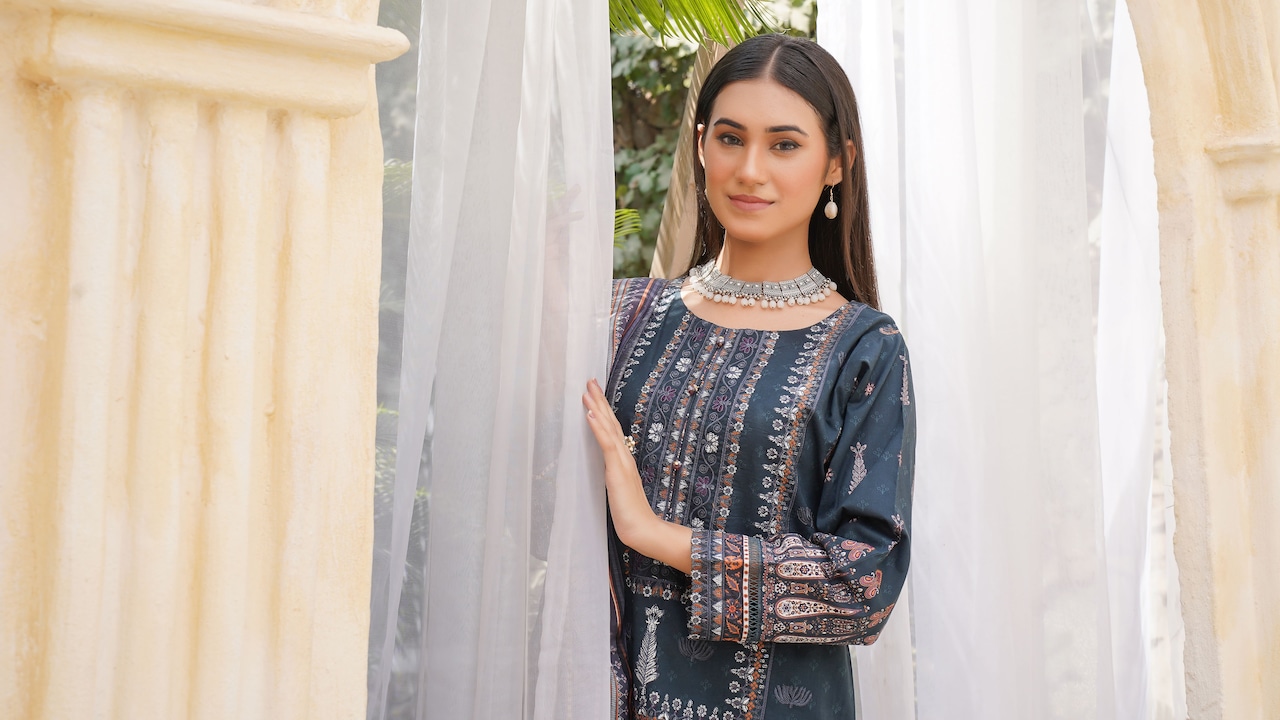
Top 10 Forgotten Sarees That Are Perfect For Summers
Discover 10 forgotten Indian sarees made for summer, breathable cottons, light silks, GI-tagged weaves and regional drapes designed for Indian weather.
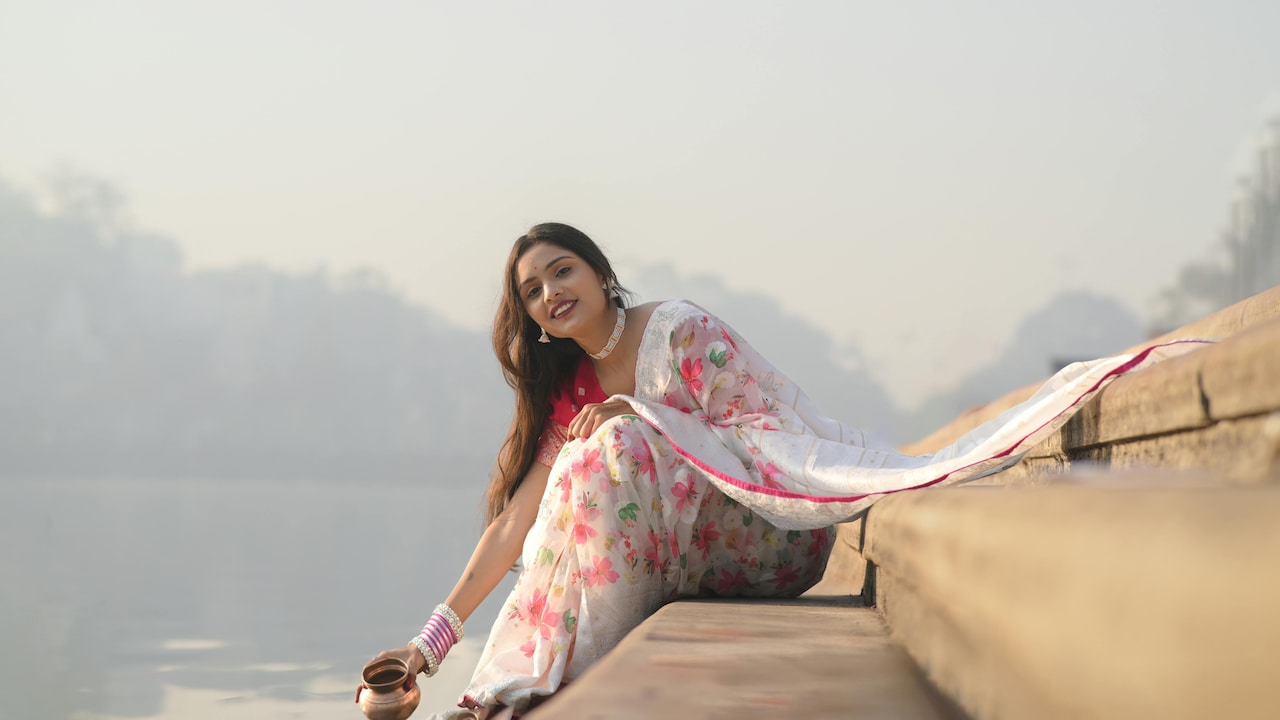
Indian summers shaped Indian sarees long before fashion trends did.
Summer in India has always dictated how we dress. Long before “breathable fabrics” became a marketing buzzword, regional weavers across the country were quietly solving the same problem: how to create clothing that protects, cools, drapes well and still looks dignified in unforgiving heat. Sarees were never meant to be uncomfortable. They were engineered for climate, movement and everyday life.
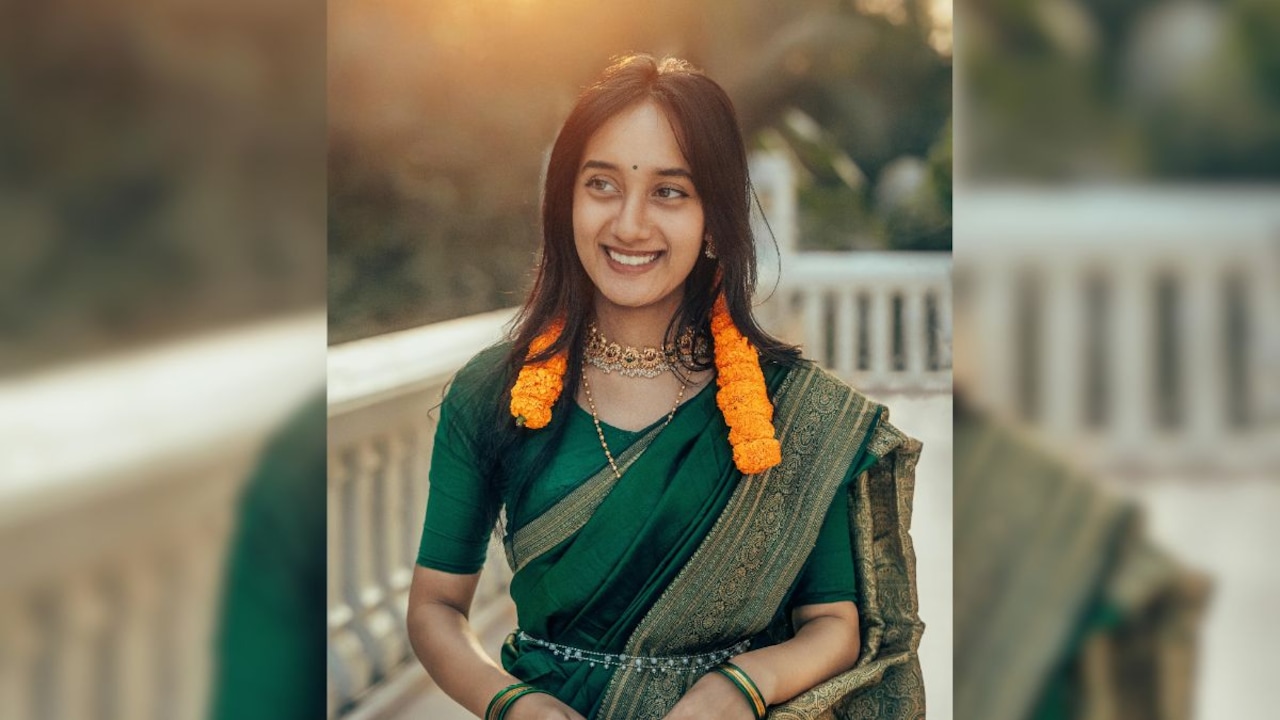
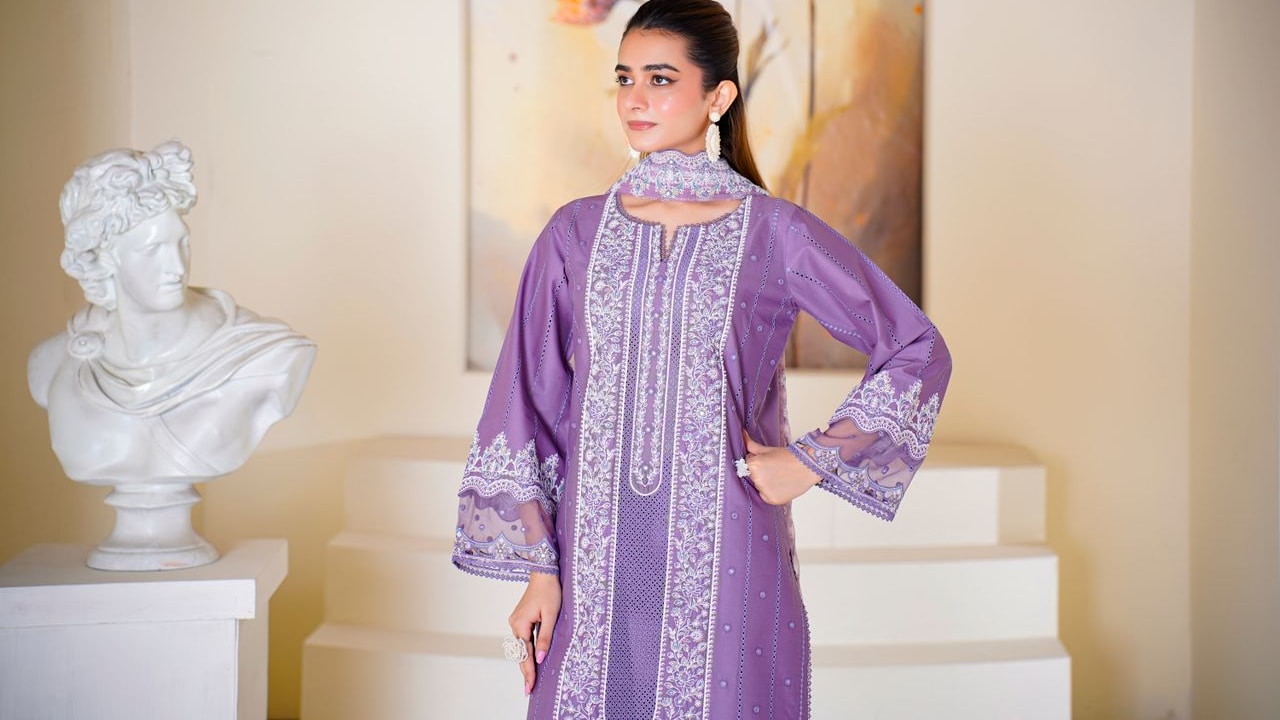
Summer sarees don't have to be boring to be comfortable.
Photo Credit: Pexels
Yet today, when conversations around handloom sarees come up, we tend to circle the same few names like Banarasi, Kanjeevaram, Jamdani, Ikat, beautiful traditions, no doubt, but only a fraction of India's textile map. In the process, dozens of region‑specific sarees have slipped into the background, not because they lack beauty or craftsmanship, but because they never received a viral moment or mainstream fashion backing.
Also Read: Top 8 Fashion Moments Spotted At The Oscars 2026
What makes these overlooked sarees especially relevant now is that they were designed locally, using local cotton, local dyes and local wisdom. The fabrics are skin‑friendly, the weaves are breathable, and the silhouettes are practical. Some are reversible, some don't need a fall, some use silk that feels lighter than cotton. Many even carry a Geographical Indication tag, quietly safeguarding centuries of craft without fanfare.
If you're looking to build a summer saree wardrobe that is sustainable, wearable and rooted in Indian culture, these 10 sarees deserve your attention.
Top 10 Forgotten Sarees From Indian Culture
1. Woraiyur Cotton Saree
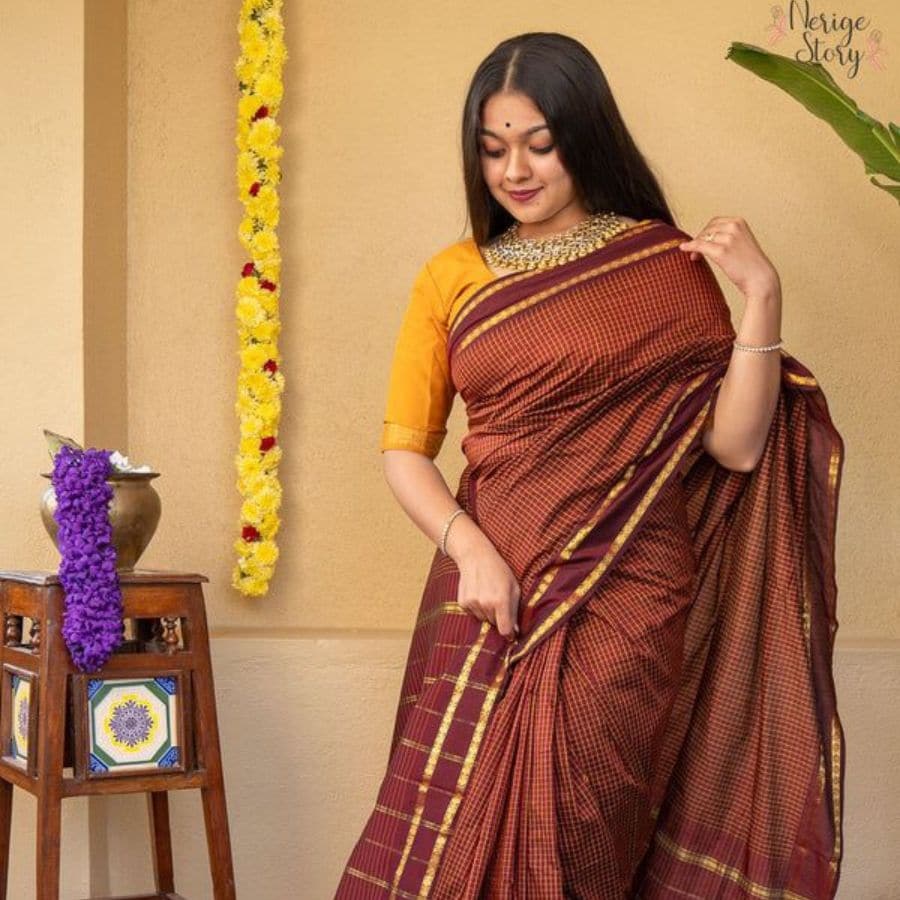
Breathability, not embellishment, was the original luxury.
Photo Credit: Pinterest/ Nerige Story
Woraiyur cotton sarees come from the Tiruchirappalli region of Tamil Nadu, an area with a long history of fine cotton weaving. What immediately stands out is their restraint. The fabric is light but tightly woven, with clean lines, subtle borders and minimal ornamentation. These are sarees that don't overwhelm the body, making them ideal for long workdays or humid afternoons.
Recently granted a GI tag, Woraiyur cottons are a reminder that simplicity itself can be a craft. Traditionally worn for daily use and religious occasions, these sarees prioritise comfort without sacrificing structure. They drape easily, stay crisp through the day and feel almost weightless on the skin.
2. Bomkai Saree
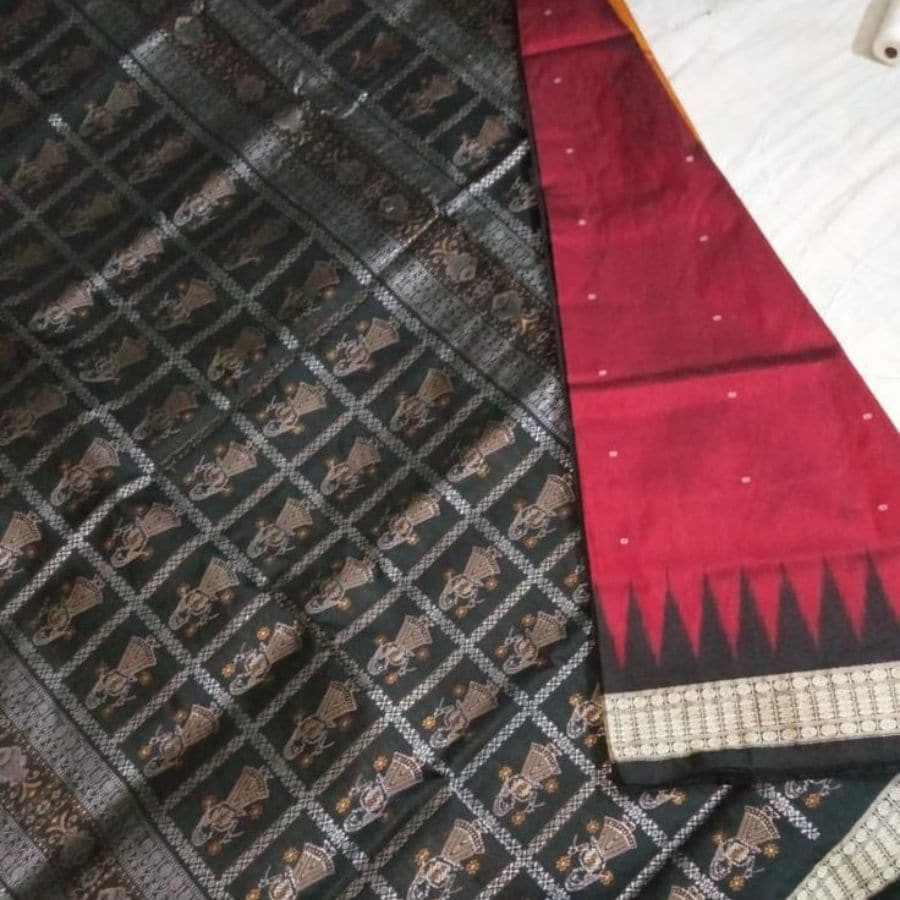
Many forgotten sarees are more wearable than popular ones today.
Photo Credit: Pinterest/ @Anil Nawal
From Odisha's Bomkai village and the Sonepur region comes the Bomkai saree, a weave that balances folk expression with refined technique. The body is usually kept relatively simple, while the borders and pallu carry dense motifs inspired by nature, tribal art and temple architecture.
Bomkai sarees exist in both cotton and silk, but it's the cotton versions that shine in summer. They offer visual richness without heaviness, making them suitable for festive daytime wear. Recognised with a GI tag, Bomkai reflects Odisha's ability to blend storytelling with wearability, ornate where it counts, breathable where it matters.
3. Patteda Anchu Saree
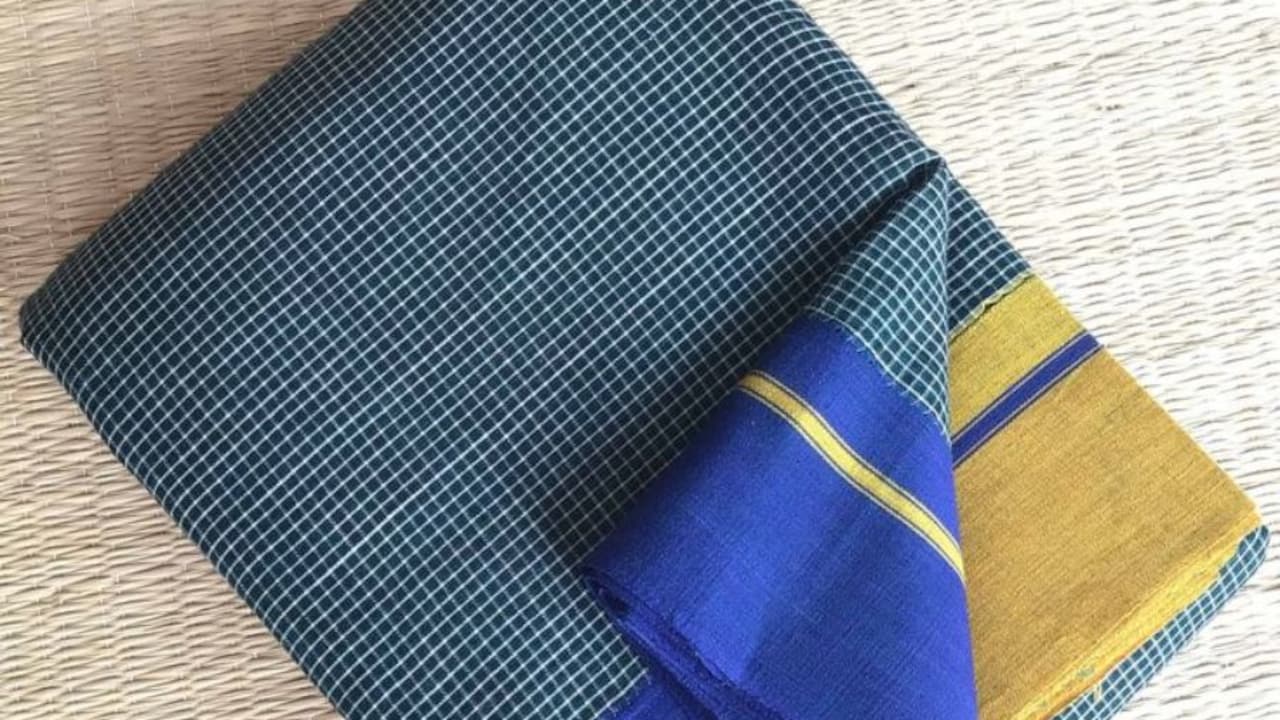
Summer sarees don't have to be boring to be comfortable.
Photo Credit: Pinterest/ @indiva
Patteda Anchu sarees from North Karnataka are a lesson in functional design. These cotton sarees are known for their bold, contrasting borders and checked or striped bodies, but their most impressive feature is structural. The saree is woven in such a way that it doesn't require a fall at all, and can be worn from either side.
This makes Patteda Anchu one of the most practical sarees for summer. The fabric has a natural body, the borders give it weight without bulk, and the cotton softens beautifully with use. Traditionally worn during rituals and offered to deities, it is now being rediscovered by women who value ease, reversibility and everyday elegance.
4. Bhagalpuri Silk Saree
Silk is rarely associated with summer comfort, but Bhagalpuri silk breaks that assumption entirely. Woven in Bihar from tussar silk, these sarees have a raw, breathable texture that doesn't cling to the skin. The silk allows air to pass through, making it surprisingly suitable for hot and humid climates.
Bhagalpuri silk has received GI recognition, and rightly so. It carries a natural matte finish, earthy colours and understated motifs, allowing you to look dressed up without the heaviness typical of silk sarees. It's a perfect choice for summer weddings, cultural events or evenings when cotton feels too casual.
5. Himroo Saree
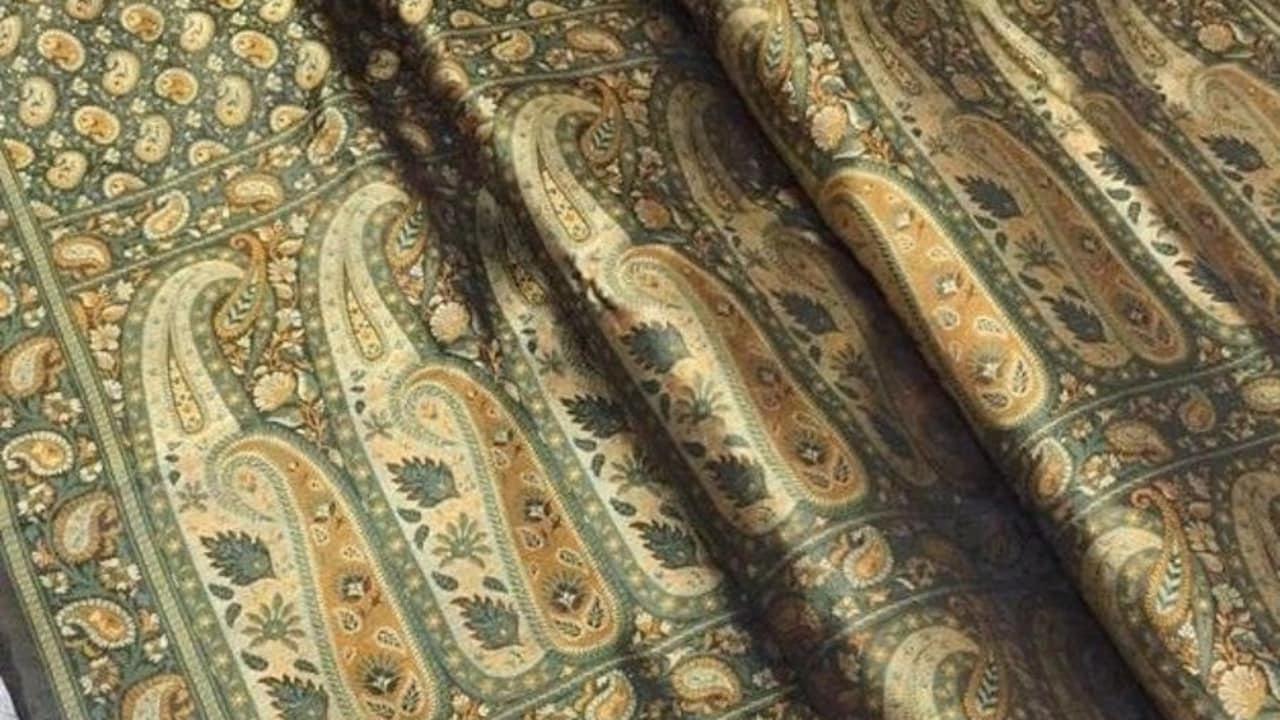
Regional sarees are designed using local climate knowledge, yarn and weaving techniques.
Photo Credit: Pinterest
Himroo is often spoken of in the context of shawls and yardage, but sarees woven in this silk‑cotton blend deserve equal attention. Originating in Aurangabad, Himroo was historically created as an accessible alternative to royal brocades, blending silk with cotton to achieve softness and durability.
Despite its regal appearance, Himroo remains relatively light on the body. The fabric breathes better than pure silk and carries intricate patterns inspired by Persian design. Though it doesn't have a GI tag, its rarity and historical depth make it a collector's textile, one that works beautifully for summer evenings.
6. Madurai Sungudi Cotton Saree
A GI tag ensures authenticity and regional origin.
Photo Credit: Pinterest/ @Vika Boutique
Madurai Sungudi is one of the most climate‑responsive sarees in India. Made using a traditional tie‑and‑dye technique on pure cotton, Sungudi sarees are instantly recognisable by their tiny dotted patterns and vibrant colours.
These sarees have a GI tag and a deep cultural history. Designed specifically for South India's heat, they absorb sweat, dry quickly and remain comfortable through the day. The cotton feels lived‑in rather than stiff, making Sungudi ideal for daily wear, temple visits or casual summer gatherings.
7. Siddipet Gollabhama Saree
From Telangana's Siddipet region comes the Gollabhama saree, known for its distinctive woven motif of a milkmaid carrying a pot. Unlike printed designs, these motifs are painstakingly woven into the fabric, often along the border or pallu.
The base fabric is cotton, making it well‑suited for dry, hot weather. Gollabhama sarees reflect rural life and storytelling, traditionally worn during festivals and social gatherings. Though less commercialised, they are powerful expressions of local identity and deserve far more visibility than they currently receive.
8. Chettinad Cotton (Kandangi) Saree
Chettinad cotton sarees, also known as Kandangi sarees, are bold, earthy and unapologetically sturdy. Woven in Tamil Nadu's Chettinad region, these sarees feature checks, stripes and thick contrasting borders, often in vegetable‑dyed hues.
They carry a GI tag and are designed for durability. The cotton is coarse enough to withstand daily wear, yet breathable enough for heat. Kandangi sarees don't cling or crease easily, making them ideal for women who want structure, tradition and comfort rolled into one.
9. Santipuri (Shantipuri) Saree
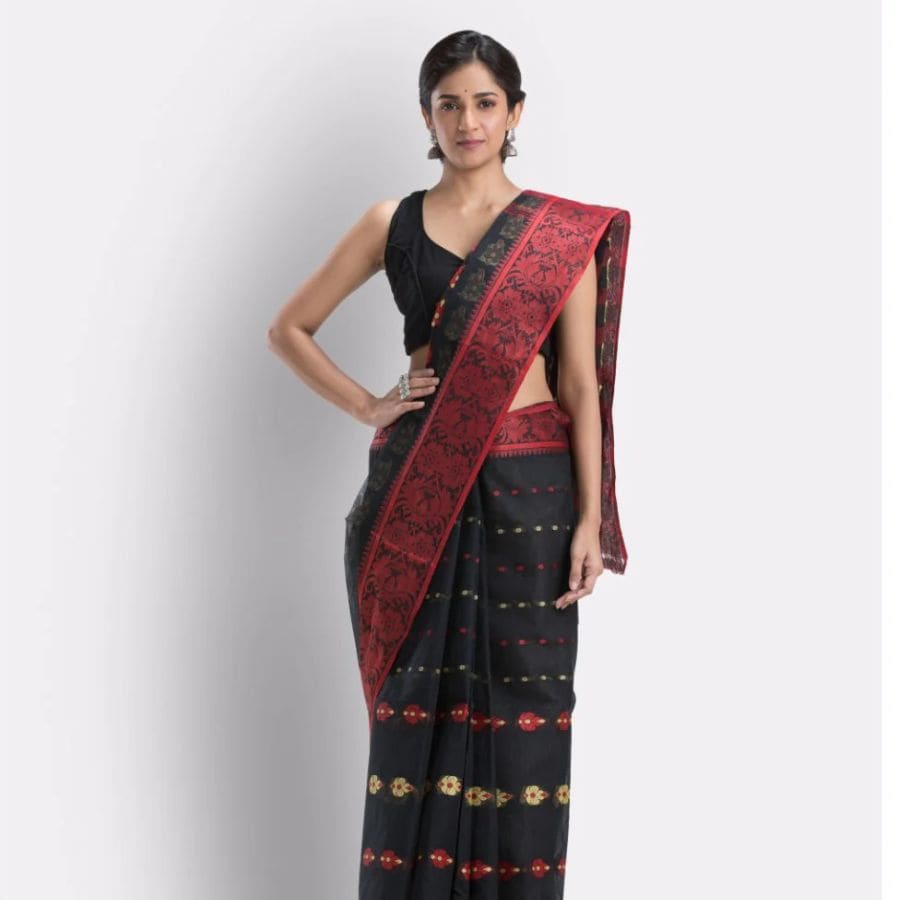
These Indian sarees are perfect for summer dressing.
Photo Credit: GoSwadeshi
Santipuri sarees from West Bengal are known for their fine cotton texture and feather‑light feel. Woven in the Shantipur region for centuries, these sarees were historically exported and prized for their finesse. Even today, when you pick one up, the fabric almost slips through your fingers.
Awarded a GI tag, Santipuri sarees are perfect for Indian summers because they allow air to circulate freely. The designs are usually understated, soft stripes, delicate borders, subtle colour play, making them ideal for office wear, travel or long hours in the heat without feeling weighed down.
10. Goan Check (Kunbi) Saree
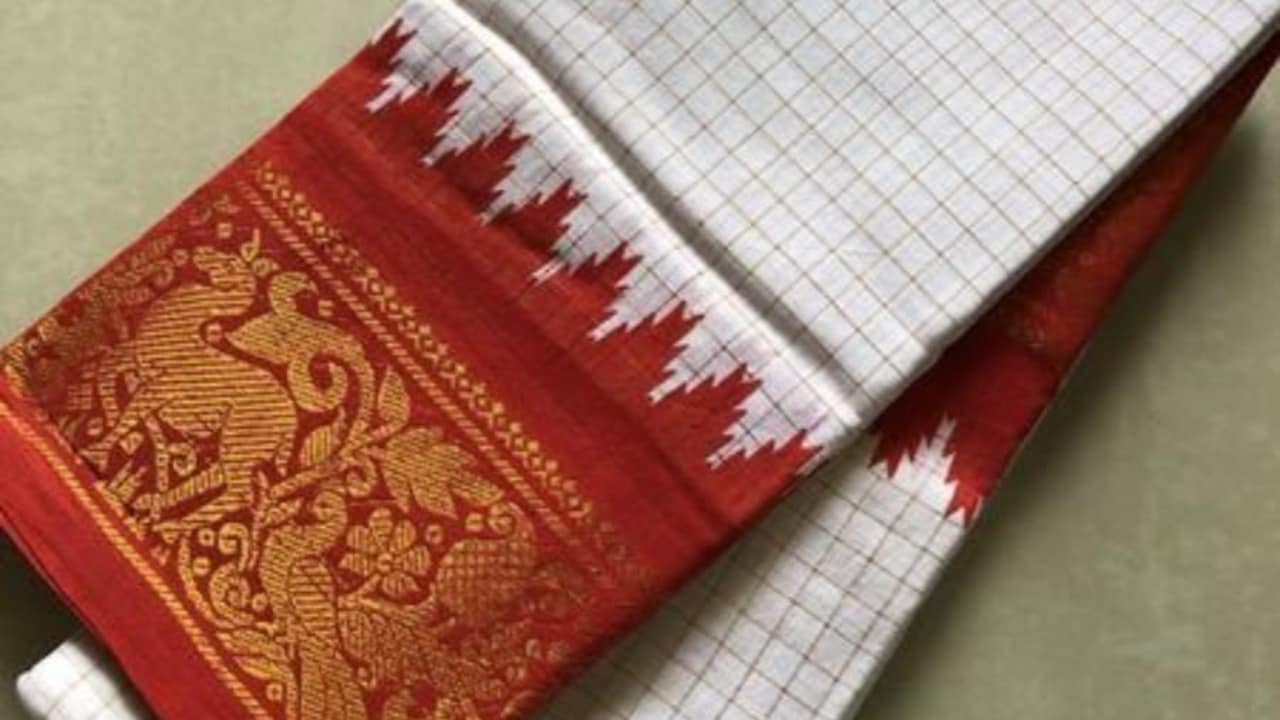
The Goan check saree, commonly known as the Kunbi saree, is perhaps one of the most honest garments on this list. Traditionally worn by tribal women while working in fields, this cotton saree was designed for movement, ventilation and resilience.
Characterised by bold checks in red, white or black, Kunbi sarees are coarse, breathable and deeply tied to Goa's indigenous culture. Today, revival efforts have brought them into contemporary wardrobes, where they stand as symbols of sustainability and cultural pride rather than fashion trends.
What unites all these sarees is not nostalgia, it's relevance. They were designed with climate intelligence, local resources and real bodies in mind. In a time when summer dressing often feels like a compromise between comfort and appearance, these forgotten sarees prove that Indian handlooms solved this problem generations ago.
Choosing them isn't just about wearing something different. It's about supporting regional crafts, dressing responsibly and reconnecting with textiles that were always meant to work with the weather, not against it.
Frequently Asked Questions (FAQs)
1. Which sarees are best suited for Indian summers?
Sarees made from pure cotton, fine handloom weaves and breathable silks like tussar are best for Indian summers as they allow air circulation and absorb moisture.
2. Are silk sarees comfortable to wear in summer?
Yes, certain silks like Bhagalpuri tussar and silk‑cotton blends are suitable for summer as they are lighter, airy and less clingy than heavy mulberry silks.
3. What makes regional sarees more summer‑friendly?
Regional sarees are designed using local climate knowledge, yarn and weaving techniques, making them more comfortable for the weather conditions they originate from.
4. Do GI‑tagged sarees guarantee better quality?
A GI tag ensures authenticity and regional origin, but comfort depends on fabric, weave and finishing rather than the tag alone.
5. Are forgotten sarees suitable for everyday wear?
Many forgotten sarees, especially cotton varieties like Sungudi, Woraiyur or Chettinad cotton, were traditionally worn daily and are ideal for regular summer use.
(Disclaimer: This article may include references to or features of products and services made available through affiliate marketing campaigns. NDTV Convergence Limited (“NDTV”) strives to maintain editorial independence while participating in such campaigns. NDTV does not assume responsibility for the performance or claims of any featured products or services.)