10 Reasons Drawer Organisers Become Messy Again Within Days And How To Keep Them Useful
Drawer organisers can look perfect on day one and chaotic by Friday. Here’s why sections stop working, small items wander, and clutter creeps back, plus practical ways to keep every drawer organised for longer.
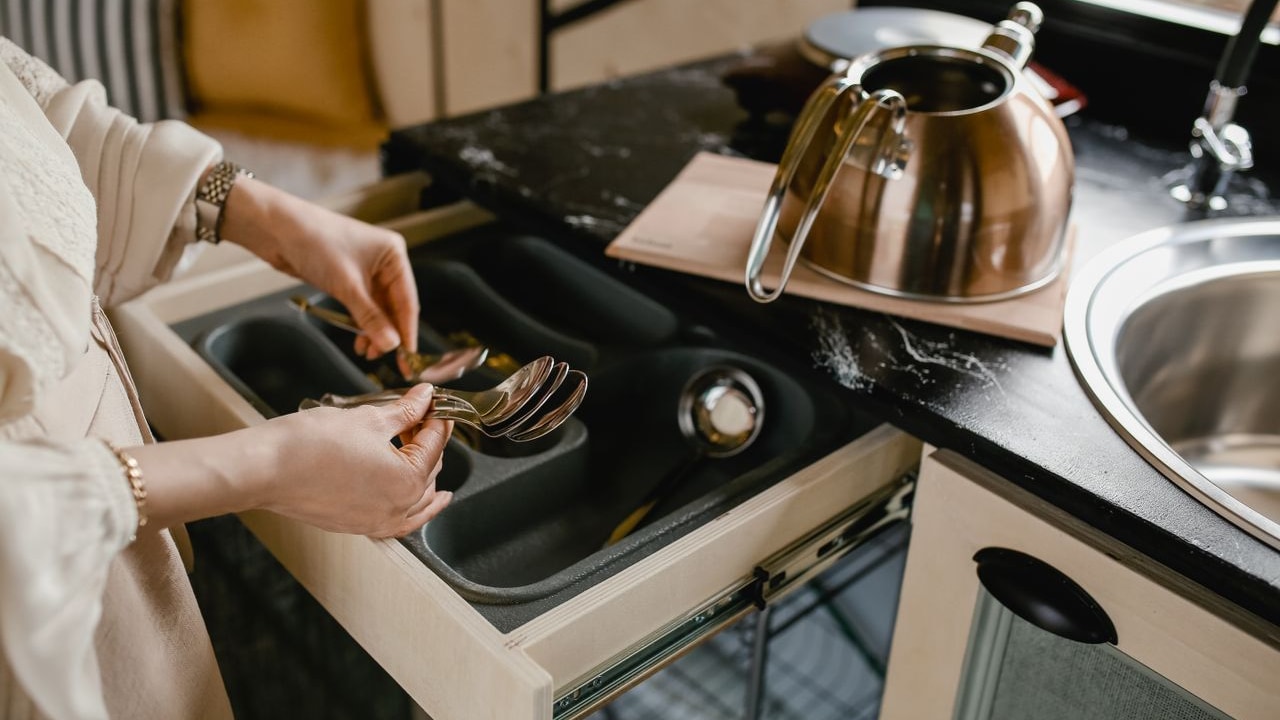
How to use drawer organisers for a clean and well-organised space
Opening a freshly organised drawer can feel oddly satisfying. Socks sit in neat rows, chargers have their own corner, stationery stays separated and not a single stray receipt is lurking underneath everything else. Then real life happens. A few rushed mornings, one hurried search for a cable and a handful of things dropped into the nearest empty space can undo the entire system. The problem isn't always laziness or a lack of discipline. Often, the organiser simply doesn't match how the drawer gets used. Compartments may look tidy but hold the wrong quantities. Frequently used items might sit behind rarely used ones. Some belongings may not even have a logical home.
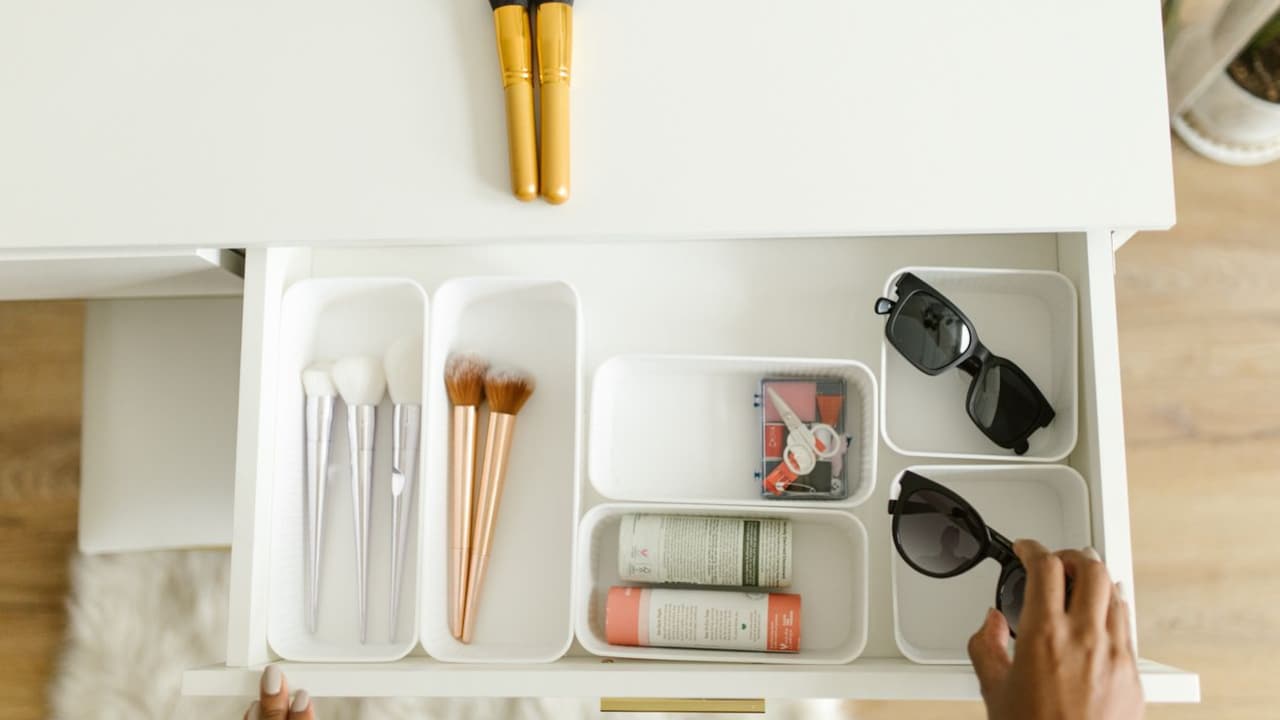
How to prevent drawer organisers from looking cluttered and messy
Photo Credit: Pexels
A good drawer organiser should reduce effort rather than create another household rule to remember. If keeping it tidy feels like solving a puzzle every time something needs putting away, clutter will return.
Also Read: Find Your Perfect Match: 5 Types Of Coffee Tables For Every Living Room
So, before buying more dividers or reorganising everything yet again, it helps to understand why neat drawers repeatedly unravel.
Why Drawer Organisers Become Messy So Quickly: 10 Common Causes And Fixes
1. The Compartments Don't Match What You Actually Store
One of the quickest ways to create an organiser that fails is choosing compartments according to appearance rather than contents. Those perfectly symmetrical little sections may look excellent in product photographs, but belongings rarely arrive in matching quantities and sizes.
A cutlery drawer, for example, may contain twelve teaspoons but only one bottle opener. A dressing-table drawer might hold ten lipsticks, three hair ties, one compact and a collection of tiny samples that somehow multiply overnight. Giving every category the same amount of space simply doesn't work.
When one section fills up, items start spilling into neighbouring compartments. Soon, the organiser still exists, but its boundaries mean very little.
Instead, organise according to volume. Give larger categories more room and allow smaller groups to share a section where practical. Adjustable dividers work particularly well because they let the drawer evolve when your belongings change.
Before arranging anything, place similar objects together outside the drawer. Seeing the actual quantities makes space planning much easier. The goal isn't perfect symmetry. It's creating compartments that reflect what's really there.
2. Too Many Categories Make Putting Things Away Feel Like Work
There is such a thing as being too organised. When every tiny object gets its own designated square, returning things to the drawer starts requiring unnecessary thought.
A stationery drawer doesn't necessarily need separate compartments for blue pens, black pens, highlighters, pencils, erasers, sharpeners, sticky tabs and paper clips. That level of precision may look impressive immediately after organising, but maintaining it during a busy week becomes another matter.
Someone rushing through a workday will probably drop all writing tools into whichever section has room. Once one item lands in the wrong place, others tend to follow. Before long, those carefully designed categories disappear.
Broader groupings usually survive daily use better. Pens and pencils can live together. Small desk accessories can share another section. Hair accessories might need just two categories: everyday and occasional.
Think of organisation as reducing decisions. Every time an object needs putting away, its home should feel obvious.
A drawer that stays 80 per cent tidy with minimal effort is far more useful than one that looks 100 per cent perfect for three days.
3. Everyday Items Sit Behind Things You Rarely Use
Sometimes the problem isn't the organiser at all. It's the order in which things sit inside it.
Imagine opening a kitchen drawer several times a day for teaspoons, scissors or a vegetable peeler. If those pieces sit beneath specialist gadgets used once every few weeks, the drawer gets disturbed constantly. You move one item to reach another, place it back slightly differently and gradually lose the original arrangement.
The same thing happens with beauty products. Everyday kajal, lipstick or moisturiser may sit behind occasion-only makeup because the drawer was organised by size rather than frequency.
Make convenience the priority.
Frequently used belongings should sit near the front or in the easiest compartments to reach. Occasional items can move towards the back. Things needed only a few times a year may not deserve valuable drawer space at all.
Pay attention to your movements for a few days. Which objects do you reach for repeatedly? Which sections constantly get disturbed?
A good organiser shouldn't demand careful handling. It should follow your everyday habits so naturally that staying organised requires almost no conscious effort.
4. The Drawer Holds More Things Than The Organiser Can Handle
Even the smartest organiser can't defeat an overflowing drawer.
When every compartment reaches maximum capacity, removing one object disturbs several others. Socks spring out of rows, cables become tangled and makeup products end up stacked awkwardly. You may technically have enough space to shut the drawer, but that doesn't mean the storage system works.
A little breathing room matters.
Try leaving some empty space rather than packing each section edge to edge. That spare capacity gives objects somewhere to move when you're searching, rearranging or adding something new.
It also helps reveal when the drawer needs editing.
Before reorganising, remove duplicates, empty packaging, broken accessories and things nobody uses anymore. That mystery charging cable for a phone last seen years ago probably doesn't need permanent accommodation.
Avoid treating every empty centimetre as storage that must be filled. A drawer that looks slightly sparse usually stays organised more easily than one packed like holiday luggage five minutes before leaving for the airport.
Useful storage isn't about fitting the maximum number of belongings into a small space. It's about accessing them without creating chaos.
5. Loose Organiser Trays Slide Around Whenever The Drawer Opens
Sometimes your belongings aren't causing the mess. The organiser itself is travelling.
Lightweight plastic trays can shift every time the drawer opens or closes. Small gaps between trays make the movement worse. After several days, compartments that originally sat neatly together may develop awkward spaces where coins, clips, pins or jewellery begin disappearing.
A fast drawer closure can create even more movement. Suddenly, everything has migrated several centimetres backwards.
The solution can be surprisingly simple.
Measure the inside dimensions of the drawer before buying organisers and look for combinations that fit reasonably snugly. If existing trays are slightly smaller, non-slip drawer liners can help reduce movement. Small removable adhesive grips may also work for certain surfaces, provided they won't damage the drawer.
Interlocking organisers offer another option because individual trays connect rather than sliding independently.
Also consider how aggressively the drawer gets used. A frequently opened kitchen drawer needs more stability than a drawer containing occasional paperwork.
An organiser that shifts every time you touch it forces you to keep correcting the system. Stabilise the organiser first, and maintaining the contents becomes much easier.
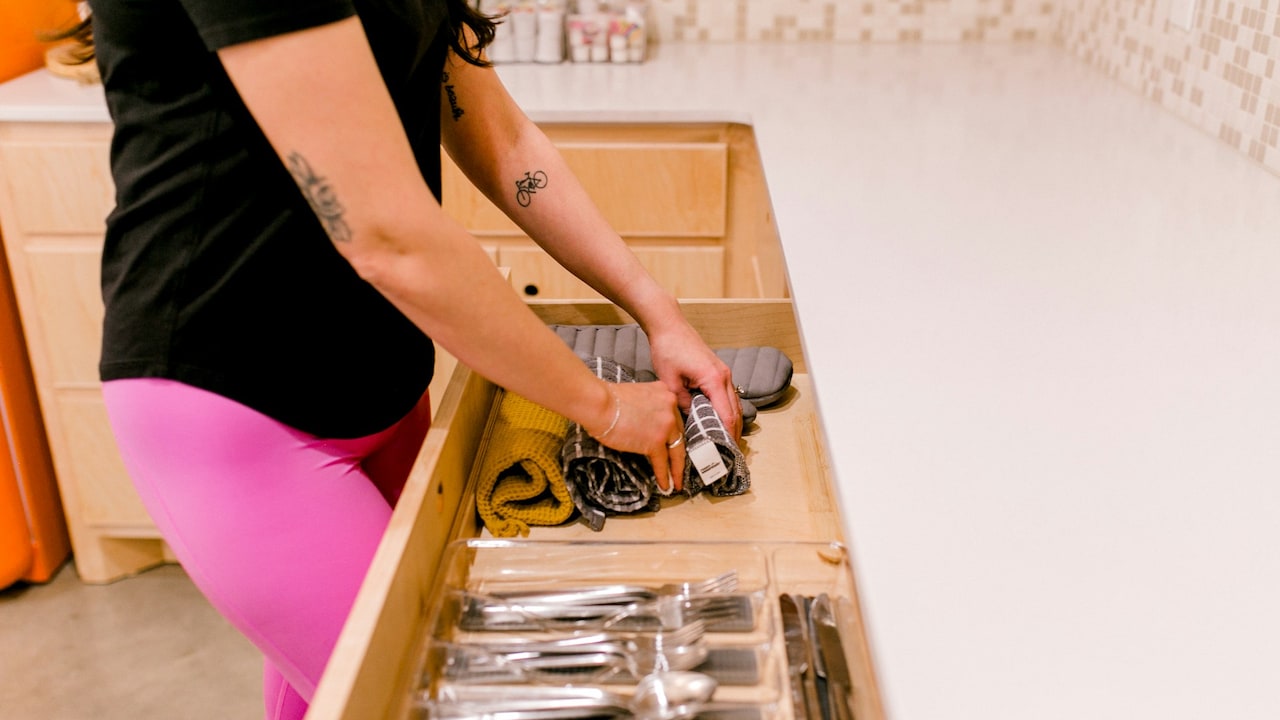
Loose organiser trays keep sliding around; Photo Credit: Unsplash
6. Small Items Sneak Under And Between The Dividers
Hair pins, earrings, SIM-card tools, coins, screws and tiny stationery accessories have an impressive talent for escaping their assigned compartments.
The problem often begins with dividers that don't sit flush against the bottom or sides of the drawer. A tiny gap may seem harmless until small belongings start slipping underneath. Then sections become difficult to clean, and you'll occasionally discover something six months later while wondering how it travelled that far.
Choose organisers according to the size of the smallest objects they need to contain.
For jewellery, craft supplies or desk accessories, shallow trays with solid bases usually work better than tall dividers with open gaps beneath them. Small boxes placed inside larger organisers can also create secure zones for tiny pieces.
Avoid mixing extremely small and large objects in the same loose compartment. A few hair pins beneath a bulky brush, for example, tend to vanish from sight.
Visibility matters just as much as separation. If you can see every small item immediately, you're less likely to rummage through the entire drawer looking for something that's technically already there.
7. New Purchases Enter The Drawer Without A Plan
The drawer looked organised when it contained exactly what you owned last Sunday. Then came a new charging cable, another lipstick, a pack of batteries, extra kitchen tools and a receipt you planned to keep “for now”.
New belongings are one of the biggest reasons organisation systems slowly collapse.
Without spare capacity or a clear rule for additions, every new item becomes an exception. It gets placed wherever space appears. One exception becomes three. Soon, the organiser contains a mixture of categories that no longer make sense.
Build flexibility into the drawer from the beginning.
Keep one small section available for temporary or newly added items. Review it occasionally and decide where those things should permanently live. This prevents random objects from invading established sections.
For categories that grow quickly, consider a simple replacement rule. When another cosmetic product, cable or accessory enters an already crowded section, check whether something older can leave.
Storage space has limits even when shopping baskets don't.
A drawer stays useful when the system accounts for change rather than assuming the contents will remain frozen forever.
8. You Keep Using The Drawer As A Temporary Dumping Zone
Every home has at least one place where objects get dropped because nobody wants to decide what to do with them immediately.
Unfortunately, an organised drawer can easily become that place.
Receipts, keys, batteries, loose change, warranty cards, medicines, takeaway menus and random screws often arrive with the innocent thought, “This can go here for now.” The phrase “for now” has probably destroyed more organising systems than any badly designed divider ever could.
The easiest solution is to create a proper temporary zone.
A small tray near the entrance, a designated household basket or one clearly defined drawer section can collect undecided objects. Then the rest of the organiser remains protected from miscellaneous clutter.
The important part is keeping that temporary area small. A huge miscellaneous section eventually becomes its own archaeological site.
Spend a few minutes clearing it once a week. File papers, return items to their proper rooms and discard anything unnecessary.
Organisation becomes much easier when every drawer doesn't have to absorb objects that belong somewhere else. Sometimes the best way to protect a tidy space is simply learning to say, “Not this drawer.”
9. The Organiser Makes Items Harder To See
A drawer can technically be organised while still being frustrating to use.
Deep containers often hide shorter objects. Tall dividers may block visibility. Stacked belongings force you to lift one thing to reach another. Once people can't immediately see what they need, rummaging begins.
That's when the neat arrangement starts disappearing.
Choose organiser heights according to the drawer and its contents. Shallow trays work well for jewellery, stationery and makeup because most items remain visible from above. Deeper sections suit bulkier objects such as rolled socks or kitchen utensils.
Avoid unnecessary stacking wherever possible. If five items need moving to reach the sixth, those five probably won't return to exactly the same position afterwards.
You can also position categories so that recognisable shapes or labels face upwards. Fold clothing vertically rather than creating piles. Coil cables individually rather than layering them.
The quickest systems usually stay the neatest because people don't need to disturb everything to find one small object.
A useful organiser shouldn't merely separate belongings. It should help you understand what the drawer contains within seconds of opening it.
10. The System Never Gets A Small Reset
Even a well-designed drawer needs occasional maintenance.
That doesn't mean emptying everything onto the floor every month and spending an afternoon reorganising it. In fact, waiting for a full-scale decluttering session often allows minor disorder to become overwhelming.
Small resets work better.
Perhaps two socks ended up in the wrong section. A receipt appeared beside the chargers. Three pens no longer work. A packet has become empty. Correcting these tiny problems takes minutes when handled early.
The easiest time to reset a drawer is often when you're already using it. If something looks noticeably out of place, return it immediately rather than promising yourself a dramatic organising session later.
Every few weeks, open the most frequently used drawers and scan them rather than fully emptying them. Remove rubbish, return wandering objects and check whether any compartment has become overcrowded.
Think of it like straightening cushions rather than redecorating the living room.
Organisation isn't a one-time event. It's a system that needs to survive ordinary mornings, hurried evenings and those days when putting something back neatly ranks very low on the priority list.
Products Related To This Article
1. JIALTO Drawer Organizer, Organisers Storage Box
2. Xmart India Adjustable Drawer Divider Organizer Interlocking Plastic Grid Partition Strips for Wardrobe
3. Shuttle Art Drawer Organiser - Drawers Organiser System Drawer Inserts Storage Boxes for Office
4. Amazon Basics Plastic Wardrobe for Bedroom Drawer
5. House of Quirk Fabric Set of 4 Foldable Storage Box Drawer Divider Organizer Closet Storage
6. Lifelong Multi-Purpose Organizer | Bamboo Storage Baskets for Bathroom
7. FLYNGO Cardboard Foldable Drawer Organizer Clothes Organiser For Wardrobe
Drawer organisers work best when they support everyday behaviour rather than fight it. The prettiest arrangement won't survive if compartments feel awkward, overcrowded or difficult to use.
Keep categories broad, place everyday essentials within easy reach and leave enough room for belongings to move without creating chaos. Most importantly, make tidiness easy. When every item has an obvious home and putting it back takes seconds, a drawer has a much better chance of staying organised beyond the first enthusiastic weekend.
(Disclaimer: This article may include references to or features of products and services made available through affiliate marketing campaigns. NDTV Convergence Limited (“NDTV”) strives to maintain editorial independence while participating in such campaigns. NDTV does not assume responsibility for the performance or claims of any featured products or services.)