How To Power Diwali Lights Safely With Extension Boards
Learn how to power Diwali lights safely with extension boards. Simple tips on load management, placement, and choosing the right board for a safe festive home.
How To Power Diwali Lights Safely With Extension Boards
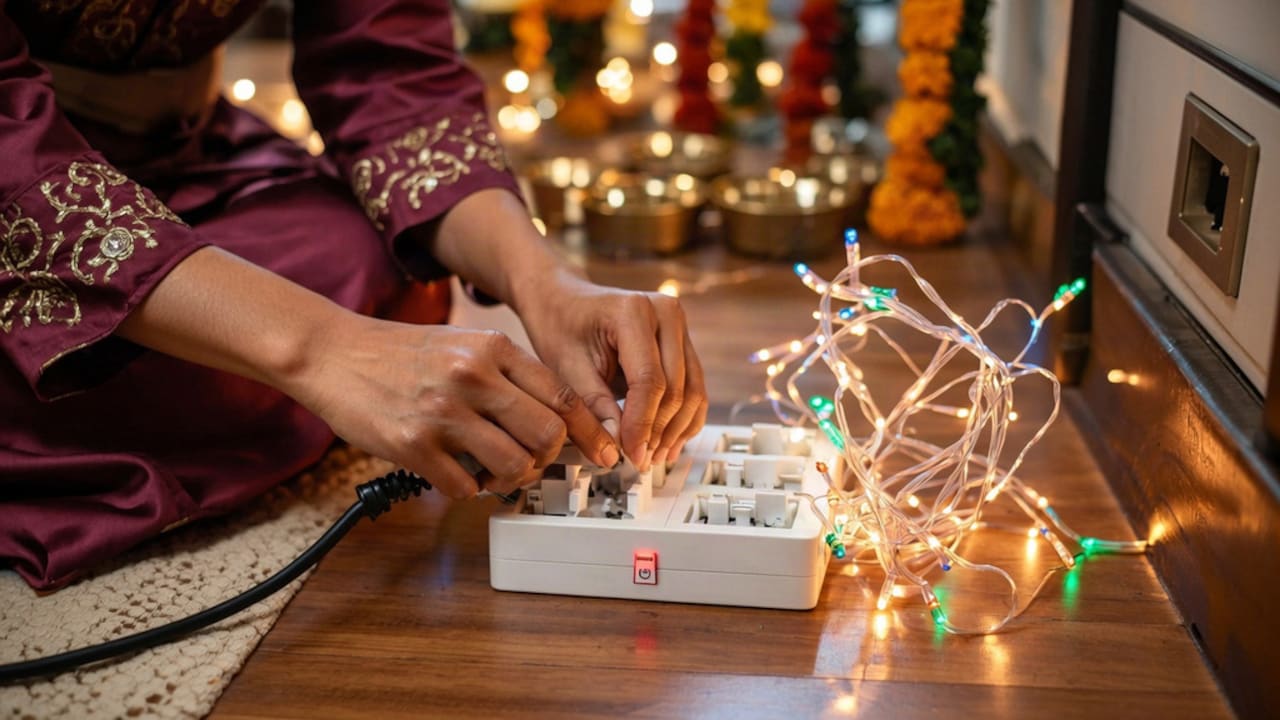
Diwali is the time of the year when suddenly every corner of the house needs to glow. String lights are wrapped around the balcony railing. LED diyas are placed on the windowsills, and decorative lamps are on every table. All that lighting is beautiful, but it also means drawing a lot more power than normal. Amazon offers a reliable choice of extension boards that have safety features and can handle the extra electrical load with no problems, making them a practical choice when the festive decorating really gets going. The problem for most people is not the lights themselves, but how they power everything. There's only so much a single outlet can do. Without the proper extension board setup, you risk tripped switches, overheating or worse. Used correctly, they do make a difference.
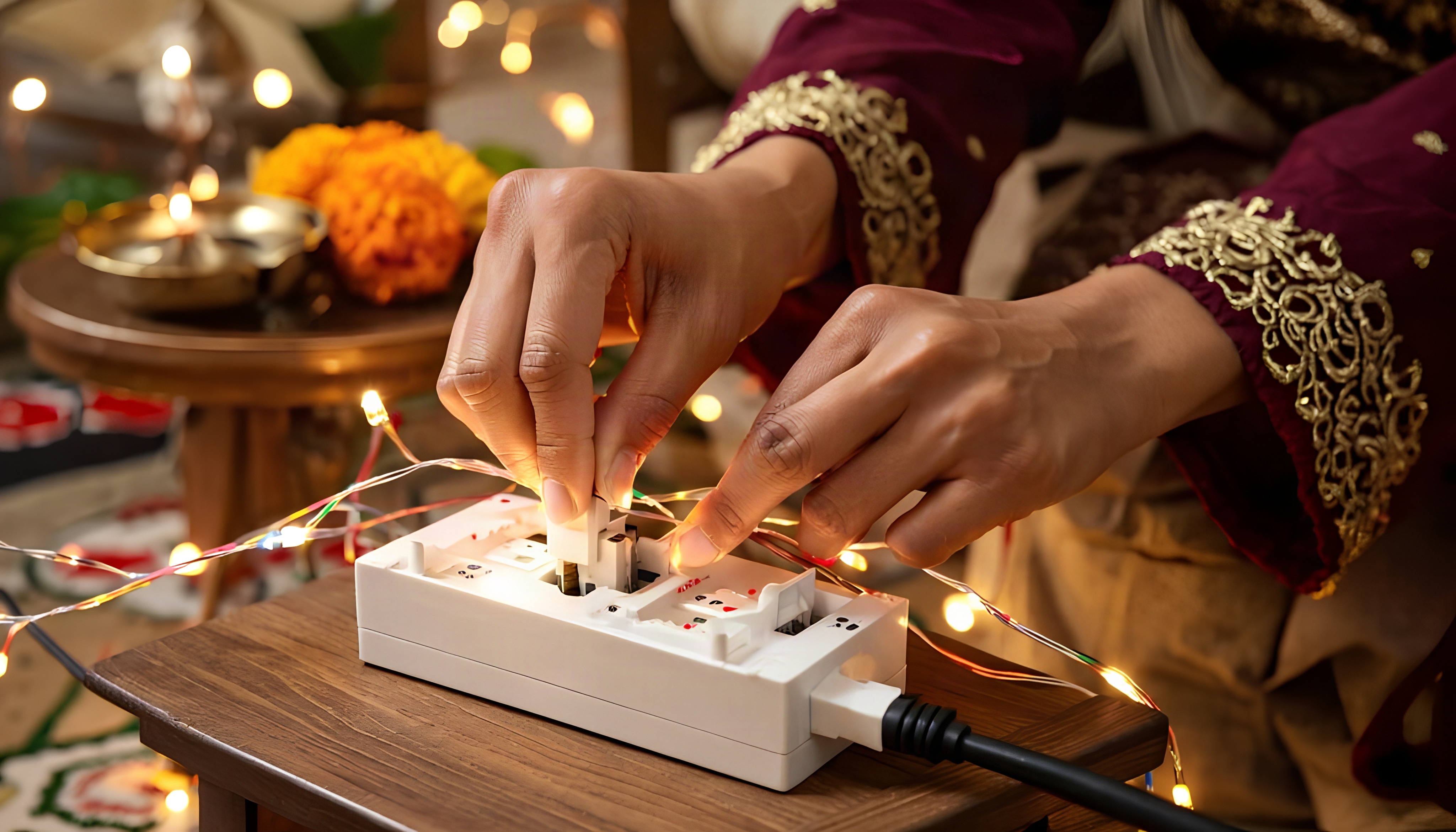
Extension Board For Diwali Lights; Photo Credit: iStock
Understanding Your Electrical Load Before Plugging In
Knowing what your home's wiring can really handle before you put up a single string light is helpful. Normally, Diwali decorations run from many points at the same time - inside and outside - and that's where things can get tricky if you go in without any planning.
1. Calculate The Total Wattage Of Your Lights
Every decorative light, whether it's an LED strip, a fairy light chain or a decorative floor lamp, will have a wattage rating on the box or on the plug itself. Calculate the wattage of all the items you intend to plug into a single power strip. Most Indian homes have a board rated at about 2,000 to 2,500 watts. Staying well below that limit—ideally at 70 to 80 per cent of its maximum—keeps things running without stress on the wiring.
2. Check The Ampere Rating On The Extension Board
Wattage is one thing; ampere rating is another. Quality extension boards are usually rated 5A or 10A. A 10A board at 230 volts is around 2,300 watts, so that gives you a clear idea of scale. If you are running several LED strips and a few decorative lamps together, a 10A board with surge protection is worth going for more than a basic 5A one.
How To Choose The Right Extension Board For Diwali Lighting
Not all extension boards on the market are designed for the prolonged use that Diwali lighting needs. Some suit charging phones and running laptops, while others handle heavier, longer loads. There is a lot of unnecessary hassle that you can avoid if you get it right at the beginning.
1. Look For Surge Protection And An Overload Switch
Diwali is one of those times when an extension board with a surge protector is particularly useful. Voltage fluctuations are a common occurrence during peak festive evenings when power demand is high across the grid. If it gets too hot or the load goes above safe limits, a board with an overload switch will cut the power automatically, instead of letting the wiring heat up in silence.
2. Pick A Board With Adequate Socket Spacing
Decorative light plugs and LED strip adapters tend to be bulkier than normal plugs. You find that if the sockets on an extension board are too close together, you can only use every second one. The wider spacing of the sockets or universal slots on the boards makes it much easier to plug in several decorative items without the awkward juggling.
3. Consider The Length Of The Cable
Diwali decorating often means reaching into rooms, down staircases or out onto balconies. A short cable will need to be stretched, which puts tension on the plug and can loosen the connection over time, so make sure the cable is long enough. You get enough reach with a 3 m or 5 m extension cord and don't need to daisy-chain two boards together, which is something you should never do.
Safe Placement And Setup Tips For Extension Boards During Diwal
But if you place the extension board in a haphazard way, no matter how good it is, it can be a hazard. Where you put it is just as important as what you buy.
1. Keep The Board Away From Fabric, Curtains, And Rugs
Extension boards generate some heat during prolonged use, and that heat must go somewhere. Risk is involved in placing a board under a rug, behind a heavy curtain or around packaging material. A little bit of clear space on all sides. Always keep it on an open flat surface; a tiled floor or wooden shelf works well.
2. Avoid Running Cords Under Doors Or Across Walkways
Tripping over a cord may seem like a minor inconvenience, but it could pull a plug loose, damage the internal wiring of the cord, or cause someone to knock over a light fixture. Run cables along edges of walls, behind furniture if you can, or use small cord clips to keep them flat to a skirting board. Keep walkways clear, especially in the evening when guests are walking about.
3. Do Not Leave Extension Boards On Overnight Without Supervision
Lights that stay on all night – in the courtyard or on the balcony – should be connected to a board with a timer socket or turned off manually before going to sleep. One of the causes of electrical incidents during the festive season is the continuous overnight operation of electrical equipment in the absence of persons. A mechanical timer or a simple smart plug can automate the shutoff and take that worry completely out of your mind.
Maintaining Your Extension Board Setup Through The Festive Season
For most households, Diwali is not just one evening. The lights are usually up for a week or more, and the extension boards are used for a long stretch. Over that time, a little maintenance keeps everything running safely.
1. Check For Warm Plugs Or Sockets Regularly
Touch the plug end and the sockets on the board once or twice a day, quickly. Normal to be a little warm. Real heat – the kind that makes the plastic uncomfortably hot – means either too much load is being drawn or a connection is loose somewhere. Unplug immediately, let it cool, and before plugging it back in, check to see if one of the lights that was plugged in has a faulty adapter.
2. Unplug Individual Lights When Not In Use
Shutting off a power strip at the main switch does cut the supply, but the adapters still draw a small standby load. Just unplugging lights you are not using – especially during the day – reduces that load, keeps the board cooler and extends the life of the lights themselves. It's a quick minute and really adds up over a week-long festive period.
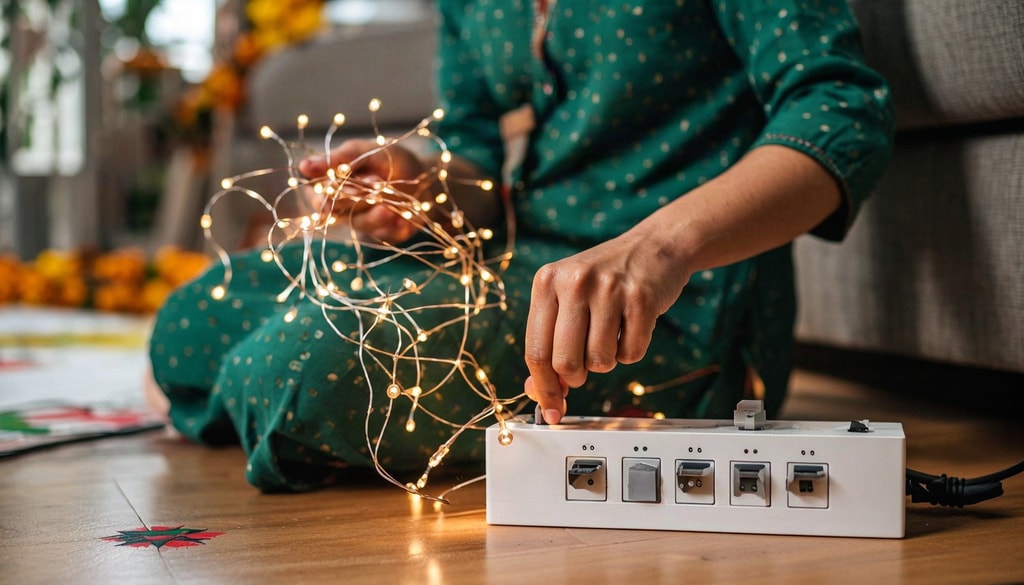
Extension Board For Diwali Lights; Photo Credit: iStock
Some Products You May Like
1. GM 3060 Extension Board
2. Goldmedal i-Design 4x1 Extension Board
3. Portronics Power Plate 10 Extension Board
4. Cablet 250 Volts Extension Board
5. Robustt 4‑Outlet Extension Board
6. Havells 4-Way Extension Board
7. Lifelong Electronics Extension Board 7-in-1 with Switch
8. Ambrane Extension Board
Powering Diwali lights safely is as important as decorating beautifully. Choosing a high-quality, surge-protected extension board with overload safety ensures your celebrations stay bright and worry-free. Shop top-rated extension boards during the Amazon Great Indian Festival at unbeatable prices and light up your home safely this Diwali. Shop now on Amazon
Frequently Asked Questions (FAQs)
1. How many lights can one extension board handle safely?
It is determined by the wattage rating of the board. Calculate the total wattage of all the lights you plan to connect, and ensure it is no more than 70 to 80 per cent of the board's maximum rated capacity.
2. Is it safe to use extension boards outdoors during Diwali?
Only if the board and its connections are away from moisture and direct contact with the ground. It's better to use a board with an IP-rated cover outdoors or put it in a sheltered, dry place.
3. Can two extension boards be plugged into each other?
No, but daisy-chaining extension leads is dangerous, and it increases the risk of overload. Always plug directly into a wall outlet.
4. What is the difference between a power strip and a surge protector?
A power strip just gives you more sockets. A surge protector does that and also protects against voltage spikes. With surge protection, you can do Diwali lighting more sensibly.
5. How do I know if my extension board is overloaded?
Signs of overload are warmth around the sockets, flickering lights, a burning smell or a switch that has tripped. Before switching on again, switch off and reduce the load connected.
(Disclaimer: This article may include references to or features of products and services made available through affiliate marketing campaigns. NDTV Convergence Limited (“NDTV”) strives to maintain editorial independence while participating in such campaigns. NDTV does not assume responsibility for the performance or claims of any featured products or services.)