How To Tell If A Leather Bag Is Genuine Or Fake Before Buying Online
Are you buying a leather bag online? From smell and stitching to seller red flags, here's how to tell if a leather bag is real or fake before you buy.
How To Tell If A Leather Bag Is Genuine Or Fake Before Buying Online
White sneakers aside, few purchases sting quite like spending extra money on a leather bag only to realise it is pleather the moment it arrives. With so many listings online using polished photography and convincing product descriptions, the gap between what you see and what you get can be significant.
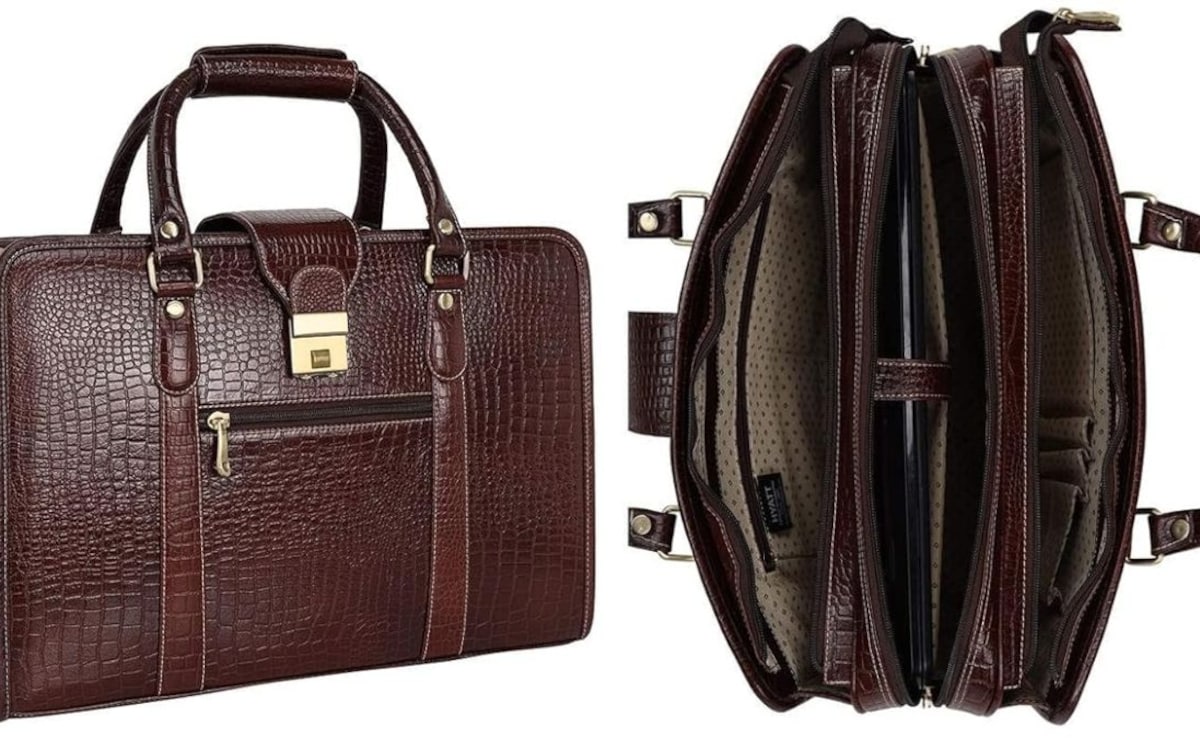
Discover key ways to check if an online leather bag is real before buying it.
Photo Credit: Amazon
The frustrating part is that sellers of fake leather bags have gotten adept at mimicking the real thing, at least visually. Even if you can't touch the bag before buying, there are ways to tell if it's real. You just need to know what to look for.
How To Tell If A Leather Bag Is Genuine Or Fake
Most people focus on photographs when shopping online, which is fair. But photos alone will only tell you so much. The more useful approach is to look at what the photos reveal about texture, construction, and material detail, while also paying attention to what the listing itself says or conspicuously avoids saying.
Real leather has a distinct grain that is irregular and uneven across the surface. Fake leather, made from PVC or bonded material, tends to have a pattern that repeats itself. Once you know what to look for, it becomes easier to spot in product images even without touching the bag.
Step 1: Read the Product Description Very Carefully
Listings for genuine leather bags will typically say so directly, often specifying the type: full-grain, top-grain, nubuck, or suede. If a listing only says "leather-look", "vegan leather", or "faux leather" or simply stays vague about the material, treat that as a clear sign the bag is not real leather. Sellers who are selling the real thing rarely hide it because it is a selling point.
Step 2: Request Close-Up Photos or Check Every Image
Ask the seller for detailed shots of the surface texture, stitching, edges, and lining if they are not already available. Genuine leather bags will show slight variations in grain, small natural imperfections, and edges that are either burnished or folded. Fake leather bags typically have very smooth, uniform surfaces, sharp plastic-looking edges, and stitching that looks machine-perfect but sits on a thin, flimsy-looking material.
Also Read: Amazon Wardrobe Refresh Sale: Shop Stylish Handbags Under ₹500 That Do Not Look Like Budget Buys
Signs a Leather Bag Is Genuine
1. Look At the Grain Pattern Closely
Full-grain and top-grain leather have an organic surface that never repeats. Zoom into any product photo and look for variation in the pores and texture. If the grain looks like it was stamped or printed, or if it repeats in a tile-like pattern across the surface, the material is almost certainly synthetic. Natural grain will have subtle irregularities that no manufacturing process has fully been able to replicate convincingly at scale.
2. Check the Edges of the Bag
This feature is one of the most reliable tells. Real leather bags have edges that are either folded inward and stitched or treated with edge paint or burnishing that gives them a slightly rounded, finished look. Fake leather tends to crack or peel at the edges even in product photos if the bag is not new, and untreated edges often look raw, thin, or plasticky. If you can see the cross-section of the material in any photo, genuine leather will show fibrous layers, while synthetic material will look uniform and smooth all the way through.
3. Examine the Stitching
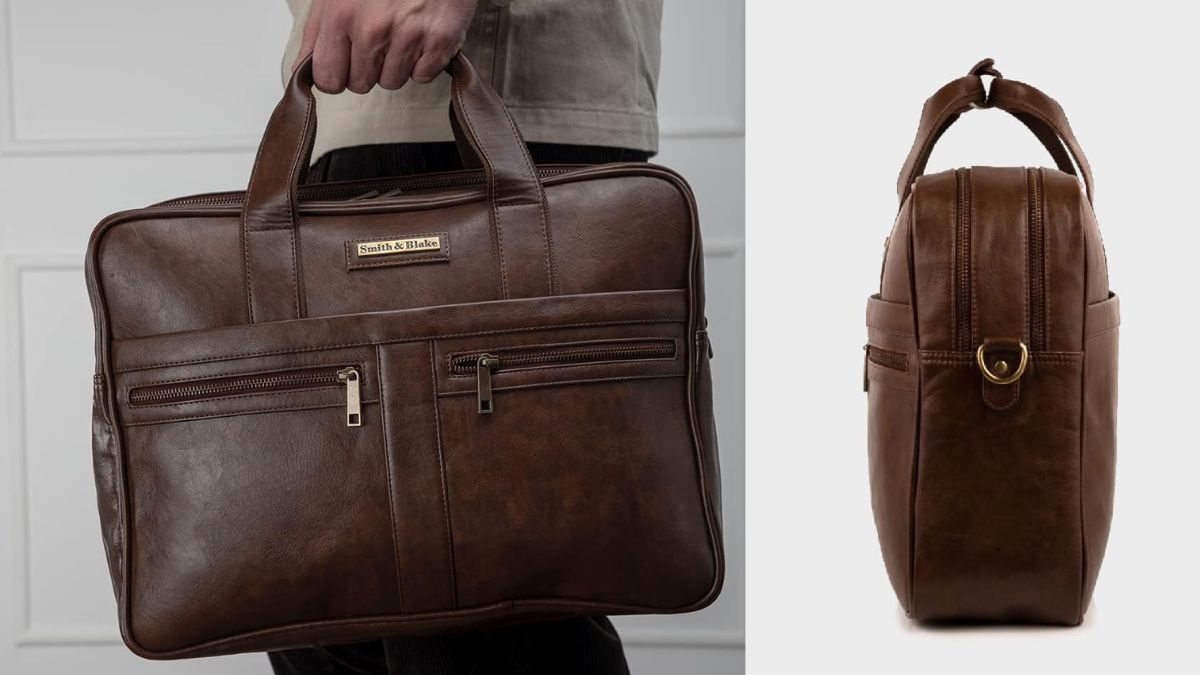
Stitching on a genuine leather bag is typically done with thicker thread and sits in a slightly recessed groove in the leather. It may not be perfectly even, because real leather has some give and the material behaves differently than a flat synthetic surface. Fake bags often have very tight, mechanical-looking stitching on a surface that looks thin or papery underneath the thread.
4. Pay Attention to the Hardware
Zips, buckles, and clasps on genuine leather bags tend to feel and look substantial. They often have branding or quality marks. On cheaper fake leather bags, the hardware is frequently lightweight, looks hollow, and develops visible oxidation or flaking in product photos of bags that have been used or displayed for any length of time. The condition is worth checking in secondary marketplace listings where the bag has been used.
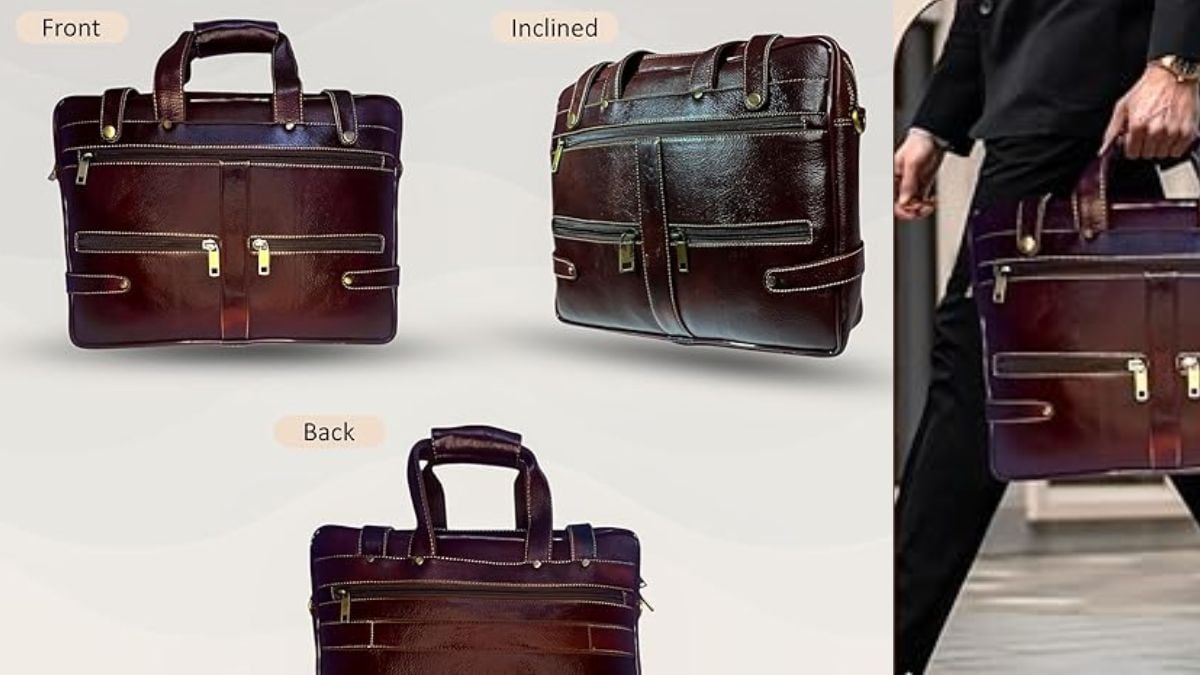
Identify authentic leather bags online by inspecting stitching details and watching for seller red flags.
Photo Credit: Amazon
Red Flags To Watch For When Buying Online
Common Signs the Listing Is Selling Fake Leather
Stock photography is a significant warning sign. If every image in the listing looks like a studio render or appears identical to dozens of other listings, the seller likely does not have the actual product in hand. Genuine leather bag sellers, especially independent ones, tend to photograph their own stock and that usually means slightly different lighting and backgrounds. Another warning sign is a price that doesn't align with the claimed material. A full-grain leather tote for the equivalent of a few hundred rupees is not a bargain. It is a different product.
How To Verify a Seller Before Buying
Check how long the seller has been active, how many reviews they have, and whether those reviews specifically mention the material quality of bags rather than just shipping speed. On platforms like Amazon, look for verified purchase tags and filter reviews based on the most recent. On Instagram shops or independent sites, ask directly for the tannery or manufacturer's details. A seller who deals in genuine leather bags will usually know exactly where their material comes from and will not hesitate to say so.
When shopping for a leather bag online, being able to spot the difference between genuine and fake leather can save you from disappointment and wasted money. By paying attention to product descriptions, close-up images, texture details, stitching quality, and brand authenticity, you can make a more informed decision. Always stick to trusted sellers and check customer reviews before purchasing. A little research and careful observation go a long way in ensuring you invest in a durable, high-quality leather bag that truly matches its promise.
Some Genuine Leather Bag Brands Worth Knowing
1. Genuine Sheep Leather Laptop Bag for Men
2. Smith & Blake - Laptop Messenger Bag - 15.6 inch Padded Laptop Compartment
3. Arctic Fox Slope Anti-Theft Backpack
4. EUME Helix 28L Backpack Bag For Man
5. HYATT Leather Accessories 24 Litres Leather Laptop Briefcase Bag
6. WildHorn Genuine Leather Office Bag for Men with Adjustable Straps
7. scarters Terminal 16 Spacious Multi-Compartment Backpack
8. DailyObjects Pedal Everyday Casual Laptop Backpack
Frequently Asked Questions (FAQs)
1. Can you really tell if leather is genuine just from photos?
To a reasonable degree, yes. Grain pattern, edge treatment, stitching, and hardware all leave visual clues in product photography. It takes some practice but looking at a few confirmed genuine and fake bags side by side trains your eye quickly.
2. What does "genuine leather" actually mean on a label?
It is one of the lower grades of real leather, made from the leftover layers after the top grain is split off. It is real animal hide, but it is less durable and more prone to peeling over time than full-grain or top-grain leather. If a bag only says "genuine leather" without further detail, it is real leather but not the best quality.
3. Is vegan leather the same as fake leather?
Largely yes, though the term is deliberately more positive-sounding. Most vegan leather is made from PVC or polyurethane. Some newer versions use plant-based materials like cactus or mushroom fibres. None of it is animal leather, and most of it will not age the same way.
4. What is the easiest way to test leather at home once the bag arrives?
Smell is the most immediate indicator. Genuine leather has a distinctive earthy, slightly animal smell that is very hard to fake. Synthetic materials tend to smell like plastic or chemicals, especially when new.
5. Are expensive bags always genuine leather?
Not necessarily. Price is a rough signal but not a guarantee online. High price alone does not confirm material. Always read the description, check the seller's track record, and ask questions before purchasing.
(Disclaimer: This article may include references to or features of products and services made available through affiliate marketing campaigns. NDTV Convergence Limited (“NDTV”) strives to maintain editorial independence while participating in such campaigns. NDTV does not assume responsibility for the performance or claims of any featured products or services.)