Short Or Long Tunic? The Surprising Choice That Flatters Your Figure the Most
Short or long tunic? The most flattering choice depends on hemline, fit, and styling. Discover the tunic length that suits your shape best, plus easy tips to look taller, slimmer, and more balanced.
Short Tunic vs Long Tunic: Find Out Which One Flatters Your Body Shape Best?
Tunic shopping often starts with confidence and ends with confusion. One tunic looks fabulous on a mannequin. Another looks brilliant on a cousin. Then the same piece reaches a different body and behaves like a completely different outfit.
That's because tunics don't just cover the body; they shape how the body is seen. The hemline decides where the eye stops. The cut decides whether the outfit looks streamlined or bulky. Even the side slits quietly decide whether the look feels sharp or shapeless.
The short-versus-long tunic debate also gets oddly emotional. Short tunics can feel too revealing. Long tunics can feel too “safe” or heavy. And then there's the daily reality: heat, commute, sitting at work, bending to pick up a bag, and dealing with a dupatta that has its own opinions.
So which tunic length flatters most? The surprising answer: neither is universally better. But one will flatter you far more than the other, once you understand a few simple rules.
Short Tunic vs Long Tunic: Which One Flatters Your Body Shape Best?
Photo Credit: Myntra
The Tunic Length Rulebook: 10 Easy Fixes That Always Work
1) The Real Secret: Where the Hemline Hits Matters More Than Size
Most people blame it when a tunic looks wrong. But the bigger culprit is often the hemline. The hem decides where the outfit “cuts” the body visually. That cut can make legs look longer or shorter, shoulders look broader, or the torso look heavier.
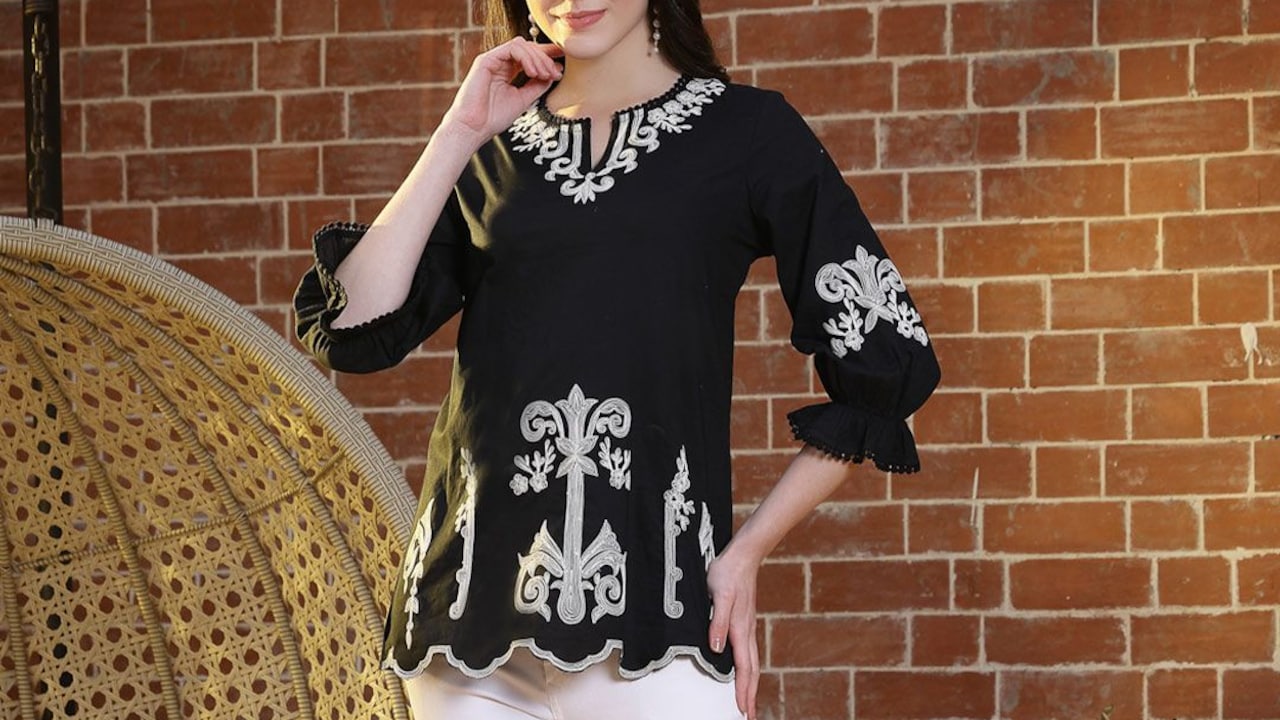
A short tunic usually ends around the upper hip or mid-hip. That makes the legs look longer, especially with straight pants or jeans. A long tunic usually ends around the mid-thigh or knee, which can create a tall, elegant line, but only if the rest of the outfit supports it.
A common mistake is choosing a tunic that ends at the widest part of the hips or thighs. The eye stops there, and the body looks wider in that exact spot. It's not cruel. It's just geometry.
A more flattering move is to pick a hemline that hits either above the widest point or below it. That's why one long tunic feels regal while another feels like a curtain with sleeves. Same size, different stopping point.
2) Short Tunics: The Best Friend of Balanced Proportions
Short tunics often get unfairly judged as “too modern” or “not traditional enough”. In reality, short tunics can look incredibly graceful, especially when styled thoughtfully.
A short tunic creates a natural break between top and bottom. That break can make the legs look longer, and the waist look more defined. It also helps avoid that “one long block” effect, where the outfit becomes a single column with no shape.
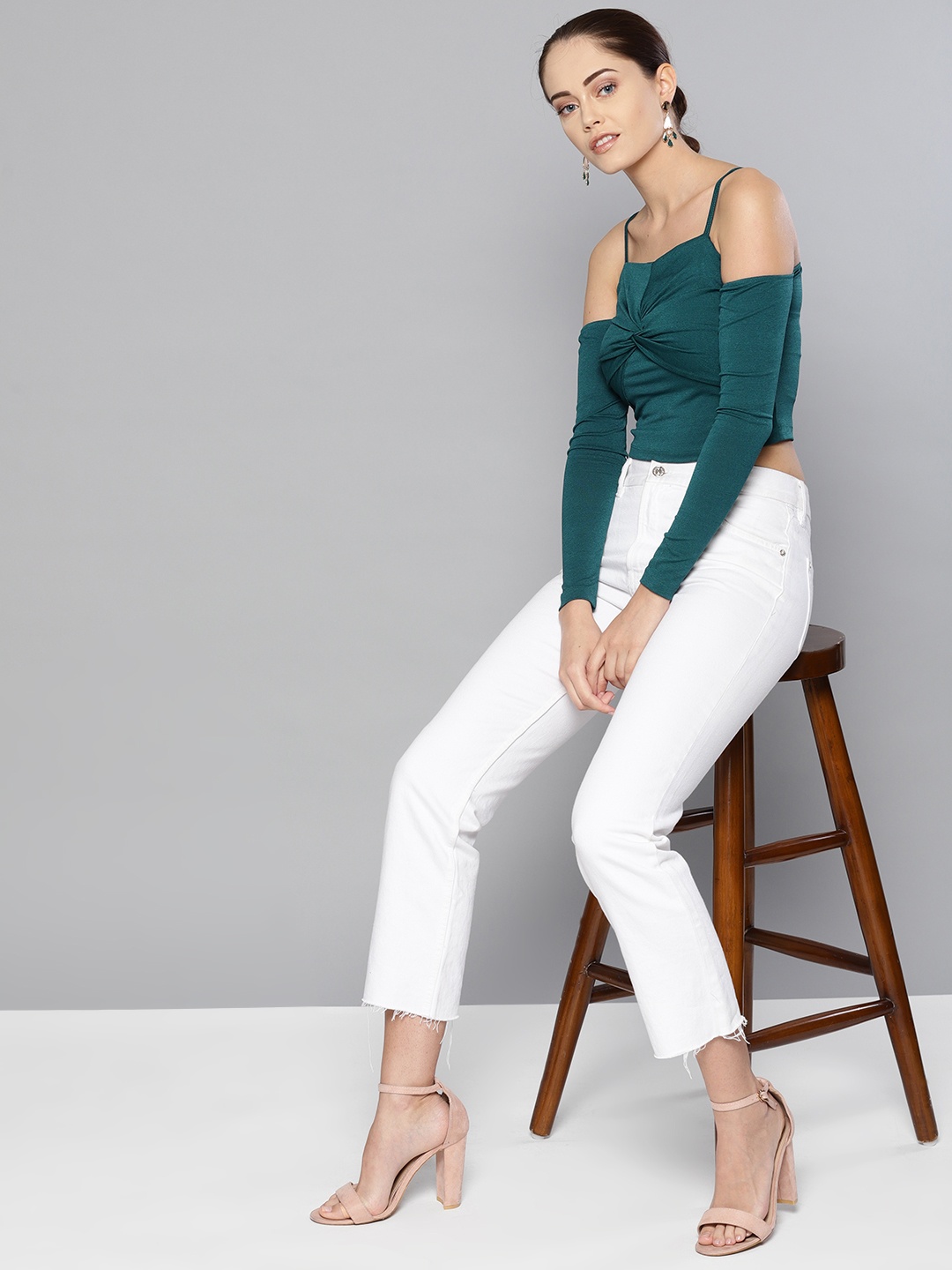
For daily wear, a short tunic pairs beautifully with cigarette pants, straight-fit trousers, or even well-fitted leggings. It also works brilliantly for petite frames because it doesn't overwhelm the body.
The only catch? A short tunic needs confidence in the styling. If the fabric clings, it can feel uncomfortable. If it rides up, it becomes a constant adjusting situation, and nobody needs that stress during a busy day.
The sweet spot is a short tunic with structure, side slits, and a slightly curved hem. It flatters without shouting.
3) Long Tunics: Elegant, Forgiving, and Surprisingly Tricky
Long tunics feel like the “safe” option. They cover more. They flow. They feel modest and polished. But long tunics come with hidden rules.
A long tunic creates a vertical line, which can look tall and slimming. That's the good part. The tricky part is volume. If the tunic is long and wide, the body can disappear inside it. The outfit then looks heavier, even when the person isn't.
The most flattering long tunics usually have one of these features: a defined shoulder seam, a slight taper at the waist, side slits that start high enough, or a fabric that falls cleanly.
A long tunic also needs the right bottom. Wide palazzos with a long tunic can look dreamy, but only if the tunic has shape. Otherwise, the whole outfit turns into a fabric festival.
Long tunics work wonderfully for office days, festive lunches, and travel. But the best ones feel intentional, not just “extra cloth for safety”.
4) If You Want to Look Taller, Here's the Tunic Length Rule
Height isn't just height. It's also the illusion of height, and tunics are excellent at creating it.
For a taller look, the outfit needs uninterrupted lines. Short tunics can help because they expose more of the legs, especially when paired with pants in a similar colour family. A short black tunic with black pants? Instant sleekness. A short beige tunic with beige trousers? Clean and long.
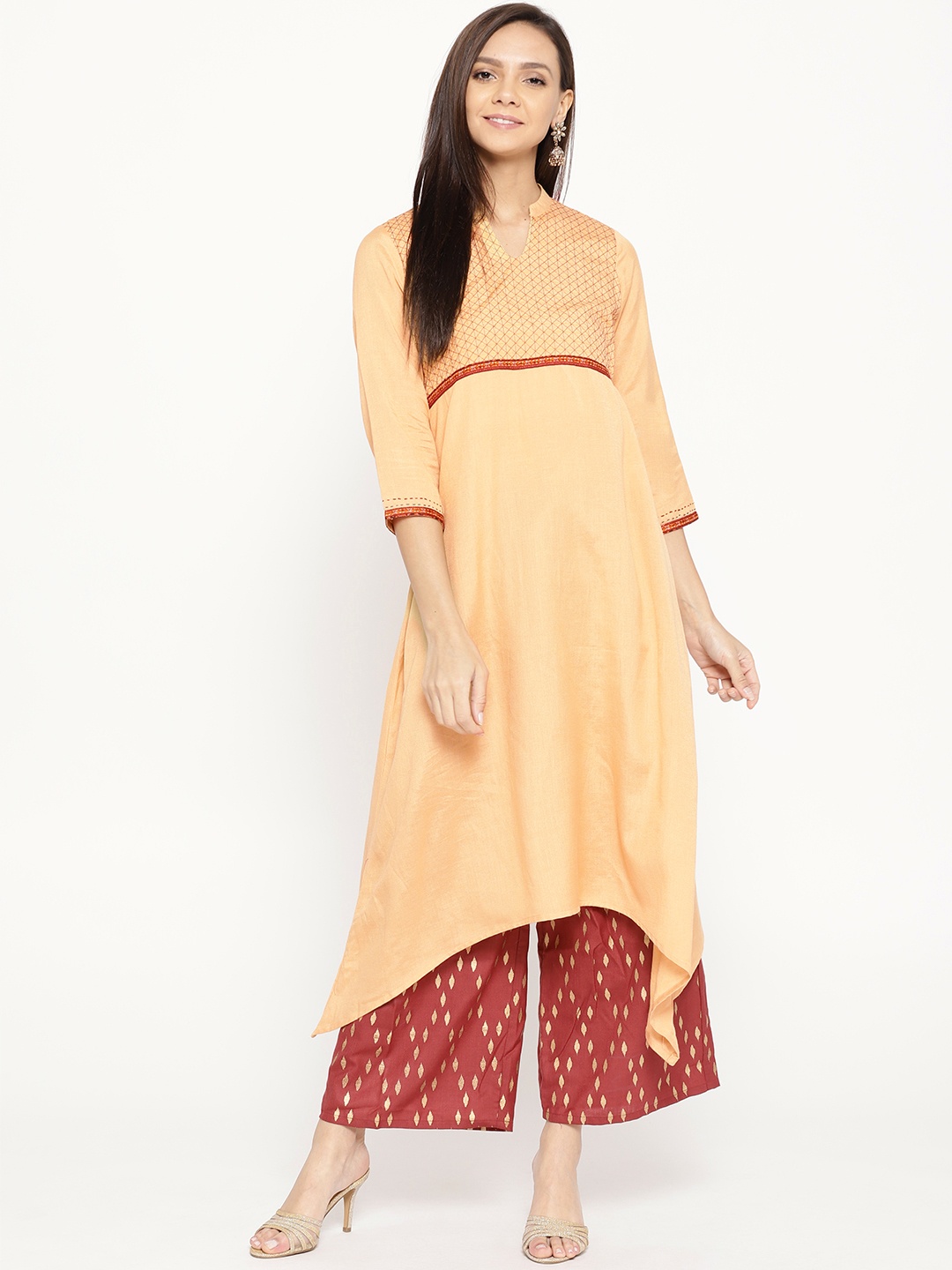
Long tunics can also create height, but they need a narrow silhouette. Think straight cuts, minimal flare, and fabric that doesn't puff. A long tunic that swings outward at the hips shortens the body visually.
Another underrated trick is the placement of side slits. A long tunic with high side slits shows the pants underneath, breaking the heaviness and bringing back the vertical line.
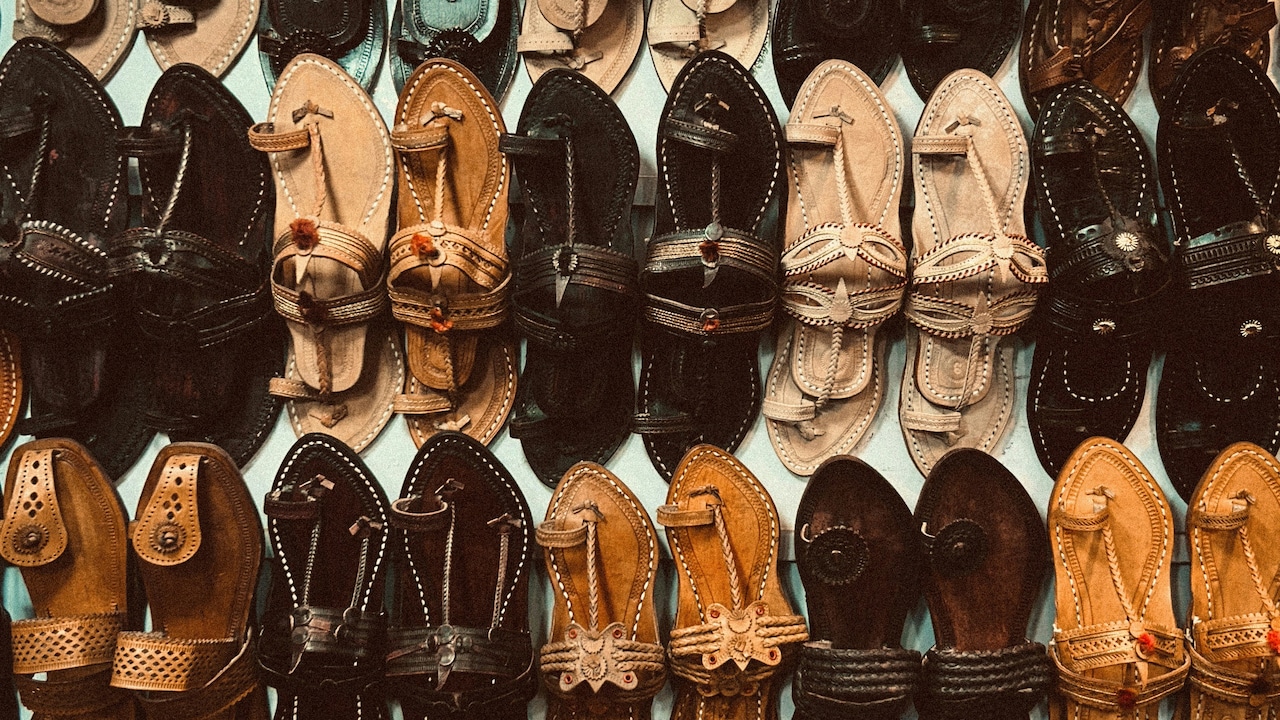
Even footwear matters. Kolhapuris look beautiful, but they can visually “ground” the outfit. A slightly raised sandal or a neat jutti can keep the line cleaner.
The goal isn't to look like a runway model. It's to look like the most put-together version of yourself.
5) If You Want to Look Slimmer, Avoid the “Middle-Heavy” Look
Many people choose long tunics to look slimmer. Sometimes it works. Sometimes it backfires.
The reason? A long tunic that ends at the mid-thigh can draw attention to the thighs. A long tunic that ends at the knee can make the legs look shorter. A long tunic that ends exactly at the widest part of the hips can make the hips look broader.
A short tunic looks slimmer if it creates shape, especially if the bottom half is straight and neat. The eye reads the body as structured, not hidden.
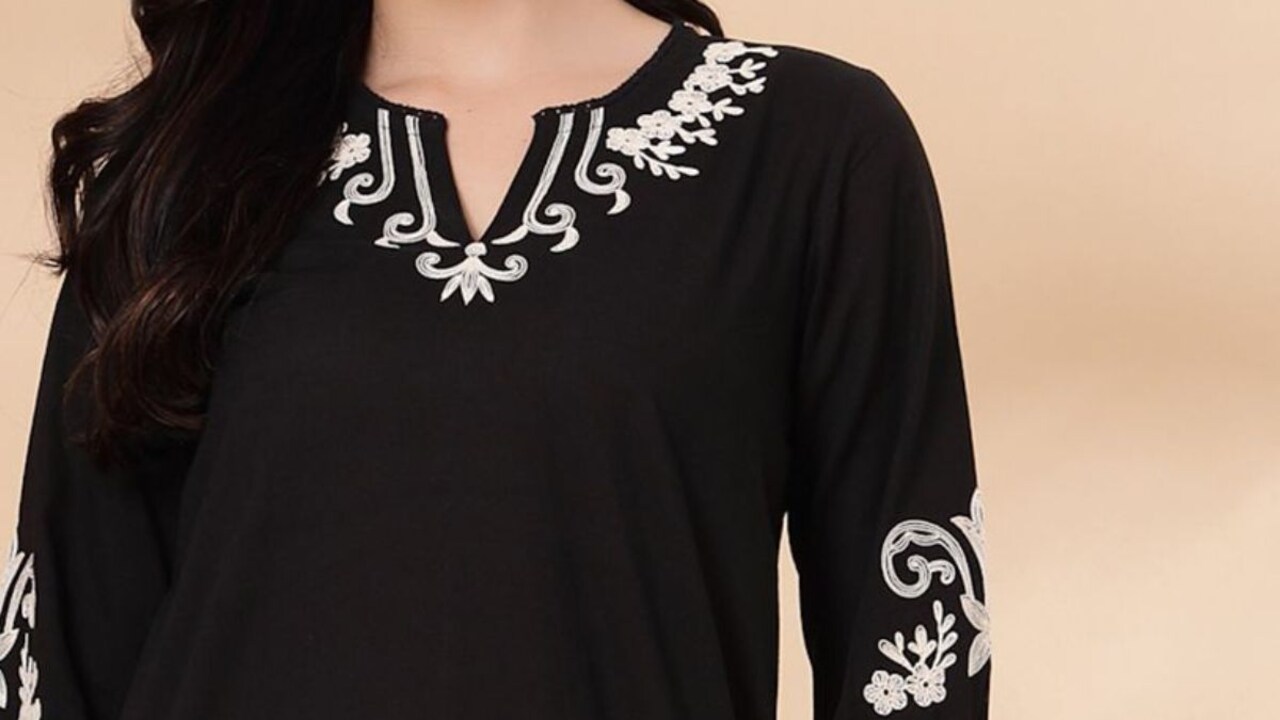
For a slimming effect, look for tunics with vertical details: a placket, pin-tucks, subtle stripes, or even a row of buttons. Avoid heavy embroidery concentrated on the belly area. That's a common design feature, and it's a bit unfair.
Also, watch the fabric. Stiff cotton can add bulk if the cut is wide. Soft rayon can cling if the cut is tight. The best is fabric that falls and holds shape, like good cotton blends.
Slim doesn't mean tight. Slim means clean lines.
6) The Waist Illusion: Why Tunics Can Make or Break It
Some outfits magically create a waist. Others erase it completely. Tunics sit right in the danger zone.
A short tunic often gives more waist definition because it ends higher. The eye sees a top, then a bottom, and naturally assumes structure.
A long tunic can hide the waist if it's straight from the shoulder to the hem. That's not always bad; it can look elegant. But if the goal is a more defined silhouette, a long tunic needs shaping.
Look for princess seams, gentle darts, or a wrap-style tie. Even a simple belt can transform a long tunic, though belts feel annoying in hot weather and don't always sit well.
Another smart trick: choose long tunics with side panels in a darker shade. That creates a slimming effect without any squeezing.
Waist definition doesn't need dramatic tailoring. It needs small hints of shape. Even a slightly curved side seam can do the job.
A tunic should flatter the body, not flatten it into a rectangle.
7) The Bottom Wear Equation: Pants Decide the Winner
A tunic never works alone. The bottom wear decides whether short or long looks better.
Short tunics love straight pants, cigarette trousers, jeans, and even churidars. The cleaner the pants, the sharper the look. A short tunic with a bulky patiala can look unbalanced, unless the tunic has a strong, structured cut.
Long tunics pair best with narrow bottoms if the tunic is flared. If the tunic is straight, it can handle wider pants too. That's why some long tunics look great with palazzos, while others look like accidental nightwear.
Leggings also matter. A long tunic with thin leggings can look sleek. A short tunic with leggings can look unfinished unless the tunic is designed for that length.
A quick mirror test helps: if the outfit looks heavy at the centre, change the bottom. If it looks top-heavy, change the tunic length.
Style isn't magic. It's a balance.
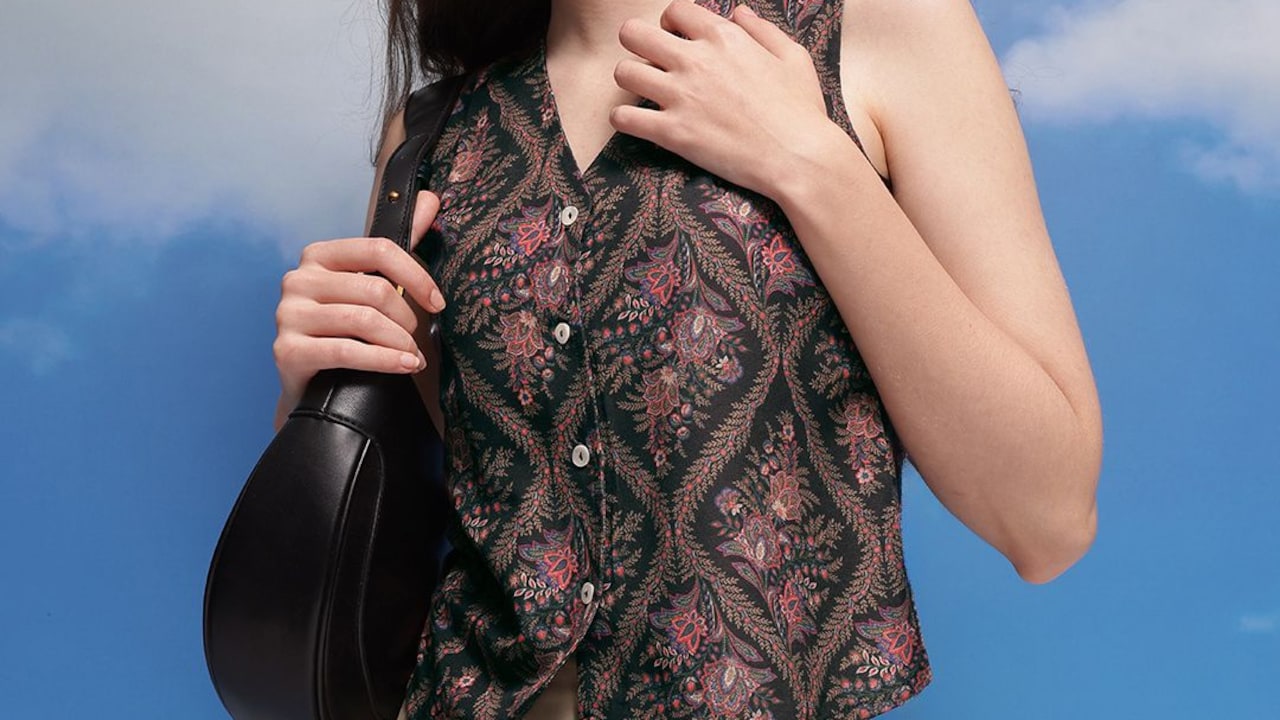
Short Or Long Tunic? The Surprising Choice That Flatters Your Figure the Most
Photo Credit: Myntra
8) Fabric and Print: The Hidden Reason One Length Feels Better
Two tunics can have the same length and still feel completely different. Fabric and print are usually the reason.
Short tunics work best in fabrics that hold shape. Crisp cotton, cotton-silk blends, or structured linen mixes give short tunics a clean look. If the fabric collapses, the short length can look messy.
Long tunics look best in fabrics that fall well. Rayon, soft cotton, viscose blends, and light silks create that flowy elegance people expect from longer lengths.
Print size also matters. Large prints on a long tunic can overwhelm the body. Tiny prints on a long tunic can look busy. Medium prints usually work best.
For short tunics, bold prints can look fun and modern. For long tunics, prints look best when they create vertical movement.
Also, avoid prints that cluster around the stomach. Many designs do that without thinking. It's like a spotlight nobody asked for.
Fabric and print don't just decorate. They shape the whole mood of the outfit.
9) The Occasion Factor: One Length Isn't Always the Right Mood
Even if one tunic length flatters more, life doesn't run on one mood.
Short tunics feel energetic. They suit casual outings, office days, college looks, and everyday errands. They pair well with tote bags, watches, and simple jewellery. They also feel practical when moving around a lot.
Long tunics feel graceful. They suit family lunches, festive evenings, temple visits, and days when the outfit needs more presence. A long tunic with a light dupatta can look instantly elevated.
For weddings or festive events, long tunics with structured fabric and good detailing can look very expensive even when they're not. A well-chosen piece at ₹1,500 can look richer than a badly cut piece at ₹6,000.
Occasions also decide comfort. In peak summer, a long tunic with heavy lining can feel like a portable sauna. In winter, a long tunic feels cosy and polished.
Style should serve the day, not fight it.
10) The Surprising Choice That Flatters Most People: The “Mid-Length” Tunic
Here's the twist: the most flattering tunic length for most people isn't extremely short or dramatically long. It's mid-length.
A mid-length tunic usually ends a little below the hip, around the upper thigh. It creates coverage without cutting the legs too harshly. It also gives structure without swallowing the body.
Mid-length tunics work for a wide range of heights and shapes because they avoid the danger zones. They don't stop at the widest hip point. They don't drag down the body. They don't force awkward styling.
They also pair easily with almost everything: straight pants, churidars, jeans, even ankle-length trousers. They look good with flats, sandals, or small heels.
This is why so many people feel instantly “sorted” in a mid-length tunic. It looks like effort without feeling like effort.
So yes, short and long both have their place. But mid-length often wins the flattering game quietly, without drama.
Products Related To This Article
1. KALINI Floral Embroidered Mandarin Collar A-Line Republic Day Kurti
2. Nayam By Lakshita Ethnic Motifs Embroidered V-Neck Patchwork Patchwork Kurti
3. Anouk Floral Embroidered V-Neck Cotton Straight Short Republic Day Kurti
4. Janasya Floral Printed Mandarin Collar Pure Cotton Pleated A-Line Tunic
5. Sangria Embroidered Peplum Top
6. Rain & Rainbow Ethnic Printed Sequinned Detail Pure Cotton Kurti
7. AADVIKA Print Ethnic Top
The short-versus-long tunic question sounds simple, but it's really about proportion, balance, and the way the eye travels. Short tunics bring structure and lengthen the legs. Long tunics bring elegance and coverage. Both can look stunning. Both can look awkward.
The real trick lies in the hemline placement, fabric choice, side slits, and what gets paired underneath. And for most wardrobes, the most reliable option is the mid-length tunic, the quiet hero that flatters without demanding constant styling effort.
Next time a tunic looks “off”, don't blame the mirror or the body. Check where it ends. Check what it's paired with. Make one small adjustment.
Because sometimes the difference between “This looks fine” and “This looks amazing” is just… three inches of fabric.
(Disclaimer: This article may include references to or features of products and services made available through affiliate marketing campaigns. NDTV Convergence Limited (“NDTV”) strives to maintain editorial independence while participating in such campaigns. NDTV does not assume responsibility for the performance or claims of any featured products or services.)