10 Reasons Floating Shelves Look Crooked Even When The Brackets Are Level
A spirit level says your floating shelf is perfectly straight, yet your eyes strongly disagree. From uneven walls and warped boards to visual tricks, these 10 common issues explain why shelves can look crooked despite level brackets.
10 Reasons Floating Shelves Look Crooked Even When The Brackets Are Level
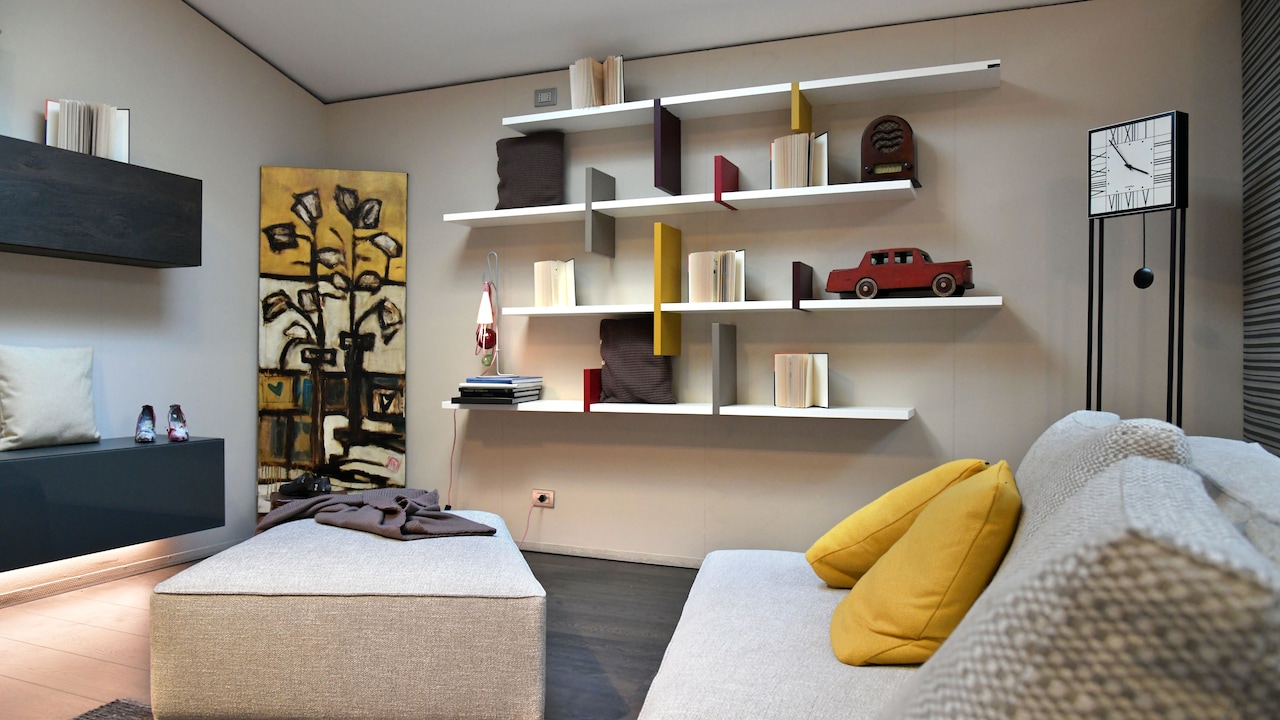
Installing a floating shelf seems like one of those wonderfully simple home projects. Measure the wall, drill a few holes, level the brackets, slide the shelf into position, and admire the result. Except sometimes the final step becomes less “admire” and more “stare suspiciously at it from five different corners of the room”. The spirit level insists everything is correct. The shelf still looks as though one end has quietly started heading downhill. That apparent tilt doesn't necessarily mean the brackets need reinstalling. Floating shelves interact with several things at once: walls, flooring, home furniture, lighting, the shelf board itself, and even the objects placed on top. A tiny irregularity can become surprisingly noticeable because floating designs have no visible supports to distract the eye. Before reaching for the drill again, it helps to work out what actually looks crooked. The bracket might be perfectly level while something around it creates the illusion of a bad installation. Here are 10 reasons this happens and what each one means for your shelf.
10 Reasons Floating Shelves Look Crooked Even When The Brackets Are Level; Photo Credit: Pexels
Why A Level Bracket Can Still Leave Your Floating Shelf Looking Crooked
1. The Wall Surface Isn't Perfectly Flat
A wall can look smooth from across the room while containing shallow bumps, dips and waves that become obvious once a long, straight shelf sits against it. Plasterwork rarely creates a mathematically perfect surface. Even small variations can change how the shelf meets the wall.
Suppose the bracket sits level against two relatively high points on the surface. The shelf may then touch the wall firmly at one end while leaving a narrow gap at the other. Viewed from the front or side, that uneven shadow line can make the shelf appear tilted.
Fresh paint can make this even more noticeable because light reflects differently across raised and recessed areas.
Check the wall by placing a long straightedge against it rather than relying only on a small spirit level. If gaps appear along the straightedge, the wall itself may explain the visual problem.
Small spacers or carefully positioned washers behind the bracket can sometimes compensate for minor variations. The important thing is to correct the contact point rather than repeatedly changing a bracket that was already level.
Also Read: Best Wall Shelves For Living Room In India
2. The Shelf Board Has A Slight Warp
Not every apparently crooked floating shelf has an installation problem. Sometimes the shelf itself refuses to stay straight.
Wood and engineered wood can develop subtle bows, twists or curves because of moisture, storage conditions, manufacturing tolerances or temperature changes. The distortion may look insignificant when the board lies on the floor. Once mounted horizontally against a wall, however, even a few millimetres can become noticeable.
A twisted board creates an especially confusing effect. The rear edge may sit correctly against the bracket while the front edge rises slightly at one end. A spirit level placed close to the wall might therefore show a perfect reading, while the visible front edge looks crooked.
Before adjusting the bracket, remove the shelf and place it on a genuinely flat surface. Look along its length from one end, almost like checking whether a ruler has bent.
Try placing the spirit level at the front, middle and back of the mounted shelf too. Different readings across those positions often point towards board distortion rather than poor bracket alignment. Sometimes the shelf, not the drill, deserves the blame.
3. The Bracket Is Level But Not Sitting Flush Against The Wall
Getting the bubble into the centre of a spirit level solves only part of the installation.
A floating-shelf bracket also needs firm, even contact with the wall. If one corner lifts away from the surface, the bracket can remain horizontally level while tilting slightly forwards, backwards or diagonally.
This often happens when a screw head, wall plug, paint ridge or small piece of debris prevents the metal plate from sitting flat. Over-tightening screws can cause trouble too, particularly on softer plasterboard or uneven plaster. The mounting plate may flex instead of resting uniformly against the surface.
The resulting shelf can look strangely twisted. From one viewing angle it appears level. Move a metre sideways and suddenly one corner seems higher.
Before changing the screw positions, inspect the bracket from the side. Look for narrow gaps between the mounting plate and wall. A torch placed close to the surface can make them easier to spot.
The aim isn't merely a level bracket. You want a level bracket sitting flat against a stable surface. Those two conditions aren't always the same thing.
10 Reasons Floating Shelves Look Crooked Even When The Brackets Are Level; Photo Credit: Pexels
4. The Floor Or Ceiling Creates A False Reference Line
People rarely judge whether a shelf looks straight in complete isolation. The eye automatically compares it with nearby horizontal lines.
That becomes a problem when those reference lines aren't actually level.
Older floors can slope slightly. False ceilings may vary in height. Cornices and skirting boards can follow irregular walls rather than a true horizontal line. Even tile grout lines can drift gradually across a room.
Install a shelf according to a spirit level and it may technically sit perfectly straight while appearing crooked beside one of these features.
The effect becomes particularly obvious with long floating shelves. Imagine a shelf sitting 30 centimetres above a cabinet whose top slopes by several millimetres. The increasing gap between the two creates a visual wedge, convincing the eye that the shelf has tilted.
Stand farther away and compare the shelf with several references rather than one. Check the ceiling, furniture, door frames and floor independently.
Sometimes the technically correct installation won't look visually correct within the room. In decorative situations, a tiny adjustment may create better visual alignment, provided the shelf remains safe and functional.
5. The Bracket Arms Aren't Perfectly Perpendicular
Floating shelf brackets usually contain horizontal rods or arms that slide into holes or channels inside the shelf. The wall plate can sit perfectly level while those arms create another problem entirely.
If one arm angles slightly upwards or downwards, the shelf won't necessarily follow the level line of the mounting plate. Manufacturing tolerances, accidental bending or pressure during installation can alter an arm by a small amount.
That tiny angle gets amplified towards the front edge of a deep shelf. A difference that looks almost invisible at the bracket may translate into a noticeable rise or drop several centimetres away from the wall.
Place a spirit level across the front edge of the shelf rather than checking only near the wall. Then check the surface from front to back at several points.
If the readings change depending on where you position the level, inspect the bracket arms individually.
This problem also explains why reinstalling the wall plate sometimes achieves absolutely nothing. The plate wasn't causing the visible tilt in the first place. The shelf simply followed an imperfect support extending from it.
6. Loose Fixings Allow One Side To Sag
A shelf can start perfectly straight and gradually develop a lean after several weeks or months.
Loose wall fixings often cause this change. Screws can shift slightly under repeated load, particularly when the chosen wall plugs don't suit the wall material. Hollow walls, crumbly plaster and masonry all need appropriate anchors.
The shelf doesn't need to collapse dramatically for the problem to become visible. One fixing moving by a millimetre or two can allow an end to sag enough for the eye to notice.
Watch for other clues. Does the shelf move when gently pressed? Has a small gap appeared between the bracket plate and wall? Does one screw turn easily when it previously felt secure?
Avoid simply tightening everything with maximum force. Excessive tightening can damage plugs, crush plasterboard or enlarge existing holes.
Instead, remove weight from the shelf and inspect each fixing. Replace damaged or unsuitable anchors where necessary.
Floating shelves rely heavily on hidden structural support. Their clean appearance means there's no visible leg underneath to share the load, so even a small weakness behind the shelf can eventually show up as an annoying tilt.
10 Reasons Floating Shelves Look Crooked Even When The Brackets Are Level; Photo Credit: Pexels
7. Uneven Weight Distribution Pulls One End Down
A floating shelf may be level when empty but appear crooked once books, plants, photo frames and decorative pieces move in.
Weight distribution matters more than many people expect.
A row of paperback books may look harmless, yet concentrating them on one side creates considerably more downward force there than placing a lightweight vase at the opposite end. A large planter becomes even heavier after watering.
Floating shelves transfer that load through hidden brackets and wall fixings. If the system has even slight flexibility, an uneven load can cause one section to dip.
The effect may disappear when you remove everything, which provides a useful diagnostic test. Clear the shelf completely and check it again with the spirit level. Then add objects gradually and watch for movement.
Spacing heavier pieces closer to bracket support points can reduce leverage. Distributing weight more evenly also helps.
Always respect the manufacturer's recommended load limit, but remember that total weight tells only part of the story. Where that weight sits matters too.
Ten kilograms spread evenly behaves differently from the same weight clustered at one outer corner.
8. The Shelf Isn't Fully Seated On The Bracket
Floating shelves usually slide onto concealed rods, pins or a supporting frame. They need to travel all the way into their intended position.
Sometimes they don't.
A tight mounting hole, wood swelling, misaligned channel or small obstruction can stop one side before it reaches the wall. The shelf may look properly installed at first glance because the difference measures only a few millimetres.
Those few millimetres can change the angle noticeably.
Check the gap between the shelf and wall along its entire length. If one side sits farther forward, the shelf may not have seated evenly onto the bracket.
Don't automatically solve the problem by forcing the shelf backwards with heavy blows. That can damage the board, bend the bracket or loosen the wall fixings.
Remove the shelf and inspect its mounting holes or channels. Make sure nothing blocks them and check whether they align correctly with the bracket arms.
A rubber mallet may help with some designs when used gently and according to the installation method.
The important clue is depth. A shelf can have perfectly level supports and still look crooked simply because one side hasn't travelled equally far onto them.
9. Nearby Furniture Makes The Shelf Look Misaligned
Sometimes nothing is wrong with the shelf, wall or hardware. The trouble sits underneath it.
A TV unit, sideboard, desk, headboard or wardrobe can provide a strong visual line that makes the shelf appear crooked. If that furniture isn't level, centred or parallel with the wall, your eye may blame the shelf instead.
This illusion becomes stronger when the shelf nearly matches the furniture's width. The brain expects the two horizontal edges to run neatly alongside each other. Even a small difference becomes difficult to ignore.
Before adjusting anything, measure both objects independently. Check the furniture with a spirit level too. Floors often contain subtle slopes, so a cabinet may lean despite all four feet appearing firmly planted.
Adjustable furniture feet can sometimes solve what initially looks like a shelving problem.
Alignment matters as much as levelness. A shelf positioned slightly off-centre above a unit may also appear tilted because the surrounding negative space differs on each side.
Step back, take a straight-on photograph and cover the nearby furniture in the image with your hand. If the shelf suddenly looks straight, you may have discovered a visual problem rather than a structural one.
10. Shadows And Lighting Exaggerate Tiny Differences
Lighting can make a straight shelf look surprisingly wonky.
Floating shelves naturally create shadows because they project away from the wall. If light arrives strongly from one side, the shadow underneath may become deeper or wider towards the opposite end. Your eye can interpret that changing dark line as a physical slope.
Uneven walls make the effect stronger. A shelf may remain level while the distance between its edge and wall changes slightly, producing an irregular shadow.
Spotlights can create another illusion. When one section of the shelf receives bright light and another remains darker, the visible edges lose some of their visual consistency.
Try examining the shelf during daylight and again under your usual room lighting. Switch individual lamps off if possible. If the apparent tilt seems to change with the lighting, hardware probably isn't the main problem.
A straight-on photograph can help here as well. Use the phone's grid as a neutral reference instead of comparing the shelf with its shadow.
Before drilling new holes because something “looks wrong”, change the viewing conditions. Occasionally, all that mysterious crookedness disappears when a troublesome light goes off.
Products Related To This Article
1. Dime Store Engineered Wood Floating Shelves for wall Decor Wall Shelf Storage Organizer
2. Wooden Wall Mounting Shelves for Decorative Wall Shelf for Books
3. Streem Sheesham Wood Floating Shelves, Wall Shelves Set of 3
4. FireBees Wooden Wall Shelf for Books
5. Shoppee Hexagon Shape Set of 6 Floating Wall Shelves and Racks for Living Room
6. Genuine Decor Sheesham 18 Inch Floating Shelves for Wall Set of 3
7. Solid Wood Floating Wall Shelves
A floating shelf that looks crooked doesn't automatically need another round of drilling. The bracket can sit perfectly level while a warped board, uneven wall, loose fixing, tilted support arm or poorly seated shelf changes the final appearance. Even surrounding furniture and shadows can fool the eye.
Start by checking the shelf from several positions and testing the front, back and sides independently. Remove the objects sitting on it, inspect the wall contact and compare nearby reference lines. That method usually reveals far more than repeatedly staring at the bubble in a spirit level.
And if the bubble says “perfect” while your eyes continue shouting “crooked”, don't assume either one is wrong. They may simply be measuring two very different things.
(Disclaimer: This article may include references to or features of products and services made available through affiliate marketing campaigns. NDTV Convergence Limited (“NDTV”) strives to maintain editorial independence while participating in such campaigns. NDTV does not assume responsibility for the performance or claims of any featured products or services.)