Does Internal Storage Affect Ottoman Shape? 10 Furniture Myths Explained
Storage ottomans can sag, bulge or lose their neat shape, but what you keep inside isn’t always the real culprit. From overloading to weak frames, here are 10 common ottoman myths worth clearing up.
Does Storage Make Ottomans Lose Shape? 10 Furniture Myths Explained
An ottoman looks like one of the least complicated pieces of furniture in the room. It sits quietly near the sofa, doubles as a footrest and, if it has hidden storage, swallows everything from spare cushion covers to board games. Then, one day, something looks slightly off. The sides appear wider. The lid no longer lines up perfectly. One corner seems to have developed a permanent slouch. Naturally, the overflowing storage compartment gets blamed. Internal storage can affect an ottoman's shape, particularly when heavy or bulky belongings constantly press against its panels. But storage is only part of the story. Frame construction, foam quality, upholstery tension, humidity, uneven flooring and even the way people sit on the ottoman can change its appearance over time. Furniture doesn't usually lose shape because of one dramatic mistake. More often, several small habits work together. So, before emptying an entire ottoman and declaring the storage compartment guilty, it helps to separate furniture fact from household folklore.
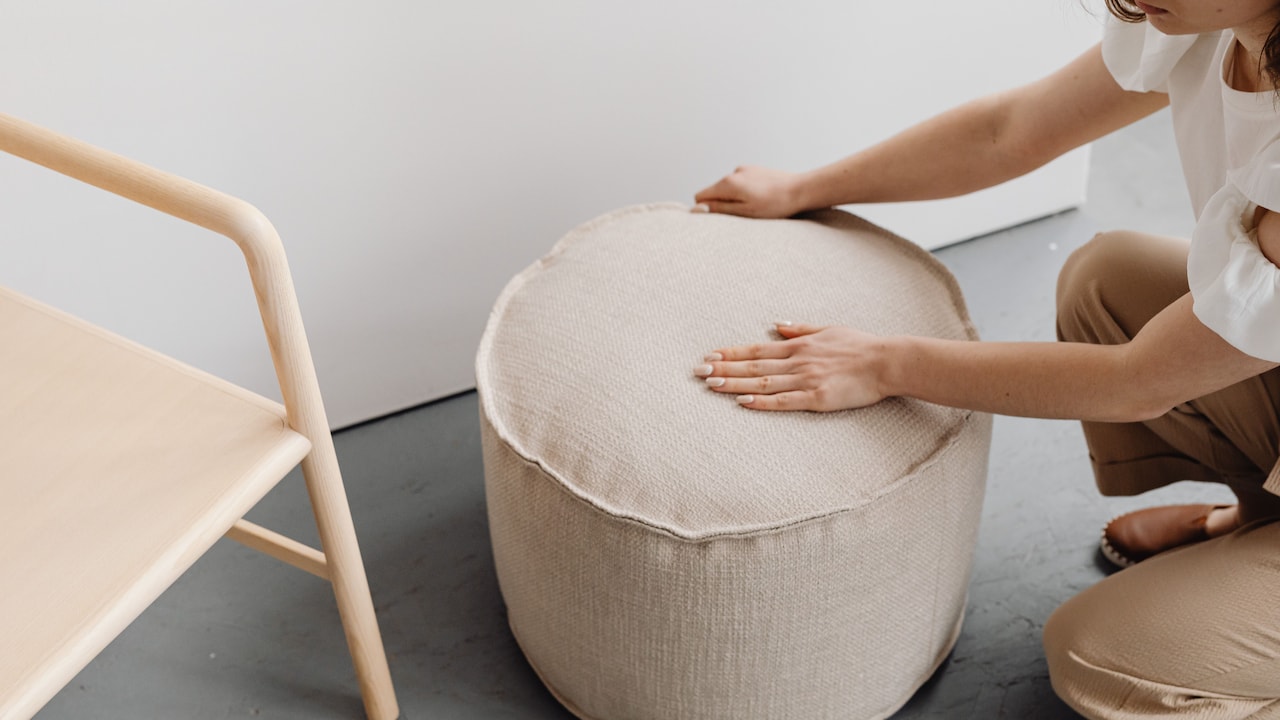
Does Storage Make Ottomans Lose Shape? 10 Furniture Myths Explained; Photo Credit: Pexels
What Really Makes An Ottoman Lose Its Shape?
1. Myth: Anything Stored Inside Will Eventually Distort The Ottoman
Simply using the storage compartment doesn't automatically ruin an ottoman. These pieces are designed with an internal cavity, and manufacturers generally expect owners to fill it with reasonably lightweight household belongings. Folded throws, spare cushion covers, bedsheets and similar items usually cause little trouble when stored sensibly.
Problems start when stored objects constantly push against the walls. A thick quilt squeezed into a compartment that barely accommodates it can create outward pressure. The same applies to rigid storage boxes packed tightly from edge to edge. Over months, that pressure may encourage thinner side panels to bow slightly.
The construction matters too. An ottoman with a strong wooden or engineered-wood frame handles internal pressure far better than one built mainly from thin boards and upholstery.
Think of the storage section as a cupboard rather than a suitcase. Filling the available space makes sense. Compressing belongings until the lid needs both hands and a small wrestling match to close does not. A little breathing room can help the furniture keep its original lines for longer.
Also Read: Top 7 Stylish Ottomans That Add Seating, Storage And Colour To A Room
2. Myth: Heavy Storage Only Affects The Bottom Panel
Heavy belongings may sit on the base, but their effect doesn't necessarily stop there. Weight transfers through the ottoman's structure, especially when the frame has limited reinforcement.
Suppose an ottoman becomes the unofficial home for several thick books, dumbbells, tools or stacks of old magazines. The bottom panel carries most of that weight, but the surrounding joints also take additional strain. Over time, screws can loosen slightly, corner joints can shift and the base may begin to sag. Once the frame moves even a little, the upholstery above it can start looking uneven.
The issue becomes more noticeable when someone regularly sits on the same ottoman. Now the frame handles weight from above and below.
That doesn't mean every heavy object must stay out. The better approach involves checking the manufacturer's recommended storage and seating capacity where available. Spread weight across the base instead of concentrating it in one corner.
An ottoman shouldn't become the household equivalent of that one drawer containing batteries, tools, paperwork and mysterious cables from 2014. Storage works best when the furniture doesn't have to prove its strength every day.
3. Myth: A Bulging Side Always Means The Ottoman Is Overfilled
A bulging panel certainly makes overpacking look suspicious, but internal pressure isn't the only possible explanation.
Upholstery can loosen as furniture ages. Foam underneath may shift, soften or expand unevenly. If the outer fabric no longer sits tightly against the frame, one side can appear rounded even when the storage compartment remains almost empty.
Humidity can also play a role. Wood-based materials absorb and release moisture as conditions change. During particularly humid periods, some engineered boards can swell slightly. While a well-made piece should tolerate normal seasonal changes, cheaper or poorly sealed materials may react more noticeably.
Then there is the simple matter of repeated use. People often rest their legs against one side, drag the ottoman by its upholstery or lean against it from the sofa. Gradually, padding compresses differently around frequently touched areas.
Emptying the compartment remains a useful first test. If the bulge stays after several days, however, the contents probably aren't the main problem. Check the inner panel, corner joints, padding and upholstery tension before forcing the furniture back into shape.
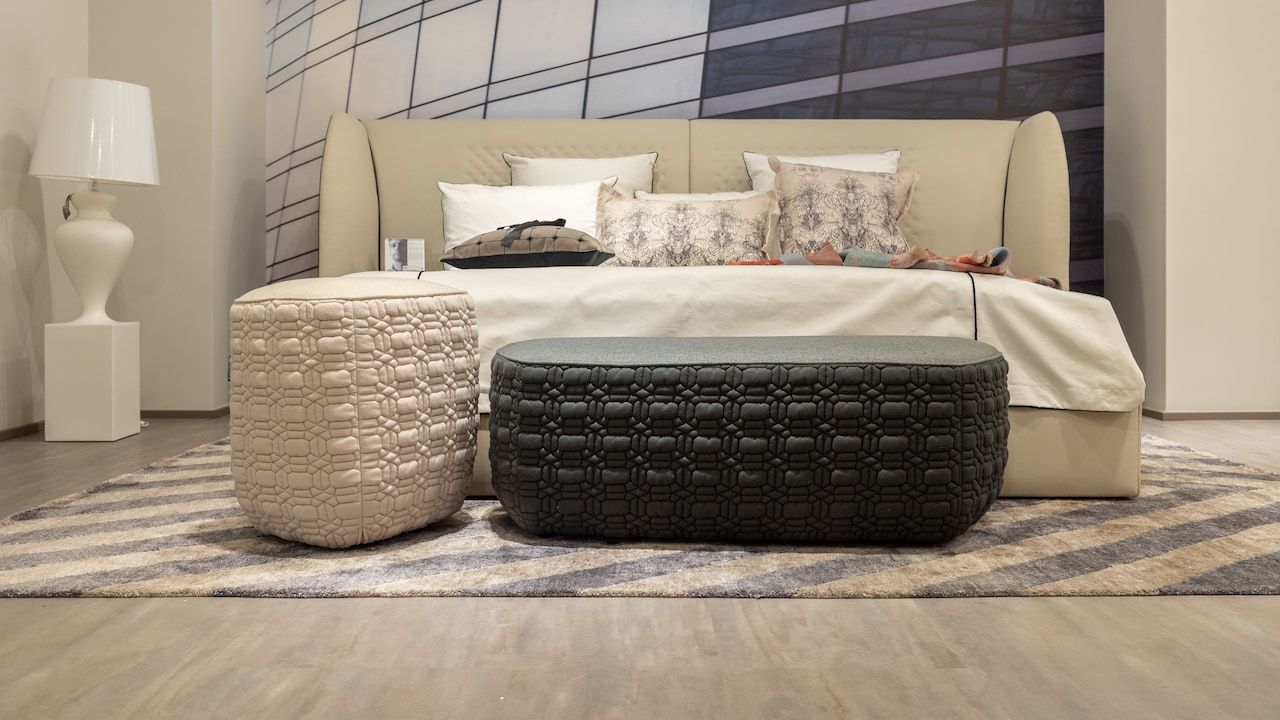
Does Storage Make Ottomans Lose Shape? 10 Furniture Myths Explained; Photo Credit: Pexels
4. Myth: Soft Items Can Never Change The Shape
A fluffy duvet hardly looks capable of damaging furniture. Yet soft items can create surprisingly strong pressure when compressed.
Anyone who has tried closing an overstuffed suitcase knows the principle. Fabric might feel soft in the hand, but several folded blankets packed into a confined space resist compression. Once the lid closes, those belongings push outward and upward while trying to regain their original volume.
An ottoman packed with winter quilts, pillows, bulky jackets or thick towels can face similar pressure. The lid may start sitting slightly higher. Side panels may bow outward. Hinges can also face additional strain when stored belongings press against the lid from below.
The danger comes from compression, not softness itself.
There is a simple visual test. After placing everything inside, the lid should lower naturally without needing significant downward pressure. If someone has to sit on the lid to close it, the compartment needs editing.
Vacuum bags can help with bulky textiles, but avoid filling the newly available space with even more belongings. Creating extra room only to pack twice as much defeats the purpose rather spectacularly.
5. Myth: Sitting On A Storage Ottoman Cannot Affect Its Shape
Many ottomans double as occasional seats, but “occasional” deserves some attention. A piece designed mainly as a footrest and storage box may not have the same structural support as a dedicated bench.
Regular sitting puts downward pressure on the lid, hinges, frame and padding. If someone repeatedly sits near the same edge, that pressure becomes uneven. Foam can flatten there first, while joints beneath the seat may gradually loosen.
The result can look like storage-related distortion. The lid starts dipping slightly in the middle, one side appears lower or the upholstered edge loses its crisp shape. Meanwhile, the belongings inside may be completely innocent.
Check the intended weight capacity before treating an ottoman as permanent extra seating. Larger bench-style models often provide stronger frames and better internal bracing than compact footstools.
How someone sits matters as well. Dropping onto the edge creates far more sudden force than sitting gently near the centre.
An ottoman can certainly become useful seating when its design supports it. Just don't assume every padded lid secretly wants a second career as a sofa.
6. Myth: If The Lid Closes, The Ottoman Is Not Overfilled
A closed lid doesn't necessarily mean the storage level is safe. Hinged lids have leverage, and a determined push can compress quite a lot underneath.
Watch how the lid behaves rather than simply checking whether it shuts. Does it spring upward when released? Does one corner sit higher? Does closing it require pressure? Do the hinges make noises they didn't make before?
These small clues suggest the contents are pushing back.
Continued pressure can gradually affect hinge alignment. Once that happens, the lid may stop meeting the frame evenly. People sometimes respond by tightening the hinges repeatedly, but that treats the symptom rather than the cause if overfilling continues.
Ideally, stored belongings should sit just below the closing line, leaving the lid free to operate without resistance. This also reduces the chances of fabric or clothing becoming trapped near the hinges.
There's another practical benefit: finding things becomes easier. When opening an ottoman releases an avalanche of blankets, charging cables, and festive cushion covers, the furniture has probably crossed from useful storage into archaeological excavation. A little space inside isn't wasted space. It protects the mechanism and makes everyday use far less chaotic.
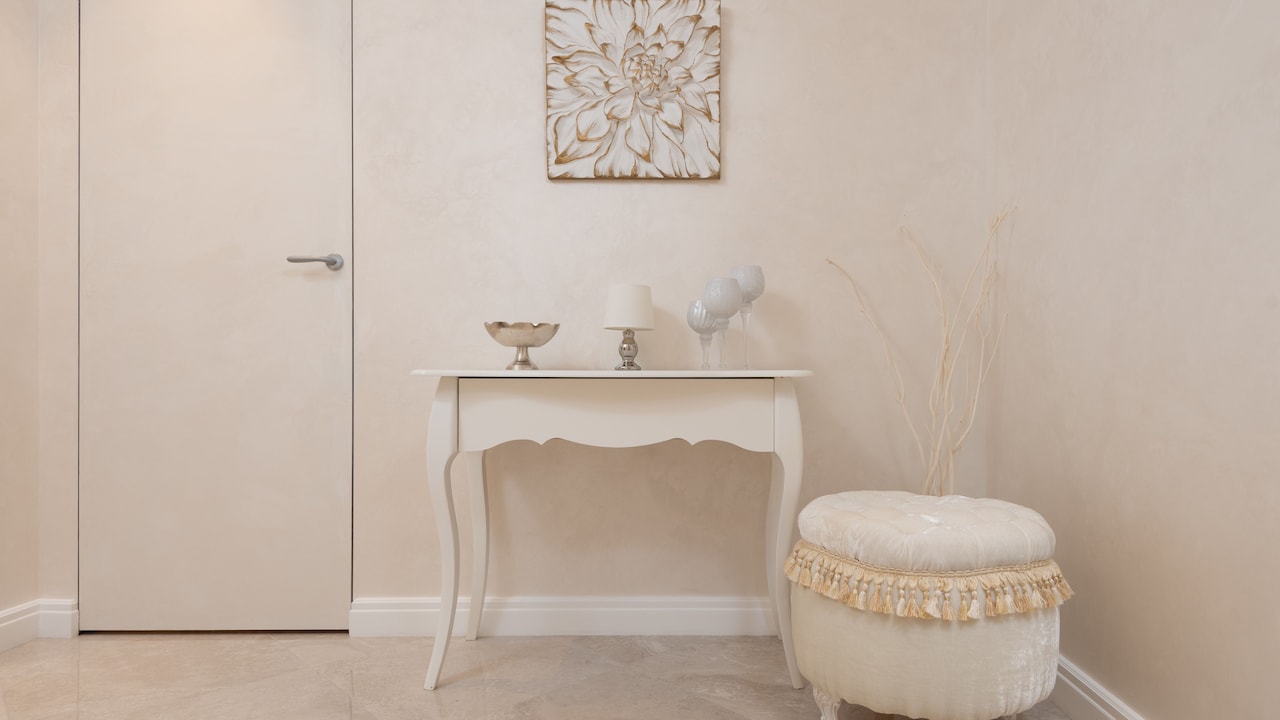
Does Storage Make Ottomans Lose Shape? 10 Furniture Myths Explained; Photo Credit: Pexels
7. Myth: Foam Quality Only Affects Comfort
Foam does far more than make an ottoman pleasant to touch. It also creates much of the furniture's visible shape.
The crisp edges and gently rounded top that look attractive in a showroom often depend on carefully cut foam beneath the upholstery. As foam ages, repeated pressure breaks down its internal structure. Lower-density foam generally softens and compresses faster, particularly in areas that receive frequent use.
That can make an ottoman look misshapen even when its wooden frame remains perfectly square. The centre may sink, corners may appear sharper because surrounding padding has flattened or one frequently used side may look thinner.
Heat and humidity can accelerate deterioration in some foam materials too. Add daily foot pressure, children climbing onto the ottoman or someone routinely using it as a seat, and uneven compression becomes more likely.
Storage has very little to do with this type of shape loss.
Press different areas of the padded surface and compare how quickly they recover. If one section stays compressed much longer than another, foam deterioration may be responsible.
Replacing padding can sometimes restore the appearance without replacing the entire ottoman, especially when the frame and upholstery remain in decent condition.
8. Myth: A Strong Frame Means An Ottoman Can Never Warp
A sturdy frame certainly improves durability, but “strong” doesn't mean indestructible.
Wooden frames respond to moisture, temperature and long-term pressure. Engineered wood can also swell or weaken if moisture reaches poorly protected edges. Meanwhile, screws and brackets may loosen after repeated movement.
Even a structurally sound ottoman can develop alignment problems when it sits on an uneven floor. One leg or corner may carry more load than the others. Over time, that slight imbalance can stress joints and make the furniture appear twisted.
Dragging the ottoman can create similar problems. Pulling one corner across the floor puts sideways force through the frame. Doing this regularly may loosen connections that were originally designed to handle mostly vertical loads.
Storage then becomes an easy suspect because any distortion appears around the storage box.
Check the ottoman on a flat surface before diagnosing the frame. Gently test each corner for movement. If it rocks when empty, the issue may involve the feet, joints or floor rather than the contents.
Good construction improves an ottoman's chances of staying square. It doesn't exempt the furniture from physics.
9. Myth: Upholstery Wrinkles Mean The Frame Has Changed Shape
A wrinkle can make an ottoman look structurally tired even when everything underneath remains intact.
Fabric stretches with use. People place their feet on the same spot, sit along one edge or repeatedly lift the ottoman by grabbing its sides. Over time, upholstery tension changes. Some materials stretch more readily than others, while synthetic leather may develop creases where the padding underneath compresses.
Humidity and heat can also affect how certain fabrics sit. A cover that looked perfectly smooth when new may gradually relax around corners.
Before assuming the frame has bowed, look at the ottoman from several angles and feel the surface underneath the loose fabric. If the frame still feels straight and solid, the visual problem may come from upholstery or foam rather than structural distortion.
Removable covers can sometimes be adjusted or cleaned according to their care instructions. Fixed upholstery may need professional tightening if looseness becomes severe.
It's worth remembering that perfectly sharp showroom edges rarely stay untouched forever. Furniture lives among feet, snacks, television marathons and the occasional guest who assumes every padded surface is a chair. A few wrinkles can simply be signs of normal use.
10. Myth: Once An Ottoman Loses Shape, Nothing Can Fix It
A misshapen ottoman doesn't automatically belong on the replacement list.
Start by emptying the storage compartment and leaving the furniture unloaded for a while. Soft padding sometimes recovers slightly once constant pressure disappears. Check whether bulky contents have been pushing against particular panels.
Next, inspect the frame and hardware. Loose screws, hinges or corner brackets may allow the structure to shift. Tightening accessible hardware can improve alignment, though damaged boards or badly stripped screw holes may need professional repair.
Flattened foam offers another repair opportunity. An upholsterer can sometimes replace worn padding while preserving the existing frame. Loose upholstery may also be tightened or reattached.
If the base has started sagging, reinforcement may help, depending on the design and condition of the ottoman. Severe moisture damage, cracked structural panels or major frame failure can make replacement more sensible.
The important part is identifying what actually changed shape. Storage pressure, foam compression, upholstery stretch and frame distortion can all look surprisingly similar from the outside.
So, before declaring the ottoman finished, investigate. Sometimes the furniture needs less of a farewell ceremony and more of a screwdriver.
Products Related To This Article
1. Inditradition Foldable Ottoman Pouf Stool with Spongy Cushioning & Inbuilt Storage Caddy
2. ShadowKart Storage Ottoman Bench for Living Room
3. Beige Contour Round Wooden Premium Ottoman Stool
4. HROY 30-INCH Storage Ottoman Bench, Footrest with Storage
5. LEGACY OF COMFORT Miajah Velvet Upholstered Flip Top Storage Bench 2 Seater Sofa Upholstered Ottoman Bench
6. Storage Ottoman Bench 80L, Foldable Storage Bench with Lid
7. Mythic Arts Round Upholstered Sitting Stool & Footrest Velvet Storage Ottoman
Internal storage can affect an ottoman's shape, but only under certain conditions. Persistent overpacking, concentrated weight and compressed bulky items can strain panels, hinges and joints. Yet foam wear, loose upholstery, uneven floors and everyday seating habits can create similar problems. Treat the compartment as practical storage rather than bottomless storage, keep pressure balanced and pay attention to small changes early. An ottoman that gets sensible use has a much better chance of keeping both its shape and its place in the living room.
(Disclaimer: This article may include references to or features of products and services made available through affiliate marketing campaigns. NDTV Convergence Limited (“NDTV”) strives to maintain editorial independence while participating in such campaigns. NDTV does not assume responsibility for the performance or claims of any featured products or services.)