Why Your Fridge Is Not Cooling Even After Repairs: The Hidden Role Of Voltage Stabilisers
Fridge not cooling even after repairs? Voltage fluctuations could be the hidden culprit. Discover how a stabiliser can protect your appliance and restore consistent cooling.
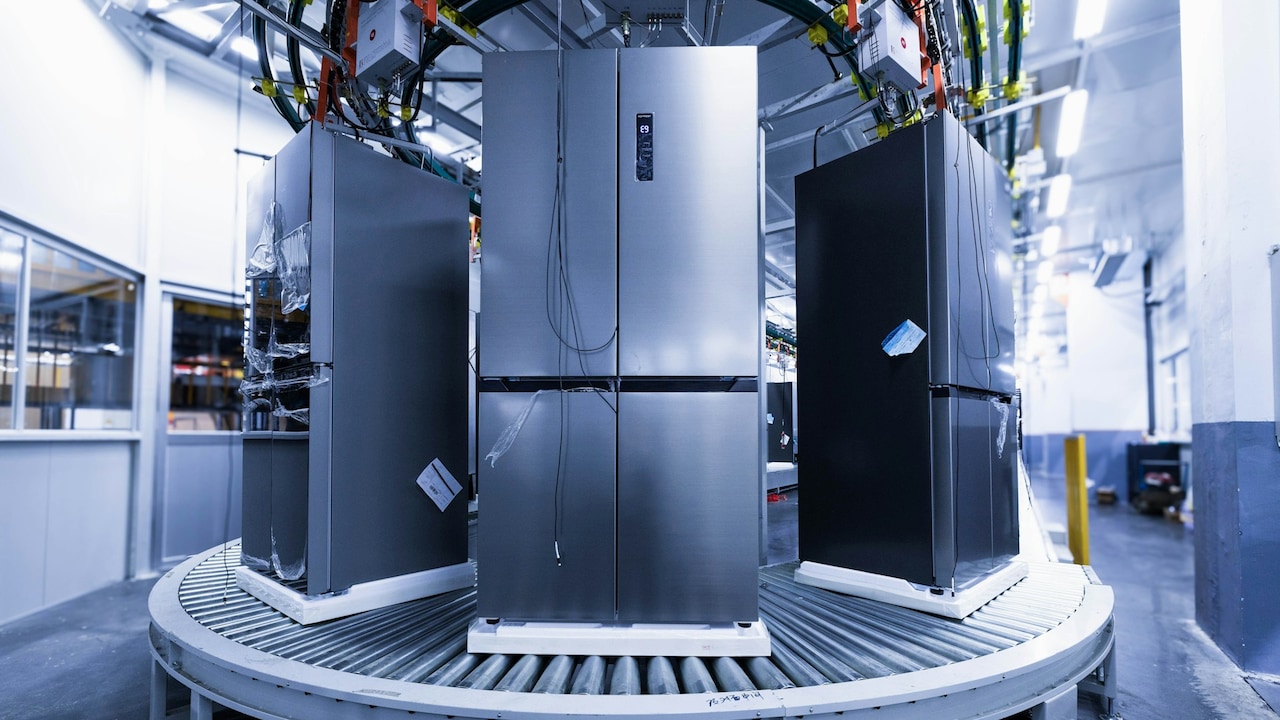
How simple investments like voltage stabilisers can boost your fridge's performance
There's a special kind of frustration that comes from opening the fridge door on a humid afternoon, expecting a blast of cool air, only to be greeted by lukewarm disappointment. The vegetables wilt faster, milk turns before its time, and leftovers begin to smell suspiciously like regret. After calling a technician, paying a bill that stings, perhaps ₹1,500 or more, and replacing a part or two, the expectation is simple: the fridge should behave.

Explore how having a voltage stabiliser can help your fridge function better; Photo Credit: Unsplash
Yet, in many homes, the problem lingers. The appliance hums, the light works, but the cooling remains unreliable. It's easy to assume poor service or faulty components. However, beneath the surface lies a less obvious but powerful influence, unstable voltage.
Electricity supply, especially in areas with frequent fluctuations, can quietly interfere with the functioning of appliances. Refrigerators, despite their sturdy build, are surprisingly sensitive to these variations. Understanding this hidden factor can save both money and repeated headaches.
Also Read: Top 5 Appliances That Makes Daily Life Easy
Hidden Factors Affecting Your Fridge's Cooling Performance
Unseen Enemy: The Problem Of Voltage Fluctuations
Voltage fluctuations rarely announce themselves. Lights may flicker briefly, or fans might slow for a moment, but these signs often go unnoticed in the rush of daily life. However, for a refrigerator, even minor variations can disrupt its delicate balance. The compressor, which acts as the heart of the appliance, depends on a steady flow of electricity to maintain consistent cooling.
When the voltage dips below or spikes above the required level, the compressor struggles. It may fail to start, shut down unexpectedly, or operate inefficiently. Over time, this erratic behaviour reduces cooling performance, even if all internal components are technically in working order.
In many households, especially during peak summer months when electricity demand surges, such fluctuations become more frequent. Air conditioners, coolers, and other heavy appliances draw power simultaneously, creating stress on the supply system. The fridge, caught in this chaos, begins to falter quietly.
Without addressing the root cause, repeated repairs only treat the symptoms. It's like fixing a leaking bucket without turning off the tap.
The Compressor's Silent Struggle
At the core of every refrigerator lies the compressor, a hardworking component that rarely gets the attention it deserves. It cycles on and off throughout the day, compressing refrigerant gas and enabling the cooling process. However, this process demands a stable voltage.
When the voltage drops too low, the compressor may fail to start. A faint clicking sound often signals this struggle. On the other hand, high voltage can cause overheating, placing undue stress on the motor. Over time, these conditions lead to wear and tear, reducing efficiency and lifespan.
Technicians often replace compressors when cooling issues persist. While this may seem like a logical solution, it doesn't address the underlying instability in the power supply. A new compressor subjected to the same fluctuations will face identical challenges.
The irony is striking: spending ₹5,000 or more on a replacement part, only to watch it degrade under the same conditions. Without voltage regulation, even the best components cannot perform reliably.
Why Repairs Alone Don't Solve The Problem
A common assumption is that every appliance issue stems from a faulty part. This belief drives repeated service calls, part replacements, and mounting expenses. While technicians focus on tangible components, such as thermostats, compressors, and fans, the invisible nature of voltage issues often escapes attention.
Repairs address immediate damage but fail to consider the environment in which the appliance operates. If voltage continues to fluctuate, new parts face the same stress as the old ones. This creates a cycle of temporary fixes followed by recurring problems.
Moreover, diagnosing voltage-related issues requires a broader perspective. It's not just about the fridge but the entire electrical setup of the home. Without proper tools or awareness, this aspect often remains overlooked.
The result is a frustrating loop: repair, relief, relapse. Breaking this cycle requires shifting focus from internal faults to external influences.
The Role Of Voltage Stabilisers Explained
Voltage stabilisers act as guardians for electrical appliances. Their primary function is simple yet crucial: to maintain a consistent voltage supply regardless of fluctuations. By regulating incoming electricity, they ensure that appliances receive power within a safe range.
For refrigerators, this stability translates into smoother compressor operation, consistent cooling, and reduced wear on components. The stabiliser absorbs the shocks of voltage spikes and compensates for drops, creating a controlled environment.
Modern stabilisers come equipped with features such as overload protection, time delay systems, and digital displays. These enhancements not only improve performance but also extend the lifespan of appliances.
Despite their importance, stabilisers are often seen as optional accessories rather than essential investments. However, considering the cost of repeated repairs and replacements, a stabiliser priced around ₹2,000 to ₹4,000 offers significant long-term value.
Common Signs Your Fridge Needs Voltage Protection
A refrigerator struggling with voltage issues often sends subtle signals. These signs may not immediately point to electricity problems, making them easy to ignore. However, recognising them can prevent further damage.
Inconsistent cooling is one of the earliest indicators. Food may spoil faster, or certain sections of the fridge may feel warmer than others. The compressor might produce unusual sounds, such as frequent clicking or humming, without proper cooling.
Another clue lies in frequent breakdowns. If the appliance requires repeated servicing within short intervals, voltage instability could be the underlying cause. Similarly, sudden shutdowns or delayed starts often hint at inadequate power supply.
Even the surrounding environment can offer hints. Frequent power cuts, noticeable dimming of lights, or fluctuations in fan speed suggest an unstable electrical system.
Paying attention to these signs can help identify the problem early, saving both time and money.

Food spoiling faster or certain sections of the fridge feeling warmer can be signs that you need a stabiliser;.Photo Credit: Pexels
Urban Living And Power Instability
City life often promises convenience, but the electricity supply can be surprisingly unpredictable. High-rise buildings, crowded neighbourhoods, and increasing energy demands place immense pressure on the power grid.
During peak hours, voltage levels may drop as multiple households use heavy appliances simultaneously. Conversely, sudden restoration after power cuts can cause voltage spikes. These variations create a challenging environment for sensitive appliances like refrigerators.
In many apartments, shared wiring systems further complicate the situation. Load distribution may not always be balanced, leading to uneven voltage supply across units. Even newly constructed buildings are not immune to these issues.
While generators and inverters provide backup during outages, they do not always regulate voltage effectively. As a result, appliances continue to face fluctuations even during backup power usage.
Understanding this context highlights the importance of additional protection measures.
Cost Comparison: Repairs Versus Prevention
Financial considerations often influence decisions about appliance care. Repairs may seem manageable in isolation, but repeated expenses quickly add up. A single service visit might cost ₹800 to ₹1,500, excluding parts.
Replacing major components like compressors or circuit boards can escalate costs to ₹5,000 or more. Over time, these expenses surpass the price of a quality stabiliser.
In contrast, investing in a stabiliser provides continuous protection. It reduces the likelihood of breakdowns, extends the lifespan of the appliance, and ensures consistent performance. The initial cost becomes negligible when compared to long-term savings.
Moreover, the convenience of avoiding repeated service calls cannot be overstated. Fewer disruptions mean less stress and more reliability in daily life.
Prevention, in this case, proves far more economical than repeated repairs.
Choosing The Right Stabiliser For Your Fridge
Selecting a suitable stabiliser involves more than picking the first option available. Different refrigerators have varying power requirements, and choosing the right model ensures optimal performance.
Capacity plays a crucial role. The stabiliser must match the power rating of the refrigerator to handle its load effectively. Additionally, features such as wide input voltage range and thermal overload protection enhance reliability.
Wall-mounted stabilisers are popular for their convenience and space-saving design. Digital displays provide real-time information, allowing users to monitor voltage levels easily.
Quality should never be compromised for cost. A reliable brand may cost slightly more, but it offers better protection and durability. Considering the value of the appliance it safeguards, this investment makes practical sense.
Making an informed choice ensures that the stabiliser performs its role effectively.
Debunking Myths Around Modern Refrigerators
A common belief suggests that modern refrigerators come with built-in stabilisers, making external devices unnecessary. While some models do offer limited protection, they are not designed to handle extreme fluctuations.
Built-in systems typically operate within a narrow voltage range. When fluctuations exceed this range, the appliance remains vulnerable. External stabilisers, on the other hand, provide broader protection and additional safety features.
Another misconception is that stabilisers consume excessive electricity. In reality, their power consumption is minimal compared to the protection they offer. The impact on electricity bills is negligible.
Some also assume that stabilisers are only necessary in rural areas. However, voltage issues are not limited by geography. Urban environments often face equally unpredictable supply conditions.
Understanding these myths helps in making informed decisions rather than relying on assumptions.
A Small Addition That Makes A Big Difference
Sometimes, the most effective solutions are the simplest ones. A voltage stabiliser may not seem like a significant upgrade, but its impact on appliance performance is substantial.
By ensuring consistent power supply, it allows the refrigerator to function as intended. Cooling becomes reliable, food stays fresh longer, and the appliance operates quietly and efficiently.
Beyond functionality, there's a sense of peace that comes from knowing the appliance is protected. No more second-guessing every unusual sound or worrying about sudden breakdowns.
In a world filled with complex solutions, this straightforward device offers a practical and dependable answer.
Products Related To This Article
1. IFB Smart Choice 331L
2. Samsung 396 L, 3 Star, Convertible 5-in-1, Digital Inverter
3. Bosch 303L, 3 Star, MaxFlex Convert Frost Free Triple Door Refrigerator
4. Whirlpool 308 L 3 Star Convertible Frost Free inverter Double Door Refrigerator
5. Godrej 183 L 2 Star 5 Years Comprehensive Warranty
A refrigerator that fails to cool despite repeated repairs can feel like an unsolved mystery. However, the answer often lies beyond the appliance itself. Voltage fluctuations, though invisible, exert a powerful influence on performance.
Recognising this hidden factor shifts the approach from reactive repairs to proactive protection. A voltage stabiliser, often overlooked, emerges as a crucial component in maintaining efficiency and longevity.
Investing in one not only reduces repair costs but also ensures consistent cooling, safeguarding both food and peace of mind. Sometimes, solving a persistent problem requires looking beyond the obvious, and in this case, the solution is as simple as stabilising the flow of power.
(Disclaimer: This article may include references to or features of products and services made available through affiliate marketing campaigns. NDTV Convergence Limited (“NDTV”) strives to maintain editorial independence while participating in such campaigns. NDTV does not assume responsibility for the performance or claims of any featured products or services.)