10 Reasons Ready-To-Wear Sarees Still Need Adjusting After You Put Them On
Ready-to-wear sarees promise effortless draping, but waist gaps, shifting pleats and uneven pallus can still cause trouble. Discover 10 common fitting issues and simple ways to fix them.
10 Ready-To-Wear Saree Issues That Affect Fit, Comfort And Draping
A saree that takes less than two minutes to wear sounds like a dream, especially when there's a wedding to attend, relatives to greet and barely enough time to finish getting ready. Ready-to-wear sarees promise exactly that convenience. No complicated pleating, no endless tucking and certainly no frantic requests for someone to straighten the pallu. Just slip into the pre-stitched garment, secure it and head out looking effortlessly elegant. Except things don't always work out quite so smoothly. The waist might feel comfortable initially but start slipping after a few steps. The pleats may look perfectly arranged in the mirror, only to bunch up when sitting. Sometimes, the pallu refuses to stay where it belongs, even though the saree supposedly eliminates traditional draping struggles. These problems don't necessarily mean the saree has poor construction. Ready-to-wear designs follow standard measurements and fixed stitching patterns, while bodies differ in proportions, posture and movement. Fabric weight, footwear and even the blouse can influence how the finished outfit sits.
10 Reasons Ready-To-Wear Sarees Still Need Adjusting After You Put Them On
Photo Credit: Pexels
Understanding these small fitting challenges makes a noticeable difference. Here are ten reasons ready-to-wear sarees still need adjusting after wearing them, along with practical solutions that help maintain a comfortable, flattering drape throughout the day.
Common Ready-To-Wear Saree Fit Issues And How To Fix Them
1. The Waistband Doesn't Always Match Your Natural Waist
Ready-to-wear sarees usually feature elasticated waistbands, hooks, zips or adjustable closures. These details make dressing easier, but they don't guarantee a perfect fit around every waist.
Two people who wear the same clothing size can have completely different waist and hip proportions. One might prefer wearing the saree slightly above the navel, while another feels more comfortable positioning it lower. A fixed waistband doesn't always accommodate these differences.
The problem becomes obvious when the saree starts sliding down during walking or feels restrictive after sitting for a while. Elastic bands can also roll inward, creating an uncomfortable ridge beneath the fabric.
Before leaving home, check whether the waistband stays secure when sitting, bending and taking a few steps. If the saree has adjustable hooks, experiment with different positions rather than automatically choosing the tightest setting.
A tailor can add extra fastening points or alter a waistband that consistently feels loose. For elasticated designs, replacing stretched elastic may restore the original fit.
The goal isn't to make the waistband extremely tight. It should support the saree comfortably without digging into the skin or requiring constant readjustment.
2. Pre-Stitched Pleats Can Bunch Up Around The Stomach
Perfectly arranged pleats often attract buyers to ready-to-wear sarees. The fabric comes neatly folded and stitched, removing one of the most time-consuming parts of traditional draping.
However, those carefully constructed pleats don't always fall naturally against every body shape.
Some sarees feature narrow pleats stitched closely together, while others have wider folds designed to create volume. Depending on the fabric and placement, these folds can gather around the lower abdomen and make the front appear bulkier than expected.
The issue becomes more noticeable when sitting, particularly with stiff fabrics such as organza or heavily embellished materials. Pleats that looked smooth while standing may spread outward or form awkward creases.
Start by checking where the pleats begin. They should generally fall from a comfortable position near the front of the waist rather than pulling tightly across the stomach.
A gentle adjustment to the waistband can sometimes improve their alignment. Avoid tugging individual stitched folds too aggressively, as this may distort their shape.
If bunching persists, a tailor can reposition the pleated section or reduce unnecessary fabric volume. Small alterations can help the saree retain its intended structure without creating unwanted bulk.
3. The Pallu Length May Not Suit Your Height
A beautifully arranged pallu can completely transform a saree. It adds movement, highlights the border and often carries the most elaborate embroidery or decorative details.
Unfortunately, ready-to-wear sarees generally come with predetermined pallu lengths.
Someone with a petite frame may discover that the pallu extends much farther down the back than expected. Taller wearers might experience the opposite problem, with the fabric ending higher than their preferred position.
Shoulder width and torso length also influence how the pallu falls. Consequently, two people of similar height may find that the same saree looks noticeably different on them.
When trying on the saree, check the pallu from the front, side and back. Make sure the border sits where intended and doesn't interfere with arm movement.
For an excessively long pallu, carefully arranging extra fabric near the shoulder can improve its appearance. A discreet pin may help secure the arrangement without disturbing the embroidery.
A short pallu requires more thoughtful alteration, especially when the design includes continuous borders. A tailor may adjust the shoulder attachment or drape position, although additional length isn't always possible.
The right pallu length should complement your proportions without demanding attention every time you move.
10 Reasons Ready-To-Wear Sarees Still Need Adjusting After You Put Them On
Photo Credit: Pexels
4. The Saree Length Changes With Different Footwear
That gorgeous pair of heels might look perfect with a saree, but changing footwear can unexpectedly affect the entire outfit.
Ready-to-wear sarees often have fixed hemlines. Unlike traditionally draped sarees, where the wearer can adjust fabric length while tucking, stitched versions offer less flexibility.
A saree that falls beautifully with three-inch heels may drag across the floor when paired with flats. Conversely, a saree altered for sandals might appear noticeably short with higher heels.
This becomes particularly inconvenient during weddings, when comfortable footwear often replaces decorative heels after several hours of standing and dancing.
Always try on the saree with the footwear you intend to wear. Walk around and check whether the hem clears the floor without exposing more of your ankles than you'd prefer.
If the saree feels excessively long, a tailor can adjust the hem or waist attachment. However, shortening an embellished border requires care to preserve the design.
For occasions involving footwear changes, choose shoes with similar heel heights whenever possible.
A little planning prevents the familiar sight of someone holding up their saree while trying to cross a crowded function hall.
Also Read: 7 Sequin Sarees for a Wedding Cocktail Night
5. The Hip Area Can Feel Tight Despite A Comfortable Waist
A ready-to-wear saree might fasten perfectly around the waist yet feel surprisingly restrictive around the hips.
This happens because pre-stitched designs often follow fixed hip measurements. Unlike a conventional saree, which allows the wearer to distribute fabric according to body shape, a ready-made silhouette may leave limited room for adjustment.
The problem becomes especially noticeable when walking quickly, climbing stairs or sitting cross-legged. Fabric that initially looked smooth may start pulling across the hips, creating diagonal wrinkles or uncomfortable tension.
Mermaid-style sarees and designs with fitted lower sections are particularly sensitive to differences in hip proportions.
Before buying, compare the garment's hip measurements with your own rather than relying entirely on the waist size.
During a trial fitting, take several normal steps and sit down to check whether the fabric allows comfortable movement.
If the saree feels restrictive, a tailor may be able to release the side seams or adjust the stitched pleats, provided sufficient fabric allowance exists.
Avoid assuming that tightness will disappear after wearing the saree for a few hours. A comfortable fit should allow natural movement from the beginning.
6. Lightweight Fabrics Don't Always Stay In Place
Chiffon, georgette and satin ready-to-wear sarees have an undeniable appeal. Their fluid movement creates an elegant silhouette without the stiffness of heavier materials.
However, that same lightweight quality can make them unexpectedly difficult to control.
Slippery fabrics may gradually shift around the waist or shoulder, particularly when the inner lining and outer fabric move differently. A loosely secured pallu can also slide backwards during everyday activities.
Even pre-stitched pleats may lose their crisp appearance when soft fabric folds against itself repeatedly.
The blouse fabric plays an important role here. A satin pallu resting against another smooth material may slide more easily than one positioned over textured cotton or a fabric with greater grip.
Consider securing the pallu at a discreet point near the shoulder. Fashion tape designed for clothing can provide additional support on suitable fabrics, although delicate materials require careful testing.
Check the inner lining as well. If it twists independently of the outer layer, the saree may need minor stitching adjustments.
Rather than adding several visible pins, focus on securing the areas responsible for movement. A few well-placed supports usually create a neater result.
7. The Shoulder Drape May Not Match Your Blouse Design
Ready-to-wear sarees often assume a fairly standard blouse shape when manufacturers determine the pallu attachment and shoulder placement.
Yet blouse designs vary enormously.
A sleeveless blouse, high-neck blouse, boat-neck design or heavily embroidered piece can change how fabric rests across the shoulder. Even sleeve padding and decorative embellishments influence the final drape.
A pallu that looks balanced with a simple blouse might pull awkwardly across a blouse with structured shoulders. Similarly, an attached pallu may conceal a decorative neckline that the wearer hoped to showcase.
This can feel particularly disappointing when both garments look beautiful separately but refuse to cooperate once worn together.
Try the complete outfit before the occasion rather than assessing the saree and blouse independently.
Check whether the pallu restricts shoulder movement or creates unwanted folds near the neckline.
Depending on the saree's construction, a tailor may reposition its shoulder attachment or modify the pleating arrangement.
For designs that allow some flexibility, changing the pallu angle can also improve the overall appearance.
The blouse and saree should complement each other, not compete for space around the shoulder.
8. The Pleats May Shift When You Sit Or Walk
A ready-to-wear saree can look impeccable while standing in front of a mirror. Unfortunately, real celebrations involve considerably more movement.
There are stairs to climb, chairs to navigate, relatives to greet and occasionally a dance floor that proves impossible to ignore.
Even stitched pleats can shift when the fabric surrounding them moves. Some designs secure only the upper portion of the folds, allowing the lower sections to swing freely.
During sitting, these loose sections may spread apart. Walking can also cause the pleats to rotate slightly towards one side, making the front appear uneven.
Before an event, test the saree under ordinary movement conditions. Walk briskly, sit on a chair and stand up without deliberately holding the pleats in place.
Notice whether the folds return to their original position naturally.
If necessary, a tailor can add discreet internal tacking at suitable points to stabilise the arrangement. However, excessive stitching may restrict movement and spoil the natural fall.
The aim is controlled flexibility rather than a completely rigid garment.
After all, an outfit designed to save dressing time shouldn't require constant supervision throughout the evening.
9. Heavy Borders And Embellishments Can Pull The Saree Out Of Shape
Embellished sarees make a striking impression, especially during weddings, receptions and festive gatherings. Sequins, zari borders, beads and embroidered panels add character to otherwise simple fabrics.
However, decorative details also introduce additional weight.
When a heavy border runs along the pallu, gravity can pull the fabric backwards or towards one shoulder. Similarly, dense embellishments around the lower edge may influence how the saree hangs.
A lightweight base fabric combined with a heavily decorated border can create an uneven distribution of weight. The result may be twisting, sagging or repeated movement around the waistband.
Check whether the saree feels balanced when worn. If one shoulder constantly carries more weight, the pallu attachment might need repositioning.
Choose a supportive blouse and ensure the saree's waistband sits securely before adjusting the decorative sections.
Avoid attaching heavy embellishments directly to delicate blouse fabric using a single pin. The concentrated pressure could damage the material.
A tailor can sometimes add concealed support or distribute the weight through stronger attachment points.
Decorative borders should enhance the saree's movement rather than turn every step into a balancing act.
10. Standard Sizes Rarely Account For Individual Body Proportions
Perhaps the biggest misconception about ready-to-wear sarees is that selecting the correct clothing size guarantees a perfect drape.
In reality, size labels provide only a starting point.
Two people may share identical waist and hip measurements but have different torso lengths, shoulder widths and body proportions. These differences affect how the saree sits, particularly when the pleats and pallu have fixed positions.
Posture matters too. Someone with naturally rounded shoulders might find that the pallu slips forward, while another person may notice fabric gathering around the lower back.
Manufacturers also follow different measurement charts. A medium in one collection might fit differently from a medium in another.
Before purchasing, examine the product's actual measurements and construction details. Look for adjustable closures, fabric allowances and detachable or repositionable draping sections.
When possible, choose designs that offer some flexibility instead of relying entirely on fixed stitching.
A tailor can often improve the fit through small changes to the waist, hip or shoulder attachments.
These alterations don't defeat the purpose of buying a ready-to-wear saree. They simply adapt a convenient garment to the person wearing it.
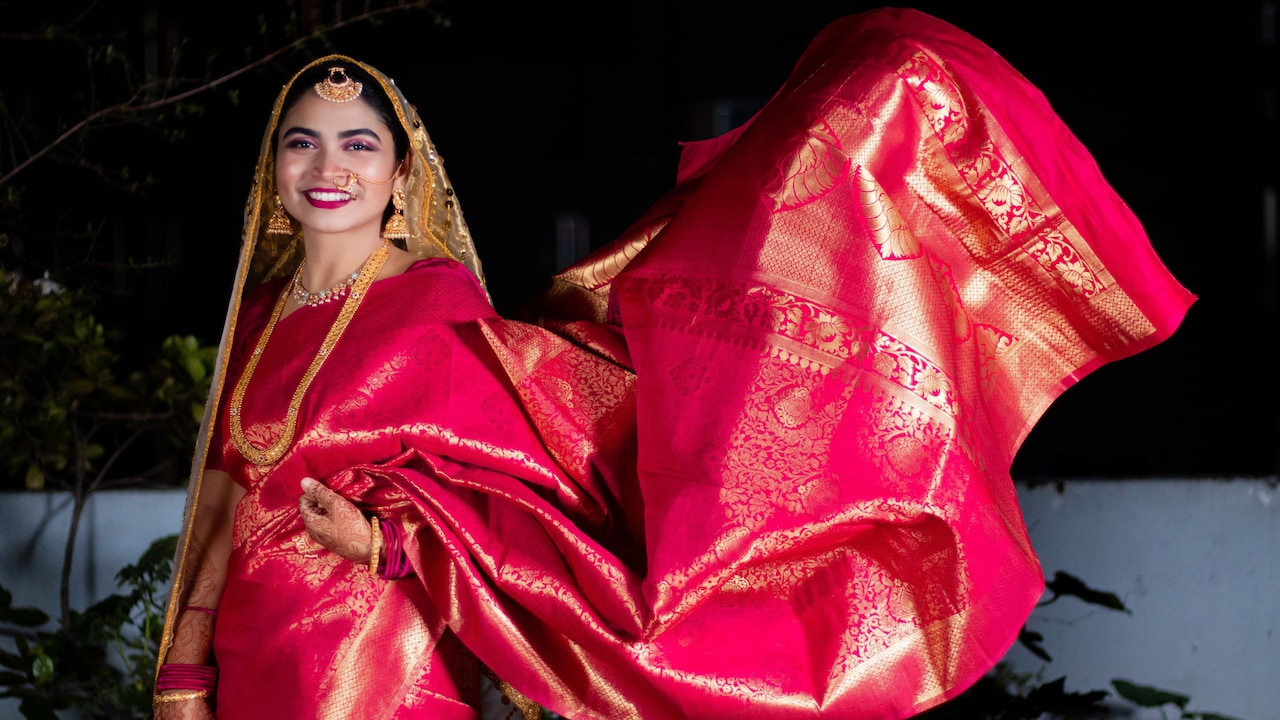
10 Reasons Ready-To-Wear Sarees Still Need Adjusting After You Put Them On
Photo Credit: Pexels
Products Related To This Article
1. RACHNA Blue Color Ombre Dyed Poly Silk Ready to Wear Saree Saree
2. Silk Land Art Silk Uppada Pattu Ready to Wear Saree
3. Satrani Ethnic Motifs Woven Design Ready to Wear Saree
4. Silk Land Floral Zari Tissue Ready to Wear Block Print Saree
5. RACHNA Ethnic Motifs Satin Ready to Wear Chettinad Saree
6. KALINI Ombre Pure Linen Fusion Saree
7. SAMANTHA Linen Blend Belted Saree
Ready-to-wear sarees make traditional dressing considerably easier, but convenience doesn't automatically guarantee a flawless fit. Waistbands, pleats, pallu lengths and fabric movement can all behave differently once the saree meets everyday activity.
The good news is that many of these problems require only minor adjustments rather than major alterations. Checking measurements, trying the outfit with the intended footwear and testing basic movement can prevent last-minute frustration.
Ultimately, a ready-to-wear saree should simplify getting dressed without sacrificing comfort or personal style. A little attention to fit ensures that the wearer can enjoy the celebration instead of spending the evening correcting rebellious pleats.
(Disclaimer: This article may include references to or features of products and services made available through affiliate marketing campaigns. NDTV Convergence Limited (“NDTV”) strives to maintain editorial independence while participating in such campaigns. NDTV does not assume responsibility for the performance or claims of any featured products or services.)