How To Choose The Best Cardigans That Keep Their Shape And Style All Season
Choose cardigans that dont sag, pill, or lose shape. This guide covers fibres, knit, fit, finishing and care so they stay stylish all season.

How To Choose The Best Cardigans For Women: Tips To Prevent Sagging, Pilling, And Stretching.
Cardigans sit in a special spot in the wardrobe: smarter than a hoodie, gentler than a winter jacket, and forgiving enough for sudden weather mood swings. That's why so many families reach for them during early-morning school runs, office commutes, and those “quick chai outside” plans that somehow turn into a two-hour catch-up.
Yet cardigans can disappoint. Some stretch out at the elbows by week two. Some twist at the seams. Some look fine on the hanger, then cling awkwardly after one wash. The solution isn't buying the most expensive option or hoarding ten backups. The solution is knowing what to look for: fabric, knit, fit, finishing, and care, so one great cardigan can carry the season with style intact.
Below are 10 practical pointers, with real-life cues and small details that make a big difference.
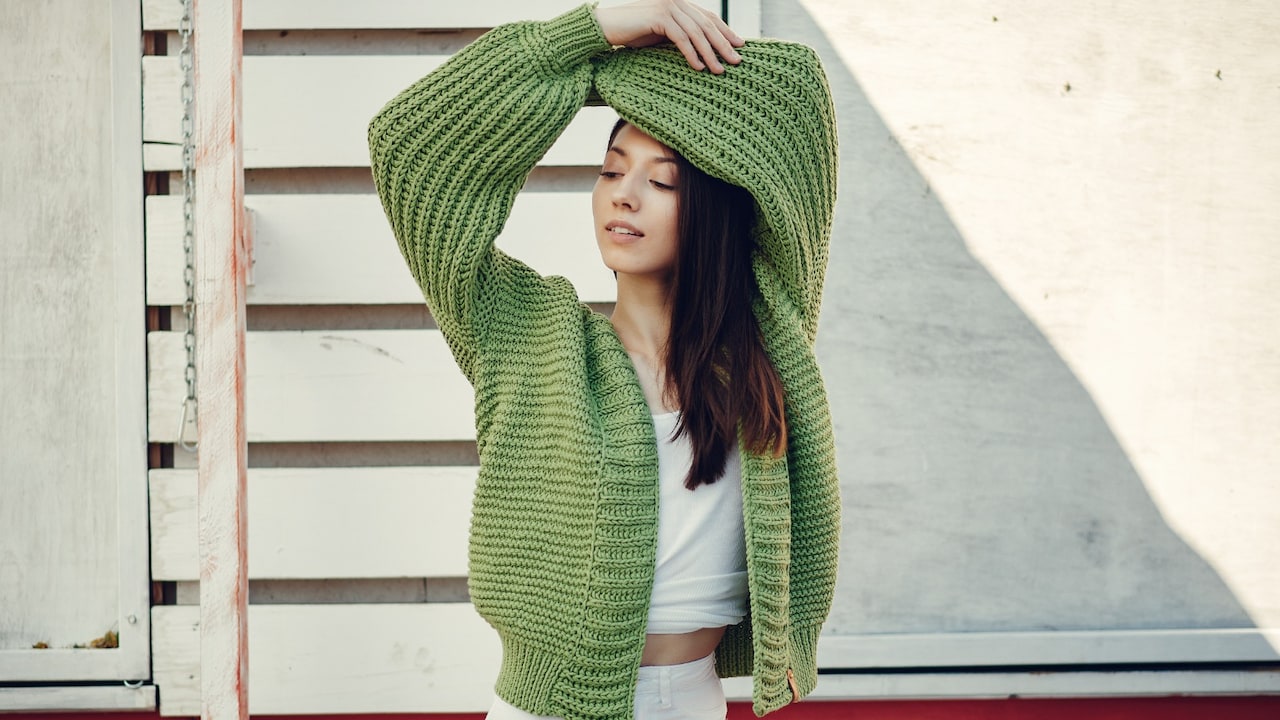
How To Choose A Cardigan That Keeps Its Shape All Season; Photo Credit: Pexels
10 Smart Ways To Pick Cardigans That Keep Their Shape All Season
1) Start With Fibre: Shape Depends On What It's Made Of
A cardigan's “memory” comes from its fibre. Natural fibres like wool and cotton breathe well, but each behaves differently. Merino wool often holds shape nicely and feels soft, while chunky lambswool can relax over time in high-movement areas. Cotton cardigans suit mild winters and air-conditioned offices, yet pure cotton can stretch if the knit runs loose.
Blends can work brilliantly. A touch of nylon or polyester (even 10–20%) often improves recovery, so elbows bounce back instead of bagging out. Acrylic gets a bad name, but higher-quality acrylic blends can resist stretching and handle frequent washing, useful for busy weeks when laundry piles up faster than weekend plans.
A quick store test helps: gently tug a small section near the hem and release. Good fibres spring back. If the fabric stays pulled or looks wavy, it may lose shape soon. The goal isn't a “perfect” fibre, just one that fits the climate, lifestyle, and washing reality.
2) Check The Knit Structure: Tight Knits Usually Stay Neater
Knit structure matters as much as fibre. A tight, even knit tends to keep its form and looks sharper through the season. Loose, open knits feel cosy and drapey, but they can stretch out, snag easily, and lose their tidy outline, especially with heavy bags, playful pets, or jewellery that loves to catch.
Look closely at the stitches. Small, consistent loops suggest stability. A rib knit around cuffs and hem often helps, too, because ribbing pulls back into place. Chunky knits can still hold shape if the yarn feels resilient and the construction is well finished. The trick is balance: chunky without floppy, soft without limp.
Try this simple move: hold the cardigan up by the shoulders. If the body lengthens dramatically under its own weight, expect stretching over time. A cardigan should hang, not droop. Think of it like a good dosa batter, spreadable, yes, but it still needs structure.
Also Read: Top 5 Long Sleeve Knitted Cardigans For Women Under ₹1000
3) Seams And Finishing Reveal The Quality Faster Than Branding
Fancy labels don't always mean sturdy construction. Seems to tell the truth. Turn the cardigan inside out and inspect. Neat, even seams with no loose threads indicate care in manufacturing. If seams look twisted, bulky, or uneven, the cardigan may skew after washing, making the front panels sit oddly.
Also, check the shoulder seams. A well-finished shoulder supports the garment's weight and stops that sad “sliding off” look. Side seams should align, and stripes (if any) should match reasonably well. Buttons should feel secure, with tight stitching and no wobble.
Pay attention to the edges, front placket, neckline, and hem. A clean, reinforced edge helps the cardigan keep its frame. When edges ripple on day one, they will not magically behave on day thirty. This is the unglamorous part of shopping, but it saves money and wardrobe frustration.
4) Choose A Fit That Allows Movement Without Excess Fabric
Fit decides whether a cardigan looks polished or tired. Too tight and it strains at buttons, pulling the knit out of shape. Too loose and it drags down, stretching elbows and pockets. The sweet spot allows comfortable movement while keeping a defined line through the shoulders and torso.
Check shoulder placement first. The seam should sit close to the shoulder edge, not drop halfway down the arm (unless the style is intentionally slouchy). Then check sleeve length, slightly past the wrist bone works for warmth, but excessive length causes constant tugging and stretching. The body should skim, not cling.
Try the “real life” test: raise arms like reaching for the top shelf, then sit and cross arms. If the cardigan rides up dramatically or pulls at the back, it may distort over time. A well-fitting cardigan feels easy, like it belongs on the body rather than negotiating for space.
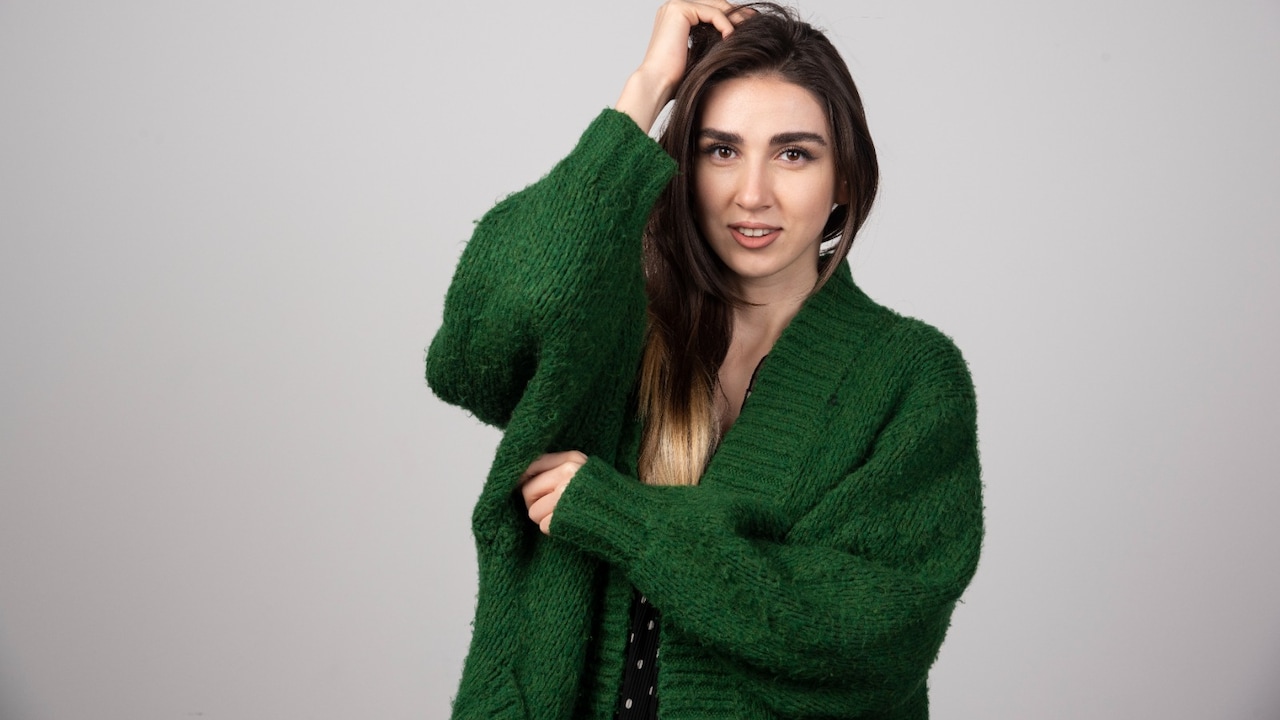
How To Choose A Cardigan That Keeps Its Shape All Season; Photo Credit: Pexels
5) Buttons, Zips, And Plackets: Closures Keep The Front From Warping
Closures affect shape more than expected. A cardigan with flimsy buttons can gape, dragging the front panels and stretching the buttonholes. Strong, well-spaced buttons reduce strain and help the cardigan sit flat. Buttonholes should look tight and clean, not fuzzy or oversized.
Zips add structure, but only if the zip tape feels sturdy. A wavy zip line often signals trouble; it can buckle and distort the knit. For button cardigans, check the placket; double-knit or reinforced plackets hold up better and keep that crisp front line.
If shopping online, zoom into close-up images of the button area and neckline. In-store, fasten every button. Any pulling or gaping on the rack will amplify after wear. A cardigan should close smoothly without looking like it's holding its breath.
6) Mind The Weight: Too Heavy Sags, Too Light Loses Presence
Cardigan weight plays a quiet role in shape retention. Very heavy cardigans can sag under their own weight, stretching shoulders and elbows, especially if worn open all day. Very light cardigans can lose their crisp look and appear limp, particularly in humid weather or after a long commute.
Aim for a medium weight that suits daily routines. For office and casual wear, a mid-weight knit offers warmth without dragging down. For colder regions and late-night outings, heavier knits work best when the shoulders and seams feel reinforced.
A helpful check: hold the cardigan by one shoulder and lightly shake. If the fabric swings wildly and stretches in the process, it may slump later. If it feels like a stiff board, comfort may suffer. The best weight feels substantial yet flexible, like a good shawl that drapes gracefully but still looks put together.
7) Watch Out For Pilling: Pills Make Even A Great Cardigan Look Old
Pilling doesn't always mean poor quality, but it does affect how “new” a cardigan looks. Pills form when fibres rub, under arms, at sides, where a handbag strap sits, or when toddlers cling like koalas. Softer yarns often pill more, especially short-staple fibres.
To reduce pilling, choose tighter knits and smoother yarns. Merino can pill, but higher-quality merino often pills less and recovers better. Blends can help here, too. In-store, rub a small area gently between fingers. Excess fuzz right away suggests more pilling later.
A cardigan can still be a winner if it pills mildly and responds well to a fabric comb. The key is avoiding the kind that turns fuzzy after two wears. Nobody wants a cardigan that looks like it survived a wrestling match with a Velcro wallet.
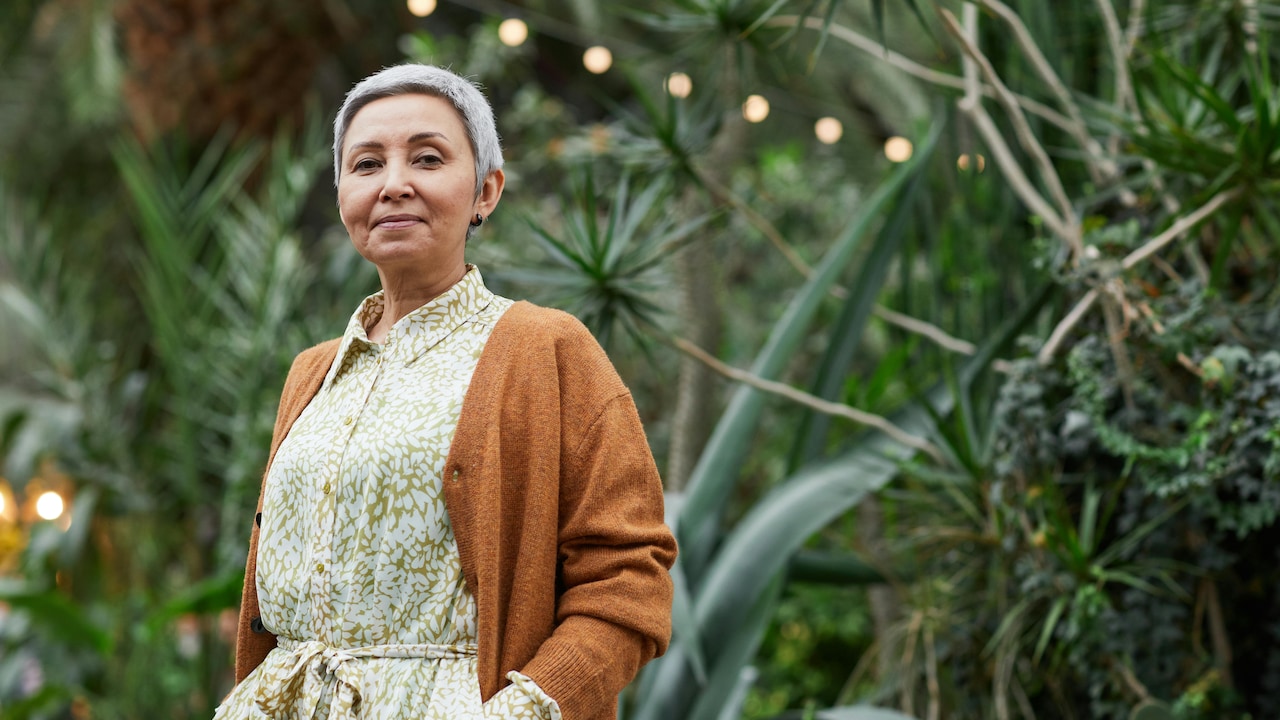
How To Choose A Cardigan That Keeps Its Shape All Season; Photo Credit: Pexels
8) Colour And Pattern Choices That Stay Stylish Beyond One Season
A cardigan that keeps its “style” isn't only about shape, colour and pattern play a part. Trendy shades can look dated quickly, while classics last longer and pair with more outfits. Neutrals like navy, charcoal, beige, cream, and black stay reliable. Earth tones work beautifully too, especially with denim and solid kurtas.
Patterns can be smart if chosen carefully. Fine stripes, small checks, or subtle texture knits look timeless. Loud prints can feel fun, but limit styling options, which often leads to less wear, and less wear can still mean wasted money.
Think of wardrobe maths: a cardigan that works with five outfits gives better value than one that only matches a single top. Spending ₹2,500 on a cardigan worn weekly beats spending ₹1,200 on one that stays in the cupboard “for special days” that never arrive.
9) Care Instructions Matter: Easy Care Often Means Better Longevity
A cardigan can look incredible, but if it demands complicated care, reality will win. Many households juggle tight schedules, sudden travel plans, and laundry that never ends. Choose care instructions that match real life, or the cardigan will shrink, stretch, or lose its finish.
If hand-washing only feels unrealistic, pick a machine-washable option with a stable knit. For wool, look for “superwash” merino if available. Always check whether the label suggests flat drying; hanging can stretch knitwear into a long, sad scarf shape.
Even with easy-care knits, gentle habits help: wash inside out, use a mild detergent, skip harsh spinning, and dry flat. Store folded rather than on hangers. These habits take minutes but protect shape for months. A cardigan should not require a life coach, only a little common sense.
10) Shop Smarter: Touch, Try, And Think Cost-Per-Wear
Smart cardigan shopping mixes feeling and logic. Touch the fabric and trust the senses, scratchy rarely becomes cosy, and overly floppy rarely becomes structured. Try it on with the kind of clothes usually worn: office shirt, T-shirt, kurta, or dress. Check how it sits at the shoulders and how it looks when unbuttoned.
Then think cost-per-wear. A cardigan priced at ₹3,000 that lasts three seasons and gets worn twice a week can be a better deal than a ₹1,000 cardigan that loses shape in a month. Also consider where it will live: a daily commuter cardigan needs sturdiness; an occasional dinner cardigan can be more delicate.
Finally, do a quick “mirror reality” check. If it feels comfortable, looks neat, and suits the day-to-day routine, it's a good sign. A cardigan should make mornings easier, not add another tiny decision to an already busy day.
Products Related To This Article
1. DressBerry Curve Fair Isle Cardigan
2. Roadster The Life Co. Mock Pocket Ribbed Cardigan
3. Bebe Cropped Open Knit Pure Cotton Cardigan Sweater
4. DressBerry Women Ribbed Floral Crochet Acrylic Cardigan
5. Mast & Harbour Women Floral V-Neck Cardigan
A cardigan that keeps its shape and style all season doesn't rely on luck. It comes down to fibre, knit structure, finishing, fit, and care, plus a little honesty about how life really runs. A well-chosen cardigan stays crisp at the shoulders, behaves at the elbows, and looks presentable even after long days, crowded commutes, and surprise weather changes.
The best part? Once the right cardigan enters the wardrobe, it becomes the dependable piece that saves outfits on rushed mornings. It turns a simple tee into something polished, adds warmth without drama, and makes the whole season feel a bit more comfortable. Choose carefully, care gently, and let the cardigan do its quiet, stylish work.
(Disclaimer: This article may include references to or features of products and services made available through affiliate marketing campaigns. NDTV Convergence Limited (“NDTV”) strives to maintain editorial independence while participating in such campaigns. NDTV does not assume responsibility for the performance or claims of any featured products or services.)