10 Reasons Sunglass Arms Become Loose Over Time And How To Restore The Fit
Sunglasses that once sat securely can slowly start slipping, spreading or sitting unevenly. From loose screws to stretched frames, here are 10 reasons sunglass arms lose their fit and what you can do about it.

How to prevent sunglass frames from becoming loose
A good pair of sunglasses can feel almost custom-made when it is new. The arms sit neatly behind the ears, the bridge stays where it belongs, and you can look down at your phone without the frames threatening to slide towards the floor. Then, somewhere between daily commutes, hurriedly pushing them onto your head and tossing them into a handbag, that reassuring fit begins to disappear. One arm may suddenly feel wider than the other. The frames might slide down whenever you bend forward. Perhaps the temples flare out enough to make the sunglasses feel a size too big, even though they fitted perfectly a few months ago.

Why do sunglasses become loose overtime and how to fix them
Photo Credit: Pexels
This doesn't always mean the sunglasses have reached the end of their life. Hinges, screws, frame materials and even everyday habits can gradually change how the arms sit. Some problems need nothing more than a careful screw adjustment. Others require gentle reshaping or professional attention.
Also Read: Sunglasses For Driving When Harsh Sunlight And Road Glare Get Distracting
Before replacing a perfectly decent pair, it helps to understand where that looseness actually comes from.
Why Sunglass Arms Loosen And What You Can Do About It
1. The Hinge Screws Have Gradually Worked Themselves Loose
The tiny screws sitting at the hinges do far more work than their size suggests. Every time the sunglasses open or close, those screws experience movement. After hundreds of repetitions, they can gradually loosen and give the arms more freedom than intended.
The first sign often isn't a visibly protruding screw. Instead, one arm may suddenly swing open with very little resistance. Fold the sunglasses, and you might notice that one temple drops freely while the other remains firm.
A miniature spectacle screwdriver can sometimes restore the original tension. Place the sunglasses on a stable surface and tighten the screw gently rather than forcing it. Too much pressure can strip the screw head or damage the hinge.
Check both sides even when only one feels loose, since uneven hinge resistance can affect how the entire frame sits.
If the screw keeps loosening shortly after tightening, the problem may lie with worn threads rather than the screw simply being loose. At that point, an optical shop can often replace the screw or inspect the hinge without requiring an entirely new pair.
2. Wearing Sunglasses On Your Head Can Stretch The Arms
Pushing sunglasses onto the top of the head looks convenient, especially when moving between bright outdoor spaces and shaded areas. Unfortunately, heads are usually wider than the section of the face where sunglasses normally sit.
Each time the arms stretch around the sides of the head, the frame experiences outward pressure. A single afternoon won't necessarily cause trouble, but repeated stretching can gradually change the resting position of the temples.
Eventually, the sunglasses may begin to feel wider around the face. They can slide when you look downward or shift whenever you walk quickly.
Plastic frames tend to hold their altered shape more noticeably after repeated stretching, particularly when heat joins the equation.
Breaking the habit can prevent further widening. When the sunglasses aren't needed, fold them and place them inside a hard case rather than using them as a makeshift hairband.
Slightly stretched frames can sometimes be reshaped by an optician. Trying to bend rigid plastic aggressively at home, however, can turn a loose pair of sunglasses into a cracked pair surprisingly quickly.
3. Heat Has Softened And Reshaped The Frame
Sunglasses spend plenty of time in warm environments. A closed car, dashboard, sunny windowsill or bag left in direct sunlight can become considerably hotter than the surrounding air.
That heat matters because many sunglass frames use acetate or thermoplastic materials that become more flexible at higher temperatures. When a warm frame sits under pressure, its shape can gradually change.
For example, sunglasses left open inside an overfilled bag may cool down with the arms slightly wider than before. The difference might initially seem tiny, yet even a few millimetres can change how securely the temples grip the sides of the head.
Keep sunglasses away from dashboards and other places exposed to intense heat. A protective case also prevents pressure from acting on softened frames.
Some plastic frames can be gently adjusted using controlled warmth, but boiling water, hair dryers and open flames aren't sensible shortcuts. Excess heat can damage coatings, warp the frame or loosen lens fittings.
An optician can warm and reshape suitable materials with much better temperature control, restoring the temple angle without turning a small fitting issue into an expensive repair.
4. The Hinges Have Started Wearing Down
Sometimes tightening the screw changes absolutely nothing. The screw sits firmly, yet the arm still feels wobbly.
That often points towards wear inside the hinge itself.
Traditional barrel hinges rely on several small metal loops aligning closely around a pin or screw. Years of opening, closing, twisting and accidental knocks can slowly wear these contact points. Eventually, ti,ny gaps develop and allow sideways movement.
Spring hinges have their own ageing problems. The internal spring mechanism can weaken or become damaged, causing one arm to extend farther than it should.
Testing the sunglasses can reveal the difference. Hold the frame securely and gently move each arm from side to side. Movement around the hinge despite a firmly tightened screw suggests that wear may extend beyond simple screw tension.
This repair usually deserves professional attention. Depending on the construction, an optical technician may replace a screw, hinge component or sometimes the entire temple.
Continuing to repeatedly tighten an already secure screw won't compensate for damaged hinge parts. It may simply damage the threads and make the eventual repair more complicated.
5. Opening The Sunglasses With One Hand Twists The Frame
There is a familiar routine many people barely notice: grab one temple, pull the sunglasses off with one hand and fold them before dropping them into a case.
Convenient, yes. Great for frame alignment, not really.
Using one hand places more force on one hinge and twists the front of the frame slightly during removal. Repeat the movement several times every day and one arm may eventually sit differently from the other.
The result can look confusing. The screws appear tight, nothing seems broken, yet the sunglasses sit crooked or one temple feels noticeably looser.
Using both hands distributes the force evenly. Hold both temples near the hinges when putting the sunglasses on or removing them.
To check existing alignment, place the open sunglasses upside down on a flat table. Both arms should generally make contact in a similar way. A noticeably raised temple can indicate twisting or uneven adjustment.
Minor alignment problems are often fixable. However, repeatedly bending the higher arm until the frame appears level can create stress around the hinge. A professional adjustment remains safer, especially with premium acetate, metal or rimless frames.
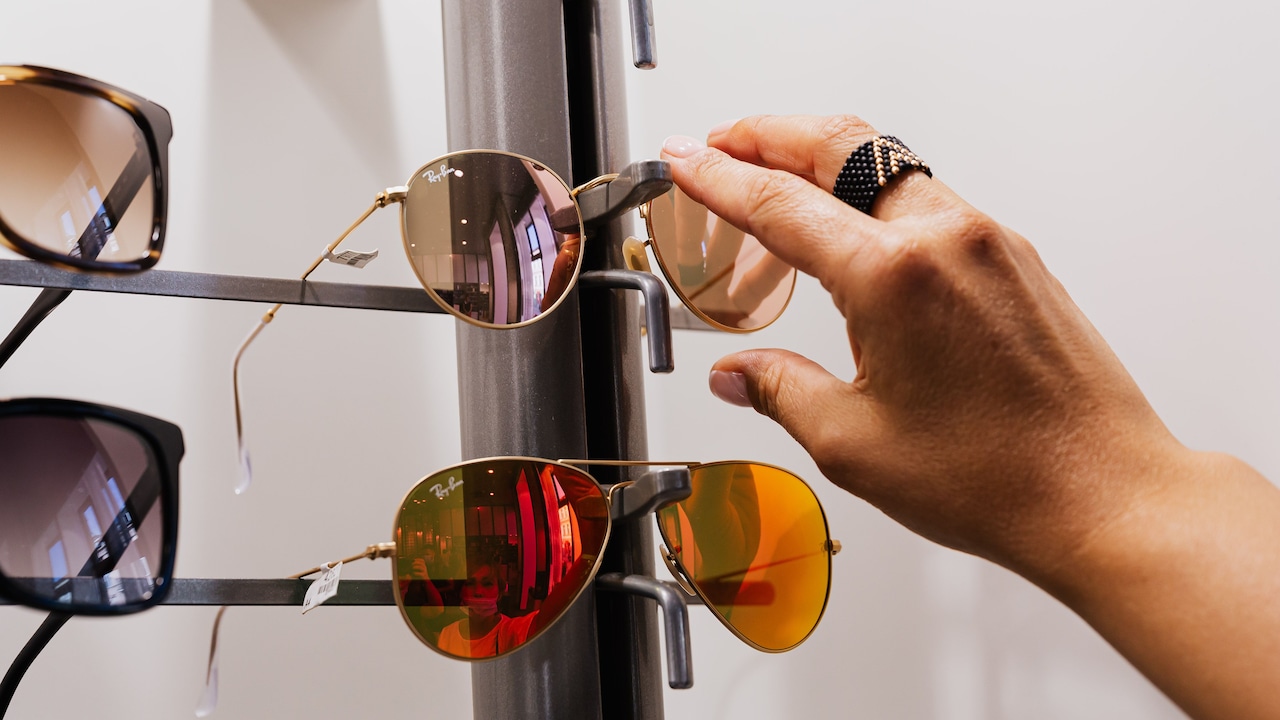
Using only one hand to open sunglasses can also twist the frame and cause damage
Photo Credit: Pexels
6. The Temple Tips Have Lost Their Original Curve
Loose sunglasses don't always have loose hinges. Sometimes the arms remain perfectly secure while the section behind the ears has gradually changed shape.
Many sunglass temples curve slightly downward or inward near their tips. That bend helps anchor the frames around the ears and reduces forward sliding.
Repeated pressure can flatten this curve. Sleeping with sunglasses resting beside you, stuffing them into a tightly packed bag or leaving heavy objects on top of the case can all affect temple shape.
When the bend becomes shallower, the sunglasses may feel loose even though the overall width hasn't changed dramatically.
Compare both arms from the side. If one temple tip curves more noticeably than the other, the problem may sit near the ears rather than at the hinges.
An optician can often restore the bend using controlled heat and shaping tools suited to the material. Metal temples may also allow careful adjustment.
Avoid attempting sharp bends with cold plastic. Frames that flex comfortably during normal use can still crack when concentrated pressure hits one small area.
7. Sweat And Skin Oils Have Made The Fit Feel Slipperier
Sometimes the sunglasses haven't become dramatically wider at all. They simply feel looser because there is less friction keeping them in place.
Sweat, sunscreen, moisturiser and natural skin oils can build up along the nose pads, bridge and temple tips. During humid days, that smooth layer can turn otherwise well-fitting sunglasses into persistent nose sliders.
The problem often becomes obvious during outdoor activities. The frames feel reasonably secure indoors but start slipping once the skin becomes warm or damp.
Clean the sunglasses regularly using the care method recommended for their frame and lenses. A small amount of suitable mild soap and lukewarm water can remove oily residue from many frames, though lens coatings and materials vary, so follow the manufacturer's instructions where available.
Also clean nose pads if the sunglasses have them. Dirty or worn pads can reduce grip and make loose temples seem worse than they really are.
If cleaning brings the secure feeling back, there may be nothing mechanically wrong with the arms. Sometimes the simplest repair is simply removing several weeks of sunscreen from them.
8. The Frame Material Has Gradually Relaxed
Not every frame holds its original tension forever.
Acetate, injected plastics and some flexible frame materials can gradually relax after thousands of hours of wear. The arms repeatedly flex outward every time the sunglasses go onto the face, then return towards their resting position once removed.
Over time, that rebound may become slightly weaker.
The change tends to happen slowly. Rather than one morning discovering dramatically oversized sunglasses, you may simply find yourself pushing them back up more frequently than you used to.
Frame quality, material thickness, environmental heat and everyday handling all influence how quickly this happens.
An optician may be able to adjust the temple angle where the arms meet the front frame, giving them a little more inward tension. Plastic temples may also respond to controlled reshaping.
However, some heavily fatigued materials won't hold an adjustment for long. If the frames repeatedly spread again soon after professional reshaping, replacement may become more practical.
That doesn't necessarily indicate poor quality. Like shoe soles and bag straps, eyewear materials experience physical stress every time they perform their job.
9. The Sunglasses Have Been Stored Open Or Under Pressure
A hard case seems like an accessory until you discover what happens without one.
Sunglasses thrown loosely into handbags, backpacks or car compartments face pressure from wallets, chargers, notebooks, water bottles and whatever else joins them during the day. If the temples remain open, sideways pressure can gradually force them farther apart.
Even folded sunglasses can become distorted if something heavy presses against the hinges or frame front.
Storage problems often create uneven looseness. One temple may flare outward while the other remains relatively normal because pressure hit one particular side.
Whenever possible, fold the arms properly and use a rigid case that fits the sunglasses without squeezing them. Avoid forcing an oversized frame into a compact case simply because it closes.
If the arms have already shifted, inspect them from above with the sunglasses open. Uneven angles become easier to spot from this position.
Minor distortions can often be corrected professionally. Good storage afterwards matters just as much as the repair itself, otherwise the freshly adjusted frames may slowly return to their unwanted shape.
10. The Original Fit May Have Been Slightly Too Wide
Sometimes sunglasses appear to loosen rapidly because the fit started close to the limit.
A frame that feels comfortable when new can still be slightly too wide across the temples. Fresh hinges and firm temple curves may initially compensate, creating enough grip to keep everything secure.
Once the hinges relax slightly and the materials settle through normal wear, the underlying width becomes more noticeable.
You may notice gaps between the temples and the sides of the head or find that the sunglasses slip forward despite having clean nose pads and properly tightened screws.
In this situation, repeatedly tightening hardware won't solve the fundamental fitting issue.
An optician may adjust the temple angle, reshape the ear bends or modify suitable nose pads to improve stability. For future purchases, pay attention to overall frame width as well as appearance. Two sunglasses with similar-looking lenses can fit completely differently around the temples.
A flattering frame that requires constant pushing and readjusting soon becomes annoying. A slightly better-fitting shape often feels far more luxurious than a fashionable pair that spends half the day travelling down your nose.
Products Related To This Article
1. WROGN Unisex Square Sunglasses With UV Protected Lens 5227 gold blue pink WRN
2. MANGO Women Square Sunglasses with UV Protected Lens
3. Voyage Unisex Square Sunglasses
4. HRX by Hrithik Roshan Unisex UV Protected Lens Square Sunglasses
5. Vincent Chase by Lenskart Unisex Brown Lens & Black Wayfarer Sunglasses with Polarised and UV Protected Lens
6. HASHTAG EYEWEAR Women Oversized Sunglasses with UV Protected LensD_WB-G-15065-GRY
7. Roadster The Lifestyle Unisex Square Sunglasses With UV Protected Lens RD 5580
Loose sunglass arms don't automatically signal that it is time for a replacement. Screws can loosen, hinges can wear, heat can reshape plastic and everyday habits can gradually widen a once-snug frame.
Start with the easy checks: clean the contact areas, inspect the screws, compare both temples and think about how the sunglasses have been stored. More significant reshaping, hinge wear or uneven alignment deserves professional adjustment rather than enthusiastic DIY bending.
And once the fit feels right again, treat the hard case as part of the sunglasses rather than optional packaging. A little care can keep those arms gripping comfortably instead of slowly wandering towards your ears.
(Disclaimer: This article may include references to or features of products and services made available through affiliate marketing campaigns. NDTV Convergence Limited (“NDTV”) strives to maintain editorial independence while participating in such campaigns. NDTV does not assume responsibility for the performance or claims of any featured products or services.)