How To Organise A Small Indian Kitchen With Limited Space
Small Indian kitchen feeling cramped? Here are simple, practical ways to organise it better, from masala storage to vertical space, without a renovation.
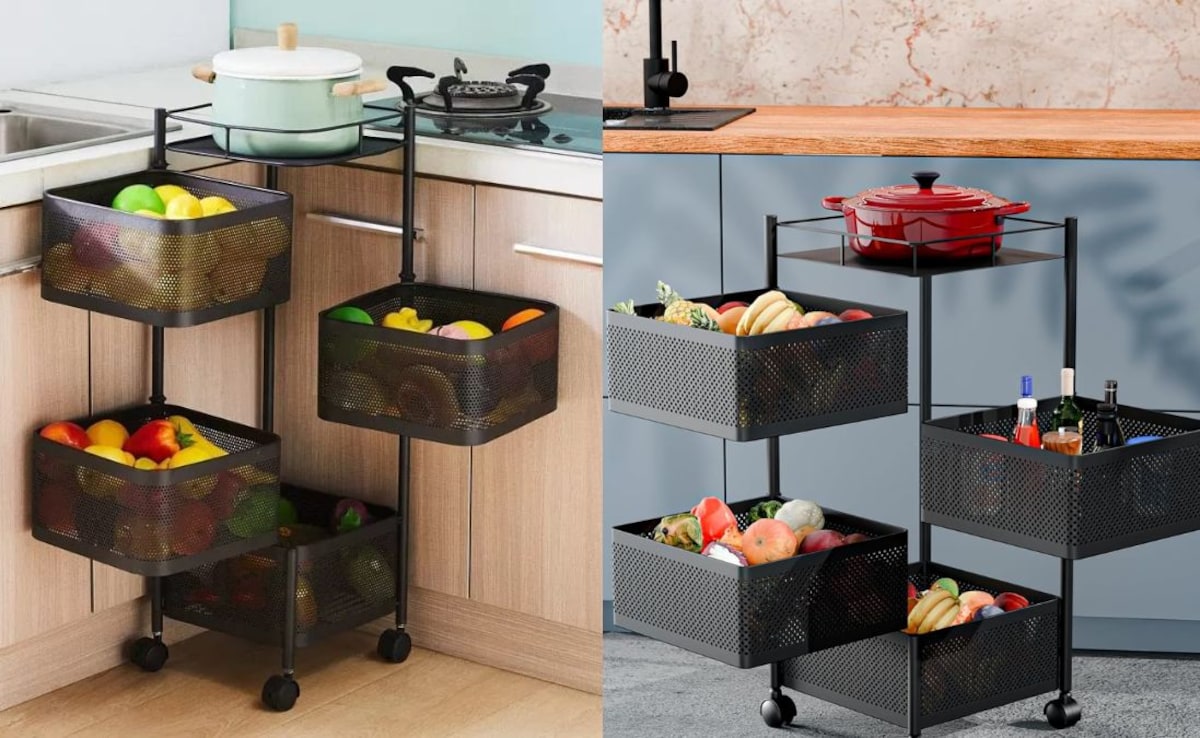
How To Organise A Small Indian Kitchen With Limited Space
Indian kitchens have a storage problem that most general organisation advice does not account for. Between the pressure cooker, the tawa, the kadai, the idli stand, and the rotating cast of dals, masalas, and flours that live on the counter, even a decently sized kitchen can feel like it is running out of room by Tuesday.
Learn how to use vertical space to declutter your cramped Indian kitchen without a renovation.
Photo Credit: Amazon
The good news is that most small Indian kitchens are not actually short on space. They lack the appropriate organisation. A few structural changes to how things are stored and accessed can make a noticeable difference without touching a single wall.
How To Organise A Small Indian Kitchen
The starting point is almost always a declutter. Indian kitchens tend to accumulate things quietly: duplicate ladles, half-used spice packets shoved behind full ones, appliances that only come out twice a year. Go through every cabinet and drawer and pull out what you don't use regularly before purchasing any storage solution. That alone frees up more room than most people expect.
Once you know what you are working on, organising becomes much simpler. The goal is to put the most-used items within arm's reach and move everything else to harder-to-access spots. This sounds obvious, but most kitchens do the opposite by default.
Step 1: Sort Everything by How Often You Use It
Daily use items like oil, salt, turmeric, cumin, and the main cooking vessels should live at counter height or in the most accessible cabinet. Weekly-use items like less common spices, backup stock, and speciality flours can go on higher shelves or at the back of lower cabinets. Things used only occasionally, such as festival cookware, speciality appliances, and extra servingware, belong in the hardest-to-reach spots or outside the kitchen entirely if space allows.
Step 2: Treat Vertical Space as Your Main Resource
Most small kitchens use the floor and counter but ignore the walls and the full height of cabinets. Wall-mounted magnetic strips for knives, pegboards for ladles and spatulas, and stacking shelf risers inside cabinets can effectively double usable storage without adding a single square foot of floor space. In Indian kitchens specifically, freeing up counter space is the biggest win because active cooking tends to use a lot of surface area.
Easy Ways To Store Masalas And Dry Ingredients
1. Use a Dedicated Masala Drawer or Turntable
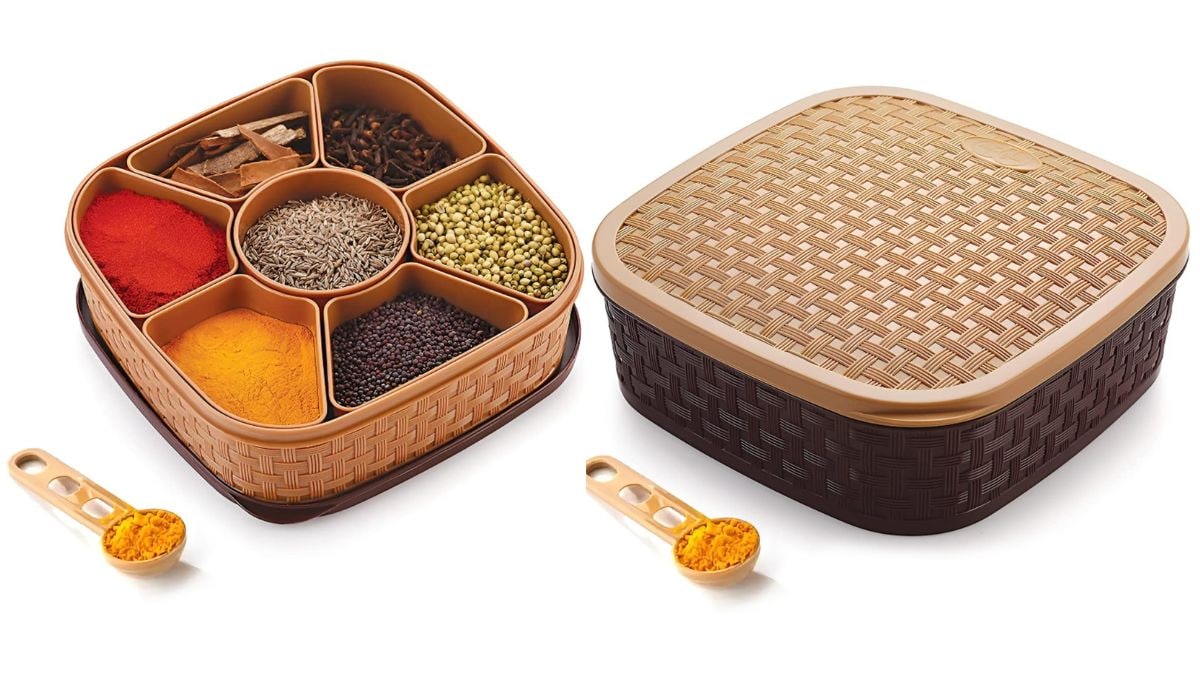
The masala dabba handles the daily spices well, but the collection almost always extends beyond them. For the overflow, a deep drawer with small, uniform containers laid flat is far more practical than a cabinet where jars stack behind each other and the one you need is always at the back. If a drawer is not available, a lazy Susan turntable on a shelf lets you rotate through jars without pulling everything out. Matching container sizes, even roughly, makes a bigger difference than most people expect.
2. Decant Bulk Dry Ingredients Into Airtight Containers
Atta, rice, poha, various dals, and sooji are staples in most Indian households, and they usually arrive in plastic bags or paper packets that take up irregular spaces, attract pests, and are hard to stack. Transferring them into airtight square or rectangular containers allows for proper stacking, clear visibility of low stock, and a significantly calmer pantry area. Label the lids rather than the sides so you can read them when looking down into a cabinet or shelf.
3. Store Oils and Liquids Together
Oil, vinegar, soy sauce, and similar bottles tend to scatter across counters and shelves. Grouping them on a small tray or in a dedicated corner of the counter keeps the drips contained and makes wiping down much faster. This step is a small thing that makes daily cooking noticeably less frustrating.
How To Make The Most Of Cabinet And Counter Space
1. Stack Cookware Smartly
Kadais, pressure cookers, and pans are bulky and awkward to store. Nesting them according to size is the obvious approach, but the lids are usually the harder problem. A vertical lid organiser, either a freestanding rack or a tension rod fitted inside a cabinet, keeps lids upright and accessible without the usual avalanche every time you open the door. Storing pressure cooker lids and gaskets together in a small bin prevents the parts from getting separated.
Also Read: Best 7 Kitchen Gadgets That Simplify Cooking And Save Time
2. Use the Inside of Cabinet Doors
The inside surface of cabinet doors is almost always wasted space. Adhesive hooks or over-the-door organisers can hold measuring cups, small tools, foil and clingwrap rolls, or cleaning supplies. In a kitchen where every centimetre counts, the back of a cupboard door is genuinely valuable real estate.
3. Keep the Counter Clear of Everything Except Daily Essentials
This is the hardest rule to follow and also the most impactful one. A cluttered counter makes a small kitchen feel much smaller than it is and makes cooking actively harder. The only things that belong on the counter are items used every single day: the gas stove, one cutting board, the oil and salt, and perhaps the kettle or mixer if it gets daily use.
Everything else, even if it feels convenient, is better off stored away.
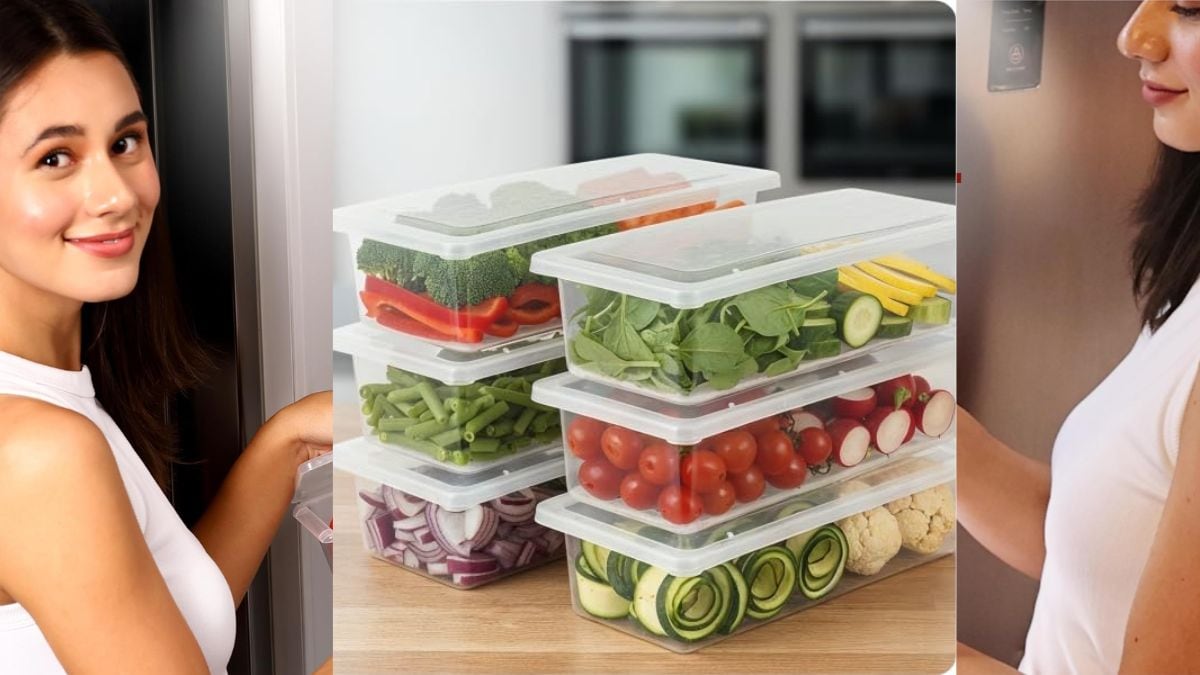
Easy organization hacks for small Indian kitchens to optimize storage space and daily meal prep.
Photo Credit: Amazon
Organising a small Indian kitchen with limited space is all about smart planning and efficient use of every corner. By decluttering regularly, investing in stackable storage, using wall space, and keeping daily essentials within easy reach, you can create a functional and stress-free cooking area. Thoughtful organisation not only saves time during busy meal prep but also makes your kitchen feel more spacious and inviting. With a few practical changes and consistent upkeep, even the smallest kitchen can become highly efficient and enjoyable to work in.
Some Kitchen Organisation Products Worth Considering
1. Oblivion Plastic Masala Box 1 Pc
2. VOLTURI Fridge Storage Containers (Pack of 6)
3. TEX-RO Kitchen Trolley with Wheels
4. Homero 6 in 1 Kitchen Container Set with Rotating Tray
5. HomeWiz Smart 6-in-1 Masala Box with 6 Inner Containers
6. Cri8Hub High-Grade Stainless Steel 2-Layer Kitchen Spice Rack
7. PALAK Multipurpose Plastic Big Revolving Spice Rack
8. WOODFARM Wood/Wooden Triangular Countertop
Frequently Asked Questions (FAQs)
1. What is the best way to store masalas in a small Indian kitchen?
A masala dabba covers the daily essentials, but for the full spice collection, uniform airtight containers in a drawer or on a turntable shelf work best. Labelling lids makes finding things faster and keeps the setup sustainable long-term.
2. How do I keep my kitchen counter from getting cluttered?
The only fix that actually works is deciding in advance what lives on the counter and putting everything else away every time. If something on the counter hasn't been used in two weeks, it doesn't belong there.
3. How do I store a pressure cooker and its parts neatly?
Nest the cooker body inside the kadai or in a lower cabinet with a vertical lid organiser nearby. Store the lid, gasket, and weight together in a small container so the parts stay together and are simple to find before cooking.
4. Is it worth buying modular kitchen storage on a budget?
Yes, selectively. Airtight containers and a basic shelf riser give the most return for money spent. Expensive modular systems are not necessary for a small kitchen and often create more categories than a small space needs.
5. How do I organise a kitchen with no pantry or extra cabinets?
Vertical space becomes essential here. Wall-mounted racks, pegboards, and magnetic strips take cooking tools off the counter entirely. A rolling kitchen trolley can also add a useful surface and storage tier without permanent installation.
(Disclaimer: This article may include references to or features of products and services made available through affiliate marketing campaigns. NDTV Convergence Limited (“NDTV”) strives to maintain editorial independence while participating in such campaigns. NDTV does not assume responsibility for the performance or claims of any featured products or services.)