Smart Doorbells In Flats: Are They Actually Useful Or Just A Gimmick?
Smart doorbells promise security and convenience in flats. But are they truly useful, or just another flashy gadget? Take a closer look at whether they are worth the investment or simply overhyped.
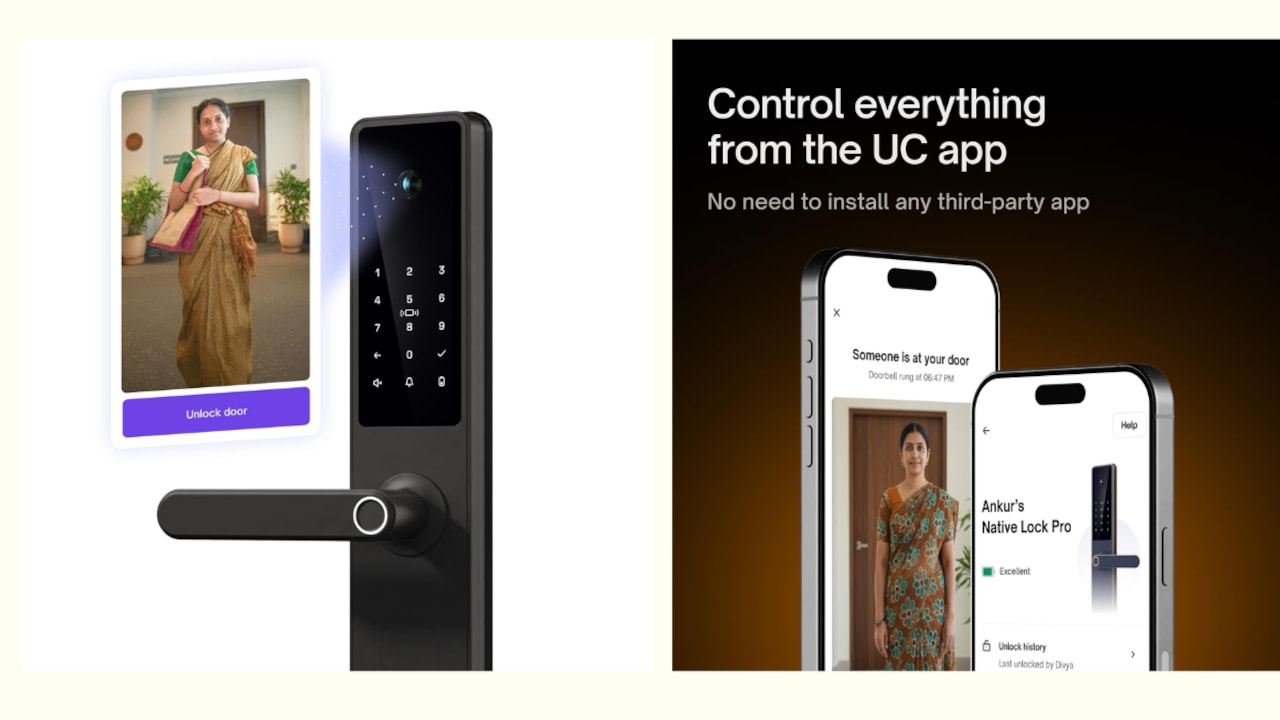
How smart doorbells can make your house safer for the family
Step into any modern apartment building today, and one thing becomes clear: technology has crept into even the smallest corners of daily life. Groceries arrive through apps, lights switch on with voice commands, and now, even the humble doorbell has undergone a digital makeover. Smart doorbells, once seen as luxury gadgets in glossy catalogues, have become increasingly common in flats across cities.
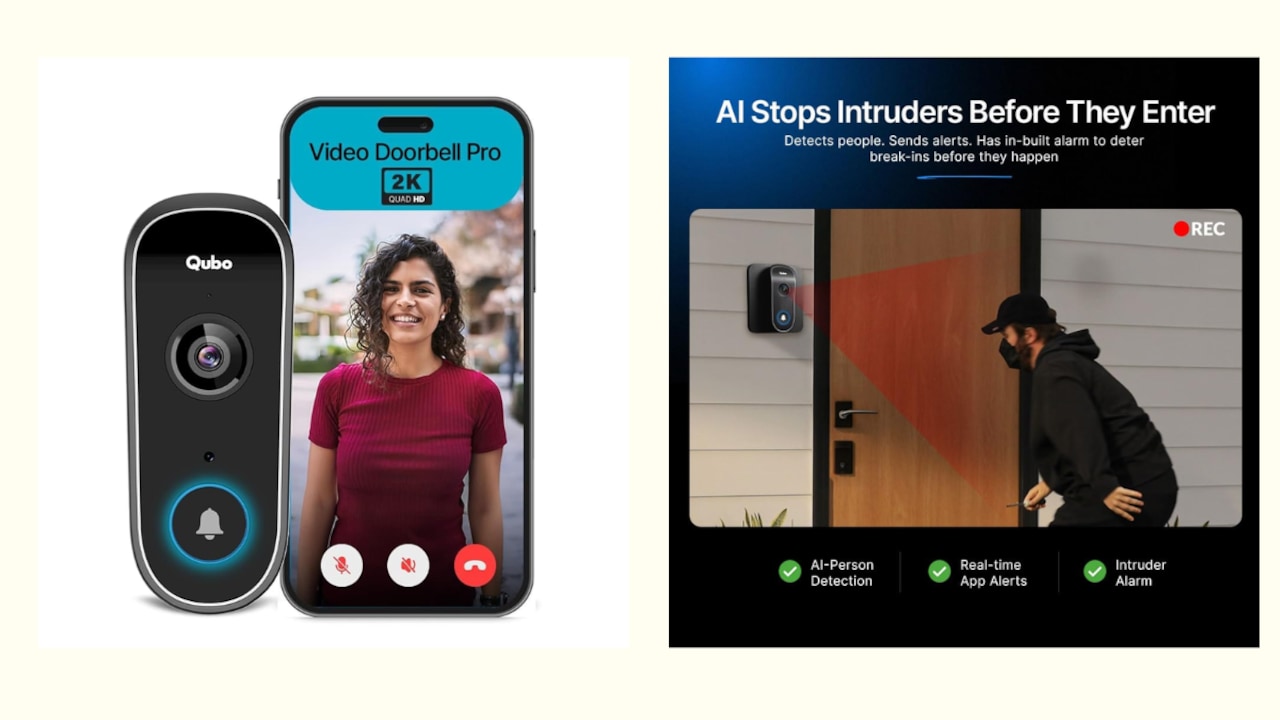
Read how smart doorbells can enhance the safety and security of your home; Photo Credit: Amazon
At first glance, they appear impressive. A tiny device at the door, a smartphone in hand, and suddenly there is the ability to see, speak to, and monitor visitors without opening the door. It sounds like something straight out of a futuristic film. Yet, beyond the novelty, questions linger. Are these devices genuinely useful for residents living in flats, where security guards and intercom systems already exist? Or do they simply add another layer of unnecessary tech to already busy lives? The answer, as it turns out, depends on how one looks at convenience, safety, and the evolving nature of urban living.
Also Read: Best Smart Doorbells With Camera Under ₹20000 That Let You Screen Visitors Safely
Smart Doorbells In Flats: Are They Actually Worth The Hype?
A New Kind Of Doorstep Awareness
Living in a flat often means sharing corridors, lifts, and entry points with dozens of neighbours. While this builds community, it also creates a layer of unpredictability. Smart doorbells attempt to address this by offering constant visual awareness of the doorstep.
With motion sensors and real-time video, these devices notify residents whenever someone approaches the door, even before the bell rings. This feature proves particularly useful in busy households where unexpected visitors, delivery personnel, or maintenance staff frequently arrive. Instead of guessing who might be outside, a quick glance at the phone settles the matter.
This heightened awareness feels reassuring, especially during late evenings or when alone at home. It removes the hesitation of opening the door blindly. In many ways, it replicates the instinct of peeking through a peephole, but with far more clarity and control.
However, for flats with strong security at the main gate, this might feel redundant. After all, visitors usually pass through a guard first. Yet, that final layer of confirmation at the doorstep often brings a surprising sense of control that traditional systems fail to offer.
Convenience That Fits Urban Chaos
City life rarely follows a predictable schedule. Deliveries arrive at odd hours, friends drop by unannounced, and domestic help may come and go at different times. Smart doorbells thrive in this chaos by offering unmatched convenience.
Imagine a scenario where a parcel arrives while no one is home. Instead of a missed delivery slip, the doorbell connects directly to the phone. A quick conversation with the delivery person allows instructions, leave the package with a neighbour, place it near the door, or return later. This simple interaction saves time, effort, and often frustration.
For working professionals juggling packed schedules, this feature becomes invaluable. There is no need to rush home or depend on others to receive packages. The home remains accessible, even from afar.
Still, this convenience depends heavily on reliable internet and smartphone access. Without these, the device quickly loses its charm. What begins as a seamless experience can turn into a minor inconvenience if connectivity falters.
Security: Real Protection Or Perceived Safety?
Security remains the biggest selling point of smart doorbells. With built-in cameras and recording features, they create a digital record of every visitor. This can act as a deterrent, as most people behave differently when they know they are being recorded.
For families, especially those with elderly members or children at home, this added layer of safety feels comforting. It allows remote monitoring and ensures that vulnerable individuals do not open the door to strangers without verification.
However, it is worth questioning how much real security these devices provide. In flats with strong building security, CCTV coverage, and controlled entry points, the doorbell adds more of a personal surveillance layer than a primary security system.
It enhances awareness rather than replaces existing safeguards. While it may not prevent all risks, it certainly reduces uncertainty, and sometimes, that psychological assurance matters just as much as physical protection.
The Price Tag And Value Debate
Smart doorbells are not exactly budget purchases. With prices ranging from ₹5,000 to ₹20,000 or more, they demand careful consideration. For many households, this cost sits in the grey area between necessity and indulgence.
The value they offer depends on usage. For those who frequently receive deliveries, travel often, or prioritise home monitoring, the investment may feel justified. The convenience alone can make daily life smoother.
On the other hand, residents who spend most of their time at home or live in tightly secured societies may find limited utility. In such cases, the device risks becoming an expensive gadget that gathers dust, impressive to show guests, but rarely used.
The real question is not whether smart doorbells are useful, but whether they are useful enough for a specific lifestyle. Without a clear need, even the smartest gadget can feel unnecessary.
Privacy Concerns Behind The Lens
With cameras installed at the doorstep, privacy becomes a subtle yet important concern. Smart doorbells do not just capture visitors, they often record shared spaces like corridors and common areas.
Neighbours may feel uncomfortable knowing they are being recorded each time they walk past. This raises questions about consent and boundaries within shared living spaces. While the intention is security, the impact can sometimes feel intrusive.
Additionally, these devices store data in the cloud. This brings up concerns about who has access to the footage and how securely it is stored. In an age where data breaches make headlines, this cannot be ignored.
Responsible use becomes crucial. Adjusting camera angles, respecting shared spaces, and understanding privacy settings can help strike a balance. Technology works best when it respects not just convenience, but also the comfort of those around it.
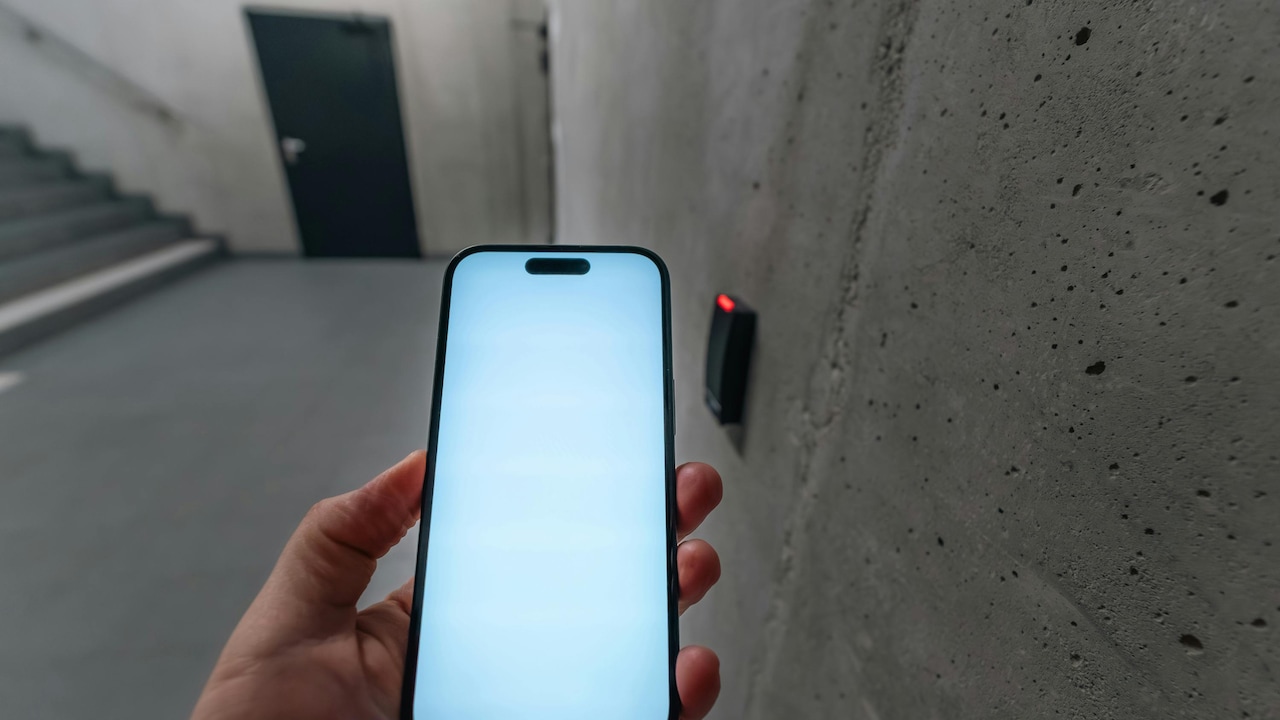
Smart doorbells capture visitors and record shared spaces like corridors; Photo Credit: Pexels
Integration With Smart Homes
For those already using smart home devices, smart doorbells fit seamlessly into the ecosystem. They connect with voice assistants, smart displays, and home automation systems, creating a cohesive experience.
A visitor rings the bell, and the image appears instantly on a smart screen inside the house. Voice commands can unlock doors or communicate with visitors. It feels almost cinematic, turning everyday moments into something futuristic.
This integration enhances usability, especially for tech-savvy households. It reduces the need to juggle multiple apps or devices. Everything works together, creating a smooth and connected environment.
However, for homes without existing smart systems, the doorbell may feel like a standalone device with limited synergy. Its full potential often reveals itself only when paired with other smart technologies.
Installation Challenges In Flats
Unlike independent houses, flats come with their own set of constraints. Shared wiring systems, building regulations, and limited control over external fixtures can complicate installation.
Some societies restrict modifications to doors or common areas, making it difficult to install certain models. Wireless options help, but they still require stable connectivity and proper placement.
There is also the question of aesthetics. A sleek gadget on one door may stand out in a corridor where others maintain a uniform look. This can lead to minor friction within housing communities.
Despite these challenges, many residents find workarounds. Battery-operated devices and non-invasive mounts have made installation easier. Still, it remains a factor worth considering before making the purchase.
The Role Of Society Security Systems
Most flats already rely on layered security systems, guards at the gate, visitor logs, intercoms, and CCTV cameras. In such setups, smart doorbells may seem like an extra layer rather than a necessity.
Yet, they offer something these systems cannot: personal control. Society security handles entry at a broader level, while smart doorbells focus on the individual doorstep.
This distinction matters. Even after clearing security, a visitor at the door still requires a decision. The doorbell provides that final moment of verification, directly in the resident's hands.
Rather than replacing existing systems, it complements them. Whether this added layer is essential or excessive depends largely on personal comfort and expectations from home security.
Everyday Use: Habit Or Novelty?
Many gadgets start with excitement but slowly fade into the background. Smart doorbells are no exception. Initially, every notification feels intriguing. Over time, frequent alerts may become routine, or even slightly annoying.
The key lies in how naturally the device integrates into daily habits. For some, it becomes indispensable. Checking the door through the phone feels as normal as answering a call.
For others, the novelty wears off quickly. Traditional habits take over, and the device sees minimal use. This difference highlights an important truth, technology succeeds only when it aligns with behaviour.
A smart doorbell is not just about features; it is about how often those features genuinely make life easier.
Products Related To This Article
1. Qubo Smart Wi-Fi Video Doorbell Pro 2K from Hero Group
2. UN1QUE Wireless Door Bell for Home - Small Calling Bell for Office
3. LAVNA Secure X Smart Door Lock + Doorbell Combo with 8 Way Access
4. TP-Link Tapo D230S1 2K 5Mp/1920p Smart Wireless Security Video Doorbell
5. Anchor by Panasonic Wireless Multitone Doorbell With Remote
Smart doorbells sit at an interesting intersection of practicality and modern lifestyle. They offer convenience, enhance awareness, and add a sense of control that traditional doorbells simply cannot match. Yet, they are not universally essential.
For some households, they become a quiet yet powerful addition, simplifying daily routines and offering peace of mind. For others, they remain a sophisticated gadget that feels more like a luxury than a necessity.
The decision ultimately comes down to individual needs. In a world increasingly shaped by technology, not every upgrade is mandatory. Sometimes, the smartest choice lies in understanding what truly adds value, and what merely adds noise.
Smart doorbells are neither a pure gimmick nor an absolute necessity. They exist somewhere in between, waiting to prove their worth in the rhythm of everyday life.
(Disclaimer: This article may include references to or features of products and services made available through affiliate marketing campaigns. NDTV Convergence Limited (“NDTV”) strives to maintain editorial independence while participating in such campaigns. NDTV does not assume responsibility for the performance or claims of any featured products or services.)