How To Keep Bath Mats From Sliding Without Leaving The Floor Damp
Tired of bath mats slipping across wet bathroom floors? Discover 10 practical ways to keep them firmly in place, prevent trapped moisture and maintain a safer, drier bathroom.
How To Keep Bath Mats From Sliding Without Leaving The Floor Damp
A bath mat should make stepping out of the shower feel comfortable, not turn an ordinary morning into an unexpected balancing act. Yet, many households deal with the same frustrating problem. The mat slides when someone steps on it, bunches up near the bathroom door or stays damp long after everyone has finished bathing. Sometimes, the floor underneath feels wetter than the tiles surrounding it. Bathroom floors present a particular challenge because water, soap residue and smooth tiles create slippery conditions. Add frequent showers, limited ventilation and humid weather, and even a good-quality bath mat can struggle to stay in place. The problem becomes more noticeable in shared bathrooms, where several people use the same mat throughout the day. Fortunately, keeping bath mats secure doesn't require expensive renovations or complicated accessories. A few thoughtful changes can make a noticeable difference. From choosing the right backing material to improving airflow and cleaning routines, these practical solutions help tackle both slipping and moisture accumulation. The goal isn't simply to stop a mat from moving. It's to create a bathroom where the floor dries properly, the mat feels comfortable and nobody has to perform an awkward little dance to avoid slipping.
How To Keep Bath Mats From Sliding Without Leaving The Floor Damp; Photo Credit: Pexels
10 Practical Ways To Keep Bath Mats Secure And Bathroom Floors Dry
1. Choose A Bath Mat With A Reliable Non-Slip Backing
Not every bath mat that feels soft underfoot offers reliable grip. Some look wonderfully fluffy but have smooth fabric underneath. Others feature rubber-like backing that gradually loses traction after repeated washing. Choosing the right underside matters just as much as selecting the material on top.
Look for bath mats with textured, moisture-resistant backing designed for bathroom flooring. Rubber and thermoplastic rubber, commonly called TPR, are popular options. A well-designed backing creates friction between the mat and the tiles, reducing unwanted movement when someone steps out of the shower.
However, a non-slip label doesn't guarantee performance on every surface. Highly polished tiles, uneven flooring and soapy residue can affect how securely the mat stays in place. Check whether the manufacturer recommends the backing for your floor type.
It's equally important to consider moisture. Some solid-backed mats can trap water underneath, especially when placed over wet tiles. Lift the mat regularly and check whether the floor needs drying.
For households with elderly family members or energetic children, grip deserves particular attention. A comfortable bath mat may feel like a small luxury, but reliable traction makes it far more useful.
Also Read: Top 5 Anti-Slip Bath Mats For Monsoon Under ₹850
2. Dry The Bathroom Floor Before Placing The Mat
A surprisingly common mistake involves placing a bath mat directly over a damp floor. It seems harmless, particularly when everyone expects the mat to absorb water anyway. Unfortunately, moisture underneath can interfere with grip and remain trapped for hours.
Even bath mats with textured backing generally perform better on clean, dry surfaces. A thin layer of water can reduce friction, allowing the mat to shift unexpectedly. Soap residue makes matters worse by creating an additional slippery film.
Before positioning the mat, wipe the tiles with a dry cloth or use a bathroom floor squeegee to remove excess water. Pay particular attention to the area immediately outside the shower, where splashes tend to collect.
In bathrooms with frequent water accumulation, consider directing water towards the floor drain after each shower. This simple habit prevents puddles from spreading beneath the mat.
The same principle applies after cleaning. Avoid returning the mat immediately after mopping while the tiles still feel damp.
It may add a minute to the bathroom routine, but keeping the contact surface dry improves stability and reduces lingering moisture. Sometimes, the simplest solution doesn't involve buying anything new.
3. Use A Water-Absorbent Mat That Dries Quickly
A bath mat that holds too much water can become a problem even when it stays perfectly still. Thick, plush materials feel inviting initially, but some retain moisture for long periods, particularly during the monsoon or in bathrooms without windows.
Choosing a quick-drying material helps prevent the mat from becoming permanently damp. Microfibre bath mats often absorb surface water efficiently and can dry relatively quickly when properly ventilated. Their performance, however, depends on the thickness, construction and backing.
Cotton mats offer a familiar, washable alternative, although heavier varieties may require more drying time. Thin, tightly woven designs can be easier to maintain than oversized, heavily padded options.
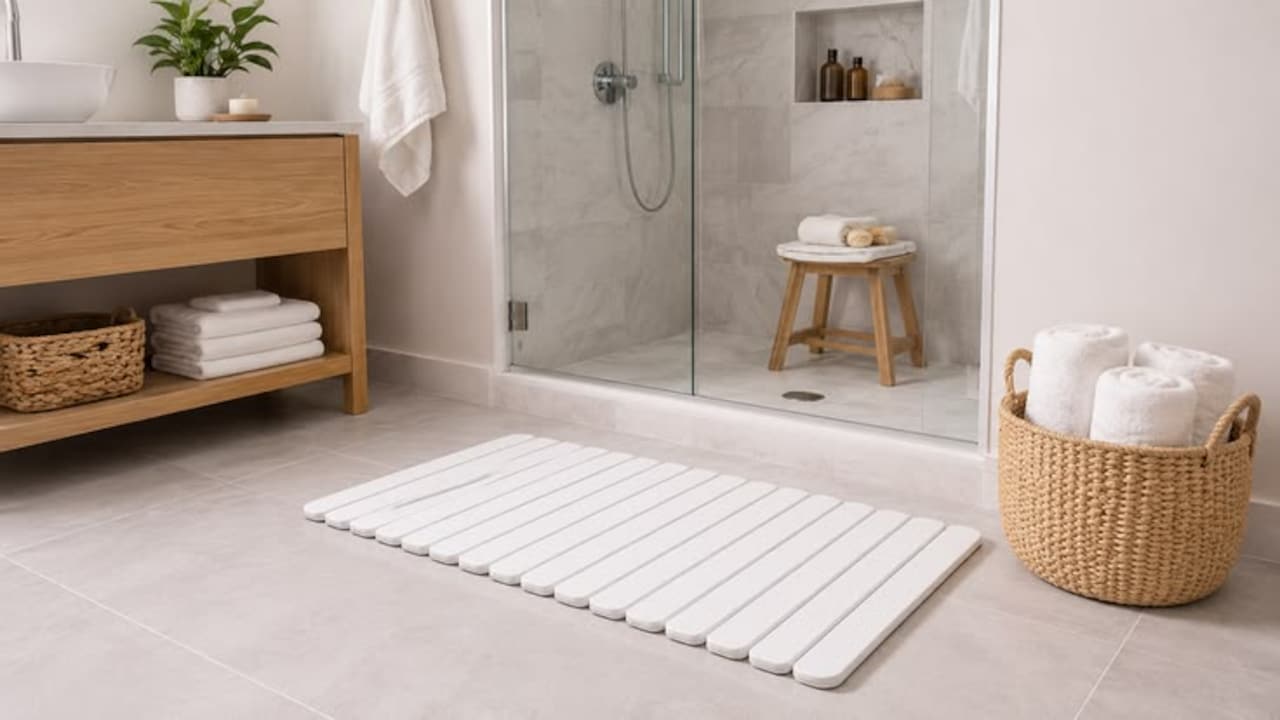
Another possibility involves rigid diatomaceous earth bath mats. These products absorb surface moisture and can dry quickly under suitable conditions. However, they need a stable, level surface and careful handling, as certain rigid designs may crack or become slippery when poorly maintained.
Whatever material you choose, examine how quickly it dries between showers rather than relying entirely on advertising claims.
A mat that remains wet throughout the day defeats its purpose. The ideal option absorbs water from your feet without becoming a miniature reservoir beside the bathroom door.
How To Keep Bath Mats From Sliding Without Leaving The Floor Damp; Photo Credit: Pexels
4. Position The Bath Mat Away From Constant Water Flow
Sometimes, the problem isn't the bath mat itself but its unfortunate location. Placing it directly beneath a shower's spray zone or beside an overflowing bucket almost guarantees constant dampness.
The best position allows someone to step comfortably onto the mat without exposing it to unnecessary water throughout the bathing process. In bathrooms with separate wet and dry areas, position the mat just outside the wet zone rather than inside the shower space.
For bathrooms without partitions, observe where water naturally travels. Does it collect near the toilet? Does it run towards the doorway? Does the floor slope towards a drain?
These details help identify a suitable location. The mat should sit on a relatively dry, level section of flooring, without obstructing drainage.
Also, consider the distance between the mat and the bathroom door. A thick mat placed too close to the door may bunch up whenever someone enters or leaves.
Leave enough space for the door to move freely and ensure the mat doesn't obstruct the walking path.
Good placement reduces unnecessary saturation, improves everyday convenience and makes the mat less likely to slide across the bathroom.
5. Keep The Tiles Free From Soap And Cleaning Residue
Bathroom floors often develop an invisible layer of residue that affects traction. Soap, shampoo, conditioner and certain floor cleaners can leave behind slippery deposits, particularly on smooth ceramic or vitrified tiles.
A bath mat placed over this surface may move even when its backing appears perfectly functional. The issue becomes particularly noticeable after someone has recently cleaned the bathroom with an excessive amount of detergent.
Regular cleaning helps restore a more reliable contact surface. Use a floor cleaner suitable for your tile material and follow the recommended dilution. Afterwards, rinse away any remaining product where the instructions require it.
Avoid applying oily polishes, waxes or products that leave a glossy coating on bathroom flooring. Although the tiles may look attractive, reduced traction creates an unnecessary hazard.
Pay attention to the underside of the bath mat as well. Dust, hair and accumulated detergent can affect its grip.
Wash or wipe the backing according to the manufacturer's instructions, then allow it to dry completely.
A simple test involves checking whether the clean, dry mat shifts under gentle foot pressure. If it still moves noticeably, replace it or choose a design better suited to the flooring.
6. Improve Bathroom Ventilation To Prevent Trapped Moisture
A bathroom can look spotless while remaining surprisingly humid. After a hot shower, moisture settles on mirrors, walls, tiles and fabrics. Without adequate ventilation, bath mats may stay damp long after the visible water disappears.
Improving airflow helps the room and its furnishings dry more effectively. If the bathroom has an exhaust fan, switch it on during bathing and leave it running afterwards, ideally for another 20 to 30 minutes if the fan and ventilation arrangements permit.
Where privacy and safety allow, opening a window can improve air circulation. Keep the bathroom door open after use when practical, especially if the room lacks mechanical ventilation.
During humid weather, drying takes longer. A bath mat that feels reasonably dry in summer may remain unpleasantly moist during several consecutive rainy days.
Avoid leaving the mat flat against damp flooring indefinitely. Lifting it allows air to reach the underside and helps both surfaces dry.
Ventilation also matters because prolonged moisture can encourage musty odours and mould growth.
The aim isn't to transform the bathroom into a wind tunnel. Even modest improvements in airflow can make everyday drying routines more effective and prevent that familiar damp-cloth smell.
How To Keep Bath Mats From Sliding Without Leaving The Floor Damp; Photo Credit: Pexels
7. Secure The Mat Without Using Permanent Floor Adhesives
When a bath mat keeps shifting, sticking it to the floor may sound like the most obvious answer. However, permanent adhesives can create fresh problems, especially when water collects around the attached areas.
Some adhesive products may damage tile finishes or leave stubborn residue. Others lose effectiveness in humid conditions. More importantly, a fixed mat can make cleaning and drying underneath unnecessarily difficult.
Instead, choose removable, bathroom-rated non-slip solutions that suit the flooring and mat material. A compatible non-slip underlay may improve friction, provided the manufacturer approves its use in wet environments.
Avoid improvised solutions such as ordinary double-sided tape, loose rubber sheets or household adhesives. These materials may deteriorate after exposure to water and cleaning products.
Before adding an accessory, check whether the existing backing has become worn, brittle or smooth. Replacing an ageing mat may prove safer and more effective than trying to repair its grip.
Remember that additional layers can also trap moisture if they prevent proper drying.
Any removable underlay should come off easily for cleaning and drying. Inspect it regularly, as a damp or deteriorating grip layer can create the very slipping problem it was supposed to prevent.
8. Wash Bath Mats Regularly Without Damaging Their Grip
A bath mat handles wet feet, soap splashes, dust and everyday bathroom traffic. Naturally, it needs regular cleaning. However, washing it incorrectly can damage the backing and make slipping more likely.
Start by checking the care label. Some fabric mats tolerate machine washing, while others require gentle hand washing. Certain rubber-backed varieties may crack or deteriorate when exposed to excessive heat or harsh detergents.
Use the recommended amount of detergent and rinse thoroughly. Residue left behind after washing can affect absorbency and make the fibres feel unpleasant.
Fabric softeners aren't always suitable for absorbent bath mats because they can coat fibres and reduce their ability to take up moisture.
Dry the mat completely before returning it to the bathroom. Where the manufacturer permits, hang it in a well-ventilated place with sufficient airflow around both sides.
Avoid exposing heat-sensitive backing to intense sunlight or high-temperature tumble drying unless the care instructions allow it.
Households with several bathroom users may need more frequent washing than those with lighter usage.
Regular maintenance protects more than cleanliness. It helps preserve the mat's texture, absorbency and grip, keeping it comfortable and practical for longer.
9. Choose The Right Bath Mat Size And Thickness
A bath mat that's too small may shift whenever someone steps near its edge. An oversized mat can bunch against bathroom fixtures, while an excessively thick design may interfere with the door.
Getting the dimensions right can prevent several problems at once.
Measure the available floor space before purchasing a mat. Consider the shower entrance, washbasin, toilet and bathroom door. The mat should provide enough standing space without covering drains or extending into areas where water constantly accumulates.
Thickness matters too. Plush mats may offer extra cushioning, but bulky varieties can take longer to dry. They may also create a tripping hazard when their edges curl or catch underfoot.
A moderately thick mat with a stable backing often offers a practical balance between comfort and everyday maintenance.
Check that the edges lie flat against the floor. Raised corners can catch a foot, particularly when someone moves quickly after bathing.
In compact bathrooms, one well-positioned mat may work better than several overlapping pieces.
It's tempting to choose the largest, softest option available. Yet, bathroom comfort depends on proportion as much as plushness. A mat should fit the room rather than force everyone to navigate around it.
10. Create A Simple Daily Routine To Keep The Mat Dry And Stable
Even the best bath mat needs occasional attention. A few everyday habits can prevent moisture accumulation, preserve grip and reduce the chances of unpleasant surprises.
After bathing, remove excess water from the surrounding tiles using a squeegee. If the mat feels wet, lift it from the floor and hang it somewhere with good airflow.
Avoid folding a damp mat over itself, as this slows drying. A suitable drying rail or rack allows moisture to escape from both sides.
Before placing the mat back, check whether its underside and the floor have dried. This matters especially in shared bathrooms, where the mat may become wet several times before lunchtime.
Inspect the edges and backing periodically. Peeling rubber, curled corners or persistent slipping indicate that the mat may need replacing.
It also helps to keep a spare washable bath mat. While one dries, the other can serve the bathroom without requiring anyone to stand on wet tiles.
For families with children or older relatives, prioritise a stable, dry stepping surface over decorative appeal.
Ultimately, the most effective routine is one people can follow without much thought. A quick lift, a little airflow and a dry floor can make a surprisingly big difference.
Products Related To This Article
1. LUXEHOME INTERNATIONAL Rust-Pink Textured 3000 GSM Memory Foam Bath Mat
2. Homzz Beige & Green 450 GSM Anti-Skid Bath Rugs
3. Home Centre Senegal Brown Ribbed 1902 GSM Anti-Slip Bath Rugs
4. DREAM WEAVERZ Pink Anti-Skid Bath Rugs
5. Saral Home 1 Piece Green Self-Designed Anti-Skid 2400 GSM Microfiber Bath Rugs
6. Go Hooked Grey Anti-Skid Rubber Bath Rug
7. RALIA HOMES Sea Green & White Printed 1800 GSM Bath Rugs
A sliding bath mat isn't merely an everyday annoyance. It can create unnecessary slipping hazards while trapping moisture against bathroom tiles. Fortunately, small changes often solve both problems.
Start with a mat that offers dependable grip, suitable absorbency and dimensions that fit the space. Keep the flooring clean, improve ventilation and avoid leaving wet fabric pressed against the tiles. Just as importantly, inspect the backing regularly and replace worn mats before they become unreliable.
A good bath mat should make the bathroom safer and more comfortable, not add another cleaning headache. With sensible placement and a few consistent habits, it's possible to enjoy dry feet, stable footing and a bathroom floor that doesn't remain damp for hours.
(Disclaimer: This article may include references to or features of products and services made available through affiliate marketing campaigns. NDTV Convergence Limited (“NDTV”) strives to maintain editorial independence while participating in such campaigns. NDTV does not assume responsibility for the performance or claims of any featured products or services.)