10 Reasons Small Study Tables Feel More Cramped Than Their Dimensions Suggest
A small study table can look perfectly adequate on paper yet feel cramped once work begins. From poor depth and bulky storage to cable clutter and awkward layouts, here’s why usable desk space disappears so quickly.
10 Reasons Small Study Tables Feel Cramped And How To Maximise Desk Space
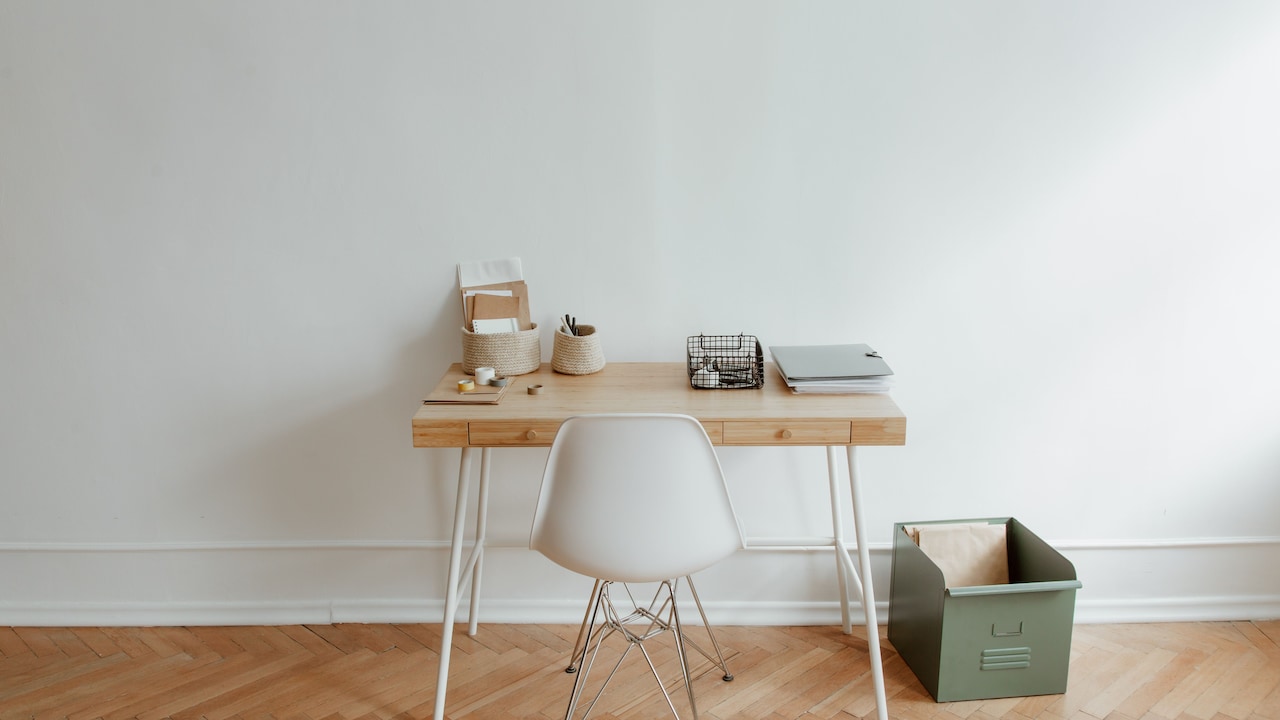
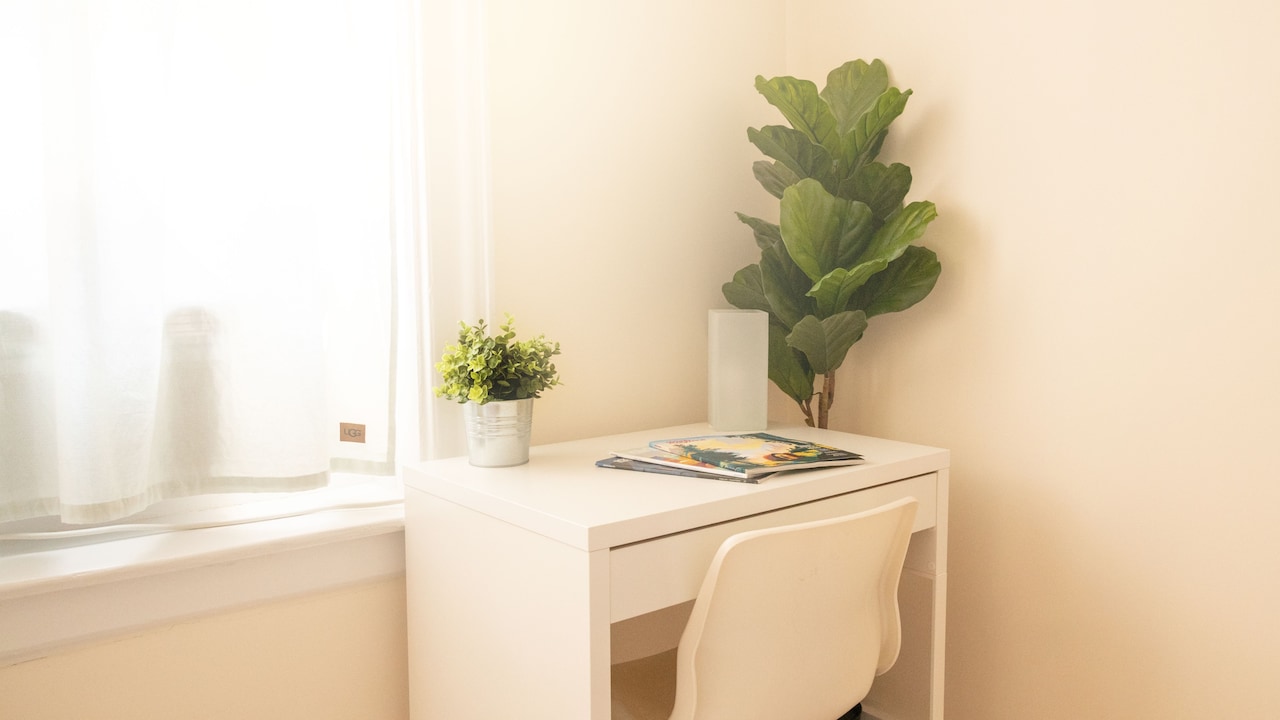
A compact study table often makes perfect sense when space comes at a premium. It fits beside the bed, slips into a corner and leaves enough room to move around. The measurements may even seem generous when checked online or with a measuring tape. Then the laptop arrives. Add a notebook, charger, water bottle and perhaps one school textbook, and suddenly the supposedly practical table starts behaving like a tray table on a crowded train. The problem isn't always the table's overall size. What matters more is how much of its surface you can actually use comfortably. A 90 cm-wide desk with poor depth can feel tighter than a smaller one with better proportions. Thick drawers may steal legroom. A wall can restrict monitor placement. Even an oversized desk lamp can turn valuable surface area into dead space. So, before blaming a compact room or assuming a larger desk is the only answer, it helps to understand where that cramped feeling comes from. These ten common problems explain why small study tables often feel much smaller than their listed dimensions suggest.
10 Reasons Small Study Tables Feel Cramped And How To Maximise Desk Space; Photo Credit: Pexels
What Makes Small Study Tables Feel More Cramped Than They Actually Are?
1. The Table Is Wide Enough But Not Deep Enough
Width tends to grab all the attention when people measure a study table. A desk that stretches neatly along a wall looks spacious enough at first glance. Depth, however, often decides whether it actually feels comfortable.
A shallow tabletop pushes everything into the same narrow strip. Place a laptop near the back and there may be barely enough room for a notebook in front. Move the laptop forward and the screen sits too close to your face. Add a keyboard, textbook or tablet and objects begin overlapping instead of occupying separate zones.
Depth matters even more when using a large laptop or monitor. Screens need enough distance from the sitting position, while your forearms still require somewhere to rest. Without that buffer, every task feels compressed.
This explains why two tables with similar surface areas can feel completely different. A balanced rectangle usually supports work better than a long, narrow one. When evaluating a compact desk, don't just ask, “Will it fit this wall?” Ask whether the front-to-back measurement leaves enough breathing room for the way you actually work.
Also Read: Top 5 Affordable Laptop Tables For Work And Study With Storage
2. Too Many Everyday Items Permanently Live On The Surface
Small desks rarely become cramped because of one dramatic mistake. Usually, a collection of harmless-looking objects slowly claims the surface.
A pen stand occupies one corner. The charger stays plugged in because removing it feels inconvenient. A water bottle sits near the laptop. There may be spectacles, earbuds, hand cream, sticky notes, a calculator and perhaps yesterday's coffee mug. Individually, none seems troublesome. Together, they can consume a surprising amount of working space.
The bigger issue is that permanent items create invisible boundaries. You begin working around them rather than across the full tabletop. A notebook gets squeezed between the laptop and bottle. Papers start stacking because there isn't enough clear room to spread them out.
A useful compact desk needs some empty surface, not merely enough space to physically hold everything.
Try treating the tabletop as active workspace rather than general storage. Items used occasionally can move into a drawer, wall organiser or nearby basket. That small change can make the table feel noticeably larger without adding a single centimetre.
3. The Laptop Sits In The Most Valuable Part Of The Desk
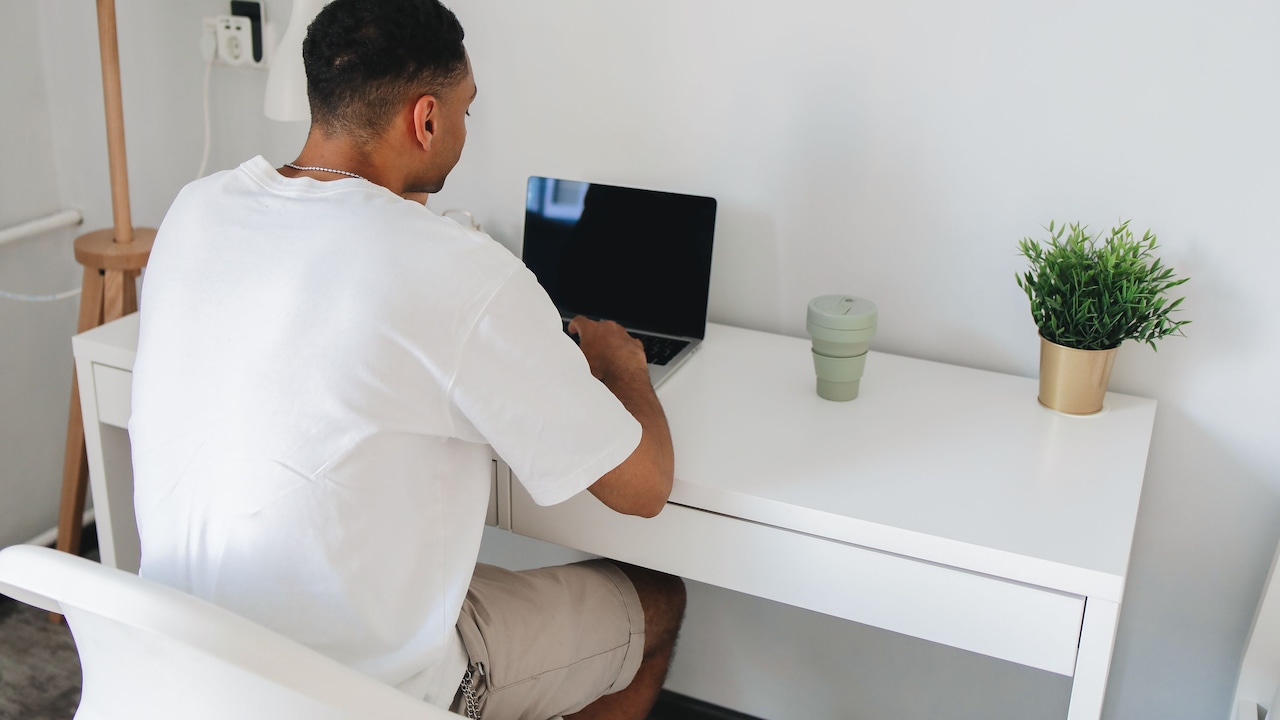
A laptop doesn't merely occupy the space underneath it. It controls the surrounding space too.
On a small study table, placing the laptop directly in the centre can divide the tabletop into several narrow, awkward sections. There may be a few centimetres on either side, but those strips aren't particularly useful for writing, reading or placing larger objects.
The screen angle can create another problem. Opening the laptop often requires clearance behind it, especially when the desk sits against a wall. Push it too far back and the lid may hit the wall. Pull it forward and valuable writing space disappears.
This arrangement works reasonably well when nearly every task happens on-screen. It becomes frustrating when work involves switching between digital and handwritten material.
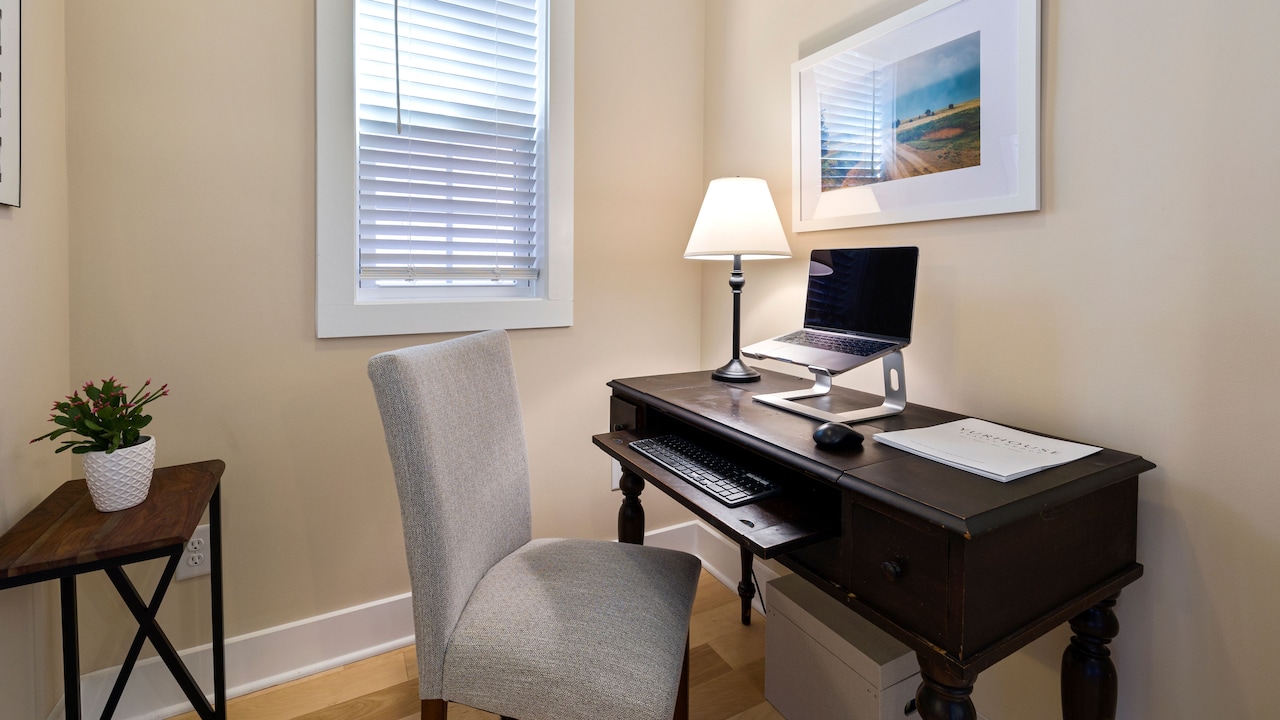
A laptop stand can sometimes help by opening storage space underneath, though it works best with an external keyboard. Alternatively, positioning the laptop slightly to one side can create one larger usable area instead of two tiny ones. On a small desk, uninterrupted space often proves more valuable than perfectly symmetrical placement.
10 Reasons Small Study Tables Feel Cramped And How To Maximise Desk Space; Photo Credit: Pexels
4. Built-In Drawers Steal More Space Than Expected
Storage sounds like an advantage on a compact study table. Sometimes it is. But bulky built-in drawers can quietly make a small desk feel much tighter.
A deep drawer underneath the tabletop reduces vertical legroom. Instead of sitting naturally, you may lower the chair or push it backwards to stop your knees from hitting the drawer. That creates extra distance between your body and the desk, which then encourages leaning forward.
Side drawer units cause a different problem. They narrow the opening where the chair sits. Even when the tabletop measures a reasonable width, the usable seating zone may feel noticeably smaller.
Then there's the temptation to choose a table with several compartments simply because extra storage appears practical. In a tight room, however, chunky cabinets can make the entire piece feel heavier and more dominant.
Slim drawers can work well for stationery and documents. The key is proportion. Storage shouldn't interfere with comfortable seating.
Sometimes a simple open-frame desk paired with a separate mobile drawer unit gives you greater flexibility than a compact table packed with fixed storage.
5. The Wall Makes The Table Feel Smaller
Placing a study table against a wall saves floor space, so it remains the most practical arrangement in many bedrooms and compact homes. Yet the wall can also intensify that boxed-in feeling.
When the tabletop touches a blank wall, your visual field stops almost immediately beyond the desk. Add shelves, noticeboards, calendars and hanging organisers, and the work area may begin to feel surrounded from every direction.
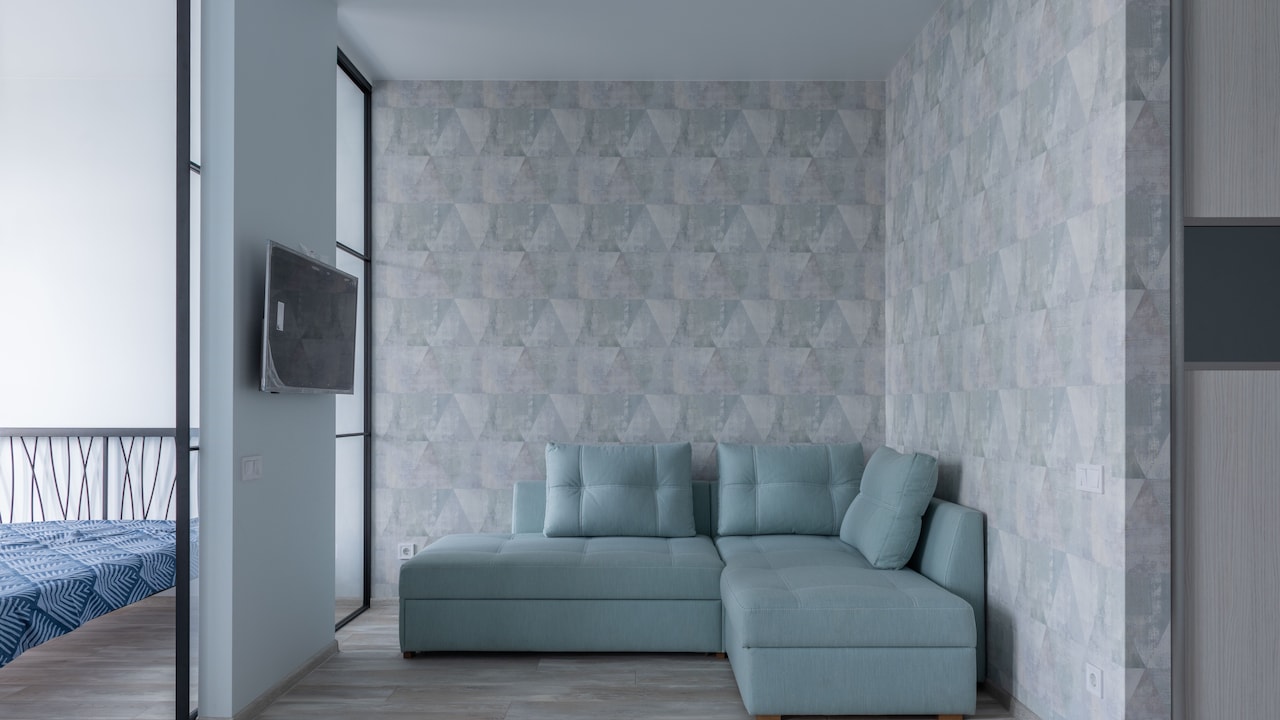
Dark walls or heavily patterned wallpaper can exaggerate the effect. So can shelves fitted too close above the table. Even when those shelves don't technically reduce desk dimensions, they can make the area feel compressed.
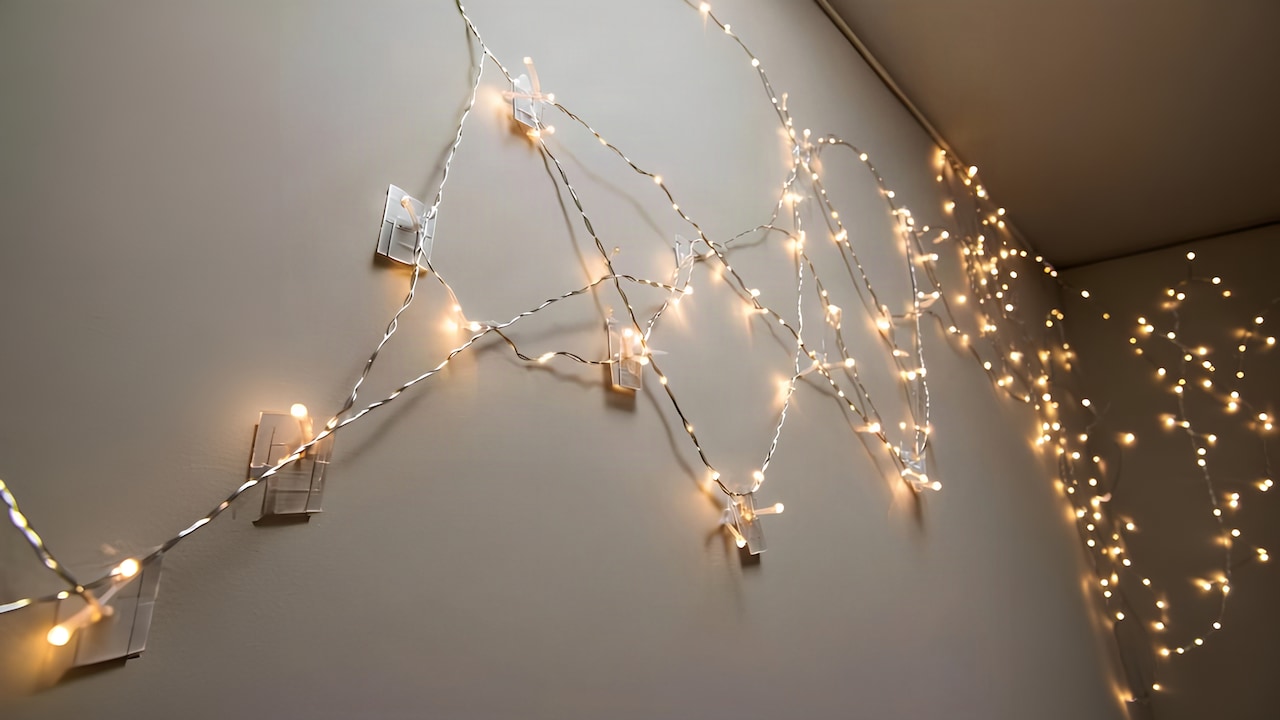
A little visual breathing room helps. Keeping wall décor relatively simple around the main work zone can reduce clutter without making the space boring. A mirror positioned thoughtfully nearby can also increase the sense of openness.
If possible, leave a narrow gap between the wall and table rather than wedging the desk tightly against it. You gain room for cables while reducing the sense that the work surface ends abruptly against a barrier.
6. Cables Turn Empty Space Into Unusable Space
A charger cable doesn't occupy much area by itself. Five tangled cables somehow manage to conquer half the desk.
Compact workstations often need to accommodate a laptop charger, phone cable, extension board, lamp wire, headphones and perhaps a monitor or tablet charger. When these run randomly across the surface, perfectly usable areas become difficult to reach.
Cables also encourage clutter around them. An extension board placed on the tabletop becomes a permanent object. Adaptors gather beside it. Devices stay close to available sockets rather than where they would actually be comfortable to use.
Moving the extension board below the tabletop can immediately recover space. Adhesive cable clips, reusable ties or an under-desk cable tray can keep wires from creeping back upwards.
The difference may sound cosmetic, but cable management changes how freely you can move objects while working. A notebook can slide across the desk without catching a wire. The laptop can shift position when required.
On a compact table, that flexibility matters. Clear space feels larger because it remains genuinely available rather than technically empty but practically unusable.
10 Reasons Small Study Tables Feel Cramped And How To Maximise Desk Space; Photo Credit: Pexels
7. The Chair Cannot Slide Properly Underneath
Sometimes the desk isn't the main reason the setup feels cramped. The chair is.
A wide chair with fixed armrests may not fit neatly beneath a narrow study table. When you finish working, it remains several centimetres outside the desk. While working, the armrests may hit drawers or table supports before your body reaches a comfortable distance from the surface.
This forces you to sit farther away. Suddenly, the table appears too shallow because you need to stretch towards the keyboard. The room also feels more crowded because the chair constantly occupies extra floor space.
Bulky gaming chairs can create this mismatch particularly easily when paired with slim desks. They may offer excellent support yet overwhelm a tiny workstation.
Measure the clear gap between the desk legs or storage units, not merely the full tabletop width. Then compare it with the chair at its widest point.
A chair that slides comfortably underneath can make both the desk and room feel noticeably more spacious. Sometimes improving a cramped study corner requires changing what's in front of the table rather than changing the table itself.
8. The Desk Lamp Has A Bigger Footprint Than You Realise
A desk lamp may look relatively small until its base claims one of the most useful corners of the tabletop.
Traditional lamps often have broad weighted bases to prevent tipping. On a large desk, that barely matters. On a compact table, a 15–20 cm base can occupy the same area you might otherwise use for a notebook, mouse or phone.
The lamp's arm can also restrict movement. If it extends across the desk rather than rising above it, taller books and laptop screens may compete with it.
Wall-mounted, clamp-style or slim upright lamps can free up more surface area. A clamp lamp makes particularly good use of an edge that otherwise offers little practical value.
Lighting position matters too. A poorly placed lamp may force you to rearrange everything simply to avoid shadows while writing.
Don't think of lighting as an accessory added after organising the desk. It forms part of the desk layout. On small study tables, every permanent object should justify the amount of working area it occupies.
9. The Table Is Being Asked To Do Too Many Jobs
A study table often becomes much more than a study table.
It serves as a work-from-home desk in the morning, study station in the evening and charging area overnight. It may also become a dressing surface, book shelf, snack counter and temporary home for parcels that haven't been opened yet.
No compact piece of furniture can comfortably perform six roles at once.
The problem becomes especially noticeable when each activity requires its own permanent objects. Work needs a laptop and diary. Studying adds books and highlighters. Grooming brings a mirror and skincare bottles. Charging introduces cables and devices. Eventually, every activity leaves a small footprint behind.
Creating even modest boundaries helps. A nearby shelf can hold books. A bedside surface can handle phone charging. Grooming products can stay elsewhere rather than occupying study space.
The aim isn't to enforce a perfectly minimalist desk. Real homes don't work like catalogue photographs. Instead, decide which activities truly need the tabletop. A small table feels far more generous when it supports one or two jobs well instead of becoming the household's universal landing zone.
10. There Is No Empty Zone For Work To Expand Into
One overlooked reason a study table feels cramped is simple: every centimetre already has a job.
A perfectly organised desk can still feel restrictive if its entire surface contains neatly arranged objects. There might be a laptop in the centre, organiser on the left, lamp on the right and books lined up along the back. Everything looks tidy, yet there's nowhere to open a large notebook or spread out paperwork.
Work changes throughout the day. One task needs only a laptop. Another requires two books, loose sheets and a calculator. Sometimes you need space to sign documents, sketch ideas or simply place a cup of tea without risking the keyboard.
That requires an intentionally empty area.
Think of this space as a flexible zone rather than wasted tabletop. Keeping roughly one section clear gives the desk somewhere to expand when a task demands it.
This principle often makes more difference than elaborate organisers. Storage solutions can arrange belongings beautifully, but they can't create comfort if every newly cleared centimetre immediately gets filled again.
Products Related To This Article
1. ABOUT SPACE Wooden Study Table with Hutch & Bottom Storage
2. FFO Nova Study Table for Home with 2 Side Storage & Drawer
3. Torche Multipurpose Foldable & Portable Study Table
4. QARA Wood Laminated Study Table, Computer Table for Home
5. Klaxon Office Table for Home | Workstation Table Desk
6. Breeze Minimalist Study Table with 2-Tier Side Shelves
7. ABOUT SPACE Study Table with Cabinet - Computer Table with Bottom Storage Space
Small study tables don't always feel cramped because they're genuinely too small. Poor proportions, bulky furniture, permanent clutter, messy cables and too many competing uses can shrink the practical workspace long before the tape measure suggests a problem.
Before replacing the table, look at how the available space functions. Clearing one flexible work zone, reconsidering storage and moving a few permanent objects elsewhere may completely change the setup. In compact rooms, smarter space often matters more than simply having more of it.
(Disclaimer: This article may include references to or features of products and services made available through affiliate marketing campaigns. NDTV Convergence Limited (“NDTV”) strives to maintain editorial independence while participating in such campaigns. NDTV does not assume responsibility for the performance or claims of any featured products or services.)






![Steam Iron Teflon Shoe Cover for ES-300,ST-96 [Only For ES-300 and ST-96 Model Electric Steam Irons]](https://m.media-amazon.com/images/I/51wwkttondL._SL160_.jpg)