How To Choose A Trimmer If You Want To Try Bangs At Home
Thinking about cutting bangs at home? Learn how to choose the right trimmer for precise, smooth, safe, and easy fringe maintenance without salon visits.

Tips to choose a trimmer for at-home haircuts
There is nothing quite like a fresh set of bangs to completely reinvent your style. Whether you are leaning toward soft, effortless curtain bangs, wispy textures, or a bold, classic blunt fringe, it is easy to see why so many people are skipping the salon chair and trying this trend in front of their own mirrors. However, the real challenge is not figuring out if you can pull the look off. The actual make-or-break moment happens before you even make that very first cut; it comes down to picking the right tool.
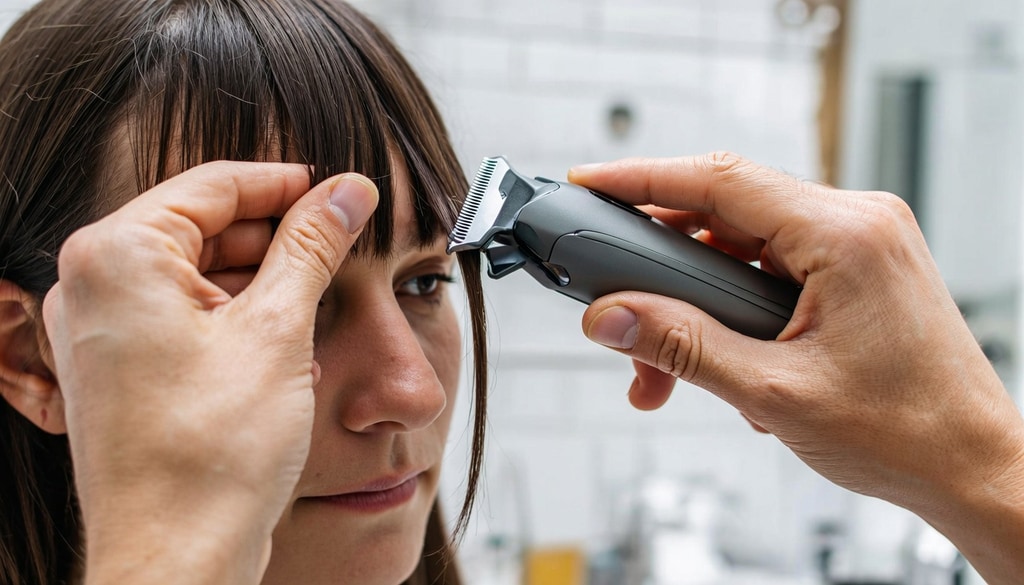
Skip the salon visits by choosing the perfect trimmer for precise, easy DIY home bangs.
Photo Credit: iStock
Using the wrong clipper can result in taking off way too much hair in a split second, leaving you with instant regret. On the flip side, the proper device gives you complete authority over your style and a massive boost of confidence. If you are planning to handle your own fringe maintenance or want to create bangs from scratch, choosing a tool tailored for the job is just as crucial as nailing the cutting technique itself.
Also Read: Best Grooming Trimmers To Buy
Here is a practical guide on how to hunt down a trimmer that makes at-home fringe styling a total breeze rather than a stressful ordeal.
Why The Right Trimmer Matters When Cutting Bangs At Home?
Unlike cleaning up body hair or tidying up a beard, your bangs live front and center on your face. There is nowhere to hide a mistake, and even a tiny slip of the hand will be glaringly obvious to everyone you meet. Because of this, pinpoint precision is infinitely more important than raw motor power when you are shopping for a fringe-maintenance tool.
A massive, heavy-duty grooming clipper might be fantastic for buzzing hair or bulk beard trimming, but it will feel incredibly clumsy and awkward when you try to manoeuvre it around your forehead. Opting for a lightweight, detail-oriented device lets you proceed slowly, carefully, and deliberately. This gives you the freedom to sculpt your hair exactly how you envisioned it. Plus, picking a specialised tool drastically cuts down on uneven hacks and keeps you from over-trimming when you get a bit too scissor-happy.
How To Choose A Trimmer If You Want To Try Bangs At Home?
Step 1: Look For Precision Attachments
Make sure to select a model that comes packed with detailing or micro-precision heads. These specialised attachments allow you to snip away at tiny sections of hair bit by bit, which gives you incredible control while you are shaping strands around your forehead and temples.
Step 2: Pick Adjustable Length Settings
Devices that feature customisable length guards allow you to leave the hair longer initially and take it down in increments. This safety net prevents you from accidentally chopping off a massive chunk of hair at once, offering beginners some much-needed peace of mind.
Step 3: Choose A Lightweight Design
An ultra-lightweight trimmer is significantly easier to guide and hold steady right next to your face. When a tool handles beautifully, you naturally get cleaner, more fluid results—especially when aiming for those soft, wispy, natural-looking edges.
Step 4: Consider Cordless Convenience
Going cordless gives you the freedom of movement you desperately need while styling. You can easily shift angles in front of the mirror without a bulky electrical cord getting tangled up or dragging against your hand during a delicate cut.
Step 5: Check Battery Performance
A dependable battery ensures that the motor maintains a steady, even cutting speed. The last thing you want is a device that loses juice halfway through a trim, which causes the blades to tug on your hair and completely ruins your precision.
Common Trimmer Mistakes People Make When Cutting Bangs
Even the highest-end tool on the market cannot save your hair if you approach the mirror with the wrong strategy. Here are a few classic missteps to avoid at all costs:
1. Buying The Cheapest Option Available:
Budget-basement bargain tools might look kind to your bank account, but they usually lack the micro-guards and precision heads needed for detailed work. When dealing with your face, paying a few extra bucks for absolute control is always worth it.
2. Choosing A Large Hair Clipper:
Heavy clippers built for buzzing full haircuts are simply too bulky for forehead work. They block your line of sight. Smaller, nimbler personal trimmers give you the visibility and delicate touch required for fine fringe adjustments.
3. Ignoring Battery Life:
A dying battery means uneven blade strokes. A fully charged, high-quality battery ensures the blades glide effortlessly through your hair, giving you a smooth, predictable cut from start to finish.
The next time you wish to upgrade your grooming appliances and buy a trimmer, remember these tips to get your hands on the best one. Compare different features and prices to find something that aligns with your requirements the best. Give yourself stunning bangs anytime you want with a trimmer that offers speed with precision.

Learn how to select the right trimmer for safe, smooth, and accurate home fringe trimming.
Photo Credit: iStock
Some Trimmer Products You May Like
1. ASBAH Turbo Professional Hair Clipper, 8 Guide Combs 180-Minute Cordless Runtime
2. VGR V-683 Professional Trimmer with 200-Min Runtime & 4 Length Settings - Black
3. BOMBAE 8-In-1 Full Body Trimmer
4. BEARDO Ape-X EZ Trimmer with 110mins Run-Time & Type-C Charging - Black
5. Philips MG5932/15 All in One Trimmer with 11 Attachments for Face-Hair & Body - Grey
6. VEGA PROFESSIONAL VPMHC-08 Pro Buzzer Hair Clipper - White
7. WAHL 9655-1517 Cordless Hair Clipper - Black & Grey
8. VGR VL-786 Barbers Choice Salon Hair Clipper with 200 Min Runtime & 6 Length Settings
Frequently Asked Questions (FAQs)
1. Can I use a regular hair trimmer for bangs?
You can, but it is risky. A hair trimmer equipped with micro-precision guards gives you significantly better visibility and control, protecting you from accidental, uneven hacks.
2. Are cordless trimmers better for trimming bangs?
Absolutely. Cordless models give you total freedom of movement, making it incredibly easy to switch angles and check your symmetry in the mirror without a wire getting in the way.
3. How often should bangs be trimmed?
To keep your fringe looking sharp and sitting at the perfect length, you will want to give it a quick maintenance cleanup every two to four weeks.
4. Should I trim bangs when my hair is wet or dry?
Always trim your hair when it is bone dry. Wet hair stretches out, and if you cut it then, it will bounce up much shorter than you intended once it dries.
5. Which trimmer feature is most important for beginners?
For first-timers, having precision detailing attachments and highly adjustable length guards is absolutely crucial for keeping mistakes to a minimum.
(Disclaimer: This article may include references to or features of products and services made available through affiliate marketing campaigns. NDTV Convergence Limited (“NDTV”) strives to maintain editorial independence while participating in such campaigns. NDTV does not assume responsibility for the performance or claims of any featured products or services.)