Induction Cooker Buying Guide: Wattage, Presets And Pan Detection Explained
Choosing an induction cooker? Understand wattage, cooking presets, pan detection, cookware compatibility and safety features before buying the right model for your kitchen.
How To Choose An Induction Cooker Wattage, Safety And Cookware Guide
An induction cooker often enters the kitchen with a simple promise: faster cooking without the flame, smoke or stubborn grease around a gas burner. For busy households, students, working couples and anyone who has wrestled with an empty cylinder at dinnertime, that promise sounds rather attractive. The trouble begins while shopping. One model offers 1,200 watts, another boasts 2,100 watts, and a third displays enough presets to resemble the dashboard of a small aircraft. Product descriptions throw around phrases such as auto pan detection, electromagnetic heating, feather-touch controls and intelligent temperature regulation. Suddenly, buying a cooker feels like preparing for an engineering entrance examination.

How To Choose An Induction Cooker Wattage, Safety And Cookware Guide
Photo Credit: Pexels
Fortunately, the basics are far simpler than the packaging suggests. A good induction cooker should suit daily cooking habits, work with existing utensils, respond quickly and remain safe during rushed mornings. Wattage affects speed, presets influence convenience, and pan detection determines whether the appliance heats correctly. The following 10 factors explain how to judge these features without getting distracted by shiny buttons or impressive-sounding jargon.
Also Read: Buying An Induction Stove? Donot Overlook These 8 Crucial Features
Key Features To Consider Before Buying An Induction Cooker
1. Choose Wattage According To Everyday Cooking
Wattage tells you how much electrical power an induction cooker can use at its highest setting. In practical terms, higher wattage generally means quicker heating. A 2,000-watt model can boil water or heat a pressure cooker faster than a 1,200-watt appliance. However, bigger numbers do not automatically guarantee a better purchase.
For light work such as brewing tea, warming milk, reheating dal or preparing instant noodles, a cooker between 1,200 and 1,500 watts may feel perfectly adequate. Regular family cooking usually calls for something between 1,600 and 2,000 watts. This range handles pressure cooking, frying, boiling and everyday sabzi without demanding heroic levels of patience.
Those who often cook large portions may appreciate a model above 2,000 watts, provided the household wiring can support it. Remember that induction cooking responds quickly, so maximum power rarely remains necessary throughout a recipe. Once the curry begins bubbling like an enthusiastic gossip group, lowering the setting saves electricity and prevents spills.
Think about the food prepared most often. The right wattage should match real habits, not merely the largest number printed on the box.
2. Check The Power Settings, Not Just Maximum Wattage
Maximum wattage attracts attention, but the range of available power levels matters just as much. Cooking does not happen at one dramatic temperature. Tea needs a gentle simmer, rotis need steady heat, and deep-frying requires stronger, controlled power. A cooker that jumps abruptly between low and high settings can turn simple recipes into a test of reflexes.
Look for a model with several clearly spaced power levels. Ten or more levels usually offer better control than a machine with only five broad options. Fine adjustments help when tempering spices, melting jaggery or simmering milk without creating a white waterfall across the counter.
Some cookers display wattage directly, while others use numbers from one to ten. Either system works once the controls feel logical. The important part is whether the cooker changes heat quickly when a setting changes. Induction technology should respond almost at once.
Low-power performance deserves special attention. Certain models perform brilliantly at full strength but pulse on and off at lower settings. This can cause sauces to heat unevenly. User reviews and demonstration videos often reveal such behaviour. A versatile cooker should sprint when required and stroll calmly when the recipe demands patience.
3. Understand What Cooking Presets Actually Do
Presets offer ready-made combinations of power and cooking time for common tasks. Buttons labelled 'Milk', 'Roti', 'Fry', 'Curry', 'Boil' or 'Pressure Cook' may look wonderfully convenient, especially during a rushed morning. Pressing one button instead of adjusting several settings certainly has its charm.
However, presets do not possess magical culinary wisdom. They cannot tell whether the pan holds one cup of milk or enough kheer for a family celebration. Most simply begin at a programmed power level and adjust it after a set period. Results still depend on the vessel, quantity and recipe.
Useful presets should match the food prepared regularly. A household that relies on pressure cooking may value a dedicated pressure-cook mode. Someone living alone may use boil and reheat settings far more often. Twenty decorative presets offer little benefit when only three see daily action.
Choose a cooker that also allows manual adjustments during preset operation. This freedom prevents frustration when the default heat feels too strong or too weak. A preset should act like a helpful kitchen assistant, not a stubborn relative who insists that there is only one correct way to make tea.
4. Look Closely At Pan Detection
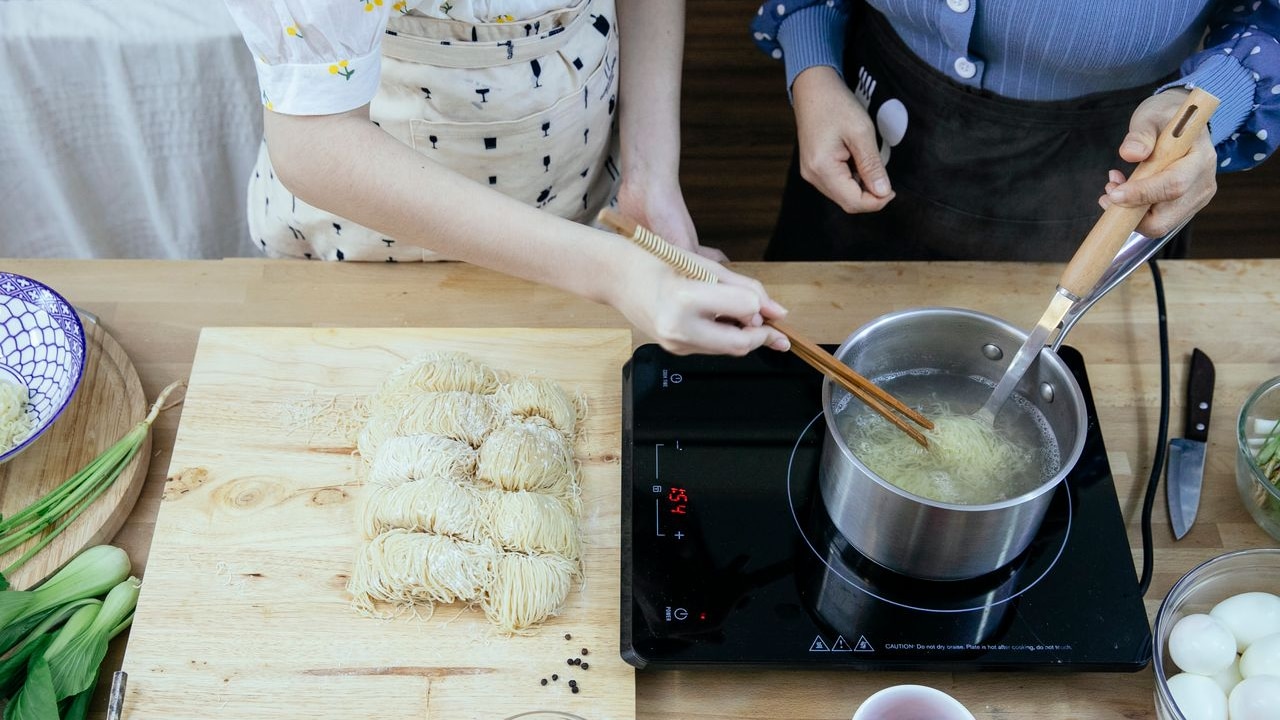
Pan detection allows the induction cooker to recognise whether a compatible vessel sits on the cooking surface. When the correct pan rests in the centre, the cooker generates heat. Remove it, and the appliance should stop heating or display an error message. This feature improves both safety and energy efficiency.
Good pan detection reacts quickly without becoming overly fussy. A cooker should recognise common induction-friendly cookware such as stainless-steel pressure cookers, iron tawas and magnetic-bottom kadais. Poor sensors may reject smaller vessels or stop heating when a pan shifts slightly during stirring.
Minimum pan size also matters. Some models struggle with tiny tea pans or coffee pots. Check the manufacturer's recommended base diameter, especially when small vessels appear frequently in the kitchen. The base should sit flat against the ceramic surface.
Automatic shut-off after pan removal adds reassurance during hectic cooking. It prevents the cooker from continuing to draw full power when someone lifts the vessel and forgets to switch off the appliance.
Pan detection cannot rescue incompatible cookware, though. The quickest test involves a fridge magnet. If it sticks firmly to the base, the vessel will usually work. A weak attraction may lead to disappointing or inconsistent heating.
Also Read: Top 7 Induction Cooktops Under ₹3000 For Daily Cooking
5. Make Sure Existing Cookware Is Compatible
An induction cooker heats magnetic cookware rather than the cooking surface itself. That means not every beloved vessel in the cupboard will cooperate. Aluminium, copper, glass and some grades of stainless steel will not work unless they include a magnetic induction base.
Cast iron, enamelled iron and magnetic stainless steel generally perform well. Many pressure cookers, tawas and kadais now display an induction-compatible symbol underneath. Still, checking the base before buying a new cooker can prevent an unexpected utensil-shopping expedition.
Flat-bottomed vessels give the best results. Rounded kadais may wobble or make poor contact with the surface. A slightly thick base also distributes heat more evenly and reduces the risk of scorching. Very thin pans can heat too quickly, especially at high wattage.
Avoid buying an induction converter plate as the first solution for unsuitable utensils. These metal discs sit between the cooker and pan, but they reduce efficiency and weaken the main advantage of induction technology. Replacing one or two frequently used vessels usually makes more sense.
Include cookware costs in the budget. A cooker priced at ₹2,500 may look economical, but replacing several pans can raise the total considerably. The true purchase price includes everything needed to cook comfortably from the first day.
6. Consider The Size Of The Cooking Zone
The circular markings on the induction surface indicate the ideal area for placing cookware. Matching the pan base to this zone helps the cooker transfer energy efficiently. A vessel that extends slightly beyond the marking can still work, but an extremely large tawa may heat unevenly around the edges.
Before choosing a model, measure the base of the largest pressure cooker, frying pan or tawa used regularly. Many portable induction cookers suit vessels with bases between roughly 12 and 20 centimetres. Larger families may need a wider cooking zone that supports heavier cookware.
The cooker's overall dimensions also deserve attention. Compact models fit neatly into small kitchens, hostel rooms and crowded countertops. Yet an appliance that feels too narrow may become unstable under a large kadai. A broad, sturdy body usually handles stirring and pressure-cooker movement more confidently.
Weight capacity rarely appears as prominently as wattage, but it matters. Large pots filled with biryani, stock or festive sweets can become surprisingly heavy. Check whether the top plate and body feel robust enough.
A well-sized cooker should hold the pan securely without consuming the entire counter. Kitchen harmony sometimes begins with a few sensible centimetres.
How To Choose An Induction Cooker: Wattage, Safety And Cookware Guide
Photo Credit: Pexels
7. Compare Control Panels And Displays
An induction cooker may use physical buttons, touch-sensitive keys or a combination of both. Neither style automatically wins. The best choice depends on how easily the controls respond during real cooking, when fingers may carry traces of flour, oil or water.
Physical buttons provide clear feedback and often work well for older users. They can, however, trap grime around the edges. Touch panels look sleek and wipe clean quickly, but low-quality sensors may ignore wet fingers or register accidental taps. A good panel should respond without requiring repeated poking.
Look for large labels and a bright display. Tiny symbols become annoying when steam clouds the surface or spectacles sit in another room. The screen should show the chosen power level, temperature or remaining time clearly.
Separate plus and minus controls feel more intuitive than a single button that cycles endlessly through settings. A pause function also proves useful when the doorbell rings at the exact moment onions reach their golden stage.
Avoid overcrowded panels filled with rarely used modes. Simplicity supports speed. During cooking, nobody wants to decode a blinking symbol while the tadka races from fragrant to burnt. Controls should make the cooker feel calmer, not cleverer than the person using it.
8. Prioritise Safety Features
Induction cookers already reduce several risks associated with open flames, but extra safety features still matter. Automatic shut-off, overheat protection, voltage protection and a child lock can prevent common kitchen mishaps.
Overheat protection switches the cooker off when internal components become too hot. This becomes especially useful during long frying sessions or when ventilation openings collect dust. High- and low-voltage protection guards the appliance against an unstable power supply, a concern in many neighbourhoods during summer or heavy rain.
A child lock prevents curious hands from changing settings. It also protects against accidental taps while wiping the control panel. The lock should activate easily but not so easily that it interrupts cooking every few minutes.
Look for a stable base with anti-slip feet. The power cable should feel thick, properly insulated and long enough to reach the socket without stretching across a walkway. Never rely on a lightweight extension board for a high-wattage cooker. A dedicated wall socket with suitable capacity offers a safer setup.
Safety features may not sound exciting in a product advertisement, but they often decide whether the appliance remains dependable after the novelty fades. A cooker should produce hot meals, not household drama.
9. Judge Build Quality And Cooling Design
A portable induction cooker may look slim, but it contains coils, electronics and a cooling fan working hard beneath the surface. Build quality affects how well these components survive daily heat, spills and movement.
The top usually consists of ceramic or toughened glass. It should feel smooth, solid and easy to wipe. Decorative patterns may look attractive online, yet a plain dark surface often hides stains and remains easier to maintain. Check for uneven edges or gaps where liquid could enter.
The cooling fan starts during operation and may continue briefly after cooking. Some noise is normal. A harsh rattle, grinding sound or constant high-pitched whine suggests poor fan quality. Ventilation openings should sit where walls, cloths or utensils will not block them.
A sturdy outer body prevents flexing when heavy cookware rests on top. The feet should keep the appliance level. Flimsy plastic can crack near the corners after repeated shifting between the counter and cupboard.
Read warranty terms closely. A one-year warranty appears common, though longer coverage on the coil or internal board offers better reassurance. Service availability often matters more than an impressive warranty printed by a brand with no nearby support network.
Also Read: Master Your Induction Stove: Effective Use With Power Settings, Cookware, Safety Tips
10. Balance Price, Efficiency And Long-Term Value
Induction cookers cover a broad price range. Entry-level models may cost around ₹1,500, while feature-rich options can cross ₹5,000. The sensible choice lies not at the cheapest or most expensive end, but where features match daily needs.
A basic cooker with reliable controls, proper safety protection and suitable wattage may outperform a flashy model filled with presets that nobody uses. Paying extra makes sense for stronger build quality, better low-heat control, quieter cooling and dependable service. Paying solely for a glossy finish or an oversized digital panel rarely transforms the food.
Energy efficiency also affects long-term value. Induction cookers direct heat into the pan quickly, reducing wasted energy compared with many conventional electric hot plates. However, running the cooker at full power for every task wastes that advantage. Matching the setting to the recipe keeps consumption sensible.
Consider repair costs and spare-part availability. A low purchase price loses its appeal when a damaged control board costs almost as much as a new appliance.
The best cooker should feel easy to use on an ordinary Tuesday, not merely impressive during the first unboxing. Value appears in dependable meals, manageable bills and fewer reasons to call customer care.
Products Related To This Article
https://www.amazon.in/s?k=induction+stove&crid=1AS6WD4JT3FOM&sprefix=induction+stove%2Caps%2C252&ref=nb_sb_noss_2
1. Prestige PIC 6.1 V3 2200 Watts Induction Cooktop
2. Philips Viva Collection HD4928/01 2100-Watt Induction Cooktop
3. Pigeon By Stovekraft ABS Plastic Acer Plus Induction Cooktop
4. iBELL IBL CROWN 11 Induction Cooktop 2000W
5. Preethi Indicook IC124 | 2100-Watt Induction Cooktop
6. Cadlec CookFusion_5 2000W Induction Cooktop
7. Hawkins Futura Single Induction Hob, 2000-W Cooktop
Choosing an induction cooker becomes easier once the technical language gives way to everyday kitchen logic. Wattage determines speed, but adjustable power levels determine control. Presets can save time, though they work best when users can change them. Pan detection improves safety, yet cookware compatibility decides whether the cooker heats at all.
A dependable model should suit existing vessels, available counter space and the household's usual recipes. It should offer a clear display, responsive controls, sensible safety features and enough power without placing unnecessary strain on the electrical setup. Strong construction and accessible service support also matter far more than a panel crowded with colourful cooking modes.
Before buying, picture a typical day. Perhaps it begins with tea, moves through pressure-cooked dal and ends with a quick stir-fry after work. The right induction cooker should handle that routine without fuss, confusion or constant supervision.
Technology earns its place in the kitchen when it removes effort rather than adding instructions. Choose thoughtfully, keep expectations practical and let the cooker do what a good appliance should: make daily cooking quicker, safer and pleasantly uneventful.
(Disclaimer: This article may include references to or features of products and services made available through affiliate marketing campaigns. NDTV Convergence Limited (“NDTV”) strives to maintain editorial independence while participating in such campaigns. NDTV does not assume responsibility for the performance or claims of any featured products or services.)