Why Washing Machines Shake: The Levelling Mistake
A shaking washing machine is usually not faulty; it is poorly levelled. One uneven foot, a sloped floor, or loose lock nuts can turn the spin cycle into chaos. Fix the levelling, and the noise often disappears.
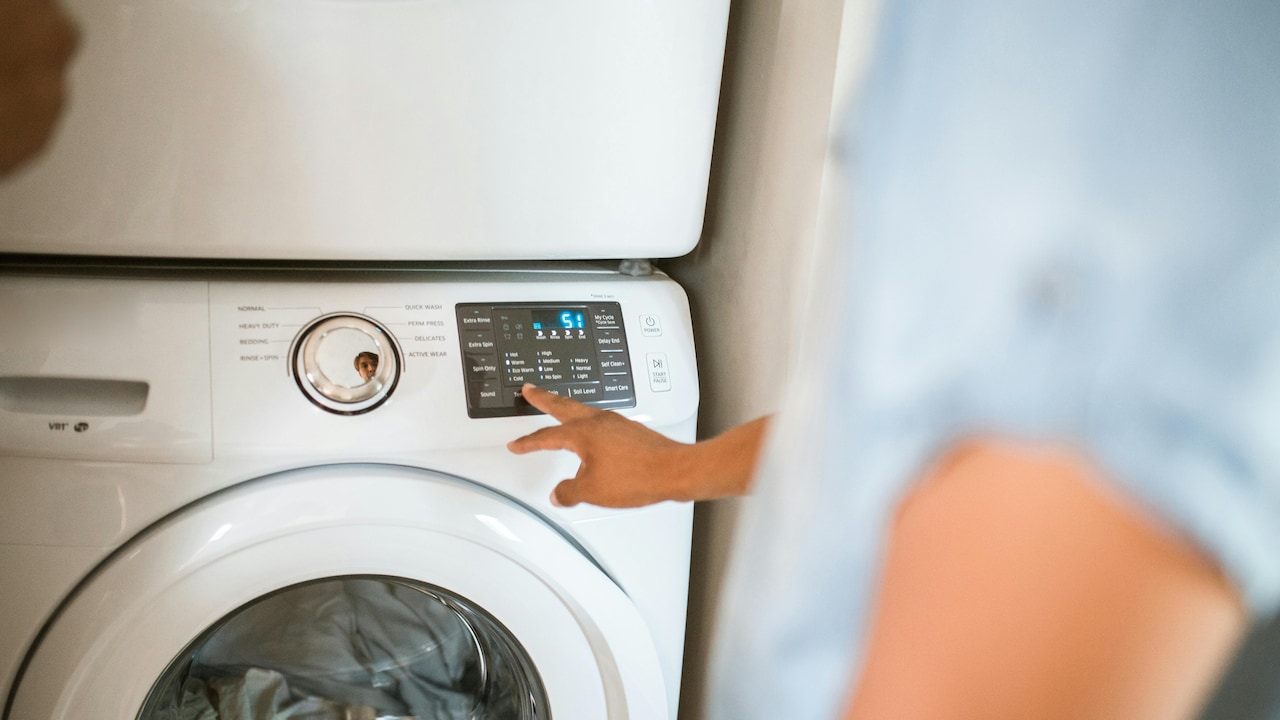
Here are common reasons that make washing machines shake during use.
There are few sounds more annoying than a washing machine that starts off normal and then, halfway through the spin cycle, turns into a percussion instrument. First comes the gentle wobble. Then the aggressive thud-thud. Then the full-blown performance where the washing machine looks like it's trying to escape the laundry corner and start a new life in the living room.
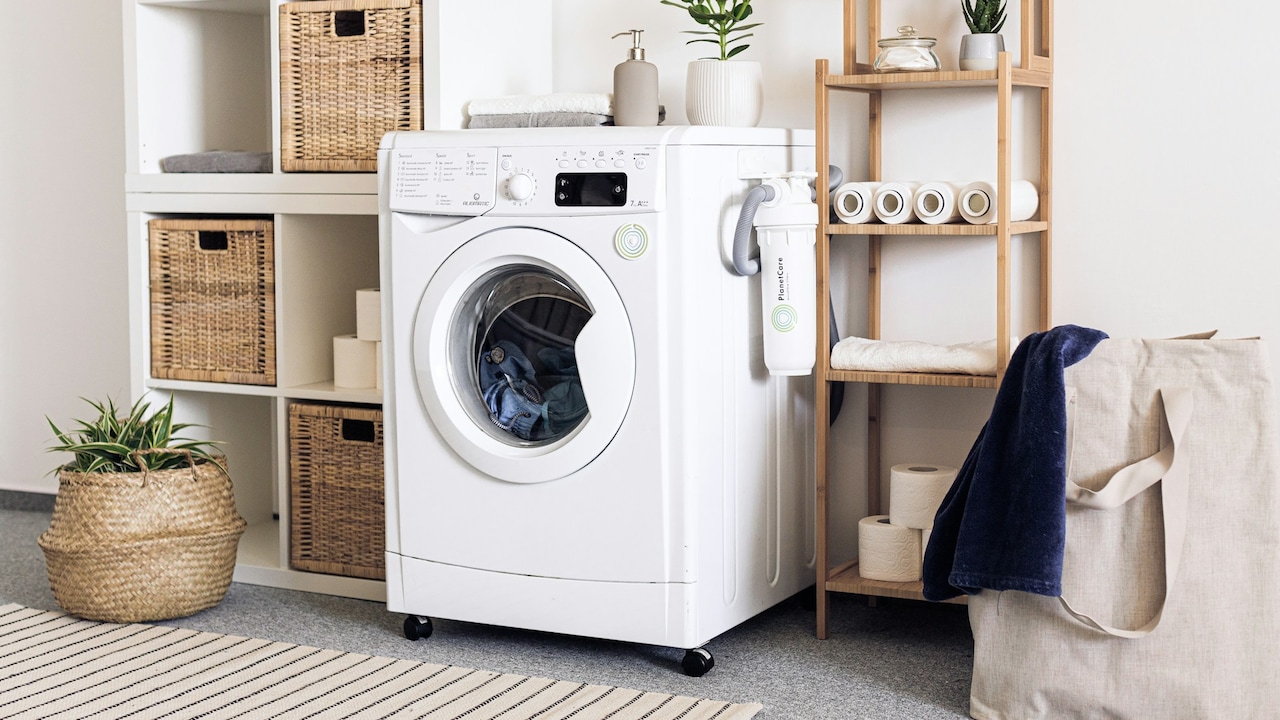
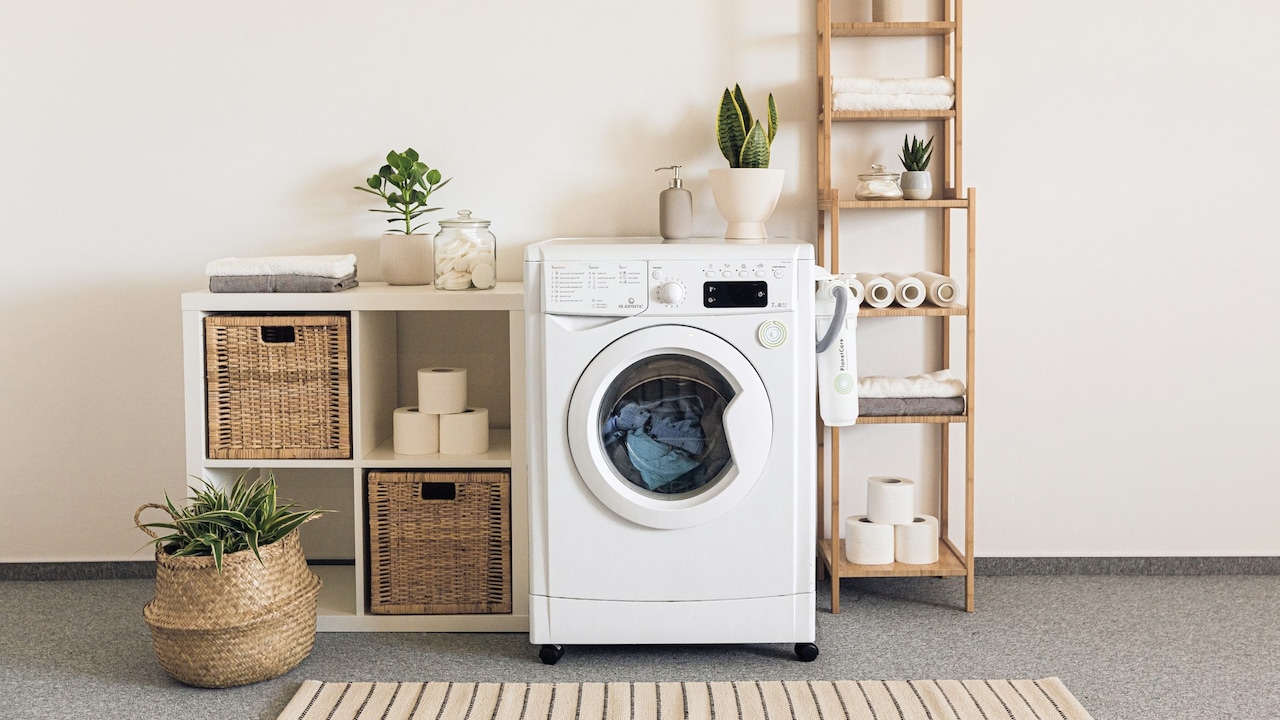
Try these tips to level your washing machine and prevent shaking; Photo Credit: Unsplash
Many people blame the brand, the model, or the load. Some even assume the machine is “old now” and start browsing replacements that cost ₹25,000 to ₹45,000. But the truth is much less glamorous. Most shaking washing machines aren't broken. They're simply not level.
Levelling sounds boring, like something only installers care about. Yet it's the difference between a peaceful wash day and a spin-cycle horror show. And in a country where washing machines often live on slightly sloped tiles, uneven cement floors, or cramped balconies, this one small detail matters a lot more than people think.
Also Read: Top 7 Washing Machine Features Rarely Used While Doing Laundry
Top 10 Real Reasons Your Washing Machine Won't Sit Still
The Floor Is Not As Flat As It Looks
Most people trust the floor. Tiles look straight, so the floor must be flat, right? Sadly, floors lie. Many homes have a slight slope to help water drain, especially in bathrooms, utility areas, and balconies. That slope may be tiny, but a washing machine feels it immediately.
A machine needs all four feet to sit firmly on the ground. If even one foot is slightly floating, the machine becomes unstable. During the spin cycle, the drum rotates at high speed, and the force pushes the machine to rock. That rocking turns into shaking. Then the shaking turns into noise. Then the noise turns into family members shouting, “Switch it off!”
This is why a machine can seem perfectly fine during washing and rinsing, but turns wild during spinning. The floor didn't change. The speed did. And at high speed, small unevenness becomes a big problem.
A good way to think about it is like a dining table with one short leg. It behaves until someone taps it. A washing machine gets tapped by physics, repeatedly, at 1,000 revolutions per minute.
The Four Feet Problem: One Loose Corner Is Enough
A washing machine stands on four adjustable feet, and that sounds reassuring until reality shows up. Many machines arrive with feet that are not properly set. Even after placing the machine, people rarely check whether all four feet are making proper contact with the ground.
Here's the sneaky part: a machine can look stable when pushed gently. But the moment the drum spins, the internal weight shifts and that one slightly raised corner becomes a trampoline. The machine begins to rock diagonally. The rocking grows stronger because the spin cycle keeps feeding it energy.
This is why some machines shake even with a small load. It isn't always about too many clothes. It's about how the machine is sitting. A machine needs equal pressure on all feet. Not “almost equal.” Not “good enough.” Equal.
The most common mistake is adjusting only one foot. People turn one leg, feel the machine stop wobbling, and assume the job is done. But levelling works like a team sport. All four feet need attention. Otherwise, the machine stays unstable, just quieter for a while.
Levelling By Eye: The Confidence Trap
There is a special kind of confidence that comes from eyeballing something and declaring it “straight.” This confidence has broken many things, including shelves, televisions on wall mounts, and washing machines.
Levelling a washing machine by eye is like guessing the salt in biryani. Sometimes it works. Often it doesn't. A machine needs to be level from side to side and from front to back. That's not easy to judge visually, especially when the machine sits in a tight corner or under a countertop.
The machine might look perfectly aligned with the wall, yet still be tilted slightly. And that slight tilt matters. A tilted machine makes the drum sit unevenly. During spinning, the clothes gather on one side, the drum becomes unbalanced, and the machine starts shaking.
A small spirit level tool costs less than a casual dinner. Yet many households never use one. Some use a water bottle, some use a ruler, and some use pure optimism. Optimism is a lovely thing. It is not a levelling instrument.
The funny part is, once properly levelled, many machines suddenly become “quiet,” and everyone wonders why it wasn't like that from day one.
Overloading Isn't The Only Load Problem
Overloading is famous. Every user manual warns about it. Every elder in the house has said, “Don't put so many clothes!” Yet shaking often happens even when the load size is reasonable.
The real issue is not always overload. It's an uneven load distribution. For example, washing one heavy blanket, a large towel, or a few jeans can create a lopsided mass. During spinning, the weight clumps on one side. The drum rotates, the weight swings, and the machine begins to wobble.
Now here's where levelling matters again. A well-levelled machine can handle minor imbalance. Its suspension system absorbs the movement and keeps things steady. But a poorly levelled machine has no stability to begin with. Even a small imbalance becomes a disaster.
This is why two households can wash the same blanket. One machine spins smoothly. The other machine sounds like it's fighting a demon. The difference is not luck. It's set up.
The smartest approach is a combination: keep loads sensible, avoid washing single heavy items alone, and make sure the machine is properly levelled so it can do its job without drama.
The Shipping Bolts Mistake That Still Happens
Some front-load washing machines come with shipping bolts at the back. These bolts lock the drum during transport so it doesn't bounce around and damage the machine. They are meant to be removed before the first wash.
And yes, this mistake still happens. More often than people admit. Sometimes the installer forgets. Sometimes the machine gets delivered, and the household sets it up without professional help. Sometimes the bolts are removed partially, but not completely.
When shipping bolts remain, the drum cannot move freely. During spinning, instead of the suspension system absorbing vibration, the whole machine takes the hit. The result is intense shaking and loud banging. It feels like the machine is about to break apart.
This isn't a “minor” mistake. It can damage internal parts over time. It can also make the machine walk forward, especially on smooth tiles.
If a machine has shaken violently from day one, shipping bolts should be checked immediately. It's one of those rare issues that can be solved in minutes, and it can save thousands in repairs later. No one wants to pay ₹6,000 for a service visit when the real problem is four bolts sitting quietly at the back.
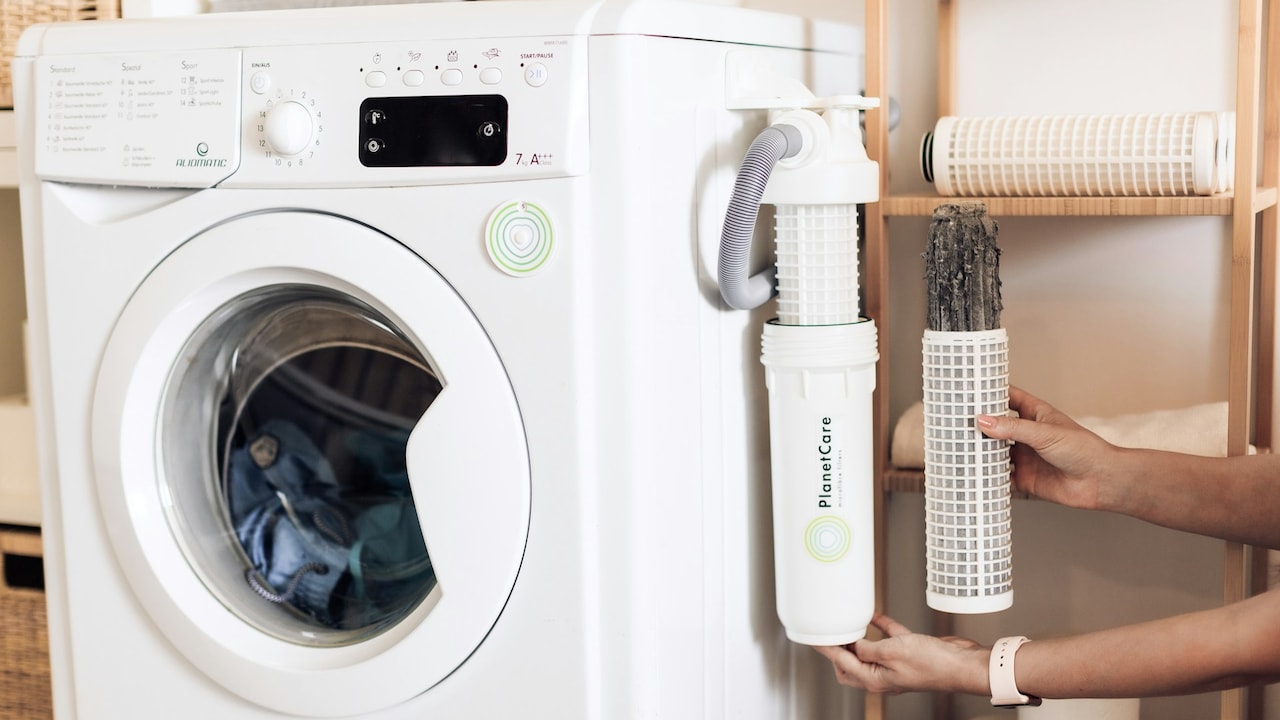
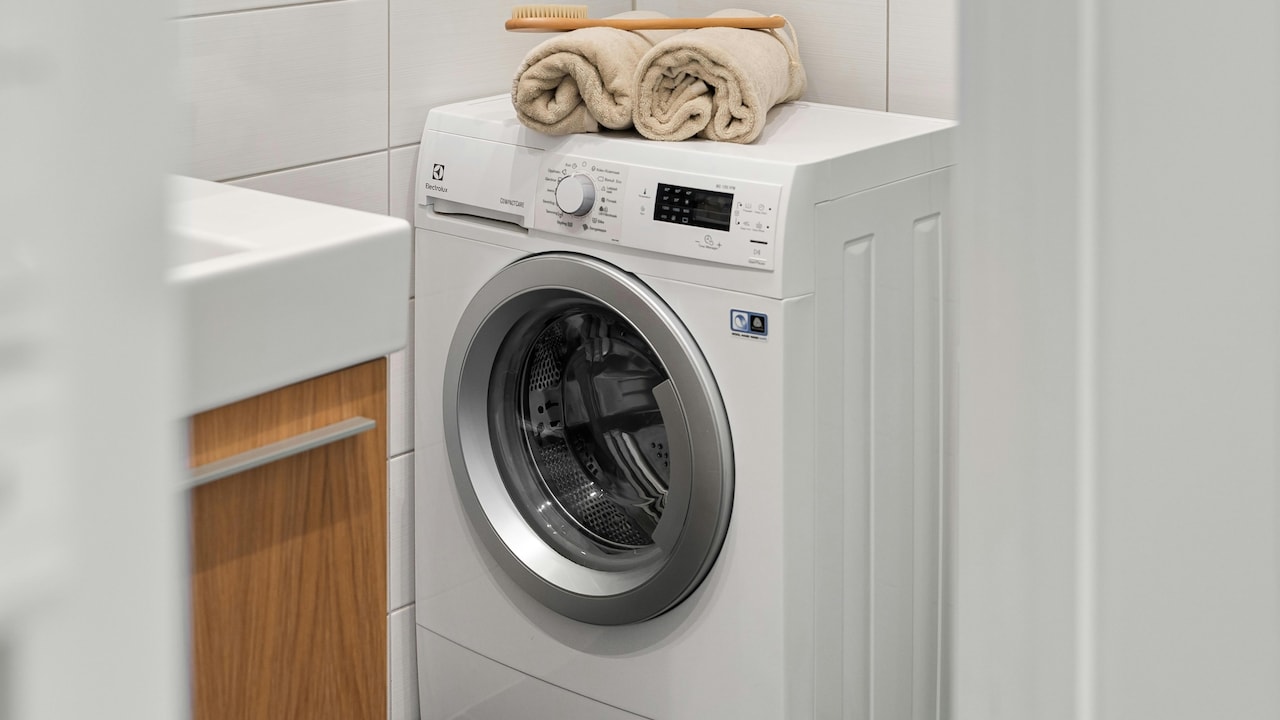
Always remove the shipping bolts from the back of the machine before using; Photo Credit: Unsplash
Soft Flooring And The Wobble Amplifier
Many homes place washing machines on mats, rubber pads, foam sheets, or even thick plastic stands. The intention is good: reduce noise, protect tiles, prevent slipping. Unfortunately, soft materials can make shaking worse.
A washing machine needs a firm, stable base. When placed on something soft, the feet sink unevenly. During spinning, the machine compresses the surface, rebounds, and begins to bounce. That bouncing amplifies vibration instead of reducing it.
Rubber pads can help when used correctly, but thick foam or spongy mats are a recipe for chaos. Even some hollow plastic stands flex under weight. A machine may feel stable when not running, but the moment it hits high spin speed, the base behaves like a trampoline.
This is especially common in small utility areas where people try to protect floors from water. A mat seems practical. But it often becomes the hidden villain.
The ideal setup is simple: hard floor, properly adjusted feet, and minimal “extra layers.” If noise is a concern, anti-vibration pads designed specifically for washing machines can help, but only when the machine is already level.
Uneven Tiles And Grout Lines: The Tiny Bumps That Matter
Tile flooring looks neat, but it can be full of tiny height differences. One tile might sit slightly higher than the next. Grout lines can create micro ridges. Over time, some tiles loosen or settle.
To a human foot, these changes feel insignificant. To a washing machine spinning at high speed, they matter a lot. The machine's feet are small. If one foot lands on a grout ridge or a slightly raised tile edge, it may not grip properly.
This creates a situation where the machine seems level when measured at the top, but the feet still don't sit evenly. The result is vibration and rocking.
In some homes, the machine sits in a corner where the tiles slope slightly towards a drain. In others, the machine sits partly on one tile and partly on another. The setup looks fine, but the machine doesn't agree.
This is where patience matters. Sometimes the solution is adjusting the feet carefully. Sometimes it involves shifting the machine a few centimetres to find a flatter patch. It sounds silly, but that small move can transform the machine's behaviour.
In many households, the difference between “silent spin” and “neighbour complaints” is literally the width of a grout line.
Lock Nuts, Loose Feet, And The Slow Return Of The Shake
A washing machine can be levelled perfectly and still start shaking again after a few weeks. This often happens when the feet are adjusted but not locked properly.
Most machines have lock nuts on the adjustable feet. After setting the height, the lock nut needs to be tightened so the foot stays in place. If it remains loose, vibration gradually turns the foot. Over time, one corner lowers or rises slightly, and the machine becomes unstable again.
This is the slow, frustrating kind of problem. The machine behaves for a while, giving everyone hope. Then, one day, the spin cycle starts sounding like a drum circle. People blame the load. They blame the detergent. They blame the weather.
But it's often just a loose lock nut.
Another common issue is feet that aren't screwed out evenly. Some people extend one foot too far, which reduces stability. The machine ends up balancing on long “stilts.” During spinning, those stilts flex slightly, and vibration increases.
A stable machine sits low and firm. Once the feet are set, lock nuts should be tightened properly. It's not glamorous work, but it saves a lot of irritation.
Balcony Life: Wind, Water, And The Not-So-Perfect Corner
Many washing machines live on balconies. It makes sense. Balconies provide ventilation, easy drainage, and a place to dry clothes. But balconies also come with levelling challenges.
Balcony floors are often sloped for water runoff. Some have rough surfaces. Some have uneven cement patches. And many are exposed to moisture. Over time, moisture can affect the floor and even the machine's feet. Rust or grime can reduce grip, making the machine more likely to slide.
Balconies also tempt people into squeezing the machine into awkward corners. The machine ends up slightly angled because the wall isn't perfectly straight or the space is too tight. That angle makes levelling harder.
Add water splashes, occasional detergent spills, and a floor that's rarely fully dry, and the machine loses friction. Even a well-levelled machine can slowly shift position after repeated cycles.
This is why some machines “walk” forward. It's not because the machine is alive. It's because vibration plus low friction equals movement.
A simple fix is to ensure the machine sits on a clean, dry, firm surface, with feet adjusted correctly and lock nuts tightened. The less slippery the floor, the better.
When Levelling Isn't Enough: Real Faults That Mimic The Mistake
Levelling causes most washing machine shaking issues, but not all. Sometimes the machine is properly levelled and still shakes. That's when deeper problems may be at play.
Worn shock absorbers are a common culprit in older front-load machines. These parts control drum movement during spinning. When they weaken, the drum moves too freely and causes heavy vibration.
Damaged drum bearings can also cause loud rumbling and shaking. This tends to sound different from a normal imbalance. It often comes with a grinding noise, and it worsens over time.
Another possibility is a bent drum spider or loose counterweight. These issues usually happen after years of use or after repeated violent shaking. Sometimes the machine has suffered a fall during the move.
The key sign is consistency. If the machine shakes badly on every load, even small ones, and levelling changes nothing, it's time to consider mechanical wear.
Still, it's worth fixing levelling first. It costs nothing and solves the problem most of the time. Calling a technician before checking the basics is like buying new shoes because the laces are untied. It happens more often than people like to admit.
Products Related To This Article
1. Whirlpool 6.5 Kg 5 Star Magic Clean Semi-Automatic Top Loading Washing Machine
2. Haier 6 kg 5 Star Oceanus Wave Drum Washing Machine Fully Automatic Top Load
3. Samsung 8 Kg, 5 Star, AI Wash, AI Energy Mode, Wi-Fi, Ecobubble, AI VRT+, Super Speed, Soft Closing Door
4. LG 7 Kg, 5 Star, Direct Drive Technology, Steam Wash, 6 Motion DD
5. Bosch 9kg 5 Star Anti Stain & AI Active Water+ Fully Automatic Front Load Washing Machine
6. Voltas Beko, A Tata Product 6.5 Kg 5 Star Fully-Automatic Top Loading Washing Machine
7. IFB 7 Kg 5 Star, DeepClean® Technology, AI Powered
A shaking washing machine feels like a big problem, but it often comes down to a small mistake. Levelling isn't exciting, and it doesn't come with fancy features or glossy marketing. Yet it decides whether a machine runs smoothly or behaves like a frustrated drummer.
In many homes, the floor has a slight slope, the tiles hide tiny bumps, or one foot doesn't sit properly. Sometimes the machine rests on a soft mat that makes everything worse. Sometimes the feet were adjusted once but never locked. And sometimes, shipping bolts are still sitting at the back, quietly ruining everyone's peace.
The good news is simple: most of this is fixable without spending ₹1. The washing machine doesn't need to shake. The spin cycle doesn't need to sound like construction work. With proper levelling and a little attention to setup, laundry can return to what it should be, boring, calm, and wonderfully predictable.
(Disclaimer: This article may include references to or features of products and services made available through affiliate marketing campaigns. NDTV Convergence Limited (“NDTV”) strives to maintain editorial independence while participating in such campaigns. NDTV does not assume responsibility for the performance or claims of any featured products or services.)