Induction Cooktop Power Settings Explained: How To Boil Water Faster Every Time
Boil water faster on an induction cooktop by using the right power setting, cookware, and lid. Learn simple tricks to cut boiling time nearly in half without wasting electricity.
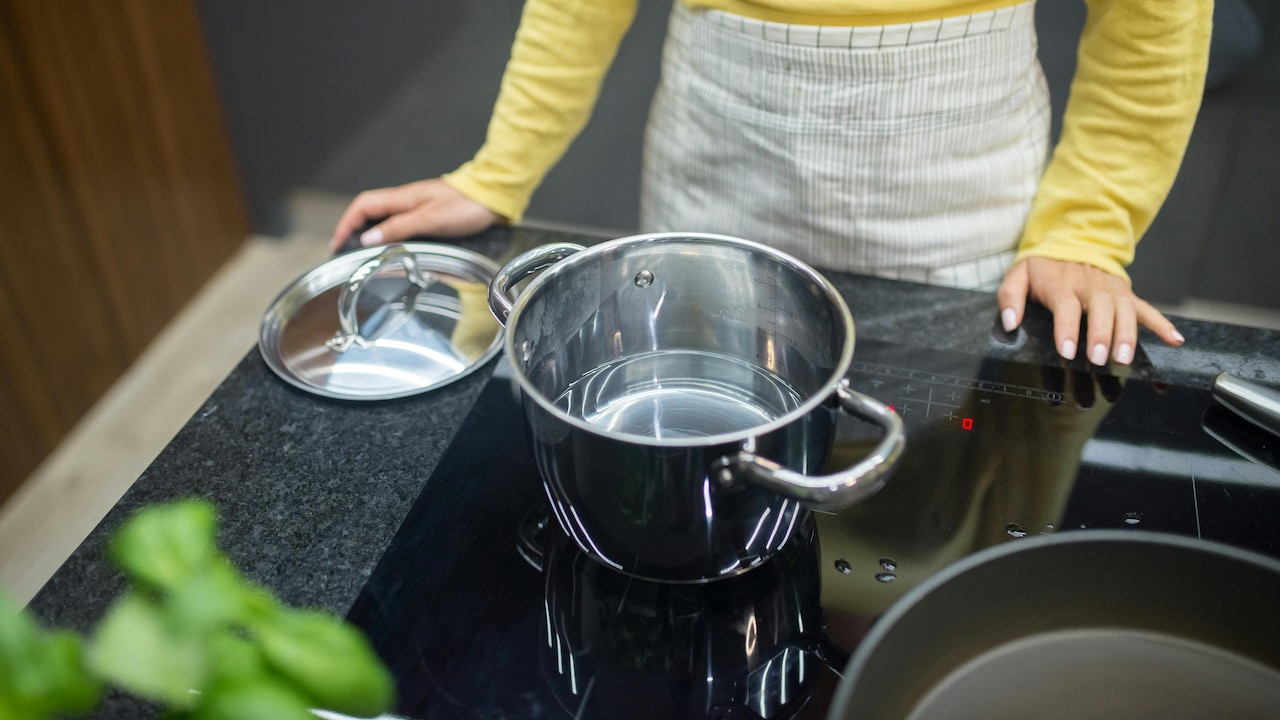
Induction Cooktop Power Settings Explained: Here Is How To Boil Water Faster Every Time.
There's a special kind of impatience that appears in the kitchen when someone is waiting for water to boil. It starts with tapping the spoon on the counter. Then comes the suspicious stare at the pot, as if glaring will intimidate the water into bubbling faster. And finally, the ultimate moment of betrayal: switching on the induction cooktop and still waiting.
Induction is supposed to be fast. That's the whole point. It's the “blink, and the water is boiling” gadget, the modern kitchen flex, the one appliance that makes even an ordinary weeknight feel slightly more organised.
Yet many homes don't get that speed. Not because the cooktop is weak, but because the settings are misunderstood. Induction power isn't like a gas flame, where “medium” is medium forever. It pulses, it senses, it protects, and it behaves differently depending on the utensil and the amount of water.
The good news is simple: with a few adjustments, boiling water in nearly half the time becomes completely realistic. And once that happens, everything else gets easier too: tea, pasta, eggs, instant noodles, soups, and those last-minute guests who suddenly want “something hot” right now.
Induction Cooktop Power Settings: How To Boil Water In Half the Time
Photo Credit: Pexels
What Most Homes Get Wrong About Induction Power Levels
1) Understand What Power Settings Really Mean (And Why They Feel Weird)
On many induction cooktops, the numbers don't represent a smooth ladder of heat. They represent how the cooktop delivers energy in bursts. At higher settings, it sends stronger and longer bursts into the base of the pan. At lower settings, it sends shorter bursts and pauses more often. That is why simmering sometimes looks like the water is “thinking about boiling” and then giving up.
This matters because boiling is not a gentle activity. Water needs a serious push to cross the temperature threshold quickly. If the cooktop sits at a mid-level power, it may keep the water warm but not drive it into a rapid boil. That's the classic mistake: setting it at 1000W or level 5 and waiting, assuming patience will do the rest.
For speed, induction needs commitment. High power is not “dangerous” when used correctly. It is simply efficient. The trick is to use maximum power early to get water moving fast, then reduce it once the boil is achieved. That one habit alone can change the boiling time dramatically.
2) Start at the Highest Setting, Then Step Down Like a Pro
Many people treat induction like a slow cooker. They set the power once and walk away. That works for some dishes, but not for boiling water quickly. The fastest method is a two-stage approach: blast first, control later.
When the goal is boiling, the cooktop should start at the highest safe setting, usually “Boost” or the top power level. This is the phase where induction shines. It heats the pan directly, so the water starts gaining temperature fast, without wasting energy heating the surrounding air.
Once the water hits a rolling boil, keeping it on maximum is unnecessary. It does not make the water “more boiled”. It only increases evaporation, wastes electricity, and sometimes triggers overheating protection in the cooktop. This is especially common in smaller kitchens during summer, when the cooktop and pan get hot quickly.
So the ideal rhythm is: maximum power until bubbles become vigorous, then reduce to a medium-high setting to maintain the boil. This gives speed without chaos. It also prevents the annoying situation where the cooktop suddenly beeps and reduces power on its own like a strict auntie.
3) Use the Right Pan: The Fastest Cooktop Still Can't Fix a Bad Base
Induction cooktops are picky. They demand a pan with a magnetic base. That's well known. But what's less obvious is that the quality of the base affects boiling time as much as the power setting.
A thin or uneven base heats inconsistently. The cooktop senses poor contact and may pulse power irregularly. That means the water heats in fits and starts instead of rising steadily. You may still get a boil, but it takes longer and feels less predictable.
A heavy-bottomed stainless steel pot usually performs best. It spreads heat evenly and stays stable on the induction surface. Some non-stick pans work too, but many have thinner bases that slow down rapid boiling. Aluminium alone does not work unless it has a bonded induction plate.
The size matters as well. A pan that is too small for the induction ring wastes potential. A pan that is too large spreads the energy thin. For boiling water quickly, the base should match the ring closely, like a well-fitted lid. If the base wobbles or sits unevenly, speed drops. It's like trying to run a race in slippers.
4) Lid On: The Most Underrated “Power Setting” in the Kitchen
This one feels almost too simple, but it makes a dramatic difference. A lid traps heat. It reduces evaporation. It keeps the hot air and steam close to the water's surface, pushing the temperature up faster.
Without a lid, a lot of energy escapes into the kitchen. With a lid, the heat stays where it belongs. In many homes, this alone cuts boiling time enough to feel like a new appliance was purchased.
The lid also helps in a very practical way: it keeps the cooktop from overheating. When water takes too long to boil, people keep the power on for longer. That increases electricity usage and heats up the pan and glass surface more than needed.
A lid means the cooktop reaches the goal sooner and can step down earlier. That is efficiency in real life, not just in a brochure.
If the lid is slightly loose, it still helps. If it fits well, even better. Just keep an eye on it when boiling starchy things like pasta or when reheating milk. The lid-on trick is powerful, but it can turn into a foam volcano if ignored.
5) Don't Overfill the Pot: More Water = More Waiting
There's a habit in many kitchens: filling the pot “just in case”. Just in case someone wants more tea. Just in case extra noodles are needed. Just in case the universe demands more boiling water.
But boiling time rises sharply with volume. Heating 250 ml is a sprint. Heating 1.5 litres is a slow march. If the goal is speed, use only what is needed. It sounds obvious, but it's one of the most common reasons people feel induction is not as fast as promised.
For tea or coffee, a small saucepan or kettle-sized vessel works best. For instant noodles, the water should cover the noodles comfortably, not flood the pan like a swimming pool. For boiling eggs, the water should sit a couple of centimetres above the eggs, not halfway up the pot.
Using less water does not just save time. It saves electricity and reduces the humidity that makes kitchens feel sticky. In peak summer, that matters more than anyone wants to admit.
6) Choose the Right Mode: Watt Mode vs Level Mode Confuses Everyone
Many induction cooktops offer two ways to control heat: power levels (like 1 to 10) and watt settings (like 200W to 2000W). Some models also include preset modes like “Boil”, “Milk”, or “Curry”. It's easy to assume these are fancy features, but they behave differently.
Level mode often feels more aggressive because it's designed for quick changes. Watt mode can feel steadier, but it may not always deliver the full burst the way level mode does. Preset modes can be conservative because they aim to prevent spills and burning, not maximise speed.
For boiling water fast, the watt mode should be set near the maximum supported by the cooktop. For many homes, that's around 1800W to 2000W. If the cooktop supports Boost, that can push it even higher for short periods.
The trick is to avoid “Boil” mode if it is too cautious. Some cooktops treat “Boil” like “gentle boil”, which defeats the purpose. A manual high setting usually wins.
Once the boil is reached, switching to a lower wattage gives a controlled boil without aggressive bubbling.
7) Use Boost Smartly: It's a Sprint Button, Not a Lifestyle
Boost mode is the star feature. It feels like magic. You press it, and suddenly the water behaves as if it got an urgent phone call.
But Boost is designed for short bursts. Many cooktops limit Boost time automatically to protect internal components. Some will reduce power after a few minutes. Others will beep and switch to a lower setting. That surprises people and creates the impression that the cooktop is “inconsistent”.
Boost is best used at the start. It gets the water close to boiling quickly. Then, before the cooktop decides to intervene, switching to the highest normal setting keeps the heating steady.
Boost also demands a good utensil. A weak or thin base can overheat unevenly under Boost, leading to hot spots. That's not dangerous in a dramatic way, but it can cause warping over time. And a warped base is the beginning of a slow, annoying decline in performance.
So treat Boost like a match strike: quick, effective, and not meant to be held forever.
8) Check Your Electricity Reality: MCB Trips and Voltage Drops Slow Everything
There's an awkward truth about fast boiling: it needs stable power. In many apartments, the kitchen circuit shares load with the fridge, mixer, chimney, and sometimes even the washing machine. Add a 2000W induction cooktop on top, and the system starts complaining.
If the voltage dips, the cooktop may not deliver full output even when set to maximum. Some models will show an error. Others will quietly reduce performance. That can make boiling feel slower than expected, especially during peak evening hours.
This is also why some people experience random shut-offs. The cooktop isn't being dramatic. It's protecting itself and the circuit. If the MCB trips often, it's worth checking whether the induction is on a dedicated socket and whether the wiring supports the load.
A stable connection can make the same cooktop feel twice as fast. It also reduces the risk of long-term damage. Nobody wants a cooktop that starts acting moody after six months.
If a stabiliser is already used for other appliances, it's usually not recommended for high-power induction unless it is rated properly. It's better to focus on safe wiring and correct load management.
9) Pre-Heat the Pan for a Few Seconds (Yes, Even for Water)
This sounds strange because water is not a stir-fry. But a short pre-heat can help when using thick-bottomed cookware. A heavy pot absorbs energy. If cold water is poured in immediately, the pot and water warm together, which is still efficient but slightly slower.
A smarter approach is to place the empty pot on the cooktop, set it to high power, and let it heat for 10 to 20 seconds. Then add water and cover with a lid. This can shave off time, especially in winter or early mornings when the kitchen is cold.
However, this needs care. Pre-heating should be brief. Leaving an empty pot on high power for too long can overheat it, especially if it is thin or non-stick. For non-stick pans, pre-heating an empty pan is risky and can damage the coating.
For stainless steel and good quality induction-compatible cookware, a short pre-heat is safe and effective. It's the kind of small habit that feels professional without being complicated.
It also makes the cooktop feel more responsive, which is oddly satisfying in a “why didn't I do this earlier” way.
Induction Cooktop Power Settings: How To Boil Water In Half the Time
Photo Credit: Pexels
10) Maintain the Boil Efficiently: Fast Boiling is Great, But Control is the Real Win
Getting water to boil quickly is the headline achievement, but maintaining it correctly is what makes induction feel truly modern.
Once the water is boiling, the setting should drop. For most cooktops, a medium-high power is enough to keep a rolling boil. Keeping it on maximum does not speed up cooking much after that point. For pasta, it can even cause messy boil-overs. For eggs, it can crack shells. For tea water, it can create that aggressive bubbling that splashes the stove and leaves mineral marks.
A controlled boil saves electricity and keeps the kitchen calmer. It also prevents the cooktop from heating up excessively, which reduces the chance of thermal cut-offs.
This is also where induction's precision shines. Unlike gas, it can hold a steady simmer or a steady boil once the right level is found. That means fewer surprises and less hovering.
And yes, this is where the cook becomes the boss. The cooktop stops feeling like a temperamental gadget and starts feeling like a reliable teammate.
Products Related To This Article
1. Philips Viva Collection HD4928/01 2100-Watt Induction Cooktop
2. Prestige PIC 20 1600 Watts Induction Cooktop
3. Preethi Indicook IC124 Induction Cooktop
4. Cadlec CookEase 2000W Induction Cooktop
5. IBELL SLIM50 Induction Cooktop, 2000W, BIS Certified
Induction cooktops can absolutely boil water in nearly half the time, but the secret is not just buying a powerful model. The secret is using power like a strategy.
Maximum heat at the start, lid on, the right utensil, the right volume of water, and a quick step-down once boiling begins. Add stable electricity and a pan that sits properly on the ring, and suddenly the cooktop behaves like the speedy appliance it was meant to be.
Boiling water quickly might sound like a small victory, but it changes the rhythm of the whole kitchen. Tea becomes instant comfort instead of a waiting game. Dinner feels less rushed. And those “just five minutes” moments stop stretching into fifteen.
And perhaps best of all, there's a quiet joy in watching water boil fast, not because the laws of physics changed, but because the cook finally cracked the code.
(Disclaimer: This article may include references to or features of products and services made available through affiliate marketing campaigns. NDTV Convergence Limited (“NDTV”) strives to maintain editorial independence while participating in such campaigns. NDTV does not assume responsibility for the performance or claims of any featured products or services.)