Is An OTG Better Than A Microwave For Baking? Debunking The Top 5 Myths
OTG or microwave for baking? This article busts 5 common myths and explains which appliance works best for cakes, cookies, bread, and everyday baking, so you can choose the right one without wasting money or effort.
OTG vs Microwave: Which One Is Better for For You While Baking Cakes, Cookies and Bread?
Walk into any home appliance shop, and you'll hear the same pitch: “Madam, OTG is for baking, microwave is for reheating.” Simple, right? Except it isn't.
Because somewhere between YouTube recipes, Instagram brownies, and that one neighbour who swears by her convection microwave, baking has turned into a battlefield. People buy an OTG expecting bakery-style cakes and end up with dry sponges. Others buy a microwave thinking it will do everything, and then wonder why cookies turn soft like yesterday's biscuit packet left open.
The truth is, both appliances can bake. But they bake differently. And most of the confusion comes from myths that have been repeated so often, they sound like facts.
So, is an OTG better than a microwave for baking? Sometimes yes. Sometimes no. The real answer depends on what you bake, how often you bake, and how much patience you have for preheating. Let's break it down with the top five myths, properly, clearly, and with a little kitchen reality.
OTG vs Microwave: Which Is Better for Baking Cakes, Cookies and Bread?
Photo Credit: Pexels
OTG vs Microwave: The Truth Behind The Confusion
1) Myth: OTG always bakes better than a microwave
This myth survives because OTGs have a “bakery vibe”. The word itself feels serious. An OTG sounds like something that should come with a chef's hat. But better is not automatic. It depends on what “better” means.
An OTG uses heating rods and dry heat. This gives excellent browning, crisp edges, and that familiar baked smell. Cakes rise nicely, bread crusts form properly, and cookies behave like cookies. A microwave with convection mode, however, also uses hot air circulation and can deliver very similar results for many bakes.
The bigger difference is consistency. A good OTG gives predictable heat, especially for baking batches. A microwave's convection can be slightly uneven depending on its fan, rack height, and cavity design. Still, plenty of home bakers get soft, fluffy cakes in convection microwaves with zero drama.
So yes, an OTG often wins for classic baking. But if the microwave has convection and is used correctly, it can bake impressively well. The myth fails because it treats all microwaves the same, and they are not.
2) Myth: A microwave cannot bake cakes properly
This myth is half-true, and that's what makes it dangerous. A regular microwave in standard mode cannot bake a traditional cake the way an oven does. It cooks by exciting water molecules, which means the cake “sets” fast but lacks the dry heat needed for browning and even crumb structure. The result often feels rubbery or steamed.
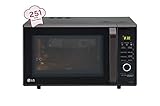
But a convection microwave is a different story. In convection mode, it behaves like a small oven. It heats air and circulates it. Cakes can rise, brown, and set properly. Many people get perfect tea cakes, banana bread, and even layered sponges in convection microwaves.
Where the confusion happens is when someone tries a cake in microwave mode and declares, “Microwave cakes are terrible.” That's like trying to fry pakoras in a kettle and blaming the gas stove.
If the microwave has convection, cakes are absolutely possible. If it doesn't, the cake will be more like a steamed dessert, which is not bad, just different. Think dhokla energy, not bakery energy.
3) Myth: OTGs are only for baking, microwaves are only for reheating
This myth is repeated by salespeople, relatives, and that one friend who gives advice with too much confidence. OTGs can grill, toast, and roast. Microwaves can defrost, cook, steam, and in convection mode, bake and grill too.
An OTG handles pizzas, tikkas, roasted vegetables, garlic bread, and paneer skewers beautifully. It also gives better top browning because the heating element is direct. If someone loves that slightly charred edge on a cheese toast, an OTG feels like a loyal friend.
A microwave, on the other hand, wins in daily life. It reheats evenly, defrosts quickly, and cooks fast when time is tight. Convection microwaves can also roast and grill, though the flavour can feel slightly different compared to an OTG because the heat is less direct.
The real point is: both appliances are multi-purpose. One leans more towards dry-heat cooking. The other leans towards speed and convenience. Calling one “only for baking” is like saying a pressure cooker is only for dal. People make cakes in it, too.
4) Myth: OTG baking is cheaper than microwave baking
This one sounds practical, so people believe it quickly. The truth is a little more complicated. OTGs often have a lower purchase price than a convection microwave. Many decent OTGs start around ₹3,000–₹8,000. Convection microwaves usually begin around ₹8,000–₹15,000 and can go higher.
But electricity use depends on wattage, duration, and frequency. OTGs typically run for longer because they need preheating and longer bake times. A convection microwave heats faster and often cooks more quickly, which can reduce total time. However, convection mode uses significant power too.
If someone bakes twice a month, the electricity difference will not matter much. If someone bakes every weekend, it starts to show.
There's also the hidden cost of mistakes. OTGs require learning: rack placement, temperature accuracy, and timing. A beginner may waste ingredients while figuring it out. A convection microwave can feel easier because it's more controlled, especially for small cakes and quick bakes.
So no, OTG is not automatically cheaper. It can be. But it depends on usage patterns, baking frequency, and how quickly the person learns the appliance.
5) Myth: Microwaves dry out baked goods, OTGs keep them moist
This myth sounds logical, but it mixes up cooking modes. In microwave mode, yes, baked goods can dry out or turn chewy because the heating mechanism is completely different. But in convection mode, the microwave uses hot air like an oven, so moisture behaves similarly to an OTG.
Moisture in baking is mainly controlled by recipe balance, oven temperature, and bake time. Overbake a cake in an OTG, and it will become dry enough to be used as a doorstop. Bake it correctly, and it will be soft. Underbake in a convection microwave, and it will sink in the middle. Bake it properly, and it will be fine.
What OTGs do better is crust formation. Dry heat creates crisp edges, which can make the inside feel more moist by contrast. A convection microwave sometimes produces a softer outer layer, which can make people feel the bake is “less moist”, even if the inside is perfect.
So the dryness problem is not about the appliance. It is about technique. And technique is learned the hard way, usually after sacrificing one innocent chocolate cake.
OTG vs Microwave: Which Is Better for Baking Cakes, Cookies and Bread?
Photo Credit: Pexels
6) The real difference: Heat style changes texture
Now comes the part people rarely talk about. Baking is not only about whether something cooks. It is about texture. And texture depends on how heat travels.
An OTG gives radiant heat from rods, plus some natural air movement. This creates a dry environment. It is brilliant for browning, crisping, and caramelising. Cookies turn crunchy on the edges. Bread forms a proper crust. Puffs and pastries get flaky.
A convection microwave uses a fan to circulate hot air. It can mimic an oven well, but the cavity is often smaller, and the airflow can be intense. This can cook the outside faster in some cases. For certain cakes, this is great. For delicate bakes like meringues or macarons, it can be tricky.
If someone wants bakery-style cookies and pizzas, an OTG usually feels more satisfying. If someone wants a simple sponge cake, muffins, and quick baking, a convection microwave can deliver without much fuss.
So the question is not “which is better”. The question is “which texture matters more?”. Because the appliance is basically a texture machine.
7) Preheating: The most ignored truth in home baking
Preheating is the boring part of baking, so people treat it like optional advice. But it is not optional. And this is where OTGs and microwaves behave differently.
OTGs often take longer to preheat. Some take 10–15 minutes to reach a stable temperature. Many home bakers start baking too early because the light turns off or the knob looks close enough. Then the cake rises unevenly, the cookies spread too much, and everyone blames the recipe.
Convection microwaves usually preheat faster. They also beep when ready. That little beep saves marriages. It removes guesswork.
But there is a twist. Some OTGs run hotter or cooler than the dial suggests. Without an oven thermometer, baking becomes a guessing game. Microwaves tend to be more accurate in displayed temperature.
So if someone is new to baking and wants fewer surprises, the microwave often feels easier. If someone enjoys the craft of baking and doesn't mind learning, the OTG becomes more rewarding over time.
8) Capacity and batch baking: OTG often wins
This is where OTGs quietly dominate. Most OTGs offer a wider, more oven-like space. This matters a lot when baking multiple trays of cookies, making two cake tins at once, or baking a proper loaf.
Convection microwaves are usually taller than they are wide. That design suits reheating bowls, not spreading cookie trays. Many people discover this only after buying the appliance and trying to fit a baking tray inside like it's a puzzle game.
If someone bakes for family gatherings, festivals, or birthdays, the OTG feels more practical. It handles larger pans and gives better airflow around trays. It also feels less cramped, which reduces the risk of uneven cooking.
For small households or occasional baking, the microwave's smaller space is not a dealbreaker. But for anyone who dreams of baking a full batch of nankhatai-style cookies or a large pizza, the OTG feels like the more generous option.
Capacity is not glamorous, but it changes everything.
9) Ease of use: Microwave is friendlier, OTG is more hands-on
This is the part that decides what people stick with. Because the “best” appliance is useless if it scares someone into never baking again.
Microwaves are built for convenience. They have preset modes, clear timers, and consistent heating. Convection models often guide users through temperature and time. It feels like having training wheels, and honestly, that is not a bad thing.
OTGs are more manual. The temperature knob may not be precise. The timer might be loud enough to wake the whole building. Rack placement matters. The top rod can brown faster. The bottom rod can overcook the base. It feels like learning a musical instrument.
Some people love this. It feels like real baking. Others find it stressful, especially when ingredients cost money, and nobody wants to waste ₹400 worth of butter.
So the better choice depends on personality. If someone wants simplicity and speed, the microwave wins. If someone wants control and traditional baking results, OTG wins.
10) The smartest answer: Choose based on what you actually bake
The final truth is not dramatic. It is practical. An OTG is often better for baking if someone loves cookies, bread, pizza, puff pastries, and anything that needs crispness and browning. A convection microwave is often better if someone wants one appliance for daily cooking plus occasional baking.
There's also the lifestyle factor. If a kitchen is small, a microwave may already be there. Adding an OTG means extra space and another appliance to manage. If someone cooks often and bakes regularly, an OTG becomes worth it.
Budget matters too. If someone has ₹6,000 and wants a baking-focused appliance, an OTG is the obvious choice. If someone can spend ₹12,000 and wants a multi-purpose machine that bakes decently, a convection microwave makes sense.
The real win is not choosing the “perfect” appliance. It is choosing the one that gets used. A slightly imperfect oven that sees weekly brownies beats a perfect oven that becomes a storage shelf for steel containers.
OTG vs Microwave: Which Is Better for Baking Cakes, Cookies and Bread?
Photo Credit: Pexels
Products Related To This Article
1. Cadlec MultiChef Multi-Function OTG for Kitchen
2. Faber FOTG 20L Neo|1400 Watts OTG
3. Morphy Richards 20R Otg Oven For Kitchen
4. AGARO Marvel Oven Toaster Griller
5. Wonderchef Oven Toaster Griller (OTG) - 60 litres
So, is an OTG better than a microwave for baking? It can be, especially for crisp textures, classic browning, and bigger batches. But a convection microwave is not the villain people make it out to be. It can bake cakes, muffins, and even cookies well when used correctly.
Most of the confusion comes from mixing up microwave mode with convection mode, and from expecting both appliances to behave the same. They don't. An OTG bakes like a traditional oven. A convection microwave bakes like a compact oven with more convenience.
In the end, the best choice is not about myths or kitchen pride. It is about what gets baked, how often it gets baked, and whether the appliance makes the process feel fun rather than frustrating.
Because baking should feel like a small celebration, whether it happens in an OTG, a convection microwave, or a slightly chaotic kitchen where someone always “checks the cake” too early.
(Disclaimer: This article may include references to or features of products and services made available through affiliate marketing campaigns. NDTV Convergence Limited (“NDTV”) strives to maintain editorial independence while participating in such campaigns. NDTV does not assume responsibility for the performance or claims of any featured products or services.)