Why Some Sarees Look Bulky Around The Waist And How Fabric Affects The Drape
Fabric weight, stiffness, borders and pleat width can make a saree look bulky at the waist. Here is how different fabrics affect the drape and how to achieve a smoother, more flattering fall.
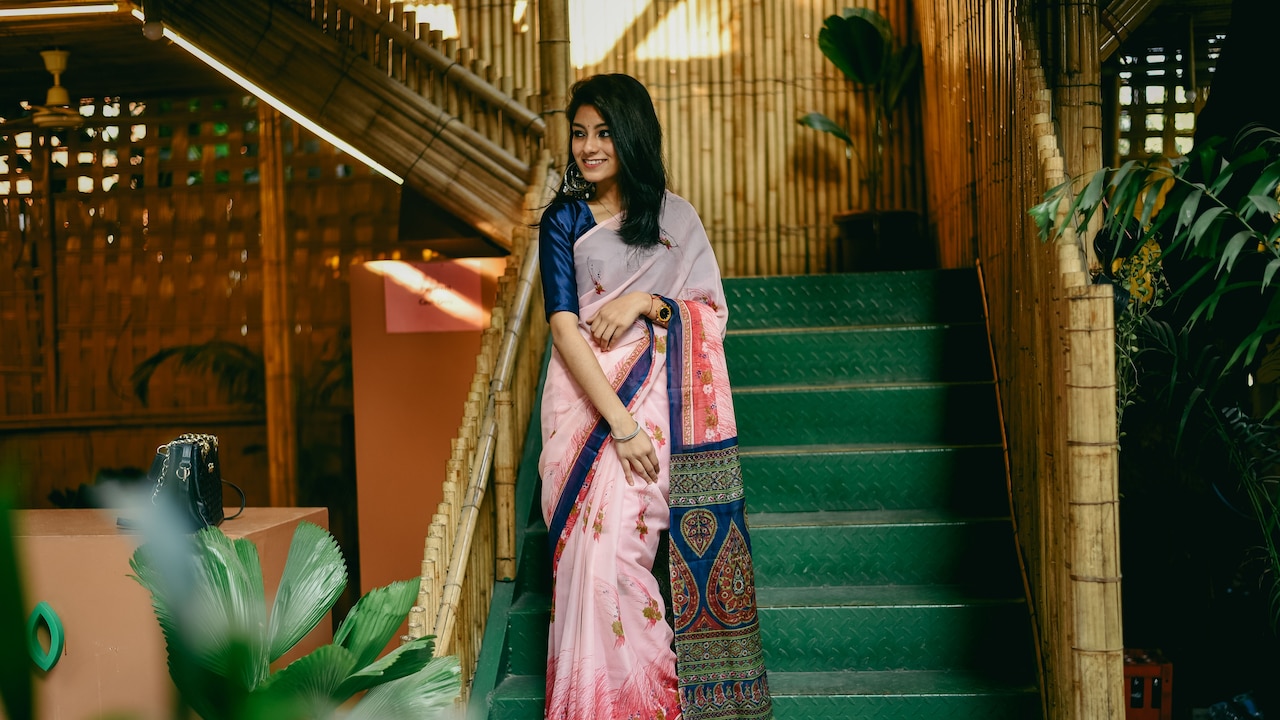
Tips to prevent sarees from looking bulky around the waist
There is a familiar dressing-room moment that has puzzled many saree lovers. The colour looks perfect, the blouse fits beautifully, and the pallu falls with all the drama of a film entrance. Yet the waist seems wider than expected. The first instinct is often to blame the mirror, the meal eaten an hour earlier or the body itself. In reality, the fabric may be doing most of the mischief. A saree wraps several metres of material around the waist. Part of that fabric forms inner layers, while another section becomes pleats. Naturally, the texture and thickness of those layers affect the silhouette. A crisp cotton saree behaves very differently from a soft chiffon one. Heavy zari, bulky borders and stiff starch can also add volume exactly where it is least wanted.
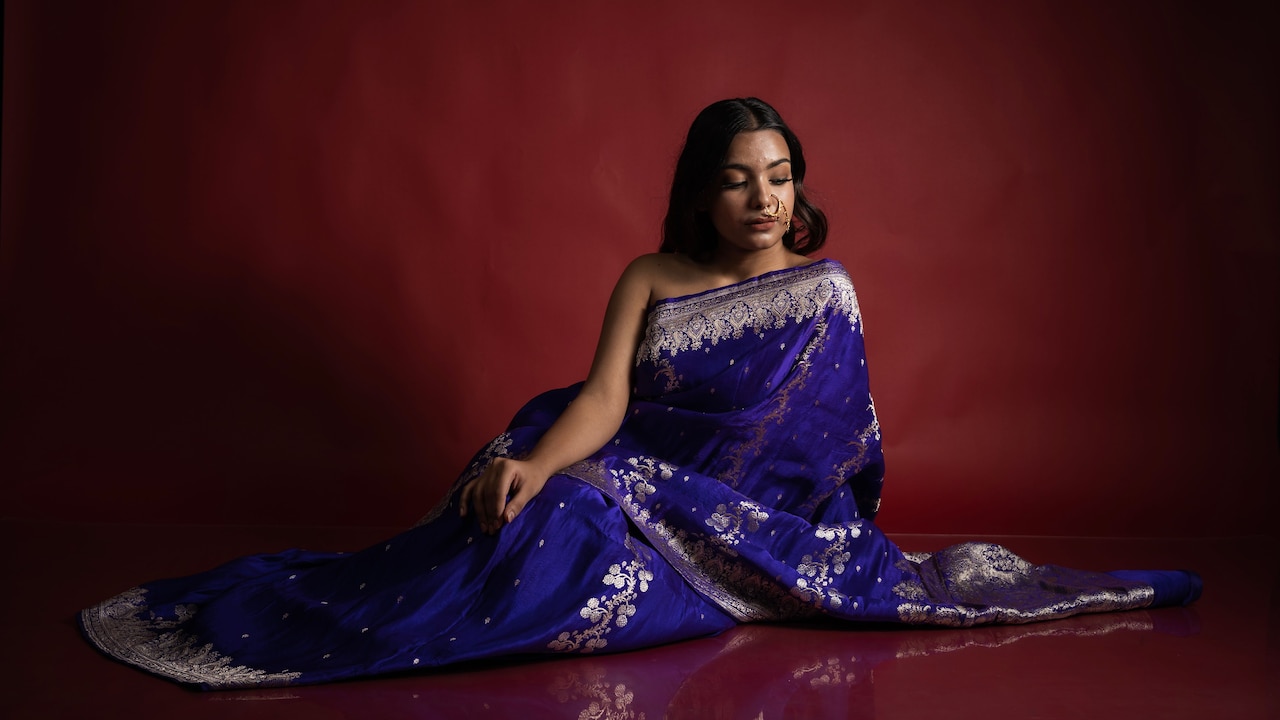
How fabrics affect saree drape, especially around the waist; Photo Credit: Pexels
That does not make one fabric better than another. Every weave has its own charm. The secret lies in knowing how it moves, where it gathers and how to drape it with intention.
Also Read: 10 Best Saree Styles For Office Wear: Comfortable Fabrics and Drapes For Everyday Work
What Makes A Saree Look Bulky Around The Waist?
Fabric Thickness Changes The Waistline
The most obvious cause of a bulky waist is fabric thickness. A saree may look delicate while folded on a shop counter, yet create considerable volume once wrapped twice around the body and gathered into pleats.
Thick cottons, dense silks and richly woven festive sarees naturally occupy more space. Their beauty comes from structure, texture and presence. However, when several layers sit around the waist, that richness can turn into visible bulk.
The effect becomes stronger when the pleats are wide or uneven. Each pleat adds another layer of material. Six thick pleats can feel almost like tucking a small hand towel into the waistband, though admittedly a far more glamorous one.
This does not mean heavier sarees should be avoided. They simply need a more controlled drape. Narrower pleats, careful pressing and fewer unnecessary folds can make a remarkable difference. The petticoat waistband should also remain smooth rather than gathered.
When shopping, rub a section of the fabric gently between two fingers. If it feels dense even as a single layer, expect it to look fuller once draped. That small test can prevent a great deal of changing-room confusion later.
Stiff Fabrics Stand Away From The Body
Stiffness influences drape as much as thickness. Some fabrics do not follow the natural curve of the waist. Instead, they stand slightly away from it, creating a rounded or boxy outline.
Starched cottons are a common example. Their crispness looks elegant and polished, especially for daytime functions, office wear and summer gatherings. Yet fresh starch can make the pleats flare out near the stomach. The result may feel broader than the wearer expected.
Organza behaves in a similar way. Its sheer surface appears light, but its structure holds air between the layers. That trapped space creates volume. Tissue sarees and certain blended silks can also produce this effect.
A softer petticoat and firmly pressed pleats help stiff fabrics sit closer to the body. Wearing the saree once or lightly steaming it may also relax excessive rigidity. Some people even roll a new cotton saree gently before the first wear to soften its folds without removing all its character.
Stiff fabrics are not unflattering by nature. They offer regal shape and striking photographs. The key is to let their structure appear in the pallu rather than allowing every layer to gather around the waist.
Soft Fabrics Follow The Natural Curves
Fluid fabrics usually create a leaner waist because they fall close to the body. Chiffon, georgette, crepe and many soft silk blends bend easily, allowing the pleats to lie flat instead of pushing outwards.
This close fall often creates the smooth, effortless drape seen at evening parties and wedding receptions. The fabric seems to skim rather than wrap. Even when several pleats are tucked in, they compress neatly and occupy less space.
However, softness brings its own challenges. Slippery sarees can shift during the day, especially when the petticoat fabric is equally smooth. Pleats may separate, and the waist can lose its clean shape after a few hours of sitting, dancing or reaching enthusiastically for the last gulab jamun.
Pins help, but placement matters. A small safety pin joining the pleats near the top can keep them aligned without making the fabric look rigid. Another discreet pin at the shoulder secures the pallu.
Soft fabrics are particularly useful when the desired look is light and elongated. They also suit occasions that involve plenty of movement. The wearer can walk, sit and join the dance floor without feeling as though the saree has developed a separate personality.
Pleat Width Determines How Much Volume Builds Up
Pleats are often treated as a finishing detail, but they strongly influence the shape of the waist. Wide pleats create fewer folds, though each fold contains more fabric. Narrow pleats distribute the material more evenly and usually sit flatter.
The ideal width depends on the saree. A thin chiffon can handle slightly wider pleats because the fabric compresses easily. A thick silk may look neater with narrower, carefully aligned pleats.
Uneven pleats are another common source of bulk. When one fold is wider than the next, the stack becomes lopsided. It may form a noticeable bump at the centre or lean awkwardly to one side. This becomes especially visible with geometric prints, checks and bold borders.
Pleats should be arranged on a flat surface or held firmly between the fingers before tucking. Their lower edges must fall at the same length. Pressing them lightly with a warm iron beforehand can save time, particularly for weddings or early-morning ceremonies.
The goal is not to create as many pleats as possible. More pleats do not earn bonus style points. A smaller number of neat, balanced folds usually looks more graceful than a crowded fan of fabric fighting for space at the waistband.
Heavy Borders Can Distort The Drape
Borders add grandeur, colour and definition to a saree. They can also create extra weight and thickness around the waist, particularly when the border is broad, embroidered or woven with dense zari.
During draping, the lower border passes around the body before the front pleats are formed. If it is stiff or heavy, it may resist folding. The pleats then spread apart near the hem and push forward near the waist.
Decorative elements can make the issue more noticeable. Beads, sequins, mirror work and raised thread embroidery form tiny ridges between layers. Once stacked into pleats, those details behave like several slim cushions tucked together.
A practical solution is to keep the embroidered sections slightly wider within the pleats rather than folding directly over the thickest motifs. This reduces the number of raised layers sitting on top of one another.
The petticoat should also provide enough support. A weak waistband can sag under a heavy saree, forcing the wearer to tighten it excessively. That creates discomfort and uneven gathering.
Broad borders look magnificent when handled well. Their visual strength can frame the body and add height. The trick is to plan the pleats around the border instead of expecting an embellished edge to behave like plain fabric.
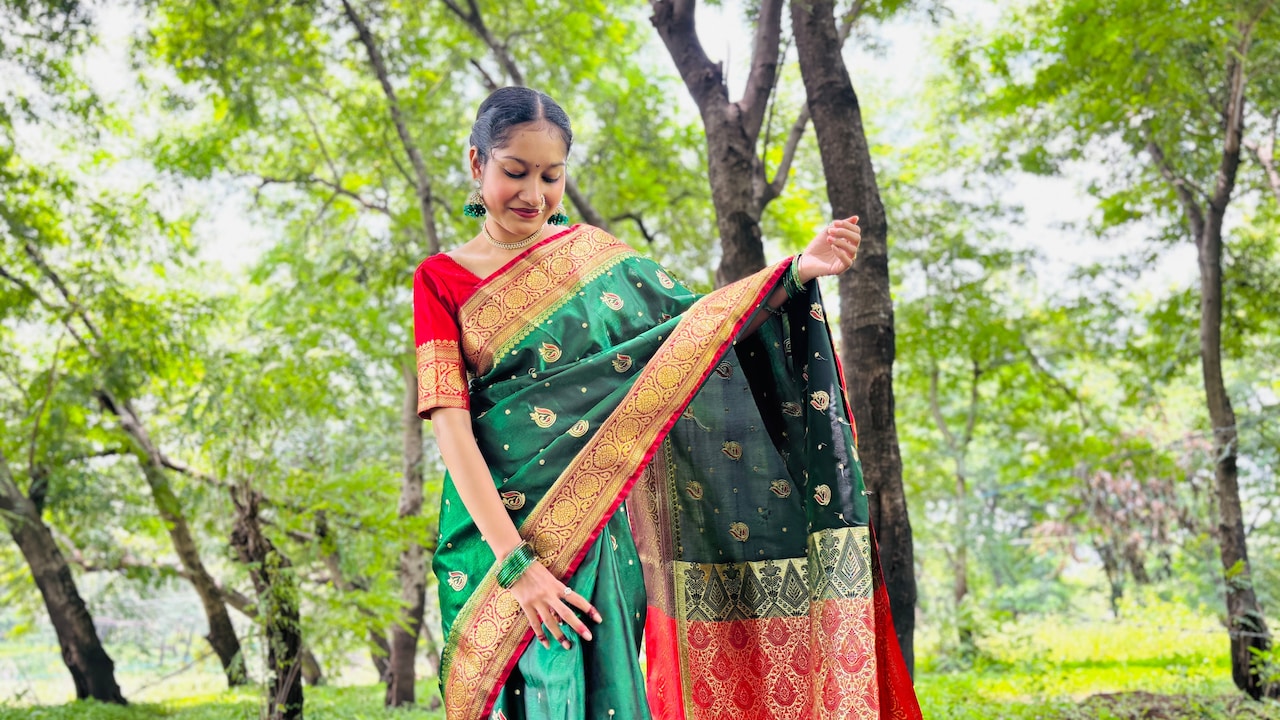
Sarees with heavy borders can distort the drape and add extra bulge
Photo Credit: Pexels
The Petticoat Can Add Hidden Bulk
The saree often receives all the attention, while the petticoat quietly shapes the entire drape underneath. A poorly fitted petticoat can add more bulk than the saree itself.
Traditional petticoats with gathered waists create small folds around the stomach and hips. Once the saree is wrapped over them, those folds become trapped between layers. The final look may appear puffed or uneven.
A well-fitted petticoat with a smooth waistband gives the saree a cleaner base. It should sit securely without cutting into the waist. If the drawstring is tightened too much, the fabric bunches and leaves visible ridges. Too loose, and the saree may slowly travel south during the function, which is rarely part of the styling plan.
Shapewear petticoats can create a streamlined outline, especially under chiffon, georgette and crepe. However, they should allow comfortable walking and sitting. A silhouette that looks sleek but permits only tiny ceremonial steps is not particularly useful.
The petticoat fabric matters too. Thick cotton adds support but may feel bulky under heavy sarees. Satin blends create a smoother surface for lighter fabrics. Matching the foundation to the saree improves both appearance and comfort.
Tucking Too Much Fabric Creates A Ridge
A secure tuck is essential, but excessive tucking can form a thick ridge around the waist. This often happens when the saree is longer than expected or when the first wrap is not measured carefully.
Some wearers tuck several inches of fabric into the petticoat for reassurance. The saree certainly stays in place, but the extra material creates a rope-like band beneath the outer layer. It can also make the waistband feel tight after a meal.
Only enough fabric to hold the saree securely needs to go inside the petticoat. The tuck should remain even around the body. A deep section at the front and a shallow section at the back will create an irregular outline.
The first wrap should skim the floor at the desired footwear height. Any adjustment is easier at this stage than after the pleats and pallu have been arranged. Wearing the intended heels or flats while draping prevents last-minute lifting and re-tucking.
Fabric should never be pushed into the waistband in a hurried bundle. Smooth it with the palm, then tuck it section by section. This takes an extra minute, but that minute can remove an entire layer of unnecessary bulk.
Saree Length And Width Affect The Final Shape
Not every saree has exactly the same dimensions. Handloom pieces, inherited sarees and regional styles may vary in length or width. These differences affect how much fabric reaches the waist and how many pleats can be formed.
An unusually long saree produces extra material after the first wrap. Unless that excess is distributed carefully, it collects in the front pleats. The waist then appears fuller even when the fabric itself is light.
A wider saree may require a deeper tuck to maintain the correct floor length. That extra depth can create thickness along the waistband. It may also feel uncomfortable for shorter wearers, particularly when paired with a stiff weave.
Before draping, it helps to open the saree fully and check its fall. Pre-pleating services are useful, but they should account for the wearer's height, footwear and preferred pallu length. A standard measurement cannot suit every body or every occasion.
Inherited sarees deserve special attention. Older fabrics may have stretched slightly, while hand-finished edges may not run perfectly straight. These details add character, though they can complicate the drape.
A minor adjustment in pleat count or pallu length often solves the issue. The fabric should be guided according to its actual dimensions rather than forced into a fixed formula.
Blouse Length Changes How The Waist Appears
Sometimes the saree is not creating as much bulk as it seems. The blouse length and shape can change how the eye reads the waist.
A blouse ending at the widest part of the ribcage may create a sharp horizontal line. When the saree begins immediately below it, the space between the two garments can appear compressed. This can make the waist seem broader.
A slightly longer blouse may smooth the transition, while a shorter blouse can create more visible space and definition. Neither option is universally better. The right length depends on comfort, proportion and the saree's fabric.
Sleeve shape also affects balance. Voluminous sleeves combined with a stiff saree may make the entire middle section feel visually heavier. A clean sleeve line can bring more focus to the drape.
The blouse fabric should work with the saree rather than compete with it. Thick brocade paired with a heavy silk creates a rich festive look, but it can also add structure around the torso. A lighter blouse fabric may soften the overall effect.
Tiny tailoring details matter. A blouse that rides up, wrinkles at the sides or pinches near the waist can disturb even a perfectly arranged saree.
Prints And Colours Can Create An Optical Effect
Not all bulk is physical. Prints, borders and colour placement can create the illusion of extra width around the waist.
Large motifs placed across the pleats may break when folded, forming a busy cluster at the centre. Bold horizontal patterns can also draw attention across the body rather than guiding the eye vertically.
Small prints and flowing vertical designs usually create a smoother visual line. Sarees with darker inner sections and a brighter pallu can make the waist appear more defined. Tonal colours often look especially fluid because there are fewer sharp visual breaks.
Contrast borders deserve careful thought. A broad, bright border can look striking, though it may divide the body into strong horizontal sections. A narrower border tends to lengthen the silhouette.
This does not mean anyone must live in dark colours or tiny prints. A vibrant saree can look spectacular when the motif placement is considered during pleating. The most attractive section can be brought to the front, while crowded areas can be folded inside.
Good draping is partly practical and partly visual storytelling. The fabric decides where the eye travels. A little planning helps that journey move gracefully from pleats to pallu instead of getting stuck at the waistband.
Products Related To This Article
1. Moda Rapido Bandhani Mirror Work Heavy Work Bandhani Saree
2. KALINI Ethnic Motifs Printed Saree
3. Sangria Woven Design Saree With Blouse Piece
4. Chandbaali Kalamkari Linen Blend Designer Saree
5. Kasee Floral Zardozi Supernet Designer Saree
6. Sangria Woven Design Zari Saree
7. Kalista Embellished Zari Satin Heavy Work Saree
A bulky-looking waist is rarely a reason to reject a beautiful saree or feel uncomfortable about one's shape. More often, it is the result of fabric behaviour, thick layers, stiff pleats, a heavy border or an unsuitable petticoat.
Every fabric brings its own personality. Cotton offers freshness and structure. Silk carries richness. Organza creates airy drama. Chiffon and georgette provide fluid movement. None of them promises the same silhouette, and that is part of the saree's enduring charm.
The best drape begins with observation. Feel the fabric, check its dimensions, notice the border and choose a supportive petticoat. Keep the first wrap smooth, control the pleat width and avoid tucking more material than necessary.
Most importantly, allow the saree to behave like itself. A crisp handloom does not need to imitate chiffon, just as a floating georgette does not need the architectural shape of organza.
When fabric, foundation and technique work together, the waist looks balanced and the saree feels secure. The wearer can then stop adjusting pleats, forget the mirror and enjoy the occasion, which is exactly what a good drape should allow.
(Disclaimer: This article may include references to or features of products and services made available through affiliate marketing campaigns. NDTV Convergence Limited (“NDTV”) strives to maintain editorial independence while participating in such campaigns. NDTV does not assume responsibility for the performance or claims of any featured products or services.)