Does Tightening The Screws Always Fix A Wobbly Folding Table? 10 Furniture Myths Explained
A folding table that rocks, rattles or refuses to sit level doesn’t always need tighter screws. From worn hinges to uneven floors, these 10 common furniture myths explain what may actually be causing the wobble and how to tackle it.

Common myths to avoid when dealing with a wobbly folding table
A wobbly folding table has a strangely effective way of announcing itself. Put down a cup of tea and it trembles. Start typing on a laptop and the screen joins in. Lean your elbow on one corner during dinner and suddenly everyone at the table knows about it. The instinctive solution seems obvious: find a screwdriver and tighten everything that moves. Sometimes that works beautifully. Five minutes later, the table feels solid again. At other times, every screw feels secure and the table continues rocking as though nothing happened.
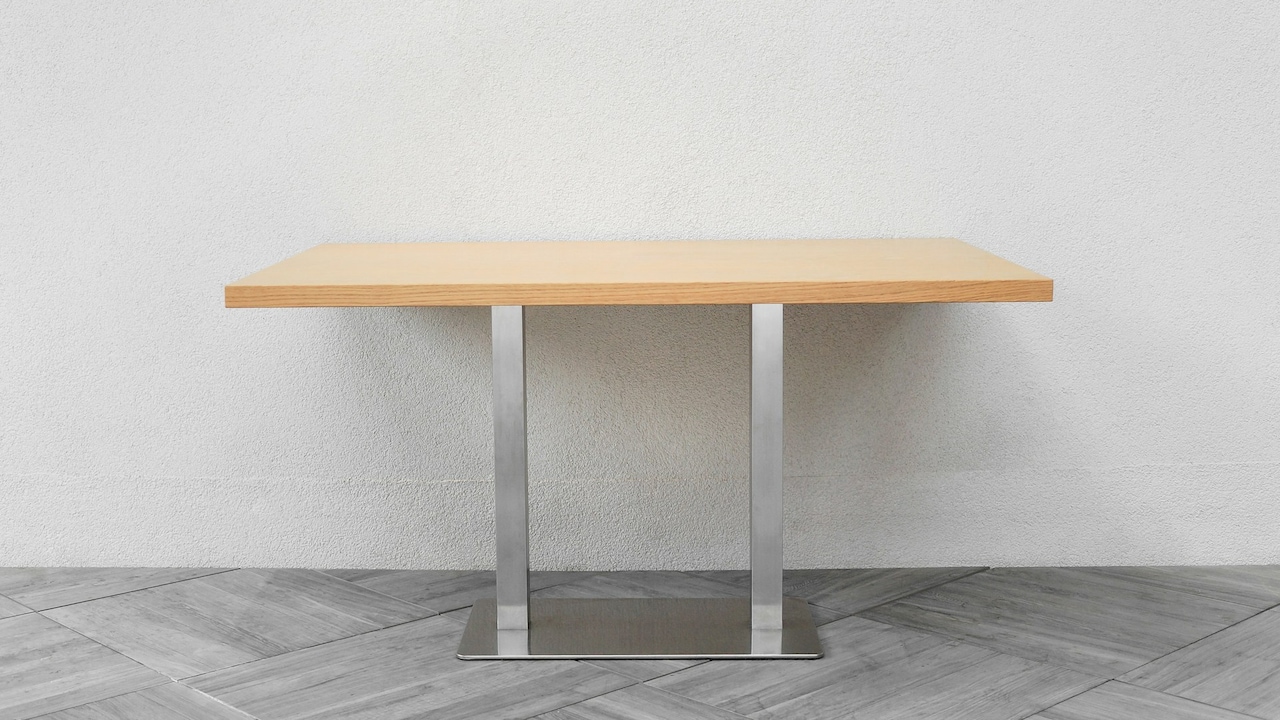
Easy ways to fix a wobbly table
Photo Credit: Unsplash
That happens because folding furniture depends on far more than screws. Hinges, locking brackets, rivets, leg angles, flooring, frame joints and even the tabletop itself can influence stability. Folding designs also experience repeated movement that ordinary fixed furniture does not. Every opening, closing and dragging session places stress on specific parts.
Also Read: Find Your Perfect Match: 5 Types Of Coffee Tables For Every Living Room
So, before blaming one loose fastener, it helps to separate familiar furniture advice from what actually causes the problem.
What's Really Making Your Folding Table Wobble?
1. Myth: Tightening Every Screw Will Always Stop The Wobble
Loose screws certainly deserve attention, but tightening them only helps when looseness actually causes the movement. A folding table can wobble even when every visible screw feels perfectly secure.
Start by gently rocking the table while watching its legs and joints. If one connection visibly shifts, a loose screw may indeed be responsible. However, movement coming from a hinge, rivet or locking mechanism requires a different fix. The floor could also be uneven, leaving one leg slightly higher than the others.
There is another problem with the “tighten everything” approach. Excessive force can strip screw holes, crush softer board materials or damage threads. A screw that spins endlessly instead of becoming firm usually points to a worn hole rather than insufficient tightening.
Think of screws as one part of the structure rather than the entire structure. Check whether they are loose, certainly. But if the table keeps dancing after reasonable tightening, put the screwdriver down. The wobble is probably trying to tell you something else.
2. Myth: If The Legs Look Straight, They Must Be Fine
A folding table leg can look perfectly normal while sitting a few millimetres out of alignment. Unfortunately, a few millimetres can make quite a difference once weight reaches the tabletop.
Repeated folding can gradually alter how legs sit inside their brackets. A leg may twist slightly, a mounting plate may shift or one side of the frame may stop opening to exactly the same angle as the other. None of these changes necessarily looks dramatic.
Try placing the table on a reliably flat surface and compare how firmly each foot touches the floor. Press lightly above each corner. If one corner drops before the others, one leg may not be carrying equal weight.
Also inspect the table from several angles rather than simply looking down from above. One leg may lean inward or outward while appearing straight from the front.
Small alignment problems often explain why tightening screws achieves very little. The hardware may already be secure; the geometry has changed. With folding furniture, stability depends heavily on every leg opening to its intended position.
3. Myth: A Wobbly Table Always Means The Furniture Is Damaged
Before dismantling half the table, move it.
Floors are surprisingly common troublemakers. Tiles can sit slightly unevenly, grout lines can create small height differences and older flooring may dip in certain areas. Even a thick rug can support one table leg differently from another.
A quick test can prevent unnecessary repair work. Rotate the table 90 degrees or move it to another section of the room. If the wobble changes or disappears, the table may have been perfectly healthy all along.
This becomes particularly useful with lightweight folding tables. Heavy dining tables often settle firmly into minor floor variations, while lighter designs respond dramatically to them. One foot sitting partly on a tile edge can produce an irritating rocking motion.
Adjustable feet can help when the table includes them. Otherwise, a discreet furniture pad under the shorter contact point may solve the issue.
Furniture often gets blamed simply because it moves while the floor appears motionless. But stability comes from the relationship between both. Always test the surface before assuming something has broken.
4. Myth: Folding Hinges Either Work Or Completely Fail
Hinges rarely move straight from perfect condition to total failure. They usually wear gradually, which makes early problems easy to miss.
A folding hinge may still open, close and hold the leg while developing additional play around its pivot. That tiny movement becomes far more noticeable at tabletop level. A millimetre of looseness near the hinge can translate into considerably more movement at the end of a long table leg.
Listen as well as look. Clicking, knocking or metallic tapping while rocking the table can reveal movement around a hinge or bracket. Watch the pivot point closely while someone gently moves the tabletop.
Dirt and corrosion can also affect how a hinge operates. A mechanism that cannot open fully may leave the leg fractionally short of its intended angle.
Avoid forcing stubborn folding hardware. Excess pressure can bend thin brackets or damage locking components. Clean accessible mechanisms according to the manufacturer's guidance and check whether any parts appear distorted.
A hinge does not need to snap in half to cause instability. Small amounts of wear can quietly turn a once-steady table into a frustrating one.
5. Myth: The Locking Mechanism Does Not Matter Once The Legs Are Open
Opening the legs is only half the job. Many folding tables rely on braces, catches or locking rings to keep those legs firmly positioned.
A table may appear fully open while one lock has not engaged completely. In that situation, downward weight can make the leg shift slightly, creating movement that feels like an ordinary wobble.
Before using the table, check that matching mechanisms on both sides sit in similar positions. Some designs produce a click when locked, while others use sliding collars or braces that must move fully into place.
Dirt, rust or a slightly bent component can stop a lock from travelling its full distance. Forcing it usually makes matters worse, particularly with thin metal hardware.
This myth becomes especially relevant after storing a folding table for months. Components can stiffen, and people often unfold the furniture quickly without checking the supports underneath.
A properly engaged locking mechanism does more than prevent collapse. It helps maintain the correct relationship between the legs and frame. When that relationship changes, even slightly, stability suffers.
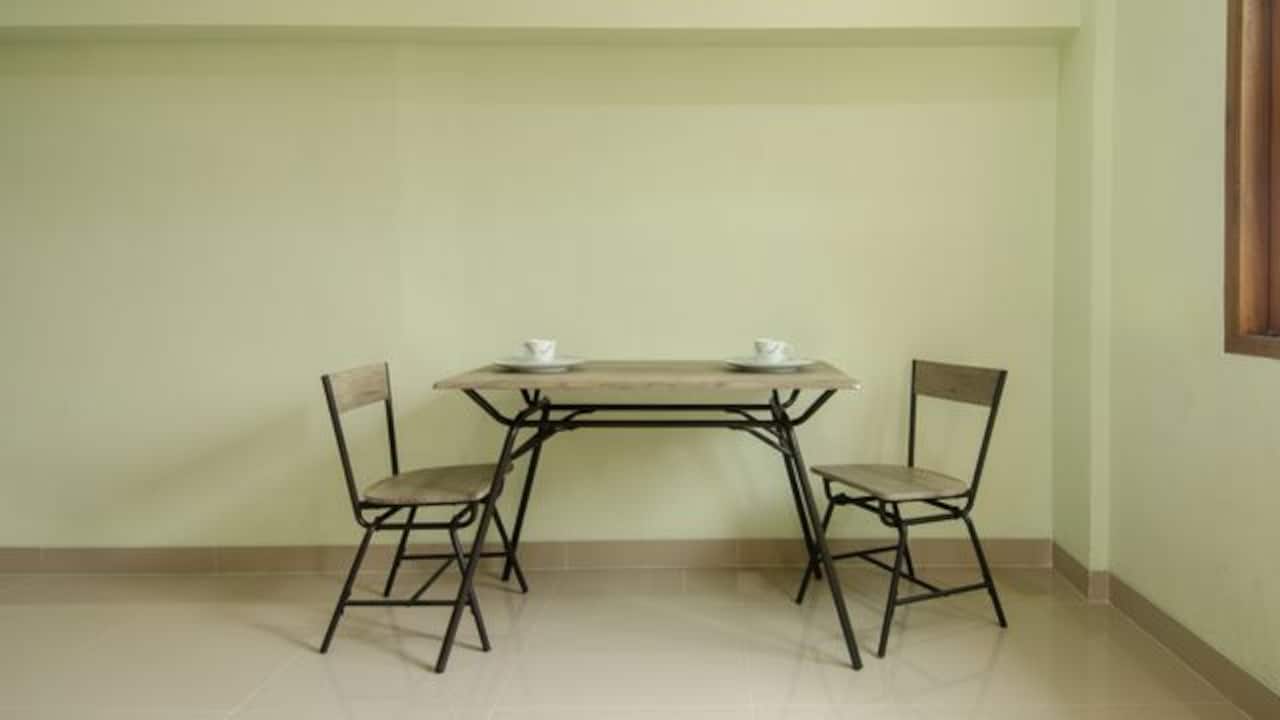
The locking mechanism matters even when the table legs are fully open; Photo Credit: Pexels
6. Myth: A Stripped Screw Hole Just Needs A Bigger Screw
A larger screw can sometimes grip a worn hole, but treating it as a universal fix can create a bigger problem.
Particle board, MDF and some lightweight timber components are particularly vulnerable to enlarged screw holes. Once the surrounding material loses its grip, repeatedly tightening the same screw achieves very little. Moving immediately to a much larger screw can remove even more material or split a narrow section.
The correct repair depends on what the table is made from and how much load the connection carries. A minor attachment point and a structural leg bracket require very different levels of care.
Watch for the tell-tale sign: the screw keeps turning without becoming properly firm. That usually means the threads no longer have enough sound material to hold.
At that stage, stop tightening. Continuing can make the hole worse.
Repairing the damaged mounting point may restore stability, but heavily worn structural areas sometimes need professional attention or replacement components. A folding table regularly carrying appliances, work equipment or heavy serving dishes deserves particular caution. Secure-looking hardware means little if the material beneath it can no longer hold properly.
7. Myth: All Four Table Legs Should Look Completely Identical
Symmetry helps, but appearance alone can be misleading. Folding tables often contain braces, mounting plates or hinge arrangements that make one section look slightly different from another by design.
What matters is whether the legs reach their intended positions and support the table evenly.
This becomes important when diagnosing a wobble because people sometimes try to “correct” something that was never wrong. A brace positioned differently on one side may simply reflect the folding sequence. Conversely, two legs may look identical while one bracket has shifted enough to alter its angle.
Use function rather than appearance as the main test. Does each leg lock properly? Do all feet meet a flat floor? Does one joint move when the table rocks? Are matching components sitting where the design expects them to sit?
Photos in an assembly manual can also help if the table originally required home assembly.
Furniture repair becomes much easier once we stop expecting perfect visual symmetry and start checking structural behaviour. A table does not care whether its underside looks beautifully balanced. It cares whether the forces travelling through it remain balanced.
8. Myth: The Tabletop Cannot Cause A Wobble
When a table rocks, attention naturally goes straight to the legs. Yet the tabletop and the frame beneath it can contribute just as much.
Some folding tables use lightweight boards attached to a separate metal frame. If those mounting points loosen, pressing on the tabletop may create movement even when the legs remain firmly planted. The sensation can feel almost identical to a leg-related wobble.
Warping can create another issue. Moisture, heat or poor storage may gradually distort certain tabletop materials. Once the surface or supporting frame changes shape, weight may no longer distribute evenly.
Check whether the wobble comes from the whole table moving against the floor or merely from the top shifting against its frame. Hold one section of the support structure while gently pressing the tabletop. Movement between the two deserves investigation.
Avoid assuming every rocking sensation begins at floor level.
This distinction matters because endlessly adjusting the legs will never solve movement occurring above them. Sometimes the feet are doing their job perfectly while the tabletop has started developing ideas of its own.
9. Myth: Dragging A Folding Table Across The Floor Does No Harm
Dragging a lightweight table across the room feels harmless. After all, it may weigh far less than a cupboard or bed. But repeated sideways pulling can place forces on folding legs that they were not designed to handle regularly.
Table legs primarily support downward loads. Dragging creates sideways stress around brackets, hinges and mounting points. Over time, screws may loosen, holes may enlarge and thinner metal parts may shift slightly out of position.
The damage often appears gradually rather than through one dramatic incident. A table that once felt solid starts developing a faint wobble. Weeks later, the movement becomes difficult to ignore.
Whenever practical, lift the table before repositioning it, particularly on rough flooring or when objects remain on top. With larger folding tables, two people can move them more safely without twisting the frame.
Also avoid pulling the table by one corner. That concentrates force unevenly through the structure.
Folding furniture may look simple, but its moving connections make it sensitive to repeated sideways stress. Treating it like something designed to slide around the room can shorten the useful life of those joints surprisingly quickly.
10. Myth: A Small Wobble Is Only An Annoyance
A slight wobble may seem harmless when the table holds nothing more exciting than newspapers and a cup. The calculation changes when the same table supports a desktop monitor, hot food, a mixer grinder or stacks of dishes.
Movement often indicates that something in the structure, locking system or contact with the floor is no longer working as intended. That does not automatically mean the table is dangerous, but it does justify checking the cause.
Pay particular attention when the wobble suddenly worsens, a leg shifts under pressure, a lock refuses to engage or the frame shows cracks, bending or heavy corrosion. Stop using the table for substantial loads until the problem is understood.
There is also a practical reason not to ignore small changes. Minor looseness can place additional stress on surrounding components, allowing wear to spread.
Furniture tends to give warnings before larger failures. A new creak, knock or wobble is often one of them.
Think of investigation as maintenance rather than panic. Catching a small problem early usually gives you more repair options and fewer unpleasant surprises later.
Products Related To This Article
1. Torche Multipurpose Foldable & Portable Study Table
2. Klaxon Modern Computer Table for Home PC
3. Office Table for Home/Writing Desk for Office
4. Riyan Luxiwood Daffodil Computer Table in Engineered Wood with Flat Surface
5. Livzing 4 Ft Length|Height Adjustable Plastic Folding Picnic Table with Metal Frame
6. Klaxon Computer Table for Home Office with Keyboard Tray and Monitor Stand
7. Artikel Foldy Wooden Foldable Study Table Computer Desk for Home Office
A screwdriver deserves a place in the folding-table repair kit, but it cannot solve every wobble. Stability depends on screws, hinges, locks, leg alignment, mounting points, the tabletop and even the floor underneath.
The useful question is not simply, “What can we tighten?” It is, “Where is the movement actually coming from?” Test the table on a flat surface, watch each joint while it rocks and pay attention to anything that shifts, clicks or refuses to lock properly.
Sometimes the answer really is one loose screw. Other times, that screw has been taking the blame for an entirely different problem.
(Disclaimer: This article may include references to or features of products and services made available through affiliate marketing campaigns. NDTV Convergence Limited (“NDTV”) strives to maintain editorial independence while participating in such campaigns. NDTV does not assume responsibility for the performance or claims of any featured products or services.)