How To Sharpen Kitchen Knives At Home Without A Professional?
Learn how to sharpen kitchen knives at home using simple tools and easy techniques that help keep your blades sharp, safe, and ready for daily cooking.
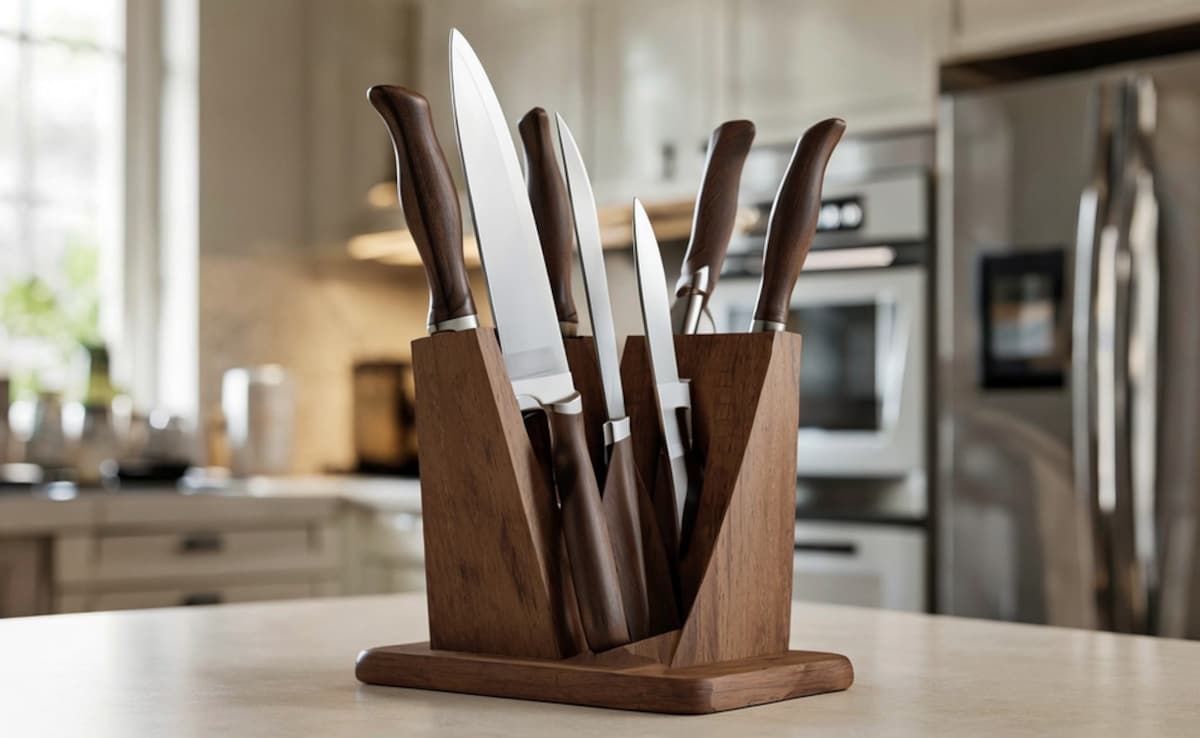
How To Sharpen Kitchen Knives At Home Without A Professional?
There's something really frustrating about using a blunt kitchen knife. Tomatoes get crushed instead of sliced properly, onions become messy, and even simple chopping starts feeling like a full workout. Most people think that they need to get their knives professionally sharpened. But that's no longer the case at all. It is much simpler than you might have thought.
Keep your blades sharp, safe, and ready for daily cooking with easy DIY sharpening techniques.
Photo Credit: iStock
Fortunately, you don't always need expensive sharpening machines or professional services. With a few basic tools and little patience, kitchen knives can be sharpened at home effortlessly, and cooking becomes much easier again. So, if knives have started feeling dull lately, this guide will help you understand what needs to be done without making things too complicated.
Why Sharp Knives Are Actually Safer
Most people think dull knives are safer because they don't cut so easily. But in real kitchens, usually the opposite happens. A blunt knife slips more because extra pressure is needed while cutting. And that is exactly when accidents start happening.
A properly sharpened knife cuts smoothly with less force applied. Better control is achieved when slicing vegetables, fruits, meats, or bread. Additionally, it significantly reduces cooking time, particularly for those who cook every day.
Another thing that people don't know much about is that sharp knives also make food look better. Herbs don't get crushed, tomatoes stay neat, and onions slice more evenly.
Tools You Can Use To Sharpen Kitchen Knives At Home
A professional setup is not needed for this task. Most home kitchens can manage easily with simple sharpening tools.
1. Whetstone Or Sharpening Stone
This is probably the most effective method for sharpening kitchen knives at home. It may look a little intimidating at first, but once the right angle is learned, it becomes easier with practice. Beginner-friendly whetstones can be found online in India for around ₹500–₹1500 effortlessly.
2. Knife Sharpener
Manual knife sharpeners are easier for beginners to use. The knife just needs to be pulled through the slots a few times. It is quick and works well for regular maintenance purposes. Chef-level sharpness may not be achieved, but honestly, for most homes, it works completely fine.
3. Ceramic Mug Trick
This is one of those old kitchen hacks that many people still use regularly. The rough, unglazed ring under a ceramic mug can help to sharpen a slightly dull knife. It is not a perfect method, but it is useful if a quick fix is needed before cooking.
4. Honing Rod
A honing rod doesn't exactly sharpen the knife. It mainly straightens the edge. But if the knife is not too dull, it can help restore better cutting performance. Many knife sets already come with one, but people usually just ignore it completely.
How To Sharpen A Knife Using A Whetstone
Using a whetstone sounds complicated, but once done slowly, it becomes quite manageable.
Step 1: Soak The Stone
Most whetstones need soaking for around 10–15 minutes before use. It should be kept in water until bubbles stop appearing completely. This helps the sharp part of the knife slide smoothly with less friction.
Step 2: Find The Right Angle
As a rule of thumb, always keep an angle of 15-20 degrees if you're sharpening kitchen knives. A simple trick is to imagine half of a 45-degree angle and then lower it slightly.
Step 3: Slide The Knife Slowly
Slide the knife over the surface of the stone gradually while maintaining the required angle. Start from the heel and reach the blade's tip. Do not apply excessive force. Slow movement always proves to be more efficient than sharp ones.
Step 4: Repeat Both Sides
Both sides should be sharpened evenly. Usually, 5–10 strokes per side is enough for regular kitchen knives. After sharpening, it is important to wash and dry the knife properly before using it.
Common Mistakes People Make While Sharpening Knives
Rushing the process often leads to knife damage for many individuals.
1. Using Too Much Pressure
Forcing the knife against the stone is not needed. Gentle pressure works better and also protects the blade edge from damage.
2. Sharpening At Random Angles
Changing angles constantly makes the edge become uneven. Staying consistent is important even if it is not perfectly maintained every time.
3. Ignoring Knife Maintenance
Many people sharpen only when the knife becomes extremely dull. Regular maintenance actually keeps the sharpening process easier over time. Even using a honing rod once every week can help quite a lot.
Also Read: Can A Sandwich Maker Replace A Toaster? A Small Kitchen Experiment
4. Putting Good Knives In Dishwashers
Dishwashers can make blades dull faster because knives knock against other utensils during the washing cycle. Hand washing is always a better option for kitchen knives.
Learn how to easily sharpen your kitchen knives at home for safe and efficient cooking.
Photo Credit: iStock
How Often Should You Sharpen Kitchen Knives?
This depends on how frequently cooking happens. If cooking is done daily, basic sharpening every few months is usually enough for home use.
Restaurant-level sharpness is not needed all the time. The goal is simply to make a knife cut comfortably without too much struggling.
Using a honing rod regularly can also reduce how often full sharpening becomes needed.
A successful test is simple enough. If the knife struggles to cut tomatoes cleanly, it probably needs sharpening now.
Some Knife Sharpening Products You May Like
1. KNIFEPLANET Knife Sharpener
2. ZHART Knife Sharpening Whetstone
3. Victorinox Portable Knife Sharpener
4. Kai Seki Magoroku Diamond and Ceramic Knife Sharpener
5. Smith's Adjustable Manual Knife Sharpener
6. AccuSharp Knife and Tool Sharpener
7. Supvox Rolling Knife Sharpener Tool
8. Inkbird 2-in-1 Knife Sharpening Stone
Frequently Asked Questions (FAQs)
1. Can you sharpen a kitchen knife without professional equipment?
Yes, you can. A whetstone, a ceramic mug, and a simple knife sharpener can easily help you achieve the desired results.
2. How long does it take to sharpen a kitchen knife?
Depending on whether you have sharpened your knife previously, it may take 10-20 minutes.
3. Is a whetstone better than a sharpener?
As far as the result is concerned, yes. Whetstones are the best tool to use. However, a knife sharpener is a more accessible tool for beginners.
4. Can sharpening damage my knife?
If done wrongly, yes. However, it actually helps your knives to remain in excellent condition for longer periods of time.
5. How do I determine whether my kitchen knife is sharp enough?
If you can cut tomatoes smoothly, then your kitchen knife is sharp enough, and you don't need to sharpen it.
(Disclaimer: This article may include references to or features of products and services made available through affiliate marketing campaigns. NDTV Convergence Limited (“NDTV”) strives to maintain editorial independence while participating in such campaigns. NDTV does not assume responsibility for the performance or claims of any featured products or services.)