Common Myths About Reheating Rice In A Microwave Debunked, And Practical Tips For Best Results
Leftover rice turning dry, chewy or strangely hard after reheating? More microwave time isn’t always the solution. These 10 common reheating myths explain what actually helps rice regain its soft, fluffy texture.

Reheating leftover rice to perfection in a microwave takes just a few simple tricks
Yesterday's rice can be surprisingly unpredictable. Straight from the fridge, the grains may feel stiff enough to make a spoonful of dal seem like hard work. Put the bowl in the microwave for another two minutes and the result should improve, right? Not necessarily. Sometimes the edges become tough while the centre stays cold. On another day, the rice comes out steaming but somehow feels even drier than before. The problem isn't simply a lack of heat. Cooked rice changes as it cools. Moisture moves around, starches firm up and refrigeration can leave yesterday's fluffy grains noticeably harder. Reheating successfully means getting enough heat and moisture back into the rice without continuing to cook it unnecessarily.
Best tips to reheat rice in a microwave
Photo Credit: Unsplash
That sounds simple, yet several kitchen habits work against it. Extra-long microwave cycles, uncovered bowls and huge portions can all turn a quick lunch into a disappointing plate. So, before giving that bowl another three-minute blast, it helps to separate useful tricks from reheating folklore.
Also Read: For The Love Of Hosting: Build Your Ceramic Serveware Collection With These Unique Finds
Why Leftover Rice Turns Dry And How To Reheat It Without Ruining The Texture
1. Myth: More Microwave Time Will Always Make Rice Softer
It seems logical. Rice feels hard, heat softens food, so another minute in the microwave should solve everything. Unfortunately, microwaves don't work quite that neatly.
Hard leftover rice often needs moisture as much as heat. During refrigeration, the starch structure in cooked rice firms up while some moisture redistributes or escapes. If you repeatedly microwave that rice without adding moisture, you can drive even more water out of the grains. The result may become hotter without becoming noticeably softer. In fact, the exposed grains around the edges can become chewy or tough.
A better approach involves adding a small splash of water before reheating. You don't need enough to make the rice soggy. A little moisture creates steam inside a covered bowl, which helps soften the grains as they warm.
Short heating intervals work better too. Heat the rice, stir it and check the texture before adding more time. Think of the microwave as part of the solution, not the entire solution. Sometimes the missing ingredient isn't another minute. It's a teaspoon or two of water.
2. Myth: Leftover Rice Is Dry Because The Fridge Removes All Its Moisture
Open a refrigerated container of rice and those once-soft grains can look noticeably drier. It's tempting to blame the fridge entirely, but the change involves more than simple dehydration.
Cooked rice contains starch that absorbs water during cooking. As the rice cools, those starch molecules begin reorganising and becoming firmer. This process contributes to the characteristic stiff texture of chilled rice. So, rice can feel dry even when it hasn't lost every bit of its original moisture.
That distinction matters when reheating. Pouring lots of water over firm rice may not fix the problem. Too much can leave a wet layer at the bottom while the grains above remain unevenly heated.
Instead, add just enough water to produce steam. For a modest bowl, a spoonful or two may be sufficient depending on how dry the rice has become. Covering the container then helps retain that steam.
The transformation can be surprisingly quick. Rice that looked destined for fried rice duty can regain much of its softer texture once moisture and heat work together rather than independently.
3. Myth: You Should Microwave Rice Uncovered So Excess Moisture Can Escape
Leaving the bowl uncovered sounds sensible when nobody wants soggy rice. But when reheating refrigerated rice, escaping moisture is usually the opposite of what you need.
An uncovered bowl allows steam to disappear into the microwave. Meanwhile, the surface of the rice continues losing moisture. This often explains why the top layer becomes firm or crusty while the rice underneath stays relatively soft.
Covering the container creates a small steaming environment. Water added to the rice heats up, turns into steam and circulates around the grains instead of immediately escaping. That trapped moisture helps soften the rice more evenly.
The cover shouldn't completely seal an unsuitable container, though. Use a microwave-safe lid positioned according to its instructions or another appropriate microwave-safe cover that allows safe venting.
There's also a practical bonus: covered rice is far less likely to send stray grains around the microwave.
If yesterday's jeera rice keeps emerging with crispy patches that nobody ordered, the cover may be the missing piece. The goal isn't to drown the rice. It's to keep useful moisture close enough to do its job.
4. Myth: Rice Only Needs Stirring After It Has Finished Reheating
That final fluff with a fork certainly helps, but waiting until the end can leave half the bowl scorching and the other half surprisingly chilly.
Microwaves can create hot and cool areas within food, particularly when reheating a large or densely packed portion. Rice sitting around the outer sections of a container may warm differently from grains buried in the middle. Simply selecting a longer heating time doesn't guarantee that those temperature differences disappear.
Stopping midway and stirring helps redistribute both heat and moisture. Bring the rice from the edges towards the centre, break apart compacted sections and spread it reasonably evenly before continuing.
This is particularly useful with rice stored in a deep takeaway-style container. A thick mound creates more distance for heat and steam to travel through than a shallower layer.
Stirring also gives you a useful checkpoint. If the rice already feels nearly soft, it may need only a short final burst rather than another full minute.
Yes, opening the microwave midway adds a few seconds to lunch preparation. It can also prevent that strange experience of taking one steaming spoonful followed by another that still feels fridge-cold.
5. Myth: A Bigger Portion Just Needs Proportionally More Microwave Time
Reheating two bowls of rice isn't necessarily as straightforward as doubling the cooking time for one bowl.
Larger portions heat less evenly because microwave energy must work through a thicker mass of food. The outside may become extremely hot while the dense centre lags behind. Adding several uninterrupted minutes can therefore dry out one section long before another section warms properly.
Container shape plays a role too. A wide, shallow layer generally gives rice a better chance of reheating evenly than a deep pile squeezed into a narrow bowl.
When dealing with a generous quantity, separate it into smaller portions where practical. If that isn't convenient, spread the rice more evenly, add a little moisture and pause to stir it during reheating.
Large quantities also benefit from patience after heating. A brief standing period allows heat to continue spreading through the food rather than disappearing the moment the microwave stops.
So, that family-sized bowl of leftover pulao doesn't necessarily need an epic microwave session. Breaking the portion down can often deliver softer rice faster and with fewer dried-out patches.
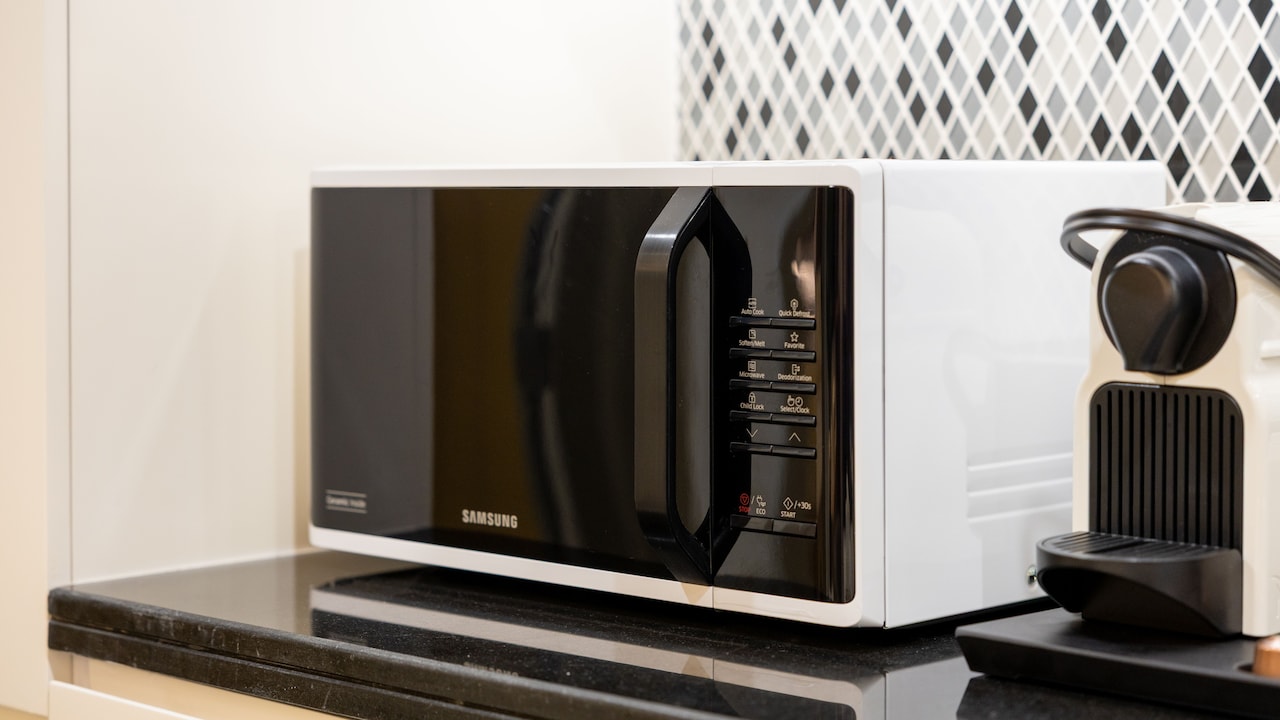
Spread large portions evenly to prevent cold spots when reheating; Photo Credit: Pexels
6. Myth: Adding Lots Of Water Guarantees Softer Rice
A splash of water can rescue dry rice. Half a glass can create an entirely different problem.
Rice absorbs water during cooking, but reheating isn't a second round of boiling. The goal is to introduce enough moisture to generate steam and soften the grains. Flooding the bowl can make the bottom layer mushy while leaving the overall texture heavy and wet.
Start cautiously. Add a small amount, cover the rice and heat it briefly. Stir afterwards. If the grains still seem dry, another splash can be added before reheating again.
The ideal amount varies. Plain basmati stored overnight may need different treatment from moist vegetable pulao or curd rice. Rice that sat uncovered in the fridge may also need slightly more help than rice stored promptly in an airtight container.
This is one of those kitchen situations where restraint pays off. Water can always be added; removing it after the rice turns soupy is considerably less convenient.
The aim is steam, not swimming rice. Once that distinction becomes habit, reheating becomes far less of a guessing game.
7. Myth: The Highest Microwave Power Is Always Best For Leftover Rice
Maximum power feels efficient. Lunch arrives faster, everyone gets back to work and nobody spends ten minutes supervising yesterday's rice. But full power isn't automatically the best choice for every portion.
Powerful heating can warm exposed sections rapidly while the centre remains comparatively cool. Continue long enough and those outer grains may lose moisture and become chewy.
Using a moderate power setting for a slightly longer period can sometimes give heat more opportunity to spread through the rice. This approach becomes particularly useful with dense portions or rice taken straight from a very cold fridge.
That doesn't mean high power should never be used. A small, loosely packed bowl with added moisture may reheat perfectly well at a higher setting. The mistake lies in treating maximum power as a universal rule.
Microwaves also vary considerably in wattage. A setting that works beautifully in one appliance may overheat rice in another.
Treat the first reheating as a test. Use short intervals, stir and adjust. Your microwave doesn't need to prove anything by running at maximum power every time lunch needs rescuing.
8. Myth: A Wet Paper Towel Is The Only Way To Keep Rice Moist
The damp-paper-towel method has become a popular reheating trick, but it isn't the only route to softer leftover rice.
Its basic idea makes sense. A damp covering can help reduce moisture loss while the rice heats. But a microwave-safe lid or suitable cover can achieve a similar steaming effect when you add a little water directly to the rice.
The better choice often comes down to what you have available and what the container allows. A proper reusable microwave cover can also save the daily ritual of reaching for disposable paper.
More importantly, don't get so focused on the covering method that you ignore the rice underneath. A tightly packed mound still benefits from stirring. Very dry rice may still require added water. An oversized portion can still heat unevenly.
No single trick cancels every other reheating rule.
So, if social media makes it look as though a damp paper towel possesses magical powers over leftover basmati, there's no need to treat it as compulsory. Moisture retention matters. The exact accessory doing the retaining matters considerably less.
9. Myth: If Rice Smells Fine, It Is Automatically Fine To Reheat
Texture problems can usually be fixed. Food safety needs a different approach.
Cooked rice can support the growth of Bacillus cereus, a bacterium associated with foodborne illness. Some bacterial spores can survive normal cooking, which means how cooked rice gets cooled and stored matters.
That makes the familiar smell test unreliable as the only safety check. Food that causes illness doesn't always announce the problem with an unpleasant odour, odd colour or dramatic change in appearance.
The sensible habit starts before reheating. Don't leave cooked rice sitting around at room temperature for prolonged periods. Cool leftovers promptly, refrigerate them properly and reheat the portion you intend to eat until it is thoroughly hot.
A microwave can heat rice, but it can't undo poor storage that happened beforehand. Adding extra microwave time shouldn't be treated as a way of making questionable leftovers safe again.
This may sound less exciting than a clever kitchen hack, but it's the rule worth remembering. Soft rice makes lunch more enjoyable. Proper handling makes that lunch a much better idea in the first place.
10. Myth: Reheated Rice Can Never Taste As Good As Freshly Cooked Rice
Fresh rice has an obvious advantage. There's something particularly satisfying about lifting the lid from a pot and seeing fluffy grains still fragrant from cooking. But refrigerated rice isn't automatically condemned to a dry second life.
Good storage and thoughtful reheating can make a remarkable difference. Keep leftover rice covered in the fridge rather than allowing it to sit exposed. When it's time to eat, break up large clumps, add a little water and cover the bowl before microwaving.
Heat in manageable intervals and stir at least once when reheating a larger serving. Let the rice rest briefly afterwards, then fluff it gently.
The final texture may not perfectly reproduce rice straight from the cooker, especially after longer storage, but it can still become soft, pleasantly separate and perfectly suited to rajma, dal, curry or whatever survived alongside it in the fridge.
And some leftovers have their own advantages. Firm chilled rice works brilliantly for fried rice because the grains separate more easily. Yesterday's rice doesn't need sympathy. It just needs the right assignment.
Some Microwave Ovens Available Online That You May Like
1. Panasonic 20 L Solo Microwave Oven
2. IFB 24L Solo Microwave Oven with 69 Auto Cook Menus
3. Godrej 20 L with 5 Years Comprehensive Warranty
4. Panasonic 20L Solo Microwave Oven
5. LG 20 L Solo Microwave Oven
6. Samsung 28L, Convection Microwave Oven with Curd Making
7. IFB 28 L Air Fry Convection Microwave with 5 in 1 Versatility Bake
When leftover rice turns hard, the answer usually isn't an increasingly heroic amount of microwave time. Moisture, covering, portion size, stirring and storage all influence what reaches the plate. Add a little water, trap the steam and reheat in controlled intervals. Most importantly, handle cooked rice safely before it ever reaches the microwave. With the right technique, yesterday's rice can return soft and fluffy instead of emerging hotter, drier and considerably more disappointing.
(Disclaimer: This article may include references to or features of products and services made available through affiliate marketing campaigns. NDTV Convergence Limited (“NDTV”) strives to maintain editorial independence while participating in such campaigns. NDTV does not assume responsibility for the performance or claims of any featured products or services.)