Does Digital Zoom Reveal More Security-Camera Detail? 10 Surveillance Myths Explained
Digital zoom cannot create missing detail. This article breaks down 10 common surveillance myths, from megapixels and night vision to AI, number plates and cloud storage.
10 CCTV Myths Debunked: Digital Zoom, Night Vision, AI And More
Security cameras have quietly become part of everyday scenery. They watch apartment entrances, jewellery counters, office corridors, petrol pumps, lifts, warehouses and the neighbourhood kirana shop where someone always seems to park a scooter directly under the camera. Yet expectations around surveillance often come from crime dramas rather than camera technology. That creates a strange gap between what people think CCTV can do and what it actually records. Modern cameras certainly offer impressive features. High-resolution sensors, artificial intelligence, colour night imaging, remote alerts and cloud storage have made surveillance more useful than ever. Still, physics remains stubborn. A camera cannot capture detail that never reached its sensor. Software cannot magically restore every hidden number plate. A wider field of view can actually reduce useful facial detail. Understanding these limitations matters because security footage often becomes important only after something goes wrong. By then, discovering that the camera faced the wrong direction or recorded unusable images feels rather like checking the umbrella after the monsoon has already soaked the sofa.
10 CCTV Myths Debunked: Digital Zoom, Night Vision, AI And More; Photo Credit: Pexels
The Truth Behind Common Surveillance Beliefs
1. Digital Zoom Can Reveal Details The Camera Never Captured
Digital zoom sounds powerful because the word “zoom” suggests getting closer. In reality, it usually means enlarging part of an existing image. If a face occupies only a tiny cluster of pixels in the original recording, digital zoom makes those pixels larger. It does not suddenly uncover eyelashes, scars or a readable badge.
Think of a photograph sent repeatedly through WhatsApp. Enlarging one corner may help someone examine it more comfortably, but enlargement cannot restore detail that disappeared during capture or compression.
This distinction becomes crucial when reviewing CCTV footage after theft, vandalism or a parking dispute. A person may appear recognisable at normal size, yet the enlarged face can quickly turn into a blocky patch.
Optical zoom works differently. A suitable lens changes the image before the sensor records it, allowing distant subjects to occupy more pixels. That can genuinely improve captured detail.
Digital enhancement still has value. Sharpening, contrast adjustments and AI tools may make existing information easier to interpret. They simply cannot create reliable evidence from information the camera never recorded.
Also Read: Top 5 Smart Cameras For Advanced Home Surveillance: Now Stay Protected 24/7
2. More Megapixels Always Mean Better Security Footage
A camera box shouting “8MP” or “4K” can look reassuringly impressive. Resolution matters, but megapixels tell only part of the story.
A high-resolution camera may still produce disappointing footage if poor lighting, weak optics, heavy compression or an unsuitable viewing angle gets in the way. Imagine placing an expensive 4K camera above a brightly lit doorway while the corridor behind it remains dark. The sensor may record millions of pixels, yet the visitor's face could still appear shadowed.
Higher resolution also creates practical trade-offs. It demands more storage, greater network bandwidth and often stronger processing hardware. A small business replacing several older cameras can discover that recording everything at maximum quality fills the hard drive far sooner than expected.
Useful security footage depends on pixel density at the subject, not merely the total number of pixels printed on the packaging. A properly positioned 4MP camera focused on a narrow entrance may identify faces more reliably than an 8MP model trying to cover an entire compound.
Resolution helps enormously, but placement, lighting and lens choice decide whether those extra pixels actually matter.
10 CCTV Myths Debunked: Digital Zoom, Night Vision, AI And More; Photo Credit: Pexels
3. Night Vision Lets Cameras See Perfectly In Total Darkness
“Night vision” can sound almost supernatural. Unfortunately, darkness still creates problems.
Many security cameras use infrared LEDs to illuminate scenes that human eyes cannot see. This allows the camera to produce monochrome footage in very low light. The result can look surprisingly clear, especially across short distances. However, infrared illumination has a limited range, and objects farther away may fade into darkness.
Reflective surfaces cause another headache. A number plate, white shirt or shiny wall can bounce infrared light towards the camera and appear excessively bright. Meanwhile, the face beside it may remain difficult to identify.
Glass creates similar trouble. Point an infrared camera through a window at night and its own LEDs may reflect from the glass, producing glare instead of a useful street view.
Newer low-light and colour-night cameras perform better when some ambient light exists, but they still need sensible installation.
So yes, night vision can greatly improve after-dark surveillance. No, it does not give every ₹3,000 camera the eyesight of a nocturnal superhero watching a lane from fifty metres away.
4. One Wide-Angle Camera Can Cover Everything Properly
A wide-angle camera seems like the obvious bargain. Why install three cameras when one can apparently watch the gate, staircase, parking spaces and delivery area at once?
Because seeing an area and identifying what happens there are not the same thing.
The wider the camera spreads its available pixels across a scene, the fewer pixels each distant person or object receives. Someone standing near the lens may appear clear, while a person at the far end of the parking area becomes too small for reliable identification.
Wide lenses can also introduce distortion. Faces near the edge may stretch slightly, straight lines may bend, and distances can look misleading.
For general situational awareness, a broad view works brilliantly. Security staff can see movement across a large space and understand the sequence of an incident. Identification usually requires tighter views at important points such as gates, cash counters, lifts and vehicle entrances.
Good surveillance, therefore, works more like cricket coverage than a single stadium camera. The wide shot shows what happened. The closer angle reveals who did it. Trying to make one camera perform every job often leaves it doing none particularly well.
5. Cameras Can Read Every Number Plate They Record
A car passes beneath a camera, so the registration number must be available somewhere in the footage. That assumption causes plenty of disappointment.
Number plates present difficult conditions for ordinary surveillance cameras. Vehicles move quickly, headlights create glare, reflective plates bounce light strongly, and the plate itself may occupy only a small part of the frame.
At night, the problem grows. A camera may expose the image for the dark road, causing bright headlights and reflective plates to turn into glowing white patches. Fast movement can also produce blur.
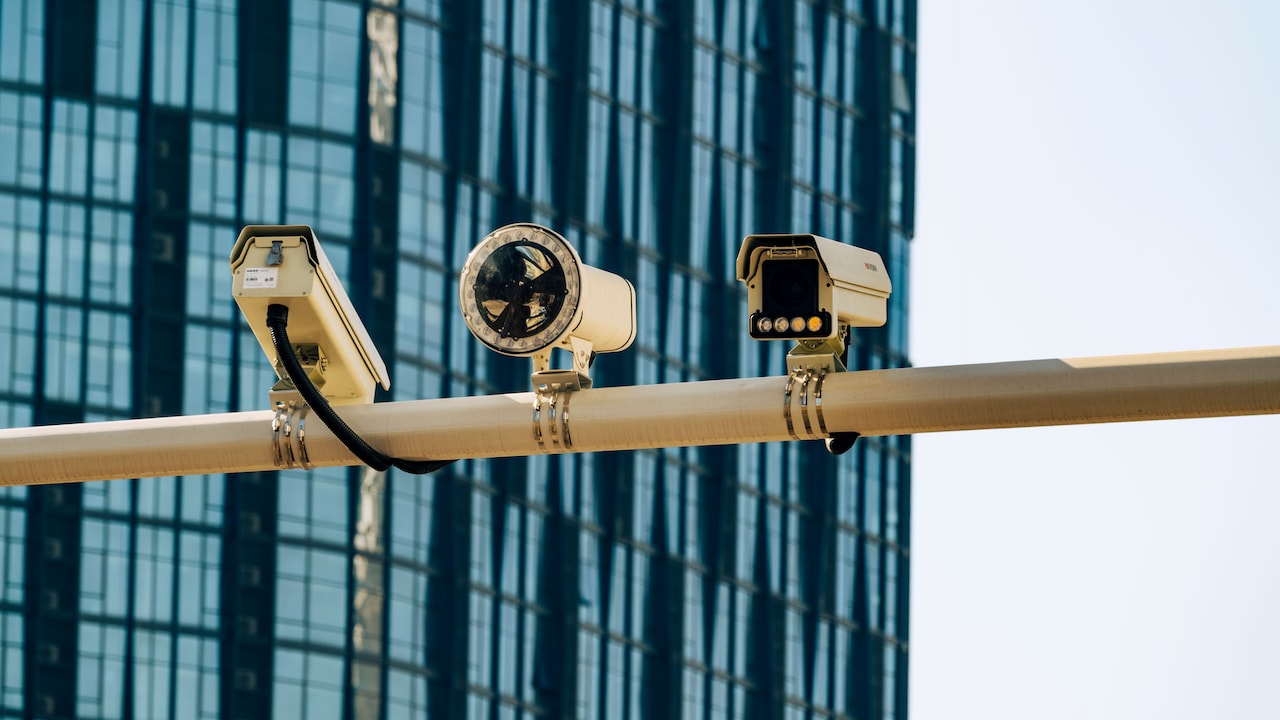
Dedicated licence-plate recognition cameras tackle these problems with appropriate shutter speeds, exposure controls, lenses and positioning. Installation angle matters too. A camera mounted high above the road and looking sharply downward may capture a vehicle perfectly while making the plate difficult to read.
Speed also counts. A camera suitable for a slow apartment entrance may struggle with vehicles moving quickly along a main road.
For important entrances, the sensible approach involves testing the readability of actual plates during daylight and darkness. Seeing a car clearly does not automatically mean the camera captured the characters printed on its plate.
10 CCTV Myths Debunked: Digital Zoom, Night Vision, AI And More; Photo Credit: Pexels
6. Security Cameras Record Exactly What Human Eyes See
Human vision adapts remarkably well to complicated lighting. Walk from a bright afternoon street into a shaded lobby and the eyes adjust almost without conscious effort. Cameras have a harder job.
Scenes containing intense brightness and deep shadow can exceed a sensor's usable dynamic range. A camera positioned inside a shop may capture the interior nicely while turning customers entering from the sunny pavement into dark silhouettes.
Wide Dynamic Range, commonly called WDR, helps handle these situations by balancing bright and dark areas. Even then, performance varies between models, and extreme conditions remain challenging.
Colour presents another difference. Camera colours can shift under LED lighting, sodium street lamps or infrared illumination. Motion blur can also hide details that seemed obvious to someone standing nearby.
This explains why a witness may confidently remember a face while the recording shows only a blurred profile. The camera did not “miss” the same view. It experienced the scene through different optics, exposure settings and sensor limitations.
Choosing cameras, therefore, requires looking at real environmental conditions. A demo recorded in a perfectly lit showroom says surprisingly little about how that camera will behave beside a sunny entrance at 2 pm.
7. AI Surveillance Understands Everything Happening On Screen
Artificial intelligence has changed security cameras considerably. Modern systems can detect people, classify vehicles, recognise certain behaviours and reduce the endless false alerts once caused by fluttering leaves.
Yet AI does not understand a scene the way a person does.
A system may correctly detect that someone crossed a virtual boundary without knowing why. Perhaps a delivery worker took the usual shortcut. Perhaps a child chased a cricket ball across the driveway. Context changes meaning, and software can struggle with context.
False positives still occur. Shadows, unusual clothing, crowded scenes, rain and partial obstruction can confuse detection models. False negatives matter too. A system that misses a genuine event can create more trouble than one that occasionally sends an unnecessary alert.
Facial recognition carries additional concerns. Image angle, lighting, resolution and database quality affect matching accuracy. Treating every software match as unquestionable proof would be risky.
AI works best as an assistant. It can search hours of footage quickly, flag unusual activity and help operators focus attention. Human review remains essential when consequences matter. The smartest camera should still face a sensible direction and operate within clearly understood limits.
8. Cloud Storage Means Footage Can Never Be Lost
Cloud recording solves several old surveillance problems. If someone damages or steals the recorder kept inside a shop, remotely stored footage may survive. Users can also access clips without standing beside the physical recording system.
Still, “in the cloud” does not mean “impossible to lose”.
Retention periods matter. A subscription might store footage for seven, fifteen or thirty days before older recordings disappear automatically. Discovering an incident six weeks later may leave nothing to retrieve.
Internet connectivity matters as well. Some cameras record locally during an outage and upload later. Others lose cloud recording when the connection drops. Buyers need to know which behaviour applies before relying on the system.
Accounts also need protection. Weak passwords and reused credentials can turn convenience into a security risk. Multi-factor authentication, controlled access and prompt removal of former staff accounts deserve just as much attention as camera resolution.
Local storage has risks too, so combining local and remote recording can provide stronger resilience for important sites.
Cloud storage remains extremely useful. It simply needs the same practical questions as any cupboard full of files: what gets saved, who can access it, and when does it disappear?
9. Installing Cameras Higher Always Makes Them More Effective
Mounting cameras high protects them from tampering and can provide a broad overview. Take that idea too far, though, and everyone starts looking like the top of a hairstyle.
Identification requires useful facial angles. A camera fixed very high above a doorway may clearly record someone entering while capturing little more than forehead and shoulders. Caps and helmets make matters worse.
The best height depends on purpose. A camera watching a warehouse floor may benefit from an elevated position because the goal involves tracking movement. A camera intended to identify visitors at an entrance needs a more suitable angle towards faces.
Installation should also consider obstructions. Tree branches grow. Signboards appear. Festival decorations arrive. Delivery boxes somehow find the one place nobody expected. A camera with a perfect view in January may spend October staring at a banner.
Accessibility matters, but installers can protect lower cameras with proper housings and careful placement rather than simply moving everything towards the ceiling.
Security design works when every camera has a defined task. Height should serve that task. Putting a camera as high as possible merely because vandals might reach it can protect the device while sacrificing the evidence it was meant to collect.
10. Once Installed, A CCTV System Needs Almost No Maintenance
Security cameras often receive attention on installation day and again after an incident. The months between those moments can be strangely quiet.
Unfortunately, cameras live in the real world. Dust collects on lenses. Spider webs appear with astonishing efficiency. Rain marks the housing. Hard drives wear out. Network settings change. Storage fills. Clocks drift out of sync.
A camera can even look perfectly healthy on a monitoring screen while recording at the wrong quality or retaining far fewer days than expected.
Regular checks prevent unpleasant surprises. Someone should confirm that each camera has the intended view, that recordings can actually play back, and that timestamps match across devices. Storage capacity deserves attention too, especially after increasing resolution or adding cameras.
Outdoor equipment needs particular care before and after harsh weather. A slightly shifted camera may spend months recording a wall after strong wind or maintenance work.
Surveillance systems resemble smoke alarms in one important way: nobody wants to discover a failure during the emergency itself. A few minutes of routine testing can protect an investment worth ₹50,000 far better than simply admiring the camera count on the monitor.
Products Related To This Article
1. Qubo Smart Outdoor Cam Pro 360° 4MP | No SD Card Required
2. CP PLUS 2MP Full HD Wi-Fi CCTV Camera for Home with Motion Tracking
3. Trueview 3MP 4G Mini PT Security Camera with SIM Support
4. Eyetech 4+4MP Smart WiFi PTZ CCTV Camera for Home Outdoor
5. MANOMAY Protect Bot 3MP Wi-Fi Pan-Tilt Camera
6. Qubo Smart Cam 360° by Hero Group
7. CP PLUS 3MP Resolution Smart Wi-fi CCTV Home Security Camera
Security cameras can provide remarkably useful evidence, but they cannot escape basic limits of light, distance, optics, storage and image resolution. Digital zoom cannot summon detail from nowhere. Megapixels cannot rescue a poor camera angle. Night vision does not defeat every dark corner, and artificial intelligence does not transform a CCTV system into an all-knowing detective.
The most reliable surveillance setup comes from matching each camera to a clear purpose. Entrances need identifiable faces. Vehicle gates need readable plates. Large spaces need broad situational views. Critical footage needs sensible storage and regular checks.
That approach may sound less exciting than the television version of surveillance, where somebody taps a keyboard three times and reveals a suspect reflected in a teaspoon across the street. Real security works through less dramatic choices: good lenses, sensible lighting, thoughtful positioning and routine maintenance.
Those choices rarely make headlines. When something actually goes wrong, however, they decide whether the recording provides useful evidence or merely a very clear video of something nobody can identify.
(Disclaimer: This article may include references to or features of products and services made available through affiliate marketing campaigns. NDTV Convergence Limited (“NDTV”) strives to maintain editorial independence while participating in such campaigns. NDTV does not assume responsibility for the performance or claims of any featured products or services.)