Does Putting A Subwoofer In A Corner Always Give Better Bass? 10 Audio Myths Explained
Does corner placement really improve subwoofer bass? This guide breaks down 10 common audio myths about speakers, watts, cables, Bluetooth, lossless music and room acoustics, helping you get better sound without wasting money.
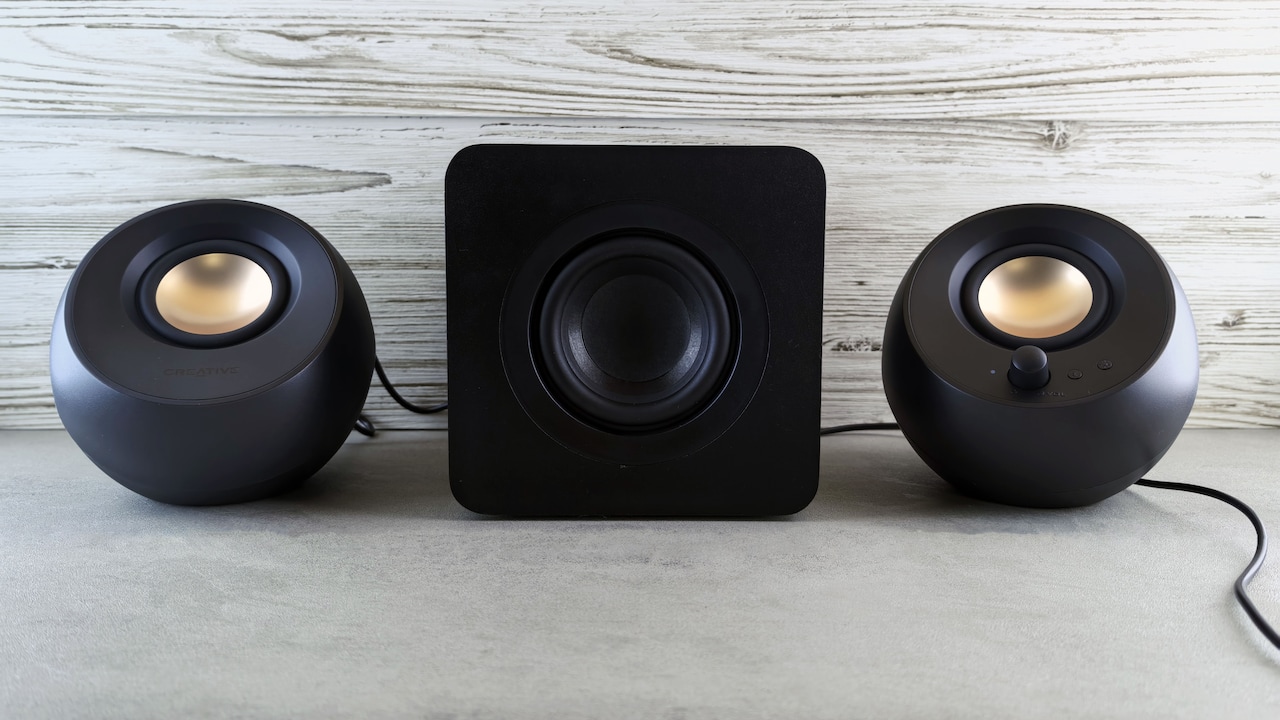
How subwoofer placement affects audio quality in home music systems
Audio has a funny way of turning otherwise sensible people into detectives. A speaker moves six inches, the bass suddenly improves, and an evening disappears into experiments involving cushions, furniture and suspiciously precise toe-in angles. That curiosity is understandable. Sound changes dramatically with the room, equipment and listening position. Yet this complexity has also created plenty of myths. Some contain a grain of truth. Others keep circulating because they sound technical enough to be convincing. The result? People often spend ₹20,000 fixing a problem that moving a speaker could solve for free.
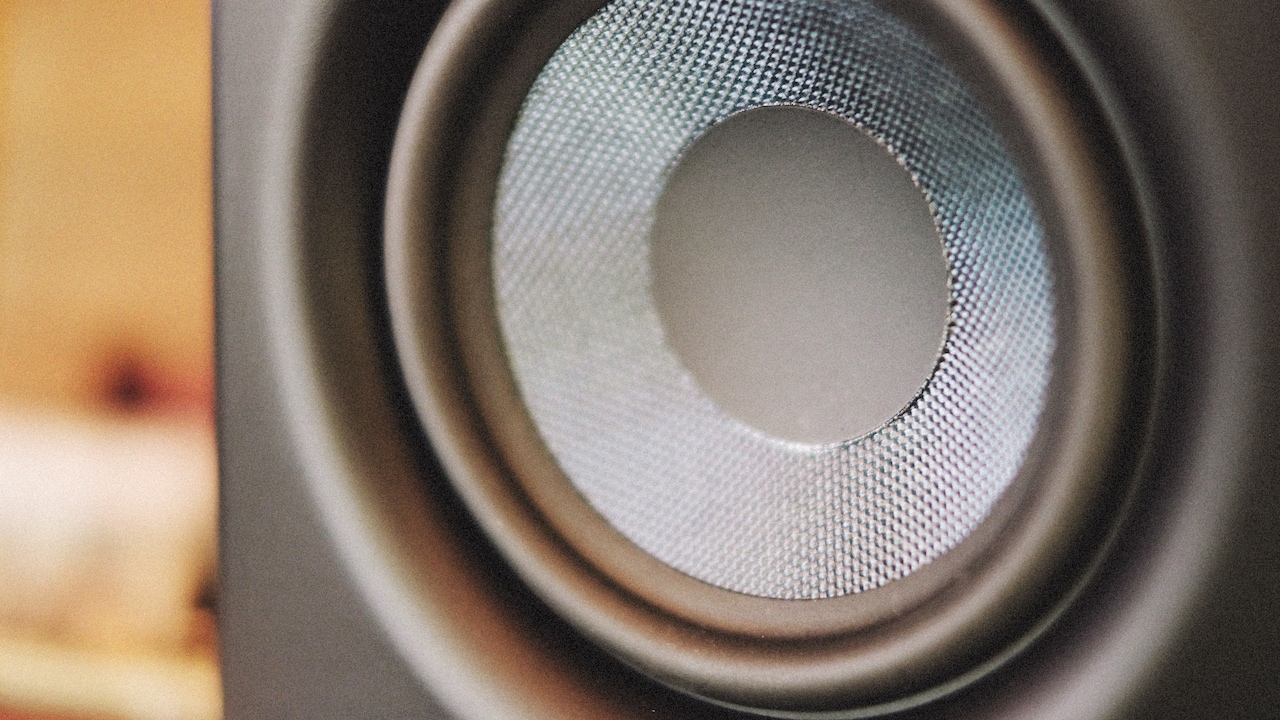
How to choose the right subwoofer placement for the best audio results
Photo Credit: Pexels
Good audio does not require a degree in acoustics or a room resembling a recording studio. It helps, however, to separate useful principles from habits that have gained mythical status. From subwoofer placement and amplifier power to expensive cables and speaker size, these ten familiar claims deserve a closer listen.
Also Read: Top 5 Soundbars under ₹7000 with Wireless Subwoofer for Apartment-Friendly Home Theatres
10 Common Audio Myths That Deserve A Reality Check
1. Putting A Subwoofer In A Corner Always Gives Better Bass
Placing a subwoofer in a corner can certainly make the bass louder. That does not automatically make it better.
Low frequencies interact strongly with nearby walls. Push a subwoofer towards a corner and those boundaries reinforce its output. The result can feel impressive during an action film, especially when explosions suddenly acquire enough enthusiasm to annoy everyone in the next room.
The problem is that extra bass may not arrive evenly. Corner placement can exaggerate certain frequencies while leaving others weak. A bass guitar might sound huge on one note and strangely thin on the next. Room dimensions, furniture and the listening position all influence the result.
A simple trick called the “subwoofer crawl” often works better than blindly choosing a corner. Put the subwoofer temporarily where you normally sit, play familiar bass-heavy music, then walk around the room. Places where the bass sounds smooth and controlled are promising positions for the subwoofer.
So, yes, a corner can deliver more bass. Better bass requires balance, not merely more thump.
2. Bigger Speakers Always Sound Better
Large speakers certainly look serious. A pair of floorstanders can dominate a living room with the authority of furniture nobody dares move. Size, however, does not guarantee sound quality.
Bigger cabinets can accommodate larger drivers and often produce deeper bass with greater ease. That helps in spacious rooms or when playing music at higher volumes. Yet speaker design involves much more than cabinet dimensions. Driver quality, crossover design, cabinet construction and tuning all affect performance.
A well-engineered bookshelf speaker may sound cleaner and more natural than a poorly designed tower twice its size.
Room size matters too. Place enormous speakers in a compact bedroom and bass can become overwhelming. Reflections from nearby walls may also muddy vocals and reduce stereo clarity. Smaller speakers paired with a carefully positioned subwoofer can produce a more balanced result in such spaces.
Think of speakers like shoes. Bigger is useful when the situation demands it, but buying the largest pair available rarely guarantees comfort.
Choose speakers according to room size, listening distance and preferred volume rather than judging them by centimetres alone.
3. More Watts Automatically Mean A Louder System
Amplifier specifications love big numbers. A 200-watt amplifier naturally sounds more formidable than a 50-watt model on paper, but watts alone cannot tell you how loudly a system will play.
Speaker sensitivity matters enormously.
A sensitive speaker produces more sound from the same amount of amplifier power than a less sensitive one. This means a modest amplifier connected to efficient speakers can play surprisingly loudly, while power-hungry speakers may demand much more muscle.
There is another catch. Doubling amplifier power does not double perceived loudness. Moving from 50 watts to 100 watts provides extra headroom, but the change is far less dramatic than the numbers suggest.
Quality matters as well. An amplifier that delivers clean, stable power can outperform a cheaper unit boasting an impressive headline figure. Some manufacturers also quote power under conditions that make comparisons difficult, such as driving only one channel or measuring unusually high distortion.
When choosing an amplifier, look beyond the wattage badge. Speaker sensitivity, room size, listening distance and amplifier quality tell a far more useful story.
Numbers matter, but context makes them meaningful.
4. Expensive Cables Always Improve Sound Quality
Few audio debates become heated as quickly as cable discussions. A perfectly peaceful evening can turn philosophical the moment somebody mentions premium speaker wire.
Cables do matter. They need suitable thickness, secure connections and decent construction. Damaged, excessively thin or badly terminated cables can create real problems.
Once those basic requirements are met, however, spending dramatically more does not guarantee an equally dramatic improvement.
A ₹1,000 cable of appropriate gauge can transmit a speaker signal perfectly well in a typical home setup. Replacing it with a ₹50,000 cable will not automatically reveal hidden percussion, wider emotions or a guitarist quietly coughing at the back of the studio.
Cable length and electrical resistance matter more than luxurious packaging. Longer runs may require thicker cable, especially with speakers that present demanding loads.
HDMI cables offer an even clearer example. A properly certified cable that supports the required bandwidth either carries the digital signal reliably or it does not. Paying extra for decorative braiding does not make a 4K film more cinematic.
Spend sensibly on cables, then focus the remaining budget on speakers, placement or room treatment.
5. Bluetooth Audio Always Sounds Bad
Bluetooth once deserved much of its poor reputation. Early implementations used heavy compression, connections could behave unpredictably and wireless speakers often prioritised convenience over fidelity.
Things have changed.
Modern Bluetooth codecs and improved hardware can deliver sound that satisfies most everyday listeners. During a morning playlist, podcast or casual evening session, the convenience often outweighs small differences in absolute fidelity.
That does not mean Bluetooth equals every wired connection. Compression still exists in many Bluetooth formats, and the final quality depends on the phone, headphones, receiver and codec being used. A high-quality wired setup can preserve more information and offer greater consistency.
Yet blaming Bluetooth whenever something sounds disappointing misses the bigger picture. Poorly mastered music, weak speakers, bad positioning or a noisy room can make a far larger difference.
Consider the setting too. Lossless audio sounds wonderful in a quiet room with capable equipment. On a crowded local train or beside an enthusiastic ceiling fan, subtle codec differences quickly lose their importance.
Bluetooth is a compromise, but modern Bluetooth is often a very good one.
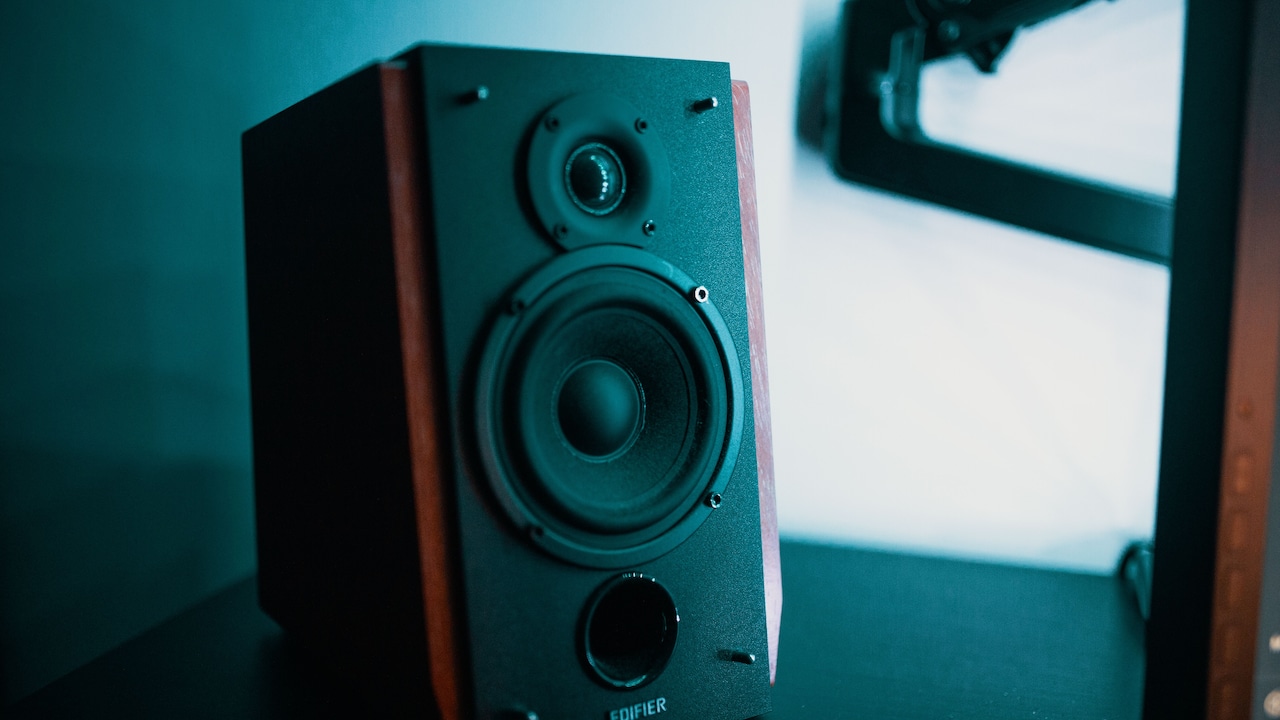
Modern Bluetooth speakers can deliver an amazing audio performance; Photo Credit: Pexels
6. Lossless Music Always Sounds Dramatically Better
The promise of lossless audio is appealing: every bit of the original digital information remains intact. Surely that must sound obviously superior?
Not always.
Lossless formats such as FLAC can offer excellent quality, particularly through revealing headphones or a well-set-up stereo system. But the audible difference between lossless music and a well-encoded high-bitrate compressed file can be surprisingly subtle.
The recording itself matters far more. A poorly mixed track will remain poorly mixed whether it arrives as a tiny compressed file or an enormous studio-quality download.
Playback conditions also influence perception. Critical listening in a quiet room gives subtle differences a chance to emerge. Music playing through a portable speaker while pressure-cooker whistles compete from the kitchen presents a rather different test environment.
Expectation can also play tricks. People often report hearing improvements when they know a “better” format is playing. Blind comparisons sometimes make those distinctions far harder.
Lossless audio remains worthwhile for archiving and high-quality systems. Just do not expect every song to transform overnight. Better mastering, speakers and placement usually produce more noticeable gains than changing file formats alone.
7. New Speakers Need Hundreds Of Hours Of Burn-In
Speaker burn-in sits somewhere between engineering discussion and audio folklore.
Mechanical parts inside a speaker can change slightly after initial use. Driver suspensions may loosen a little, particularly during the early hours of operation. The controversial part is whether this creates the enormous sonic transformation sometimes described in enthusiast circles.
Claims involving hundreds of hours deserve scepticism.
A speaker that sounds harsh, poorly balanced or fundamentally unsuitable for a room is unlikely to become magical after playing music continuously for three weeks. Small changes may occur, but human hearing also adapts remarkably quickly. Spend several evenings with a new pair of speakers and unfamiliar tonal characteristics start feeling normal.
That adaptation can easily be mistaken for dramatic physical burn-in.
There is no harm in using new speakers normally before making final judgements. Just avoid running pink noise throughout the night because an internet forum declared hour 237 the sacred moment when the soundstage opens.
If a new speaker sounds promising, give it some listening time. If it sounds fundamentally wrong for the room or personal taste, patience alone probably will not rewrite its personality.
8. Subwoofers Are Only For Films And Bass-Heavy Music
Mention a subwoofer and many people picture earthquakes, car chases and neighbours preparing strongly worded complaints. Yet a good subwoofer does far more than make action scenes shake the sofa.
Music contains low-frequency information too.
A double bass, kick drum, pipe organ and electronic synthesiser can all extend below the comfortable range of many conventional speakers. A properly integrated subwoofer reproduces that foundation without constantly announcing its presence.
That last part matters.
A well-set-up subwoofer should not sound like a separate box producing bass from one corner. It should blend with the main speakers so naturally that switching it off makes the entire presentation seem smaller and thinner.
Even vocals and acoustic music can benefit indirectly. When main speakers no longer struggle with the deepest frequencies, the overall system may sound cleaner and more relaxed.
The stereotype usually comes from badly configured systems where the subwoofer level sits far too high. If every tabla stroke feels like construction work downstairs, something needs adjustment.
Subwoofers are not merely special-effects machines. Used carefully, they complete the lower part of the musical picture.
9. Speakers Should Always Face Straight Towards The Listener
Pointing speakers directly at the listening position sounds like an obvious rule. In reality, the ideal angle depends heavily on speaker design and room acoustics.
Turning speakers inward is commonly called toe-in. More toe-in can sharpen centre imaging and make vocals appear more precisely located between the speakers. It can also increase treble energy at the listening position, depending on how directional the tweeters are.
Some speakers sound best aimed almost directly at the listener. Others produce a wider, more natural soundstage when facing slightly outward.
Room reflections complicate matters further. Bare side walls, glass surfaces and nearby furniture influence high frequencies. Changing speaker angle by just a few degrees can alter the balance surprisingly clearly.
Fortunately, this experiment costs nothing.
Start with the speakers roughly facing forward. Listen to a familiar vocal track, then gradually rotate both speakers inward by equal amounts. Pay attention to voice placement, treble balance and the width of the soundstage.
There is no universally correct angle marked by destiny. The best position is the one that works with those speakers, that room and that seat.
10. Better Equipment Can Fix A Bad Room
This may be the costliest audio myth of all.
A ₹2 lakh pair of speakers placed badly in a difficult room can sound less satisfying than a modest system arranged with care. Rooms shape what reaches the ears through reflections, bass resonances and absorption.
Hard floors, bare walls and large windows can produce strong reflections. These may make music sound bright, confused or tiring. Room dimensions can also create uneven bass, with one seat receiving thunder while another seems to have misplaced the entire low end.
Fortunately, improvement does not always require turning the living room into a recording studio.
Curtains, rugs, bookshelves and soft furnishings can help control reflections. Moving speakers farther from walls may clean up bass. Shifting the listening chair by half a metre can sometimes solve a stubborn low-frequency problem that no new amplifier could fix.
Dedicated acoustic treatment offers even greater control, but simple experiments should come first.
Equipment matters enormously, of course. Yet every speaker ultimately plays into a room. Ignoring that room while repeatedly upgrading electronics is rather like buying better spectacles while refusing to clean the window.
Products Related To This Article
1. Sonos Sub Mini | Compact Wireless Subwoofer with Bold Bass for TV
2. FABTEC 10 Inch Heavy Bass Subwoofer Speaker
3. JXL1063 BX 10 INCH Enclosure Subwoofer 5600 Watt
4. Portronics Dash 4 50W Wireless Bluetooth Party Speaker with Karaoke Mic
5. boAt Aavante 2.1 1600D / Orion Plus, Dolby Audio
6. Pioneer Ts-W1212D4 Champion Series Maximum Power Subwoofer
7. Sony HT-S100F 2.0 Ch Dolby Audio Soundbar
Audio myths survive because sound is personal, rooms behave unpredictably and technical language can make almost any claim sound convincing. The reassuring part is that better sound rarely depends on following rigid rules.
A corner may suit a subwoofer perfectly. Another room may reward completely different placement. Large speakers can sound magnificent, but compact models can be equally impressive when matched properly. Premium equipment has its place, yet no price tag can replace thoughtful setup.
The most useful audio tool often costs nothing: experimentation. Move the speakers. Change the listening position. Adjust the subwoofer level. Compare connections without looking at the labels. Play music you know well rather than tracks chosen simply because they sound impressive in a showroom.
Good sound should make music, films and games more enjoyable, not turn every listening session into an engineering examination. So the next time somebody declares that one placement, cable, format or specification is “always better”, treat the word always with suspicion. In audio, the room usually gets the final vote.
(Disclaimer: This article may include references to or features of products and services made available through affiliate marketing campaigns. NDTV Convergence Limited (“NDTV”) strives to maintain editorial independence while participating in such campaigns. NDTV does not assume responsibility for the performance or claims of any featured products or services.)