Why Your Blazer Looks Wrong: The Shoulder Fit Rule Explained
Most blazers look “off” for one reason: the shoulders. Learn the shoulder fit rule that fixes drooping seams, awkward padding, and bad sleeve hang, so your blazer looks sharp, not borrowed.

This is what makes blazers look wrong even after virtually spending tons of money.
There's a special kind of disappointment that comes from trying on a blazer that looks perfect on the hanger, but odd on the body. The mirror shows something… off. Not terrible, not “return immediately”, but off enough that confidence takes a hit.
And then the usual cycle begins. Maybe the sleeves are too long. Maybe the waist feels tight. Maybe the chest pulls. Maybe the blazer just doesn't “sit right”.

Learn all about common reasons that make blazer fit ill and look wrong; Photo Credit: Pexels
Here's the thing: most blazer problems start at the shoulders. Not the sleeves. Not the buttons. Not the length. The shoulders.
The shoulder fit rule is the quiet law of tailoring. It doesn't care if the blazer costs ₹2,500 or ₹25,000. It doesn't care if the brand is trendy or timeless. If the shoulder line is wrong, the blazer will never look clean. It will always feel like something is fighting your frame.
This article breaks down the shoulder fit rule in a way that actually makes sense, without tailoring jargon, without stiff fashion preaching, and without pretending everyone has a model's build. Just practical, real-world advice for everyday wardrobes, office days, weddings, and everything in between.
Also Read: Suits And Blazers That Do Not Wrinkle During Commutes: The Workwear Shortcut
The 10 Shoulder Fit Rules That Instantly Fix A Blazer's Look
1. The Shoulder Is The Foundation, Not A Detail
Most people treat shoulders like a minor checkpoint, the way someone checks if a phone case has a nice colour. But shoulders are the foundation of the blazer. Everything hangs from that point: the sleeves, the chest, the drape, the shape, even how the collar sits.
A blazer is basically architecture for the upper body. If the foundation shifts, the whole structure starts leaning. That's why someone can buy a blazer that “fits” in the chest and waist, yet it still looks like it's being worn instead of the other way around.
Think of it like a well-made dosa. The filling can be perfect, but if the base tears or folds weirdly, the whole experience collapses. The shoulder is the base.
This is also why shoulder alterations are expensive and often not worth it. A tailor can adjust the waist easily. They can shorten sleeves. They can tweak the back. But shoulders? That's surgery. When the shoulder fit is right from the start, the blazer instantly looks intentional, like it belongs on that body.
2. The Shoulder Seam Should End Where The Shoulder Ends
This is the simplest rule, and also the most ignored. The shoulder seam should sit right at the edge of the shoulder bone. Not hanging past it. Not sitting too far in.
When the seam drops off the shoulder, the blazer looks too big. The sleeves start from the wrong place, the arms look shorter, and the body looks wider. It gives a “borrowed from an older cousin” vibe, even if the rest feels fine.
When the seam sits too far inside, the blazer looks tight. It creates pulling lines near the upper arm, and the chest starts feeling restricted. It can even make the head look larger, which is not the goal unless someone is auditioning for a cartoon role.
A quick mirror test helps. Stand naturally. Let the arms rest. Look at where the seam lands. If it sits exactly at the shoulder edge, the blazer has a fighting chance. If it doesn't, the blazer is already losing.
3. Shoulder Divots Are A Warning Sign, Not A Quirk
Those little dents near the shoulder, often called “divots”, look small, but they ruin the entire silhouette. They usually show up when the blazer's shoulders are too wide, too structured, or shaped for a different body type.
Some people assume divots happen because their shoulders are “not broad enough”. That's a harsh and unnecessary conclusion. Divots usually mean the blazer is forcing its own shoulder shape onto the wearer.
In real life, this happens a lot with off-the-rack blazers that come with heavy padding. The blazer tries to create a strong shoulder line, but the body doesn't fill the space the way the blazer expects. So it collapses slightly, like a poorly packed suitcase.
The solution is not to “build shoulders” overnight. The solution is to find a blazer with softer shoulders, less padding, or a cut that matches the natural slope of the frame. A good shoulder line should look smooth, not dented, not hollow, and not like the blazer is quietly disappointed.
4. Shoulder Padding Should Support, Not Perform
Padding is not evil. It has a job. It helps the blazer sit cleanly, adds structure, and makes the shoulder line sharper. The problem begins when padding starts doing theatre.
A lot of blazers in malls come with dramatic padding that looks fine under bright trial-room lights, but odd in daylight. The shoulders look too square. The neck looks shorter. The whole upper body starts resembling a wardrobe.
Padding should support the shoulder, not create a new one. The best kind is subtle enough that nobody notices it, but everyone notices the overall sharpness.
This matters even more in warm weather. Heavy padding traps heat, makes movement awkward, and causes the blazer to sit stiffly. In cities where stepping outside feels like walking into a hairdryer, soft construction is a blessing.
The goal is to look polished, not armoured. A blazer should feel like an upgrade, not a costume.
5. The Shoulder Slope Must Match Your Natural Slope
Here's a truth nobody says out loud: people don't have the same shoulder slope. Some shoulders are flatter. Some are sloped. Some are slightly rounded. Some sit higher on one side.
Blazers come with a built-in shoulder angle. When that angle doesn't match the body, the blazer starts misbehaving. The collar may lift at the back. The shoulder may wrinkle. The sleeve may twist. The chest may pull even when the size seems right.
This is why two people can wear the same size and look completely different. It's not magic. It's geometry.
A blazer that matches the natural shoulder slope looks calm. It sits like it belongs there. The fabric lies flatter. The sleeves fall straight. The whole thing looks expensive, even if it wasn't.
A good trick is to look for rippling near the top of the sleeve or near the collar. If the shoulder area looks “busy” with wrinkles, the slope may be wrong. A smoother shoulder usually wins.
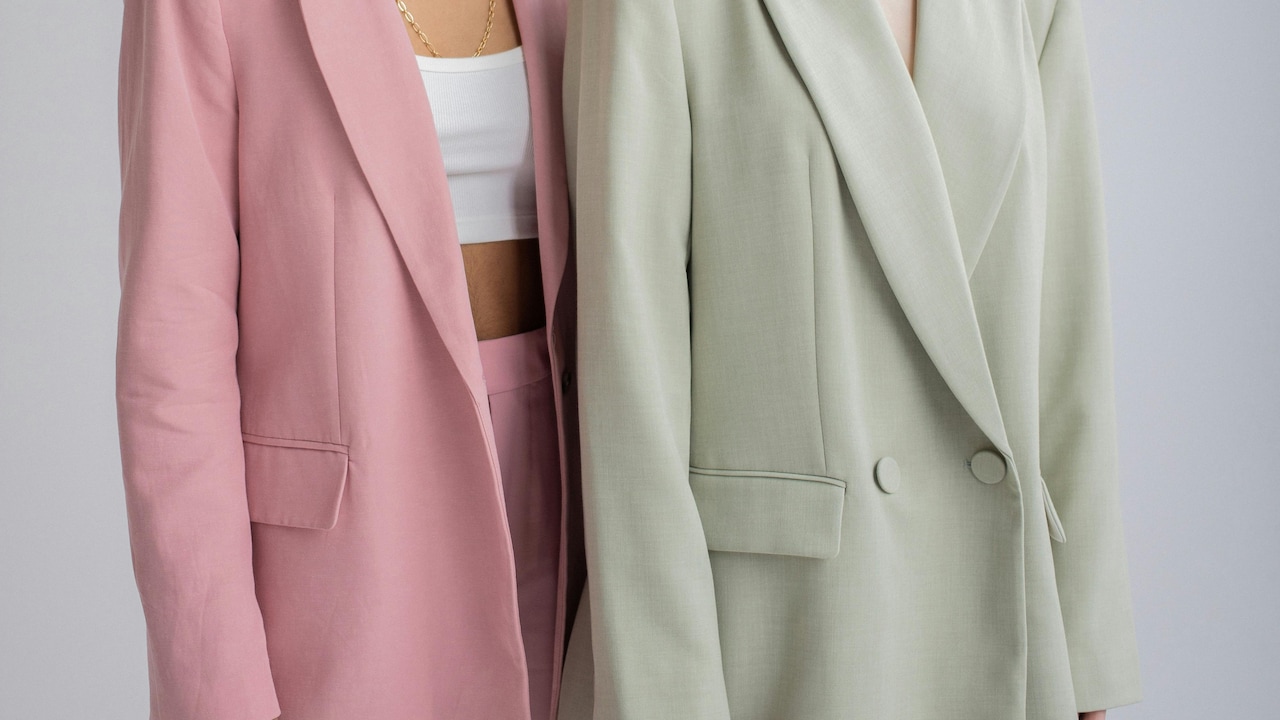
Always opt for blazers with a rippling near the top of the sleeve or near the collar; Photo Credit: Pexels
6. Sleeve Hang Depends On Shoulder Fit More Than Sleeve Length
Sleeve length gets all the attention, but sleeve hang is what separates “well-dressed” from “trying hard”.
When shoulders fit properly, the sleeves hang straight and clean. The arms move naturally. The blazer doesn't twist when reaching for a coffee or pulling out a wallet.
When shoulders are too wide, sleeves hang like tubes. They look loose and lifeless. When shoulders are too tight, sleeves pull and crease. The blazer fights every movement, like it's personally offended by bending an elbow.
This matters in real life because people move. They sit. They drive. They gesture while talking. They hold plates at weddings. They wave at colleagues. A blazer that only looks good while standing still is not a blazer; it's a mannequin outfit.
The shoulder fit sets the sleeve at the correct starting point. Once that's right, adjusting sleeve length becomes simple and meaningful. Without it, even a perfect sleeve length can still look wrong.
7. The Collar Tells The Truth About The Shoulders
The collar is a snitch. It reveals shoulder issues faster than anything else.
A blazer collar should sit close to the neck, with no big gaps. It should lie flat across the back, not float. It should not bunch up, and it should not stand away like it's trying to escape.
When the shoulders are too wide, the collar often lifts at the back. When shoulders are too narrow, the collar may strain and create folds near the neck. When the slope is wrong, the collar may look uneven.
Many people assume collar issues mean the neck size is wrong. But blazer collars don't work like shirt collars. They respond to shoulder structure and balance.
A quick test: look at the blazer from the side. If the collar sits neatly and the back looks smooth, the shoulders are probably close to correct. If the collar looks like a tent flap, something up top is not aligned.
This is one of those tailoring secrets that feels like a cheat code once known.
8. The “Hug Test” Reveals Shoulder Fit In Seconds
Trial rooms can be deceptive. Mirrors are flattering. Lighting is suspicious. Salespeople say “Sir, perfect fit” even when the blazer looks like it's plotting something.
A simple movement test helps. Try a gentle self-hug. Bring both arms forward as if hugging a friend after ages. Not aggressively. Just naturally.
If the blazer shoulders fit well, the movement will feel smooth. There will be slight tension, but nothing dramatic. If the blazer is too tight in the shoulders, it will pinch, pull, and feel restrictive. If it's too wide, the blazer will shift and bunch, like it's sliding around.
Another good test is lifting the arms slightly, like reaching for something on a shelf. A blazer should allow movement without the whole body riding up.
This matters because blazers are worn in social settings. People greet, move, dance, sit, and eat. A blazer that punishes movement turns the wearer into a stiff statue, and nobody looks confident while silently suffering.
Comfort is not optional. It's part of style.
9. Wedding And Office Blazers Fail For The Same Shoulder Reasons
A strange pattern shows up everywhere: the blazer worn to the office looks awkward, and the blazer worn to a wedding looks awkward in the exact same way. Different occasion, same problem.
In offices, blazers are often bought quickly, with a focus on colour and price. Someone sees navy, sees a discount, and leaves with a blazer that feels “close enough”. But the shoulders sit wrong, so the blazer looks sloppy in meetings and photographs.
At weddings, the opposite happens. People go for drama. Shiny fabric, heavy structure, bold shoulders. It looks impressive on the hanger, but on the body it can look like a stage outfit, especially in family photos where the lighting is unforgiving.
In both cases, the shoulder fit rule decides the final look. A well-fitted shoulder makes a simple blazer look sharp and premium. A poorly fitted shoulder makes an expensive blazer look rented.
It's also why a ₹6,000 blazer with correct shoulders often beats a ₹18,000 blazer with bad structure. The body can't fake geometry.
10. Buying The Right Shoulder Fit Is Cheaper Than Tailoring Mistakes
Tailoring can improve a blazer, but it cannot rescue the wrong shoulders easily. Many people buy a blazer thinking, “It's okay, a tailor will fix it.”
That logic works for trousers. It works for shirts. It works for sleeve length. It does not work for shoulders.
Shoulder alterations require dismantling major parts of the blazer. The cost can be high, and the result can still look slightly off. Even skilled tailors will warn that shoulder work is complicated.
This is why the smartest strategy is to buy the blazer based on the shoulders first. If the shoulders fit well, almost everything else becomes adjustable. Waist can be taken in. Sleeves can be shortened. The length can sometimes be tweaked. Even minor chest adjustments can happen.
But shoulders are the non-negotiable.
So the next time someone tries on a blazer, the best question isn't “Does it look good?” It's “Do the shoulders look calm?” Calm shoulders mean a calm blazer. And a calm blazer means a confident wearer.
Products Related To This Article
1. Mr Bowerbird Solid Single-Breasted Casual Men Blazer
2. 9 Impression Striped Single Breasted Formal Women Blazer
3. Sognare Solid Single Breasted Formal Men's Blazer
4. Theclassictogs Solid Single Breasted Casual Women's Blazer
5. Arrow Self Design Single-Breasted Formal Men's Blazer
A blazer doesn't need to be flashy to look brilliant. It doesn't need designer branding. It doesn't need loud checks or shiny fabric. It needs one thing above all: correct shoulder fit.
When shoulders fit properly, the blazer looks sharper, feels more comfortable, and instantly elevates the entire outfit. The sleeves hang better. The collar sits cleaner. The body drapes more naturally. Even posture improves, because the blazer stops fighting the wearer.
Most importantly, the shoulder fit rule saves time, money, and frustration. It stops people from buying blazers that sit in the wardrobe for years, waiting for the “right occasion” that never comes.
The next time a blazer looks wrong in the mirror, don't blame the belly, the height, or the fabric. Look up. Check the seam. Check the slope. Check the collar. The shoulders will tell the truth.
And once that truth is understood, every blazer purchase becomes easier. The wardrobe becomes sharper. The photos look better. And the feeling of being properly dressed becomes effortless, like slipping into a version of yourself that always looks ready.
(Disclaimer: This article may include references to or features of products and services made available through affiliate marketing campaigns. NDTV Convergence Limited (“NDTV”) strives to maintain editorial independence while participating in such campaigns. NDTV does not assume responsibility for the performance or claims of any featured products or services.)