Why Cheap Watches Lose Accuracy Faster Than You Think
Cheap watches may look stylish, but their accuracy often fades fast. From poor materials to weak movements, here’s why budget timepieces lose time quicker than expected.
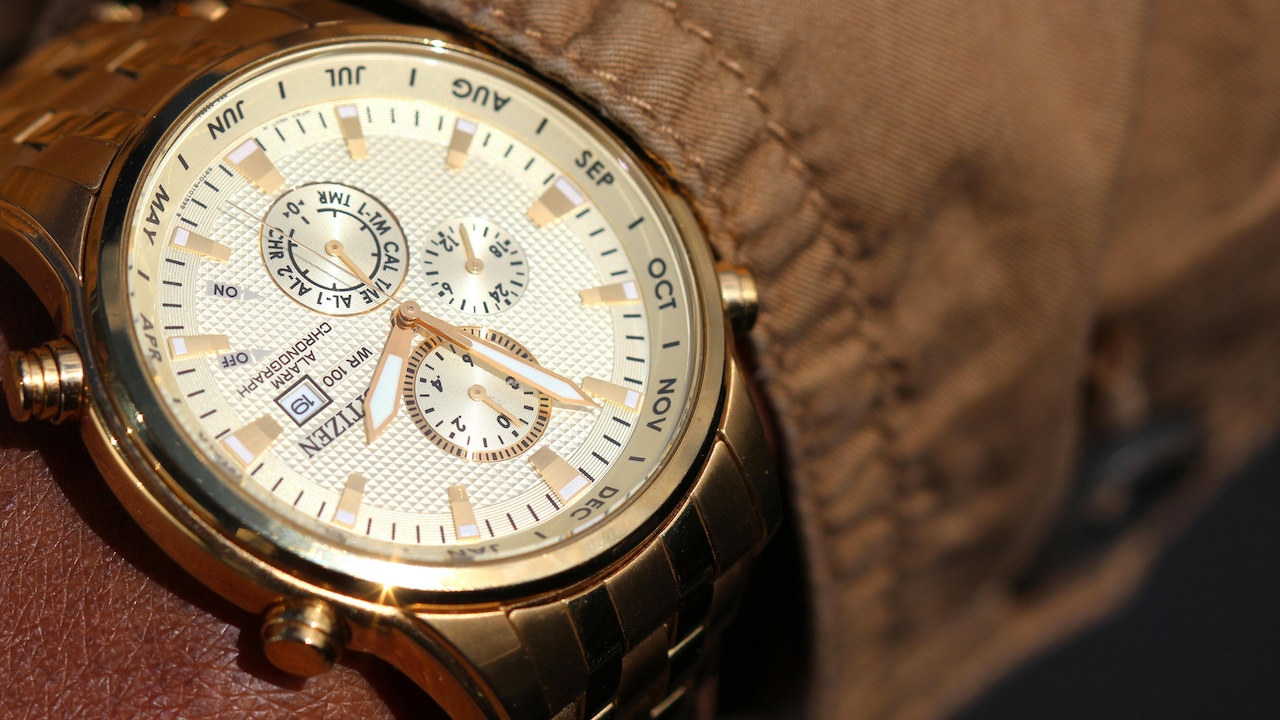
Why Cheap Watches Lose Accuracy Faster Than You Think
A watch does more than display time. It quietly shapes routines, helps catch early trains, and ensures meetings start without awkward apologies. Yet, many people notice a frustrating pattern. That budget-friendly watch picked up for ₹500 or ₹1,000 begins to lose or gain minutes within months. At first, the difference feels trivial. Over time, it becomes a daily annoyance.
The appeal of an inexpensive watch is easy to understand. It looks good, works well initially, and saves money. However, behind the polished dial and ticking hands lies a complex mechanism where quality matters deeply. Accuracy is not accidental. It depends on precision engineering, stable materials, and careful assembly.
Cheap watches often cut corners in subtle ways. These compromises may not show immediately, but they gradually affect performance. From internal components to external wear and tear, several factors quietly pull the watch away from accurate timekeeping.
Understanding these reasons does not just explain the problem. It helps make smarter choices, whether buying a new watch or maintaining an existing one.

Why Cheap Watches Lose Accuracy Faster Than You Think; Photo Credit: Pexels
What Really Affects A Watch's Accuracy Over Time
Inferior Movement Quality
At the heart of every watch lies its movement, the mechanism responsible for measuring time. In budget watches, this component often receives the least attention. Manufacturers prioritise cost savings over precision engineering, leading to movements that lack consistency.
A high-quality movement maintains a steady rhythm. In contrast, a cheaper one tends to fluctuate. Slight irregularities in the oscillation accumulate over time, resulting in noticeable inaccuracies. What begins as a few seconds off can quickly turn into minutes lost or gained within weeks.
Mass-produced movements also face minimal quality control. Small defects go unnoticed, and these imperfections affect performance. The watch may run fine at first, but as internal stress builds, accuracy drops.
Even quartz watches, often praised for precision, suffer when built cheaply. Low-grade crystals fail to vibrate consistently, leading to drift. This highlights an important truth: the type of movement matters less than how well it is made.
Low-Grade Materials Inside The Watch
The materials used inside a watch determine how well it withstands time itself. In cheaper models, manufacturers often rely on basic metals and plastics. These materials wear out faster, affecting the smooth functioning of internal parts.
Friction becomes a major issue. Components that should glide effortlessly begin to resist movement. This resistance disrupts the delicate balance required for accurate timekeeping. Over weeks and months, the watch starts losing precision.
Temperature changes also play a role. Low-quality materials expand and contract more than premium ones. On a hot afternoon or during a humid monsoon day, this expansion slightly alters the movement's behaviour. Though subtle, these changes accumulate and affect accuracy.
Durability suffers as well. Tiny gears may deform or lose shape, especially with daily use. Once that happens, maintaining consistent time becomes nearly impossible.
Also Read: Why Watches Refuse To Die In The Age Of Smartphones And Screens
Poor Assembly And Manufacturing Standards
Precision requires careful assembly. Each component in a watch must fit perfectly, down to microscopic levels. In budget watches, assembly lines prioritise speed over accuracy.
Workers often assemble hundreds of units daily, leaving little room for detailed inspection. Slight misalignments creep in. A gear placed a fraction off or a screw tightened unevenly can affect performance significantly.
Quality checks may also be minimal. High-end watches undergo rigorous testing, ensuring accuracy under various conditions. Cheaper alternatives skip many of these steps to reduce costs.
As a result, two watches of the same model can perform very differently. One may keep decent time, while another drifts badly within days. This inconsistency reflects the lack of precision during manufacturing.
The issue rarely becomes obvious immediately. It surfaces gradually, making it harder to pinpoint the cause.
Weak Battery Performance In Quartz Watches
Quartz watches rely heavily on their battery. In cheaper models, manufacturers often use low-cost batteries that lack stability.
A strong battery provides consistent power to the movement. A weak one fluctuates, causing the watch to lose accuracy. As the battery drains, the irregularity becomes more noticeable.
Many people assume a watch only needs a new battery when it stops. In reality, accuracy begins to decline much earlier. A watch that once kept perfect time may start running slow or fast weeks before the battery dies completely.
Temperature further complicates the situation. Heat and humidity can accelerate battery degradation, especially with cheaper cells. This makes accuracy even less reliable in everyday conditions.
Replacing the battery helps temporarily, but if the watch design itself lacks efficiency, the problem often returns.

Why Cheap Watches Lose Accuracy Faster Than You Think; Photo Credit: Pexels
Lack Of Proper Lubrication
Lubrication plays a crucial role in reducing friction between moving parts. In quality watches, specialised oils ensure smooth operation for years. Budget watches often compromise here.
Either the lubrication is insufficient, or the oil used lacks durability. Over time, it dries up or spreads unevenly. Once that happens, friction increases significantly.
The movement struggles to maintain a consistent rhythm. Tiny delays in gear movement add up, causing the watch to drift. This effect becomes more pronounced with regular use.
Dust and moisture worsen the situation. Without proper sealing, these elements enter the watch and mix with the lubricant. The result is a sticky residue that hampers movement.
Maintenance could solve this issue, but servicing often costs more than the watch itself. As a result, many people continue using an inaccurate watch.
Environmental Factors And Everyday Exposure
Daily life exposes watches to conditions that challenge their accuracy. Heat, humidity, dust, and even mild shocks affect performance. Budget watches struggle more under these conditions.
Consider a crowded commute or a long day outdoors. Temperature changes cause internal components to expand and contract. In a high-quality watch, materials handle this smoothly. Cheaper watches react unpredictably.
Humidity poses another challenge. Moisture can seep inside, especially if the watch lacks proper sealing. This affects both mechanical and quartz movements, leading to inconsistent timekeeping.
Even minor bumps matter. A sudden jolt while riding over a pothole can disturb the internal alignment. While premium watches absorb such shocks, cheaper ones often fail to recover fully.
Over time, these small exposures accumulate, pushing the watch further away from accuracy.
Magnetic Interference From Modern Devices
Modern life surrounds people with electronic devices. Smartphones, laptops, speakers, and even household appliances generate magnetic fields. These fields can disrupt a watch's movement.
Mechanical watches are particularly vulnerable. Magnetic interference affects the balance wheel, altering its oscillation. Once disturbed, the watch may run significantly fast or slow.
Budget watches rarely include anti-magnetic protection. This makes them more susceptible to everyday exposure. Placing a watch near a phone overnight can gradually impact accuracy.
Quartz watches are less affected but not entirely immune. Strong magnetic fields can still influence their circuits, leading to minor inconsistencies.
The problem often goes unnoticed. The watch simply seems unreliable, without any visible damage. Avoiding magnetic exposure helps, but without proper shielding, the risk remains.

Why Cheap Watches Lose Accuracy Faster Than You Think; Photo Credit: Pexels
Wear And Tear From Daily Usage
A watch experiences constant motion. Each tick represents movement, and over time, this movement leads to wear. In cheaper watches, components degrade faster.
The gears may lose their sharpness, and springs may weaken. As these parts wear out, the watch struggles to maintain a steady rhythm. Accuracy declines gradually.
Daily habits contribute as well. Wearing a watch during physical activities increases stress on the movement. Sweat, dust, and repeated impacts accelerate deterioration.
Even something as simple as winding a mechanical watch can cause damage if the components lack durability. Over time, the cumulative effect becomes noticeable.
Unlike high-end watches, which are designed for longevity, budget watches often reach their limits sooner. Once wear sets in, restoring accuracy becomes difficult.
Inconsistent Time Regulation
Every watch needs regulation, the process of adjusting it to keep accurate time. High-quality watches undergo precise regulation before reaching customers. Budget watches often skip this step.
Without proper regulation, the watch may run slightly fast or slow from the start. This initial inaccuracy worsens over time as internal factors come into play.
Even if the watch is adjusted once, maintaining that accuracy requires stable components. In cheaper models, instability leads to frequent drift.
Regulation also depends on position. A watch may keep a different time when worn versus when placed on a table. Premium watches account for this variation, while budget ones do not.
The result is unpredictable performance. The watch may seem accurate one day and completely off the next.
Limited Lifespan Compared To Premium Watches
Every watch has a lifespan, but the difference between budget and premium models is significant. Cheap watches are not built for long-term precision.
After a year or two, many begin to show noticeable inaccuracies. Internal components degrade, and maintaining performance becomes challenging. Servicing is rarely economical, leading to replacement rather than repair.
This cycle makes inexpensive watches seem cost-effective initially. However, repeated replacements can add up over time. Spending ₹800 every year eventually equals the cost of a more reliable watch.
Premium watches, on the other hand, are designed to last decades with proper care. Their accuracy remains stable, making them a better long-term investment.
The choice ultimately depends on priorities. For occasional use, a budget watch may suffice. For consistent accuracy, quality proves worth the price.
Products Related To This Article
1. Fastrack Vyb Showstopper Quartz Analog With White Mop Dial Watch For Girls
2. Daniel Hechter Paris Rivoli Collection Watch for Men with Octagon Dial and Silicon Band
3. Timex Women Bracelet Style Straps Analogue Multi Function Watch
4. French Connection Women Dial & Stainless Steel Bracelet Style Straps Analogue Watch
5. Curren Men Brass Dial & Leather Bracelet Style Straps Analogue Watch
6. United Colors of Benetton Men Analogue Watch
7. Daniel Klein Premium Women Off-White Analogue Watch
A watch may appear simple, but its ability to keep time depends on a delicate balance of engineering, materials, and care. Cheap watches often compromise on these elements, leading to faster loss of accuracy. What starts as a minor inconvenience gradually turns into a daily frustration.
The reasons behind this decline are rarely obvious. Inferior movements, weak materials, poor assembly, and environmental exposure all play a role. Each factor contributes in small ways, but together they create a noticeable impact.
Choosing a watch involves more than selecting a design. It requires understanding what lies beneath the dial. While budget options offer immediate affordability, their limitations become clear over time.
Accuracy, after all, is not just about seconds and minutes. It reflects reliability, trust, and the quiet assurance that time will stay on track.
(Disclaimer: This article may include references to or features of products and services made available through affiliate marketing campaigns. NDTV Convergence Limited (“NDTV”) strives to maintain editorial independence while participating in such campaigns. NDTV does not assume responsibility for the performance or claims of any featured products or services.)