How To Clean A Copper Bottle Properly And Remove Stains
Learn how to clean a copper bottle properly, remove tough stains naturally, and maintain its shine longer with easy cleaning tips and home remedies daily.

How To Clean A Copper Bottle Properly And Remove Stains
Copper bottles have slowly become a daily staple for many people. From gym bags and office desks to bedside tables, these traditional bottles are kind of now part of modern wellness routines. They look elegant, they feel timeless, and many folks prefer them over plastic bottles for everyday use.

Learn easy daily tips to maintain the shine and cleanliness of your copper water bottle.
Photo Credit: Amazon
However, there is a common issue that nearly everyone encounters after a few weeks. The shine fades quickly, followed by the appearance of dark spots, watermarks, and dull patches both inside and outside the bottle, which makes it look old and poorly maintained.
If you've been asking yourself how to clean a copper bottle properly without damaging it, this guide is going to walk you through simple, practical methods that actually work.
Also Read: From Copper To Glass: Choosing The Right Vessel For Your Daily Draught
Why Do Copper Bottles Develop Stains?
Copper reacts naturally with moisture, air, and liquids stored inside the bottle. Over time, this reaction can end up causing oxidation, and it shows up as dark patchy spots, a bit of dullness, or sometimes even greenish marks on the surface. Hard water, uneven cleaning habits, and leaving water sitting inside the bottle for too long can help stains turn up sooner. Fortunately, these stains are quite common, and you can usually manage them with basic kitchen staples.
Things You Should Avoid While Cleaning A Copper Bottle
Before cleaning your bottle, it is important to know a few things that can damage copper.
Avoid using harsh scrubbers like steel wool because they can leave scratches permanently. Strong chemical cleaners are not ideal either, because they can slowly damage the copper coating over time, and then it just looks worse. Dishwashers should also be avoided. The combination of heat and detergent can, in practice, reduce the shine on the bottle and alter the final appearance of the finish.
Step 1: Rinse The Bottle With Warm Water
Begin by emptying the bottle, then give it a thorough rinse with warm water. Do it thoroughly, so any loose grit, dust, or leftover residue gets out first.
If the bottle smells sort of metallic, or it feels a little sticky inside, pour in warm water and let it sit for a couple of minutes. This helps loosen that residue, makes the next cleaning step easier, and generally saves time.
Step 2: Clean The Outside With Lemon And Salt
Lemon and salt are among the easiest natural ingredients for cleaning copper.
Cut a lemon in half and sprinkle a little salt on top. Take the lemon and rub it gently over the outer skin of the bottle, paying extra attention to the stained spots. The acid from the lemon helps dissolve oxidation a bit, while the salt works as a mild cleanser, not too harsh.
Once you've been scrubbing for a minute or two, rinse the bottle with fresh water and then dry it off using a soft cloth.
Step 3: Remove Inner Stains Using Lemon Juice
Inner staining can sometimes get really stubborn, and with plain water alone it's not always simple. Squeeze in some fresh lemon juice into the bottle, then add a pinch of salt. Put the lid back on and give the bottle a gentle shake, just for around 30 seconds. After that let the mixture chill for about 10 minutes, then rinse it well.
This approach usually lifts the dullness, and you end up with a bottle that feels fresher on the inside too.
Step 4: Use Vinegar And Baking Soda For Tough Marks
If your copper bottle is getting those stubborn marks, try using vinegar plus baking soda to make it work a bit more effectively. Pour about one tablespoon of vinegar into the bottle, then add half a teaspoon of baking soda, and the mixture will start to react. That quick reaction helps deal with buildup. After that, just leave it resting for a few minutes. Then scrub inside gently with a soft bottle brush, slowly.
Once you're done, rinse the bottle several times afterwards, so the lingering odour is gone.
Step 5: Scrub Gently With A Soft Bottle Brush
Some corners and inner edges can be challenging to clean, even if you use shaking methods alone. A soft bottle brush helps you get into those places properly.
Pick a brush with soft bristles, so you don't scratch anything. Then gently scrub the bottle interior walls; try not to push down too hard. That way you remove residue, and the copper surface stays smooth.
Step 6: Wash The Bottle Thoroughly
After you use any cleaning ingredient, try to wash the bottle the right way with clean water. Make sure there's no lemon, vinegar, salt, or baking soda residue still left inside. A thorough rinsing also does help lift any lingering smell from those cleaning ingredients. If it feels necessary, you can repeat the rinse two to three times.
Step 7: Dry The Bottle Completely
Drying is one of the most important parts when you clean a copper bottle. After washing, use a soft cotton cloth and wipe the exterior right away. Then keep the bottle upside down in an open area, like somewhere airy, so the interior dries as well completely.
Try not to close the cap when the bottle is still damp, because that trapped moisture can bring on water spots and later even a dull look.
Simple Tips To Keep A Copper Bottle Shiny Longer
A few simple habits can help maintain the shine of your copper bottle for a longer time.
1. Avoid Storing Acidic Drinks For Long Hours
Try to not keep acidic drinks, like lemon water or juice, inside the bottle for long stretches. These liquids cause copper to oxidise more quickly, resulting in faster oxidation and more stubborn marks or stains.
2. Clean And Dry The Bottle Regularly
Make sure you leave it empty, then rinse the bottle right after you use it instead of keeping water inside overnight, for days, or for several nights in a row. Cleaning the bottle often using natural ingredients and drying it properly can really help it stay shiny longer.
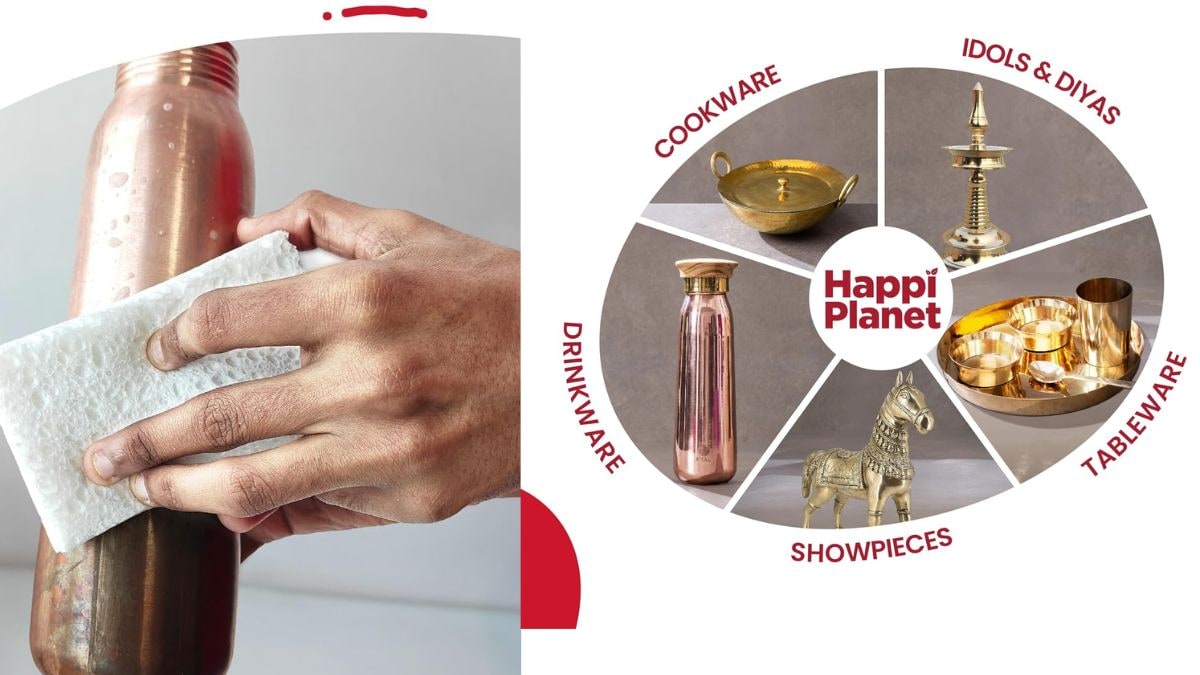
Simple step-by-step methods to clean your copper bottle properly and keep it shining longer.
Photo Credit: Amazon
Can You Use Store-Bought Copper Cleaners?
Yes, the copper cleaners from the store can work too if you want quicker results, especially for bottles that are heavily stained. These cleaners are made on purpose to lift oxidation and bring back that shine more effectively.
It matters to pick gentle cleaners that are made specifically for copper utensils. Read the instructions carefully every time, and then rinse the bottle thoroughly after use , so no residue stays behind inside.
Top Copper Bottle Cleaning Products To Consider
1. Pitambari Shining Powder
2. Happi Planet Copper, Bronze & Brass Cleaner
3. Vim Shudhham Cleaning Gel for Copper
4. Pitambar Brass & Copper Cleaning Spray
5. CLEAR XL Copper & Brass Cleaner GEL Shine & Stain Remover
6. DONVIN Copper, Bronze & Brass Cleaner Liquid
7. Klenzmo by Kleenest Copper & Brass Cleaner Spray
8. ACLIN Metal Cleaner
Frequently Asked Questions (FAQs)
1. How often should I clean a copper bottle?
A quick rinse every day is ideal, while deep cleaning with lemon or vinegar can be done once or twice a week.
2. Can I use dish soap to clean a copper bottle?
Yes, mild dish soap can be used occasionally, but natural ingredients like lemon and vinegar are usually better for maintaining shine.
3. Why does my copper bottle smell metallic?
A metallic smell usually appears when the copper bottle has not been cleaned properly for several days or has residue buildup inside.
4. Is baking soda safe for cleaning copper bottles?
Yes, baking soda is safe in small amounts for removing tough stains, as long as the bottle is rinsed thoroughly afterward.
5. Can copper bottles lose their shine permanently?
No, most dullness and stains can be cleaned easily with regular maintenance and gentle cleaning methods.
(Disclaimer: This article may include references to or features of products and services made available through affiliate marketing campaigns. NDTV Convergence Limited (“NDTV”) strives to maintain editorial independence while participating in such campaigns. NDTV does not assume responsibility for the performance or claims of any featured products or services.)















![Steam Iron Teflon Shoe Cover for ES-300,ST-96 [Only For ES-300 and ST-96 Model Electric Steam Irons]](https://m.media-amazon.com/images/I/51wwkttondL._SL160_.jpg)