How To Make Symmetrical and Geometric Rangoli: Top 10 Design Tips
Rangoli is more than just decoration; it is a living canvas that celebrates tradition, artistry and joy. For anyone eager to craft flawless symmetrical and geometric rangolis, here are timeless tips that blend age-old wisdom with modern creativity.
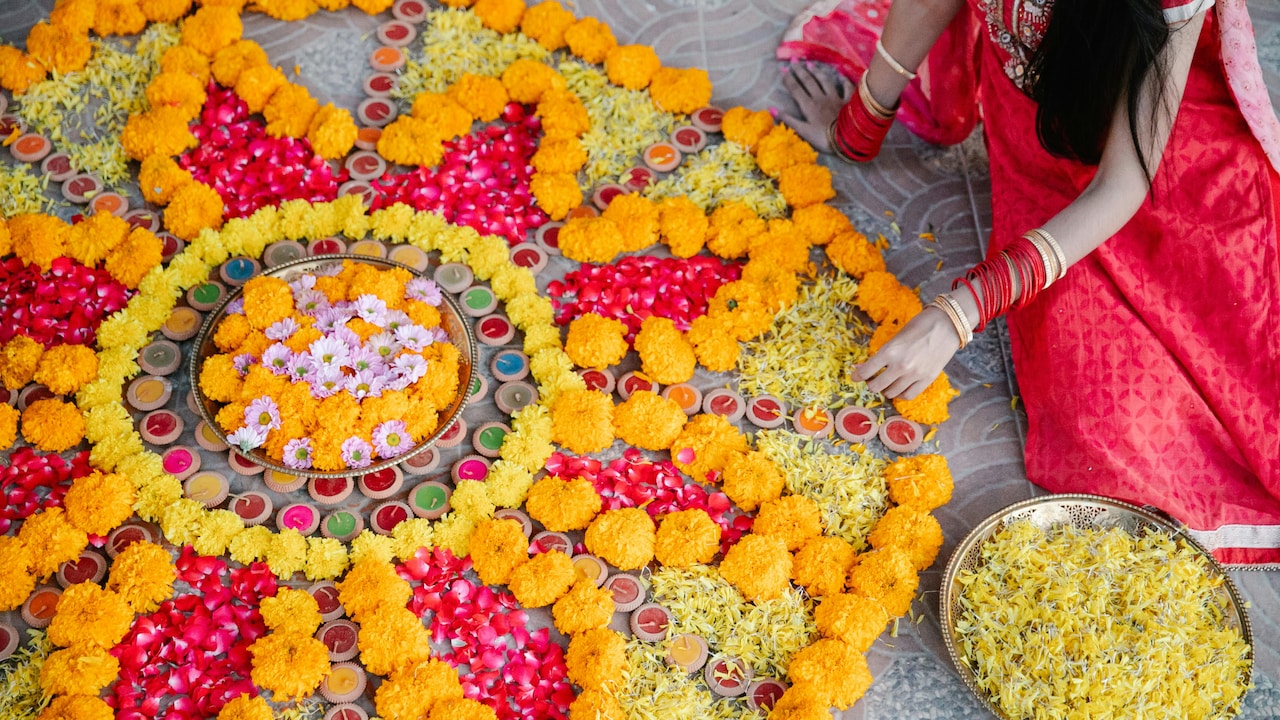
Top Rangoli Design Tips for Creating Symmetrical and Geometric Patterns.
The charm of rangoli lies in its simplicity and depth. With just a pinch of coloured powder, a few chalk outlines, and a little patience, ordinary courtyards transform into vibrant works of art. These patterns, often seen during Diwali, Pongal, or special family functions, carry more than beauty; they are symbolic of harmony, prosperity, and positive energy. Creating symmetrical and geometric rangoli designs may seem daunting, especially when the lines wobble or the circle turns into an oval. But with the right tricks, even a beginner can turn powder into poetry.
This guide shares tried-and-tested tips that help refine hand movements, sharpen designs, and fill the floor with colourful symmetry. Here are the top 10 design tips for making rangoli to achieve symmetry and geometric beauty using simple shapes, careful outlines, and colour consistency throughout every festive floor art.
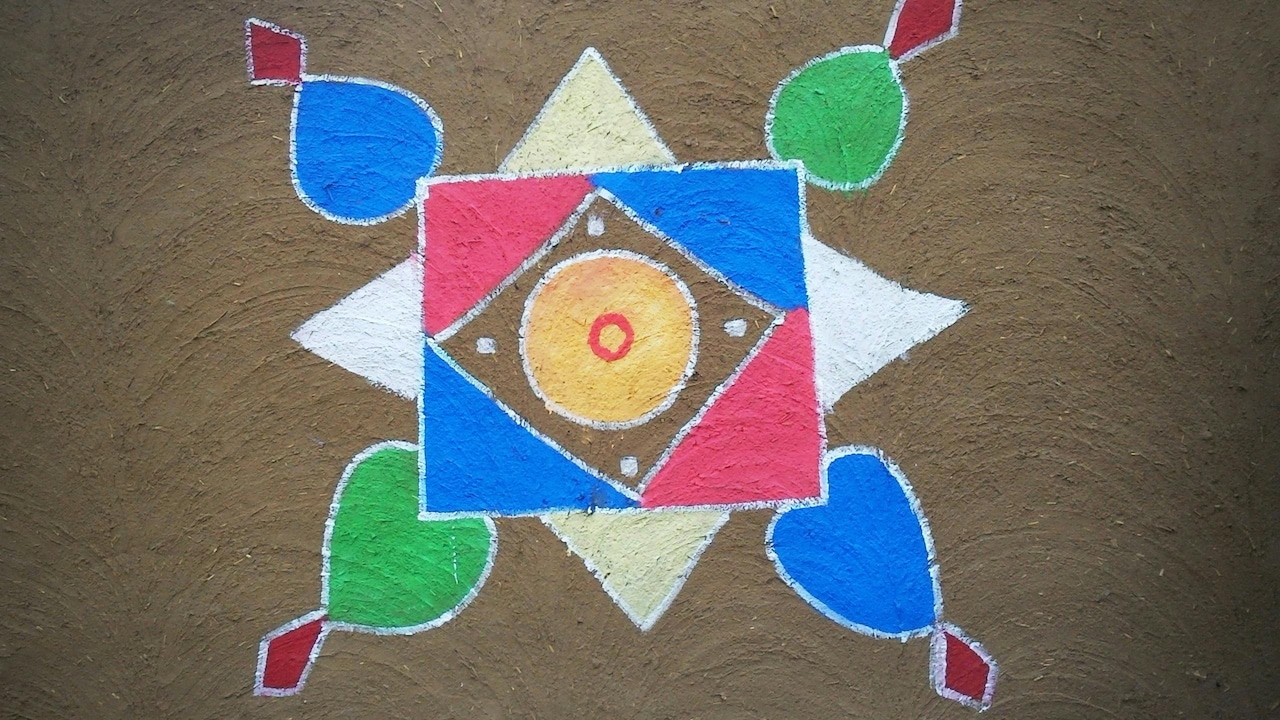
Symmetrical, geometric rangoli can be created using these top 10 design tips for balanced patterns, vivid colours, clear outlines, and consistent spacing during festivals; Photo Credit: Pexels
Practical Tips To Perfect Your Symmetrical And Geometric Rangoli
1. Start with a Clean, Even Surface
The foundation of any rangoli lies in the surface. Uneven ground, cracks in the tiles, or dust-covered verandas can distort even the most carefully drawn designs. Before picking up the powder, sweep the space thoroughly and, if needed, sprinkle a little water to keep the dust down. This also gives the colours a grip, preventing them from scattering at the slightest breeze.
Think of it as preparing a canvas before painting. Just as artists prime their surfaces, rangoli artists prepare the floor. Those who have struggled with smudges on rough patches know the frustration of a beautiful circle turning into a lopsided curve. Spending five minutes preparing the space saves half an hour of corrections later.
Some even mix a bit of rice flour in water and coat the floor lightly, creating a pale, matte background that makes the colours pop. This tiny step ensures that the eventual design not only looks neat but also feels grounded, like a painting framed in the right setting.
2. Use Dots as Your Best Friends
Symmetry becomes easier with dots. These tiny guides, placed with precision, act like invisible rulers. Traditional kolam or rangoli patterns often begin with a grid of dots arranged in neat rows. From there, lines and loops weave magic, forming flowers, stars, and intricate borders.
The beauty of dots lies in their flexibility. They can be expanded or contracted depending on the space available. A large courtyard can host a grand 15x15 dot design, while a small balcony may need nothing more than a modest 5x5 grid.
Children often learn this method first, joining dots like puzzle pieces. It is surprisingly satisfying when a simple arrangement of dots unfolds into a lotus or a peacock. For those nervous about freehand circles or perfect symmetry, this technique offers both structure and freedom. It's almost like playing a strategic game, where every dot has a purpose and every line knows where to go.
3. Master the Pinch-and-Flow Technique
One of the oldest tricks in rangoli-making is holding the powder between thumb and forefinger and letting it flow gently while moving the hand steadily. Known fondly as the pinch-and-flow, this technique creates smooth lines and controlled curves.
New learners often drop too much powder at once, creating blotches. Others release too little, leaving broken trails. The secret lies in balance: press too hard, and the stream becomes thick; loosen too much, and it scatters unevenly. Practising on plain tiles or cardboard before attempting a full rangoli helps build this control.
It almost feels meditative, the hand moves, the powder flows, and the design grows. The more this technique is practised, the more confidence builds. Soon, drawing a spiral or straight line feels as natural as doodling on paper. Once mastered, it becomes the backbone of neat geometric patterns where precision matters.
4. Break Down Complex Designs into Shapes
Large rangolis often intimidate beginners because they appear complicated at first glance. But every grand design is essentially a collection of basic shapes, circles, triangles, diamonds, or squares, arranged thoughtfully.
Instead of diving straight into a peacock with intricate feathers, start by sketching its body as a circle, its wings as ovals, and its tail as layered triangles. Once the skeleton takes shape, details can be added confidently. This method prevents proportion errors and ensures symmetry, especially in designs that cover wider spaces.
Think of it like building a house: the bricks come first, then the paint. With rangoli, the shapes form the bricks, and the colours bring life. Even highly detailed mandalas follow this principle, beginning with concentric circles before spiralling into petals and borders. Simplifying what looks complex makes the process enjoyable rather than overwhelming.
5. Symmetry is All About Balance, Not Perfection
It is tempting to chase absolute perfection, but real beauty in rangoli lies in balance rather than flawless precision. After all, it's drawn on the ground, not printed by a machine. A slight tilt in one petal or an extra swirl on one side doesn't ruin the design, it makes it human, warm, and unique.
The trick is to keep visual balance. If a pattern leans slightly to the left, compensate with a design element on the right. If one colour spills a little, echo it elsewhere in the design so it looks intentional. The overall harmony matters far more than microscopic alignment.
Elders often remind children drawing rangoli that it's not about impressing others but about invoking positivity. This gentle wisdom encourages creativity without fear of mistakes. Over time, hand-eye coordination improves, and symmetry begins to come naturally, like handwriting getting neater with practice.
Also Read: Diwali 2025: Top 5 Lazy Diwali Gift Hamper Ideas For Every Budget At Great Indian Festival
6. Experiment with Borders and Frames
A rangoli without a border sometimes feels incomplete. Borders act like a frame for a painting, they hold the artwork together. Simple lines, twin curves, or repeated motifs like dots, waves, or triangles instantly lift the design.
Borders also create opportunities for geometric creativity. A square border emphasises straight lines, while a circular one enhances spirals and mandalas. Some even use floral chains or tiny diya shapes as frames during festive occasions.
Experimenting with borders not only improves symmetry but also adds finesse. Even a basic star rangoli gains elegance when encircled with a neat dotted edge. Plus, they provide a playful way to involve children, who can help by filling in dots or drawing tiny petals along the edges. Borders give a sense of completion, like tying a ribbon around a gift.
7. Play with Contrasting Colours
Colours can transform a simple rangoli into a show-stopper. Geometric designs especially benefit from contrasting shades because they highlight sharp angles and symmetrical sections. Imagine pairing bright orange with deep blue, or crisp white with vibrant maroon. The contrast makes every shape stand out clearly.
One useful trick is to keep a few shades in reserve for highlights. For instance, outlining a peacock feather in white before filling it with green and blue creates definition. Similarly, darker shades placed at the centre with lighter hues radiating outwards give the illusion of depth.
For those worried about wasting expensive powders, mixing rice flour with a touch of food colour is a budget-friendly hack. Children particularly enjoy experimenting with such mixes, and it allows the rangoli to become not just decoration but a family activity filled with laughter and colour-stained fingers.
8. Use Everyday Tools for Precision
Sometimes, freehand doesn't deliver the crispness expected. This is where everyday household tools step in. Small funnels, sieves, cones made of paper, or even empty salt shakers work wonders for controlling the flow of rangoli powder.
Those aiming for geometric precision can trace outlines with chalk or use bangles, plates, or bowls as stencils for perfect circles. Scale rulers help in straight lines, while thread dipped in chalk dust can create symmetrical grids when snapped onto the floor.
These little tricks not only save time but also open doors to experimentation. With tools in hand, even beginners can attempt ambitious patterns that look professional. It's proof that rangoli is not about expensive supplies but about creativity and resourcefulness. A humble kitchen sieve can turn a rangoli into a masterpiece with its even dusting effect.
9. Incorporate Cultural Symbols Thoughtfully
Rangoli often carries meaning beyond aesthetics. Symbols like the lotus, conch, peacock, or diyas are more than pretty motifs, they carry cultural resonance. Geometric patterns gain richness when combined with such elements, making the rangoli both beautiful and meaningful.
For example, a symmetrical swastika design radiating from a central circle symbolises prosperity and balance. A mandala pattern with concentric lotuses represents harmony and wholeness. Even simple diya shapes placed at equal intervals add festive charm.
While experimenting with modern designs is refreshing, weaving in these motifs keeps the tradition alive. It's like telling a story through colour and symmetry, a reminder of values and blessings passed down through generations. Such thoughtful details make rangolis more than art; they become expressions of culture and joy.
10. Practise, Photograph And Preserve
Like any skill, rangoli improves with practice. The more patterns tried, the more confidence grows. A useful habit is to photograph each design once finished. These pictures not only serve as a memory bank but also as a personal design library for future festivals.
Looking back at older designs shows progress clearly, the shaky first attempts, the experiments with colour, the growing symmetry. Families often flip through albums of rangoli pictures like they do wedding photos, reminiscing about festive mornings, the smell of flowers, and the sparkle of diyas.
Preserving designs also allows for innovation. A basic square pattern used last year may evolve into a diamond mandala this year. Practice turns symmetry from effort into instinct, and the camera captures every stage of that journey. Over time, the floor becomes not just a space for decoration but a diary of creativity written in colour and shape.
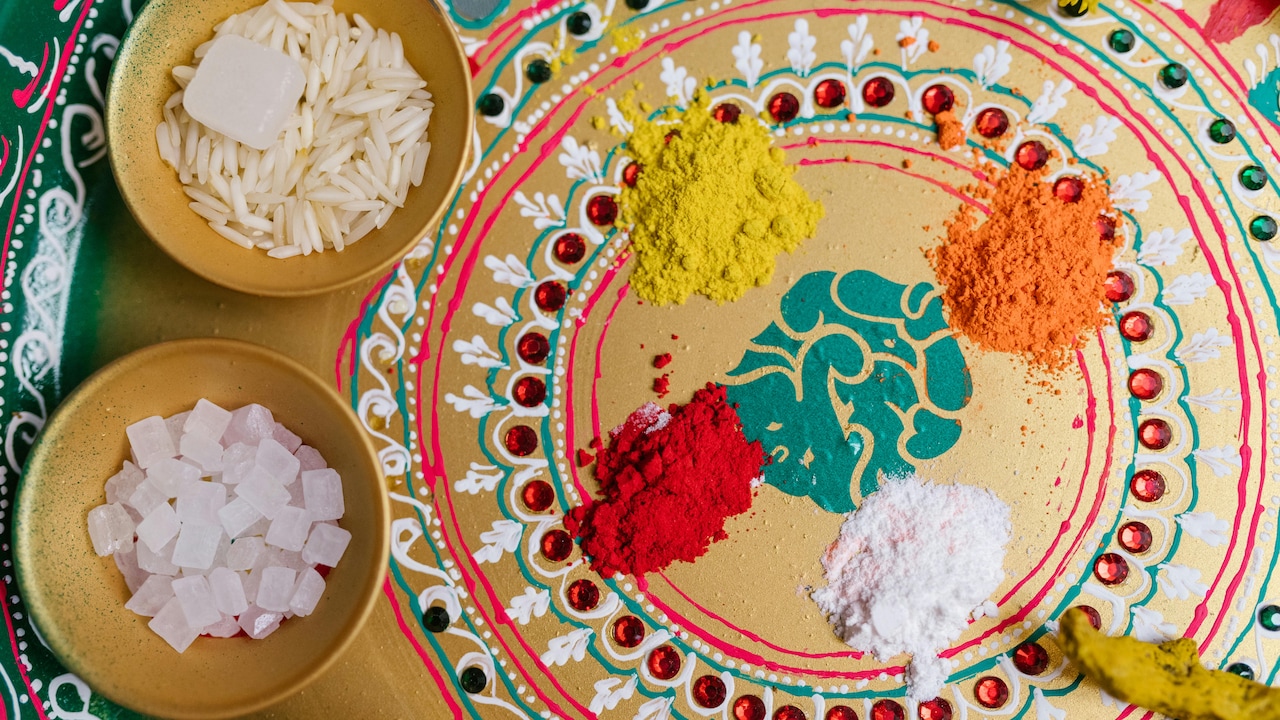
Top Rangoli Design Tips for Creating Symmetrical and Geometric Patterns; Photo Credit: Pexels
Products Related To This Article
1. COCK BRAND Decora Magic Rangoli Maker for Navratri Pongal Diwali Pooja
2. Varnika by Welburn Veda&Co® Reusable Rangoli Kit
3. CraftVatika 24 Rangoli Colour Powder Tube Kit Diwali Decoration
4. Ascension 10 Rangoli Powder Colors Bottles 4 Stencils and 2 Fillers Design Creativity Diwali Decoration
5. Reusable Rangoli Stencils Making Tools Kit Portable Rangoli Mats
Rangoli is not merely an art form; it's a celebration of community, family, and tradition. Symmetrical and geometric patterns showcase both discipline and creativity, turning everyday spaces into canvases of joy.
With simple tricks, like starting with clean surfaces, relying on dots, using borders, balancing colours, and practising regularly, anyone can create rangolis that look graceful and inviting. It is less about perfection and more about the joy of creating, sharing, and celebrating.
In the end, every line of powder drawn on the floor tells a story. A story of mornings filled with anticipation, of hands working patiently, of laughter when colours spill, and of satisfaction when the design finally shines under the glow of diyas. Rangoli is timeless, and with these tips, each design can carry both symmetry and soul. Shop now on Amazon.
Disclaimer: The images used in this article are for illustration purpose only. They may not be an exact representation of the products, categories and brands listed in this article.









![Steam Iron Teflon Shoe Cover for ES-300,ST-96 [Only For ES-300 and ST-96 Model Electric Steam Irons]](https://m.media-amazon.com/images/I/51wwkttondL._SL160_.jpg)