Why Stainless Steel Dish Racks Rust Over Time And How To Prevent It
Stainless steel dish racks can still rust due to water quality, salt exposure, poor steel grades and cleaning habits. This article explains why and how to prevent it. 10 reasons that can cause your stainless steel dish rack to rust easily.

Why Some Dish Racks Rust Despite Being Stainless Steel: Hidden Flaws In Protective Coatings.
Every kitchen has one unsung hero: the dish rack. It holds dripping plates after a heavy lunch, balances pressure cookers fresh from the stove, and survives constant splashes from the sink. Stainless steel versions enjoy special status. They look sleek, feel solid and promise freedom from rust. Then comes the disappointment.
One morning, faint orange marks show up near the welds. A week later, the corners look tired and spotted. Questions pop up over morning tea. Was the product faulty? Did the shop overcharge? Did someone forget to wipe it dry?

Here's why your stainless steel dish rack might rust with gradual use; Photo Credit: Pexels
The reality feels more layered and far more interesting. Stainless steel resists rust, but it does not fight it forever under all conditions. Kitchen environments challenge metal daily with water, salt, heat, detergents and air quality. Add marketing shortcuts and uneven manufacturing, and rust sneaks in quietly.
This piece explores ten reasons why stainless steel dish racks rust, even when they claim not to. Each reason ties back to everyday habits and familiar kitchen scenes, offering clarity without chemistry lectures or technical jargon.
Also Read: From Strainers To Organisers: 6 Kitchen Sink Accessories That Keep It Clean And Dry
The Everyday Reasons Behind An Unexpected Problem
1. Stainless Steel Is Rust-Resistant, Not Rust-Proof
Many people treat stainless steel like a superhero metal. The name itself sounds invincible. Yet stainless steel resists rust; it does not banish it completely. The metal protects itself through a thin, invisible layer of chromium oxide. This layer blocks oxygen and moisture from reacting with iron beneath.
Trouble begins when this protective skin breaks down. Scratches, constant moisture or harsh cleaners weaken it. Once damaged, rust finds a foothold.
In kitchens, dish racks face daily stress. Heavy utensils knock against rods. Plates scrape surfaces. Steel wool brushes leave micro-scratches that the eye misses. Over time, these tiny wounds add up.
Think of stainless steel like polished shoes. They resist dirt better than cloth ones, but mud still sticks if ignored. A dish rack placed right beside a wet sink rarely gets time to dry fully. Moisture lingers, oxygen reacts, and rust slowly creeps in.
Understanding this difference helps manage expectations. Stainless steel reduces rust; it does not eliminate responsibility.
2. Not All Stainless Steel Grades Are the Same
Stainless steel comes in many grades, each designed for specific uses. Kitchen sinks and cutlery usually use higher grades with more chromium and nickel. Dish racks often use lower grades to keep prices reasonable.
Lower-grade steel contains less chromium, which weakens its rust resistance. Some manufacturers choose grades that look shiny but struggle under constant exposure to water.
This explains why one dish rack lasts years while another rusts within months, even when both claim “stainless steel.” Labels rarely mention grade numbers. Shops focus on finish and design instead.
In everyday terms, it feels like buying footwear that looks sturdy but uses thinner soles. They work fine at first, then wear out faster.
Budget plays a role here. A rack priced at ₹800 often uses a different steel mix than one priced at ₹2,500. Both serve a purpose, but expectations should match material quality.
3. Hard Water Leaves More Than Just White Stains
Water quality affects metal more than most people realise. Many households deal with hard water, rich in calcium and magnesium. While these minerals leave white marks on taps, they also create a hidden problem for stainless steel.
Mineral deposits trap moisture against the surface. They block oxygen from repairing the protective chromium layer. Over time, this stagnant moisture encourages corrosion.
Dish racks suffer most because they stay wet for long periods. Plates drip slowly. Bowls collect water in curves. Minerals settle and cling.
This explains why rust often appears underneath plates rather than on exposed bars. The problem hides where water rests longest.
Regular wiping helps, but mineral build-up still happens silently. In areas with very hard water, even high-quality steel struggles without extra care.
4. Salt: A Quiet but Powerful Enemy
Salt speeds up corrosion. Kitchens use salt daily, often without noticing where it travels. A pinch spills near the sink. Salty water from rinsed vessels drips onto the rack. Pickle jars leave residue behind.
Salt breaks down the protective chromium layer faster than plain water. Once it settles into joints and corners, rust begins quietly.
Coastal air worsens this effect. Salt particles float invisibly in the air and settle on metal surfaces. Even indoor racks absorb this moisture-laden air.
This explains why homes near the sea notice rust sooner. The dish rack faces a constant salt bath without ever touching the ocean.
Rinsing racks occasionally with plain water and wiping them dry reduces salt accumulation significantly.
5. Welds and Joints Rust First for a Reason
Rust rarely appears evenly across a dish rack. It loves corners, welds and joints. These areas face more heat during manufacturing, which alters the metal structure locally.
Heat weakens corrosion resistance around welds. Manufacturers often polish visible areas well but leave joints less protected.
Water collects in these spots easily. Air circulation drops. Cleaning brushes struggle to reach tight corners. Rust thrives in such conditions.
This pattern often leads to confusion. The bars look perfect while the joints stain. The rack feels unfairly flawed.
Better manufacturing includes passivation, a process that restores corrosion resistance after welding. Budget models skip this step to cut costs.
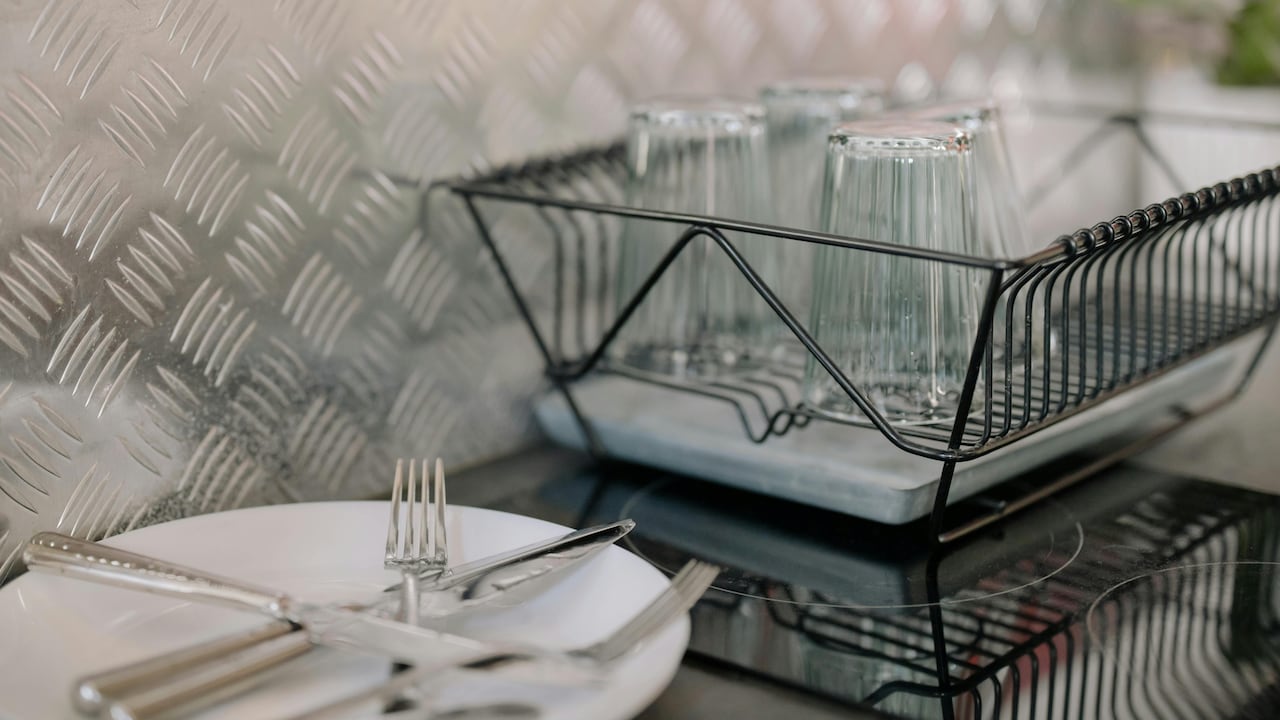
Certain parts of your dish rack, like welds and joint,s can rust easily; Photo Credit: Pexels
6. Harsh Cleaning Products Do More Harm Than Good
Cleanliness feels like protection, but the wrong cleaners damage stainless steel quietly. Bleach, acidic liquids and abrasive powders strip away the protective layer.
Many households rely on strong cleaners for speed. A quick scrub with bleach removes grease but leaves the metal exposed.
Repeated exposure worsens the damage. Rust appears weeks later, long after the cleaning session, making the connection hard to spot.
Steel wool causes similar harm. It scratches the surface and leaves behind tiny carbon steel particles. These particles rust first and spread corrosion.
Gentle dishwashing liquid and soft cloths work best. Stainless steel prefers kindness over aggression.
7. Moisture Trapped Under Accessories Causes Hidden Rust
Many dish racks include plastic trays, cutlery holders or suction cups. These attachments trap moisture underneath.
Water seeps in and stays there for hours. The steel never dries fully. Oxygen struggles to reach the surface evenly, preventing self-repair of the chromium layer.
Rust develops unseen until parts are removed. By then, the damage felt sudden but actually grew slowly.
This explains why rust sometimes appears under removable trays while exposed areas remain clean.
Removing accessories weekly and drying the rack thoroughly reduces this risk significantly.
8. Manufacturing Shortcuts Reduce Long-Term Durability
Mass production often prioritises appearance over longevity. Some manufacturers polish surfaces well but skip deeper treatments that strengthen corrosion resistance.
Thin coatings, uneven polishing and rushed finishing leave steel vulnerable beneath its shine.
The rack looks premium under shop lights. Months later, kitchen reality sets in.
This issue grows common with online purchases where inspection remains limited. Product descriptions focus on design rather than metallurgy.
Paying attention to weight helps. Heavier racks usually use thicker steel, which resists corrosion better.
9. Air Quality and Kitchen Ventilation Matter
Kitchens generate steam daily. Cooking releases moisture into the air. Poor ventilation traps this humidity.
Stainless steel survives better in dry environments. Constant moisture in the air slows evaporation on surfaces.
Dish racks placed near stoves or enclosed sinks face higher humidity levels. Over time, this environment encourages corrosion.
Simple steps help. Opening windows during cooking, using exhaust fans, and spacing racks slightly away from walls improve airflow.
Small changes create big differences over months.
10. Misleading Labels Create False Expectations
The term “stainless steel” sells well. Yet regulations around labelling remain loose. Products rarely specify grade, treatment or intended use.
This creates a gap between expectation and reality. Buyers assume lifelong rust-free service. Manufacturers assume limited liability.
Understanding that stainless steel needs care bridges this gap.
Like non-stick pans or wooden chopping boards, dish racks last longer with informed use.
Products Related To This Article
1. TEKCOOL Plastic Durable Kitchen Drainer Dish Rack Organizer
2. TEX-RO Utensils Drying Rack/Dish Drying Rack with Drainer Tray
3. HomeCloud Kitchen Dish Rack Steel
4. TEX-RO Utensils Basket Drainer & Dish Drainer Basket for Kitchen
5. WINSTAR Stainless Steel 4 Shelf Wall Mount Kitchen Utensils Rack
6. Amazon Brand - Solimo Plastic Dish Drainer
7. Stainless Steel Dish Bakeware Rack
Rust on a stainless steel dish rack feels like betrayal. The shine promised resilience, yet stains tell another story. The truth rests in small, everyday factors: water quality, salt exposure, cleaning habits, manufacturing choices and kitchen environment.
Stainless steel works hard, but it needs support. Wiping racks dry, choosing gentle cleaners, understanding grade differences and allowing airflow all extend life significantly.
Rust does not mean failure. It signals conditions that need attention.
With a little care and realistic expectations, stainless steel dish racks continue to serve faithfully, holding stories of shared meals and everyday routines without turning orange too soon.
The next time a rust spot appears, it may spark curiosity rather than frustration. After all, even strong materials respond to how they live.
(Disclaimer: This article may include references to or features of products and services made available through affiliate marketing campaigns. NDTV Convergence Limited (“NDTV”) strives to maintain editorial independence while participating in such campaigns. NDTV does not assume responsibility for the performance or claims of any featured products or services.)








![Steam Iron Teflon Shoe Cover for ES-300,ST-96 [Only For ES-300 and ST-96 Model Electric Steam Irons]](https://m.media-amazon.com/images/I/51wwkttondL._SL160_.jpg)