How to Stop Denim Shorts From Riding Up: Best Thigh-Fit Features To Look For
Denim shorts riding up? The problem is fit, not your thighs. Learn the key thigh-fit details, inseam, leg opening, rise and fabric that stop chafing and keep shorts comfortable all day.

Denim Shorts That Wont Ride Up: Key Thigh-Fit Details That Stop Discomfort And Chafing.
Denim shorts have a special talent. They look cute on a hanger, look promising in the mirror, and then turn into a rolling, riding-up menace the second real life begins. One brisk walk to the metro, one awkward step over a puddle, one enthusiastic dance move at a friend's sangeet, and suddenly the shorts are migrating upwards like they've got their own travel plans.
And the worst part? People often blame themselves. “Maybe denim shorts just don't suit me.” “Maybe my thighs are the problem.” Nope. Thighs are not the enemy. Shorts that ignore how bodies move are.
The truth is simple: denim shorts ride up because the thigh area is poorly engineered. The fabric grabs. The leg opening squeezes. The inseam is too short. The rise sits wrong. The pattern isn't built for movement. It's not a confidence issue. It's a construction issue.
So let's talk about the details that matter, the ones that stop discomfort, prevent chafing, and keep denim shorts from turning into denim briefs by lunchtime.

Denim Shorts That Wont Ride Up: Key Thigh-Fit Details That Stop Discomfort And Chafing
Photo Credit: Pexels
What Actually Stops Denim Shorts From Riding Up?
1) Choose the right inseam length: too short is the real culprit
If denim shorts ride up, the inseam is usually guilty. The inseam is the length from the crotch seam to the hem. When it's too short, the fabric has nowhere to go when the thighs move. So it climbs upward, searching for less resistance, and ends up bunching at the top.
For most people, an inseam under 2.5 inches is the danger zone. It may look stylish in a posed photo, but real life includes walking, sitting cross-legged, getting on scooters, and climbing stairs. Shorts that are 3 to 5 inches long tend to stay put far better. They also reduce inner-thigh rubbing, because the fabric acts as a buffer instead of a friction amplifier.
A good rule: if the hem sits at the widest part of the thigh, the shorts are more likely to ride up. If the hem sits slightly lower, where the thigh narrows, the fabric stays calmer. Think of it like placing a bangle on the thickest part of the arm; it will keep sliding.
Inseam length isn't about modesty. It's about physics.
2) Prioritise a wider leg opening: squeeze equals ride-up
A narrow leg opening is the fastest way to turn denim shorts into a problem. When the hem grips the thigh, every step pulls the fabric upward. It's like a tug-of-war, and your thighs keep winning.
A wider leg opening gives the shorts space to move with the body rather than against it. It also reduces that tight band feeling that makes sitting uncomfortable, especially during long drives or café hangouts where the chair is slightly too sticky and the denim feels like it's plotting revenge.
The easiest test is the pinch test. If the hem presses into the thigh and leaves marks after a few minutes, it's too tight. Another clue: if the shorts look smooth while standing but form deep horizontal creases across the thigh when walking, the leg opening is working too hard.
A relaxed hem doesn't mean the shorts will look baggy. It simply means they'll look intentional instead of stressed. And yes, clothes can look stressed.
3) Look for a curved side seam: straight cuts fight real thighs
Many denim shorts are cut like mini versions of jeans. That sounds logical until thighs enter the conversation. Human thighs are not straight cylinders. They're curved, soft, and constantly in motion.
When shorts have straight side seams and a flat, stiff silhouette, they tend to pull inward as you move. That inward pull creates friction at the inner thigh, and the fabric climbs. Shorts with slightly curved side seams accommodate the natural shape of the leg. The fabric falls better and stays in place.
This is why some shorts feel comfortable the moment you put them on. They don't force your body into a shape. They follow your shape.
A small detail to watch: if the side seam angles forward slightly (rather than hanging straight down), the shorts often fit the thigh better. It's subtle, but it changes how the fabric drapes. The result is less tugging, less bunching, and fewer “please stop moving” moments.
Designers who understand movement create shorts you forget you're wearing. That's the dream.
4) The crotch curve matters more than the size label
This one is unglamorous but essential. The crotch curve, also called the rise curve or crotch seam shape, is a major factor in whether shorts ride up.
If the crotch curve is too short or too shallow, the shorts don't have enough room for your body's natural shape. So the fabric pulls tight at the inner thigh and creeps upward. This often happens when shorts are cut for a very flat, narrow fit.
When the crotch curve is properly shaped, the shorts sit where they're supposed to sit. You get room to move without the fabric trying to climb into forbidden territory.
A quick way to check: if the shorts feel fine standing but become instantly uncomfortable when sitting, the crotch curve may be wrong. Another clue is that “wedgie” feeling, even when the waistband fits.
The size might be correct. The pattern might not be.
And yes, this is why two pairs of shorts in the same size can feel like they belong to different universes.
5) Avoid ultra-stiff denim: movement needs to give
Stiff denim looks crisp, but it's not always your friend in shorts. In jeans, stiffness can feel supportive. In short, stiffness often turns into friction.
When denim has no give, it resists the natural swing of the thighs. That resistance creates a pull at the inner seam, and the shorts ride up. It also increases chafing because the fabric rubs rather than flexes.
A small percentage of elastane (around 1% to 3%) can make a big difference. It allows the shorts to move with you without losing shape. The key is balance. Too much stretch can make shorts feel flimsy and prone to sagging. Too little stretch makes them behave like cardboard.
Also consider the weave and softness. Some denims feel rigid at first but soften after a few wears. Others remain stubborn forever, like that one relative who still asks why you don't “just settle down”.
If you want shorts you can actually live in, choose denim that bends when you bend.

Denim Shorts That Wont Ride Up: Key Thigh-Fit Details That Stop Discomfort And Chafing
Photo Credit: Pexels
6) Mid-rise usually wins: low-rise is a ride-up magnet
Low-rise denim shorts have a reputation for being “fun”. In practice, they're often the reason people spend the day adjusting their outfit every ten minutes.
When the rise is too low, the shorts sit on a narrower part of the hips. That reduces stability. The waistband shifts as you move, and the fabric gets pulled upward from below. It's a chain reaction: waistband slides, crotch lifts, thighs rub, hem creeps.
Mid-rise shorts tend to anchor better. They sit at a more stable point on the body, which reduces shifting. High-rise can also work well, especially if you like more coverage and a smoother waist fit. But high-rise must be paired with a good crotch curve; it can feel restrictive.
The best rise is the one that stays put when you sit, walk, and climb stairs. If the waistband needs constant tugging, it's not “a style thing”. It's a design mismatch.
Comfort shouldn't require choreography.
7) Watch the inner thigh seam: placement decides chafing
The inner thigh seam is where the battle is won or lost. If that seam sits too far forward or too close to the inner thigh, it rubs. And once rubbing starts, riding up usually follows.
Well-designed denim shorts often have inner seams that sit slightly lower and more centred. This reduces friction in the highest-rub zone. Some shorts also use flatter seams or better stitching that doesn't feel like a tiny rope.
A trick: turn the shorts inside out and look at the seam bulk. If the seam feels thick, raised, or stiff, it will likely irritate the skin during long wear. This matters more in hot weather when sweat makes friction worse.
If you've ever come home after a day out and felt that sting while changing, you already know how real this is.
Thigh chafing isn't dramatic. It's just miserable. And it's often caused by a seam that sits in exactly the wrong place.
8) A-line and “mom” cuts are not trends; they're thigh-friendly engineering
Some cuts stay popular because they solve real problems. A-line shorts, mom shorts, and relaxed vintage cuts tend to ride up less because they give the thigh space.
These styles often have a wider leg opening, a more stable rise, and a slightly longer inseam. They don't cling to the thigh, so there's less friction and less upward pull. They also tend to look flattering without needing constant adjustment, which is the quiet luxury everyone deserves.
There's a reason these cuts work so well for day-long wear. They were built for movement. They're the short version of a comfortable kurta, effortless, forgiving, and always ready for snacks.
If skinny denim shorts are the dramatic friend who needs attention, A-line shorts are the calm friend who helps you carry bags and never complains.
Choose peace. Choose space.
9) Don't ignore the waistband: stability stops shifting
People focus on the thigh fit and forget the waistband. But a waistband that doesn't hold steady can cause ride-up, too.
If the waistband is too loose, the shorts slide and shift. If it's too tight, it pulls the fabric upward and creates tension through the crotch and thighs. The ideal waistband sits snugly without digging in. It should feel secure even when you're moving, not just when you're standing still.
Look for waistbands with proper structure. A contoured waistband (slightly curved) often fits better than a straight one, especially if your waist-to-hip ratio is more defined. Also, check the placement of belt loops. If belt loops are too far apart or poorly positioned, the waistband can gape or twist.
A well-fitted waistband keeps the shorts anchored. When the top stays stable, the rest of the shorts behave.
In other words, if the waist is sorted, the thighs get a break.
10) Try the “real life” fitting test: sitting, walking, and stairs
Denim shorts can pass the mirror test and still fail the reality test. The solution is simple: stop judging shorts while standing still like a mannequin.
In the trial room (or at home), do three things:
Walk briskly for 20 seconds.
Sit down and stand up twice.
Climb an imaginary stair step or do a small lunge.
If the shorts ride up immediately, they will ride up all day. If the hem creeps higher with each step, the leg opening is too tight, or the inseam is too short. If the crotch feels like it's pulling, the rise curve is off. If the inner thigh rubs, the seam placement or fabric is wrong.
Also, check comfort after two minutes. Some shorts feel fine for the first ten seconds and then start irritating, like a mosquito that waits until you're emotionally stable.
The best denim shorts are boring in the best way. They don't demand attention. They let you live your life.
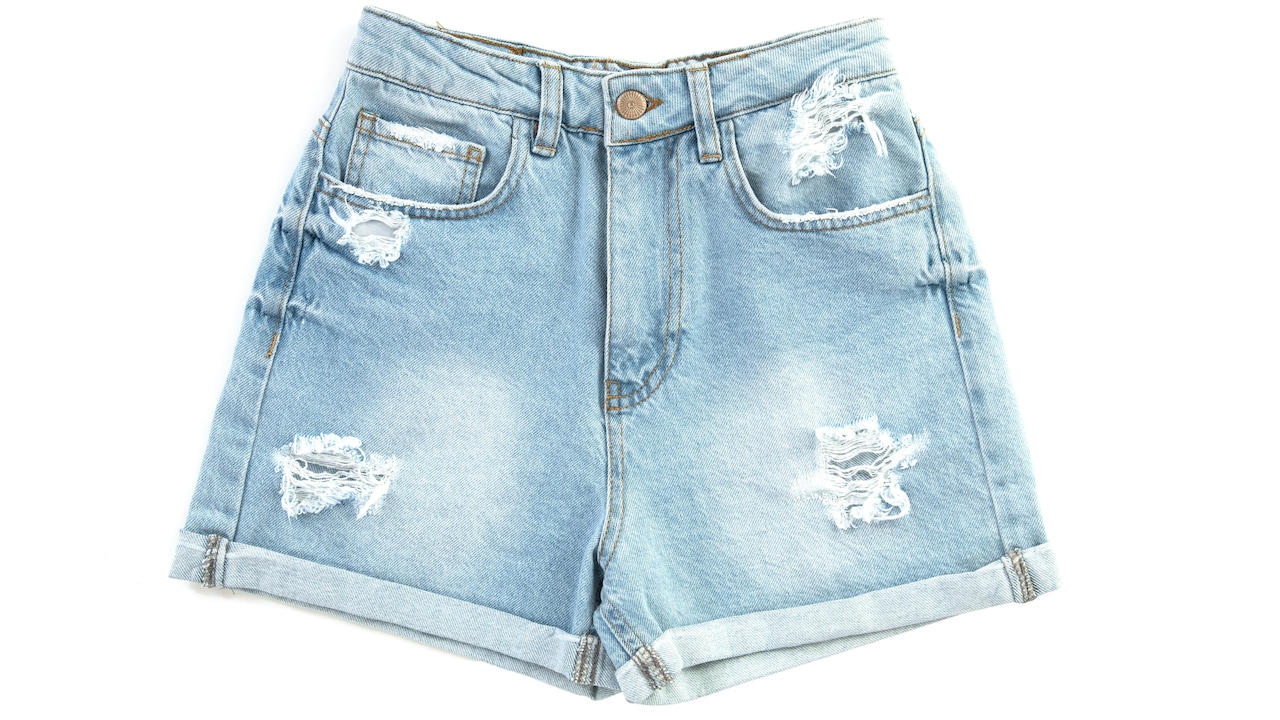
Denim Shorts That Wont Ride Up: Key Thigh-Fit Details That Stop Discomfort And Chafing
Photo Credit: Pexels
Products Related To This Article
1. Freehand by The Indian Garage Co Women Blue Slim Fit High-Rise Frayed Denim Shorts
2. Tokyo Talkies Women Blue High Rise Cotton Denim Shorts
3. Mast & Harbour Women Solid Denim Shorts
4. Glitchez Women Outdoor Shorts
5. StyleCast x Revolte Women Mid-Rise Loose Fit Denim Shorts
Denim shorts don't ride up because bodies are “wrong”. They ride up because many shorts are designed for standing still, not for living.
The good news is that the fix isn't mysterious. A slightly longer inseam, a wider leg opening, a better crotch curve, and softer denim can completely change the experience. Add a stable waistband and smarter seams, and suddenly shorts stop being a struggle.
The next time a pair rides up, don't waste energy feeling self-conscious. Treat it like bad engineering. Because that's what it is.
Life is already full of small annoyances, traffic, humid weather, and that one friend who insists on ordering for the table. Denim shorts shouldn't be one of them.
(Disclaimer: This article may include references to or features of products and services made available through affiliate marketing campaigns. NDTV Convergence Limited (“NDTV”) strives to maintain editorial independence while participating in such campaigns. NDTV does not assume responsibility for the performance or claims of any featured products or services.)